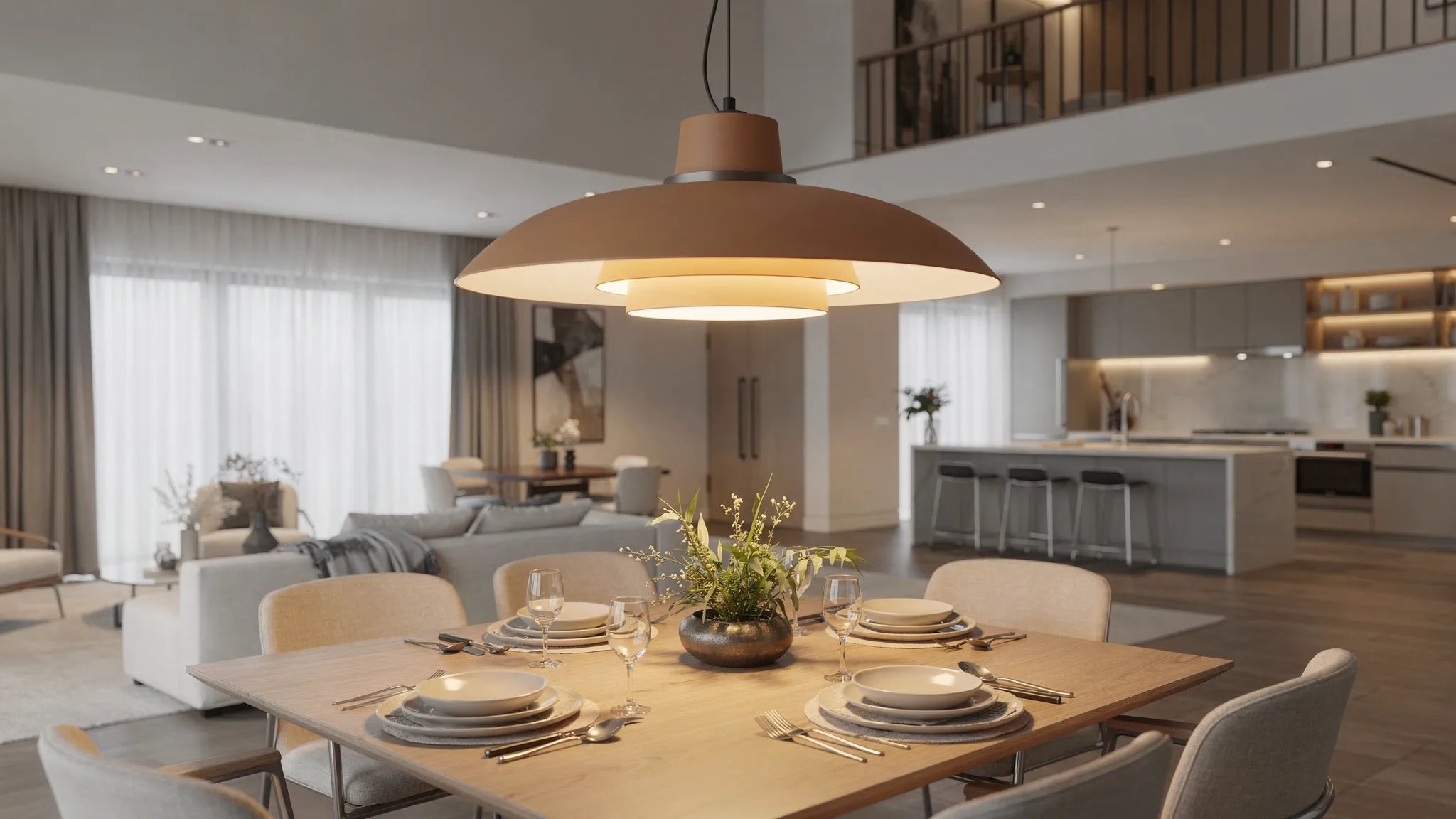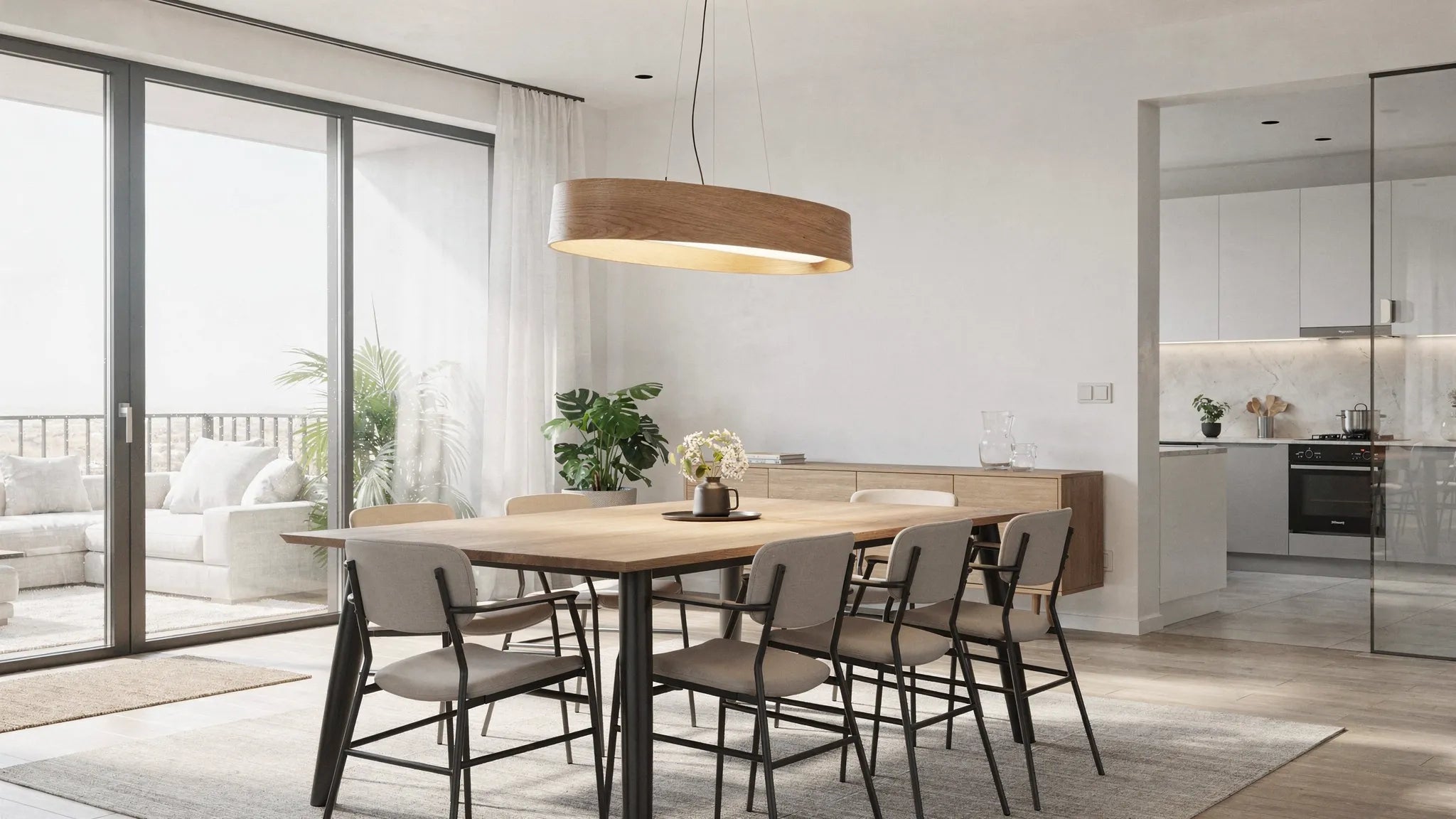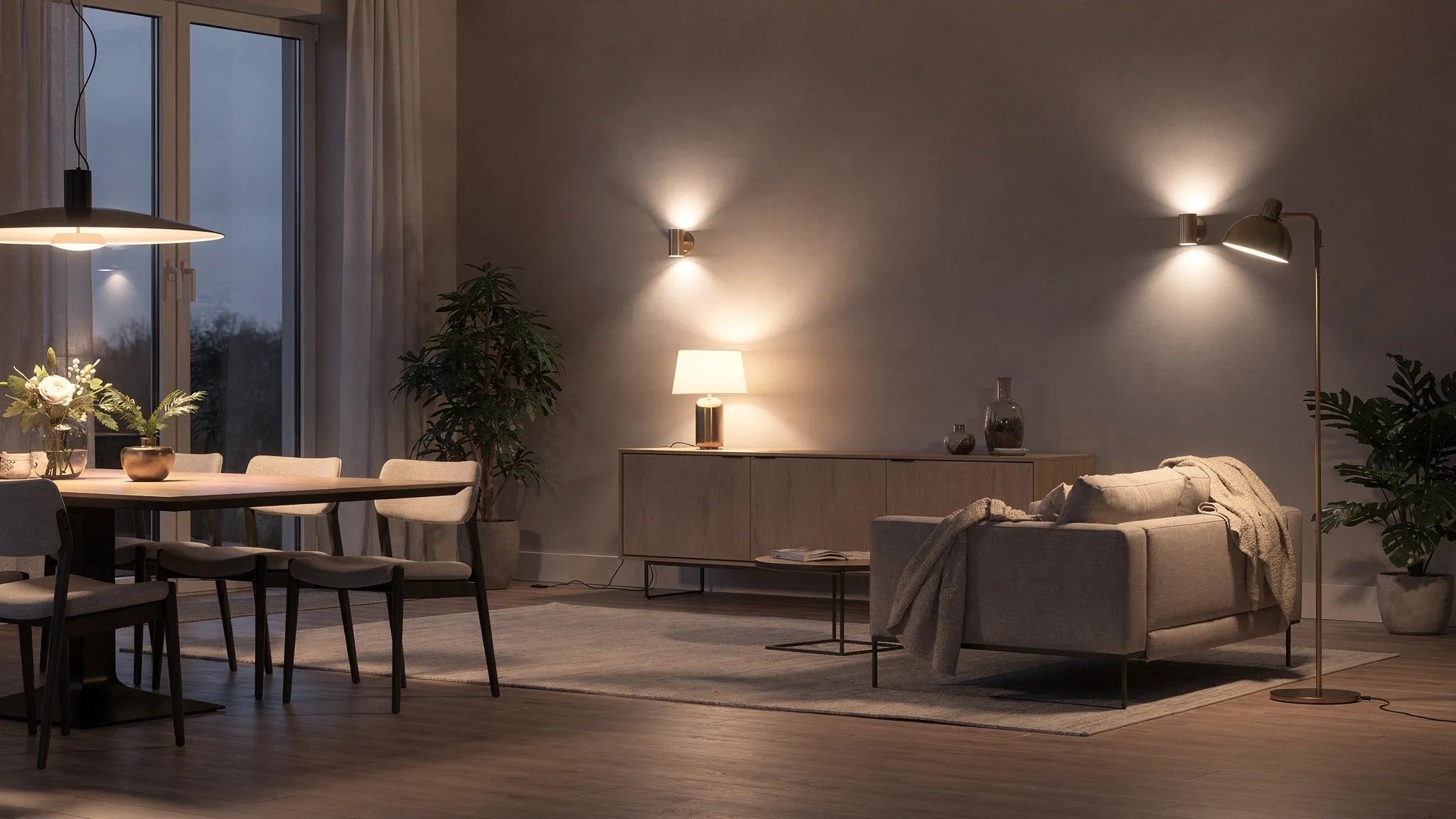
Combine modern lamps: This is how a room looks harmonious
A harmonious room is rarely created by a single spectacular light. It usually only appears high-quality when several light sources work together: a pendant lamp above the table, a wall lamp next to the sofa, a table lamp on the sideboard and perhaps a subtle spot for art or plants. This is exactly where the art lies: combine modern lamps, without the room appearing random, overloaded or restless.
The good news: You don't have to buy all the lights from the same series. On the contrary, rooms often appear more interesting when materials, shapes and heights are consciously varied. What is crucial is that there is a recognizable design logic. This guide shows you how to coordinate modern lamps so that function, atmosphere and interior design fit together.

The most important principle: not everything is the same, but everything is related
Many people try to create harmony by choosing all lamps in exactly the same style. That can work, but it quickly looks like a showroom. It becomes more comfortable if the lights are not identical but share a common design language.
This relationship can arise through various characteristics: the same metal color, similar geometric shapes, recurring glass, a common light color or similar lines. A black chandelier, a sleek black one Floor lamps and a small table lamp with a dark base do not have to come from the same collection, but they can visually belong together.
When combining modern lamps, think about a good outfit: shoes, belt and jacket do not have to be made of the same material, but should speak to each other in color, proportion and mood.
Start with a central idea for the room
Before you select individual lights, it's worth making a quick style decision. Ask yourself: Do you want the room to appear calm and minimalist? Warm and inviting? Sculptural and luxurious? Natural and reserved?
A clear guiding idea prevents each lamp from being beautiful in its own right, but from the overall picture falling apart. It is particularly helpful to define a main light as a design anchor. This can be a pendant light above the dining table, a chandelier in the living area or a striking ceiling lamp in the hallway. All other lights are subordinate to this main light without becoming boring.
If you are still at the beginning of your planning, a basic look at the principle of multiple layers of light can help. The BUYnBLUE-Guide to LED lighting with 3-layer light shows how basic light, work light and accent light systematically work together.
The 5 rules for harmonious lamp combinations
1. Repeat a material or color
A common denominator is the easiest way to achieve a harmonious look. This can be matt black metal, brushed brass, chrome, smoked glass, opal glass, wood or natural stone. It is important that you use repetition in doses.
For example, in a modern living room, a black pendant light could be combined with a black wall light and a table lamp with a dark base. The shades can differ as long as the dark accent appears several times.
As a rule of thumb: two to three recurring elements are sufficient. Anything more can quickly appear strict or over-staged.
2. Combine different heights
A room appears flat when all light sources are on the same level. Modern lamps are particularly effective when they create height graduations. A pendant lamp brings light from above, a wall lamp structures the middle height, a table lamp creates atmosphere at furniture height and a Floor lamps sets a vertical accent.
This graduation is not only visually important. It also makes the room more functional because light is created where it is needed: at the dining table, on the reading chair, on the sofa, on the wall or on a work surface.
3. Pay attention to proportions
Even the most beautiful lamp looks wrong if it is too big or too small. A delicate pendant light can seem lost over a large dining table, while a massive chandelier can be overwhelming in a small room.
Orientate yourself on furniture, room height and lines of sight. Above a long dining table, linear pendant lights or several smaller pendants often look more harmonious than a single small light. In a low room, flatter ceiling lamps or slim wall lights are usually better than very low-hanging models. For specific dimensions, the contribution to is worthwhile right size of lamps for every room.
4. Match the light color
A common reason for restless rooms is a mixture of very different light colors. If one light shines warm white, another neutral white and a third cool white, the room quickly appears inconsistent.
Warm white light between around 2700 and 3000 K is usually pleasant for living rooms. In kitchens, bathrooms or work areas, depending on the use, it can be more neutral, around 3500 to 4000 K. It is important that no hard breaks occur within a line of sight. In the open living-dining area, the lights should therefore have light colors that are as similar as possible.
5. Cast a star and several supporting roles
Not every lamp should be a statement. If pendant light, Floor lamps, If the wall lamp and table lamp fight for attention at the same time, the room becomes restless. It is better to have a clear role principle: one luminaire can attract attention and the others can support it.
A sculptural chandelier can be the star of the living room. Understated wall lights and subtle table lamps go well with this. Conversely, a simple ceiling light can be combined with an eye-catching one Floor lamps can be combined if the focus should be in a reading corner.
What can be the same, what should vary?
This table helps you quickly decide which properties you should repeat and where you can consciously allow for variety.
| Element | Better repeat | May vary |
|---|---|---|
| Metal finish | Black, brass, chrome or nickel as the common thread | Matt, shiny or brushed in fine gradations |
| Form language | Round to round, linear to linear, organic to organic | Size, orientation and detail shape |
| light color | As similar as possible within a room | Functional zones such as the kitchen or desk are a little more neutral |
| material | Repeat a main material, for example glass or metal | Second material as a contrast, such as wood or stone |
| Luminaire type | Not everyone votes the same | Combine pendants, wall, floor and table lamps |
| conspicuousness | Determine a main light | Keep side lights simpler |
Combine modern lamps according to room
Every room needs a different balance of function and atmosphere. That's why you should combine modern lamps not only according to design, but also according to use.
| space | Sensible combination | What you should pay attention to |
|---|---|---|
| Living room | ceiling or pendant light, Floor lamps, Table lamp, wall lamp | Different heights, dimmable warm light, a clear focus |
| Dining room | Pendant lamp above the table, subtle wall lights or sideboard lamp | Correct suspension height, glare-free orientation, warm light color |
| bedroom | Soft basic lighting, bedside lamps, indirect accents | Calm shapes, warm white light, easy to use on the bed |
| Kitchen | Ceiling light, work light, pendant over island or dining table | Sufficient brightness, good color rendering, clear zones |
| hallway | Ceiling light, wall lights, accent light for mirror or console | Uniform orientation, not too large lights, inviting effect |
| Home office | Ceiling or floor lamp, desk lamp, indirect background light | Freedom from glare, flexible alignment, more neutral light color |
Precise planning is particularly worthwhile in the dining area. The height, width and distance of the pendant light determine whether the table looks inviting or the light is blinding. You can find out more about this in BUYnBLUE-Guide to Pendant lamp above the dining table.
Mix styles safely
Modern lamps can be combined very well with different furnishing styles. What is crucial is that the break in style appears intentional. This requires at least one unifying factor.
Minimalist modern
Clear lines, matt surfaces and reduced shapes work particularly well in minimalist rooms. For example, combine a flat ceiling light with slim wall lights and a simple table lamp. The effect is not created by ornament, but by proportion, quality of light and calm materials.
Japandi and Scandinavian
Japandi and Scandinavian interiors thrive on calm, natural materials and soft contrasts. Modern lamps made of light wood, paper look, opal glass or matt metal fit particularly well here. Pay attention to warm white, diffuse light and avoid light beams that are too harsh.
Industrial and urban
Industrial interiors tolerate stronger contrasts. Black metal, visible constructions, smoked glass and larger lights can have a very harmonious effect here. To prevent the room from becoming cold, you should add warm light colors and soft textiles.
Glamorous and luxurious
Gold, brass, glass and sculptural shapes bring elegance to modern spaces. It is important to exercise restraint when using accompanying lights. If the chandelier shines, wall lights and table lamps can be quieter. This keeps the look high-quality instead of overloaded.
Vintage meets modern
A modern room can be given more character by adding a single retro or vintage touch. To make the combination a success, pick up a color or material again. For example, an opal vintage-inspired table lamp can harmonize well with modern glass pendants if both create a soft lighting effect.
If you are thinking more about interior design styles, the post offers Lamps and lights for every interior style additional orientation.
The role of glass, metal and color
Materials not only influence the style, but also the lighting effect. Opal glass diffuses light softly and evenly. Clear glass appears lighter, but can cause glare if the bulb is visible. Smoked glass adds depth and elegance, but often reduces perceived brightness. Depending on its shape, metal directs light downwards, upwards or to the side.
Colors should also be used consciously. Black lights create clear contours and go well with modern, graphic rooms. Gold and brass appear warmer and more elegant. White lights recede and are ideal if furniture or art needs to be in the foreground. Colored lights can have a very strong effect, but should usually be used sparingly.
A good trick: coordinate the lamps not only with each other, but also with handles, table legs, fittings, picture frames or door fittings. This creates a calm overall picture without everything obviously looking the same.
Small rooms: prefer to combine things more easily
In small rooms, restraint is particularly important. Large, dark or very low-hanging lights can visually make the room smaller. Slim shapes, bright shades, wall lights and indirect light sources are better.
This doesn't mean that small rooms have to be lit in a boring way. A single special pendant light can work very well if the other lamps remain subtle. Wall lights and table lamps create additional depth without taking up valuable floor space.
Also make sure you don't just light the middle of the room. Dark corners make rooms appear smaller. Small modern lamps on sideboards, shelves or bedside tables can visually expand the room and make it more comfortable at the same time.
Large rooms: zones instead of uniform light
Large living areas need structure. A single ceiling light is rarely enough because it creates brightness but no atmosphere. Instead, divide the room into light zones: eating, sitting, reading, working, passage and accent.
Each zone can have its own light, but they should all be connected to one another in terms of design. In an open living-dining area, for example, a large pendant light above the dining table can be combined with a Floor lamps on the sofa and wall lights in the background can be combined. If all the lights have warm light, similar metal tones or a related design language, the room appears calm despite the variety.
What is particularly important for architects and interior designers is that lighting zones should be taken into account when planning connections, switches and dimming circuits. Subsequent solutions are possible, but often less elegant.
Common mistakes when combining modern lamps
Many rooms appear inconsistent not because the lamps are poorly chosen, but because too many decisions were made at the same time. These errors are particularly common:
- Too many statement lights: Several eye-catching lights compete with each other and weaken the overall impression.
- No common light color: Different Kelvin values make the room appear spotty and restless.
- Ceiling light only: The room becomes bright, but not cozy because there is a lack of depth and zones.
- Wrong sizes: Lamps that are too small appear lost, lights that are too large visually depress the room.
- Too many materials: Black, gold, chrome, wood, glass and color at the same time can quickly appear arbitrary.
- No dimming: Without dimmable options, the light always stays the same, even as usage and mood change.
A simple cross-check: Only switch on every second light in the evening. If the room still looks pleasant, the lighting concept is usually well zoned. If dark holes or harsh contrasts immediately appear, connecting light sources are missing.
Quick checklist: This is how your lamp combination looks harmonious
Use this quick check before purchasing or remodeling:
- Is there a main light that guides the design of the room?
- Are one or two materials or colors repeated?
- Are there light sources at different heights?
- Do the lights match the size and distance of the furniture?
- Is the light color harmonious within a visual axis?
- Does each light have a clear role in the room?
- Do eye-catching and subtle lights appear balanced?
- Can important light sources be dimmed or switched separately?
If you answer these questions predominantly with yes, there is a high probability that your modern lamps not only look beautiful individually, but also function as an overall composition.
FAQ: Combining modern lamps
Do all lamps in a room have to be from the same series? No. A room often appears more lively when lights from different series are combined. What is important is a unifying element such as color, material, design language or light color.
How many lamps does a living room need? This depends on size and usage. Three to five light sources often work well: basic lighting, a floor or reading lamp, a table lamp, possibly wall lights and an accent light.
Can you combine black and gold lamps? Yes, black and gold can look very elegant. To keep it harmonious, one color should dominate and the other should be used as an accent.
Which light color suits modern living spaces? Warm white light of around 2700-3000 K is usually pleasant for living rooms, bedrooms and dining areas. A little more neutral light can be useful for the kitchen, bathroom or home office.
How do I combine an eye-catching pendant light with other lamps? Let the pendant light play the main role and choose companion lights that are simpler. Repeat a detail, such as metal color, glass type, or round shapes, to keep the look tied together.
What to do if existing lamps don't match? Look for the biggest disruptor. It is often enough to use lamps with the same light color, replace a very dominant lamp or create more peace and quiet through recurring materials.
Combine modern lamps with BUYnBLUE
If you are looking for lights that are not only functional but also visibly enhance your interior, look no further BUYnBLUE a curated selection of modern designer lighting for various living areas. Particularly helpful when combining: pendant lights and chandeliers can be adjusted free of charge, for example in terms of cable length, color or ceiling rose.
This means that a lamp can be better coordinated with the room height, table position, style concept and existing furnishings. You also benefit from free worldwide shipping, 14-day returns, secure payment options, real-time order tracking and 24/7 customer support. Discover modern lamps that fit your room instead of adapting your room to the lamp.