Combine white lamps elegantly without appearing cool
White lamps are among the most versatile lights ever. They make rooms appear brighter, fit into almost any furnishing style and are visually less dominant than black, gold or colored models. But that is exactly where the challenge lies: A white lamp can appear elegant, light and architectural, but it can also quickly appear sterile.
When you search for “white lamp,” you probably don’t mean just any bright light. You are looking for a lamp that fits calmly into your home without looking like an office, doctor's office or showroom. The key lies in four things: the right shade of white, warm materials, a suitable light color and enough soft contrasts in the room.
Why white lamps sometimes seem cool
White is not automatically warm or cold. The effect always arises in the interaction with the surface, light source and environment. A glossy pure white ceiling light in a room with white walls, gray floor and cool white LED light looks different than a matt cream white pendant light above a wooden table with warm light.
A white lamp becomes cool especially when several factors come together. Very smooth surfaces reflect light harshly. Pure snow white can appear distant when combined with gray, chrome or glass. In addition, the color temperature of the light source is often too high, around 4,000 Kelvin or more, which quickly appears objective and technical in living spaces.
A white lamp does not appear cool because of its color, but because it is embedded incorrectly. When combined correctly, white is an excellent basis for quiet, bright and high-quality rooms.
Choose the right shade of white
For white lights, it's worth taking a closer look at the color. Pure white, warm white, cream, ivory, lime white or off-white create completely different moods. Especially in living rooms, a slightly off-white is often more elegant than a very hard pure white.
| White tone of the lamp | Effect in space | Fits particularly well | Be careful |
|---|---|---|---|
| Pure white | Clear, modern, minimalist | White architecture, concrete, black, clean lines | Cold white light and completely gray rooms |
| Warm white | Gentle, homely, unobtrusive | Wood, beige, linen, natural stone | Very cool wall colors |
| Creamy white | Elegant, soft, classic-modern | Brass, walnut, bouclé, sand tones | Snow-white furniture if the tone appears yellowed |
| Matt lime white | Natural, calm, handcrafted | Ceramics, plaster walls, Japandi, Wabi-Sabi | High-gloss furniture if the break in style is unintentional |
| Opal white | Diffuse, luminous, light | Glass, chrome, light wood, small spaces | Too weak lamps, as opal glass absorbs light |
For most living areas, matt warm white or cream white is the safest choice. It appears less technical and combines more easily with natural materials. Pure white, on the other hand, is particularly suitable for very clear architecture, modern kitchens or minimalist rooms, as long as the light remains warm enough.
Materials bring warmth to white lights
A white lamp can be simple, but it shouldn't appear lifeless. Materials and surfaces give it character. Matte ceramic looks handcrafted and soft. Opal glass distributes the light gently. Textile umbrellas made of linen or cotton immediately bring cosiness. White painted metal can be very elegant when combined with warm accents.
A white lamp looks particularly successful when at least one other material in the room provides warmth. This can be a wooden table, a wool carpet, a leather armchair, a greige wall or a brass detail. This means the lamp remains bright and light, but the room has depth.
The mix of materials also works very well in modern interiors. A white pendant light with wooden details has a Scandinavian look. White with brass becomes more elegant and a little more luxurious. White with a black cable or black canopy looks graphic without being as heavy as a completely black lamp. If you would like to work more with natural materials, you can find the guide Wooden lamp more ideas on how warmth looks modern instead of rustic.
Light color: The most important factor against coolness
The most beautiful white lamp loses its effectiveness if the light is too cold. Warm white light is usually the best choice for living spaces. It makes white surfaces appear softer and ensures that skin tones, wood and textiles appear more pleasant.
The following applies as orientation:
- 2,200 to 2,700 Kelvin appear very warm and cozy, ideal for bedrooms, evening light and lounges.
- 2,700 to 3,000 Kelvin is the all-round range for living rooms, dining rooms and hallways.
- 3,000 to 3,500 Kelvin can be useful in the kitchen, bathroom or home office if function and clarity are more important.
- 4,000 Kelvin and more quickly appear matter-of-fact in living spaces, especially with white lights and light walls.
In addition to Kelvin, color rendering is also important. A CRI or Ra value of 90 or more makes colors appear more natural. This is particularly relevant above dining tables, in living areas, with art, textiles and wherever a high-quality atmosphere is to be created.
Dimmability is particularly helpful with white lamps. During the day the light can be brighter and clearer. In the evening it should be able to be reduced significantly. If you want to dim LED lights, make sure that the bulbs, drivers and dimmers fit together. You can find out more about this in BUYnBLUE-Guide Dimming LED lamps.
Colors that make white lamps appear warmer
White lamps benefit from colors that don't compete harshly with them. Warm neutral colors such as sand, greige, taupe, beige, clay, cashmere or light brown look particularly elegant. They take away the severity of white without making the room colorful.
Muted natural tones also work very well: sage green, olive, terracotta, rust, warm gray or deep blue. It is important that the colors are not too bright. A white lamp looks more elegant when it is placed against calm, slightly broken tones.
A common mistake is the combination of a pure white lamp, a pure white wall, a light gray sofa and a cold gray floor. While this can look minimalistic, it often feels impersonal. Even a beige carpet, wooden furniture or a warm wall tone changes the entire effect of the room.

Room by room: This is how you combine white lamps in a cozy way
A white lamp can work in any room. What matters is what task it takes on and what materials surround it.
| space | Suitable white lamp | This makes it appear warm instead of cool |
|---|---|---|
| Living room | White pendant lamp, ceiling lamp, floor lamp or table lamp | Combine with fabrics, carpets, wood, warm wall colors and dimmable lights |
| Dining room | Matte pendant light, opal glass light or white chandelier | Place over wood, natural stone or dark table and ensure glare-free light |
| Kitchen | White ceiling light, pendant over island, linear light | Balance with wooden fronts, natural stone, brass handles or warm under-cabinet lighting |
| bedroom | Creamy white bedside lamp, textile pendant light, wall light | Choose very warm light, soft shades and matt surfaces |
| hallway | White ceiling lamp or wall lamp | Combine with greige wall paint, mirrors, wooden console or art |
| bathroom | White wall or ceiling light with appropriate IP protection | Use warm, neutral light and good color rendering, not just cold functional light |
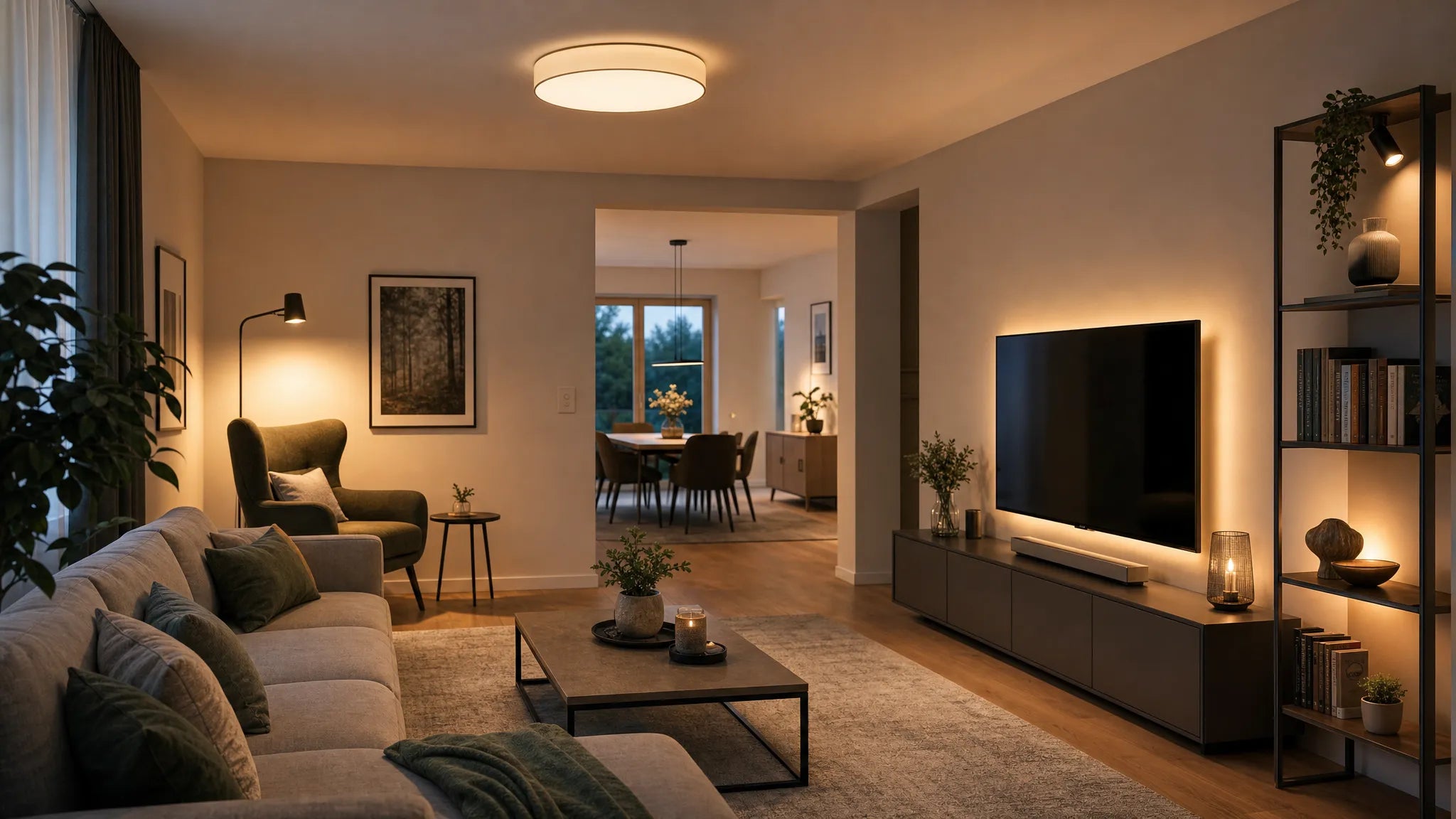
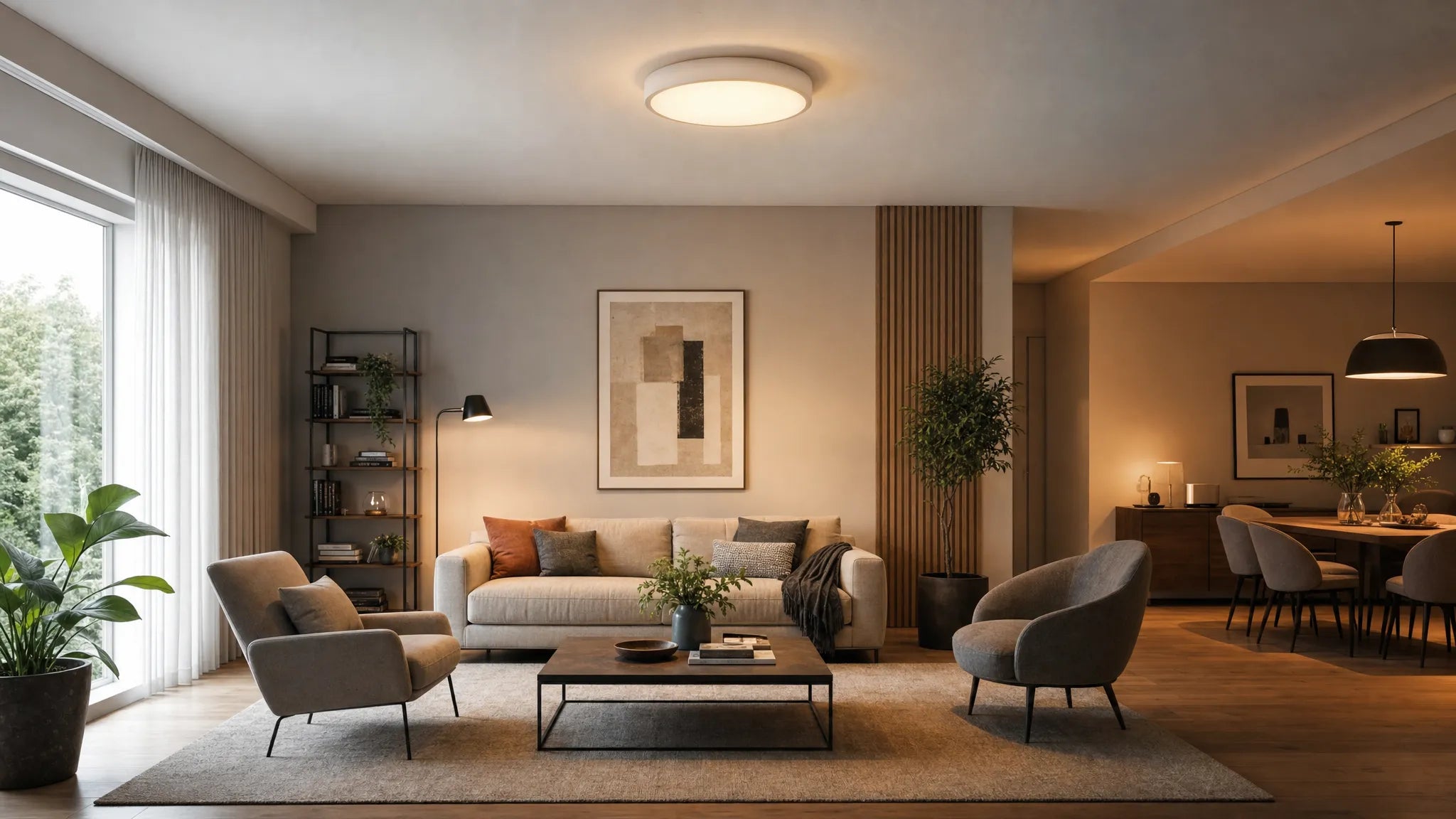
A white lamp should rarely be the only source of light in the living room. Combine them with floor or table lamps, indirect light or wall light. This creates islands of light that make the room more comfortable. A white ceiling light provides basic brightness, while smaller light sources create atmosphere.
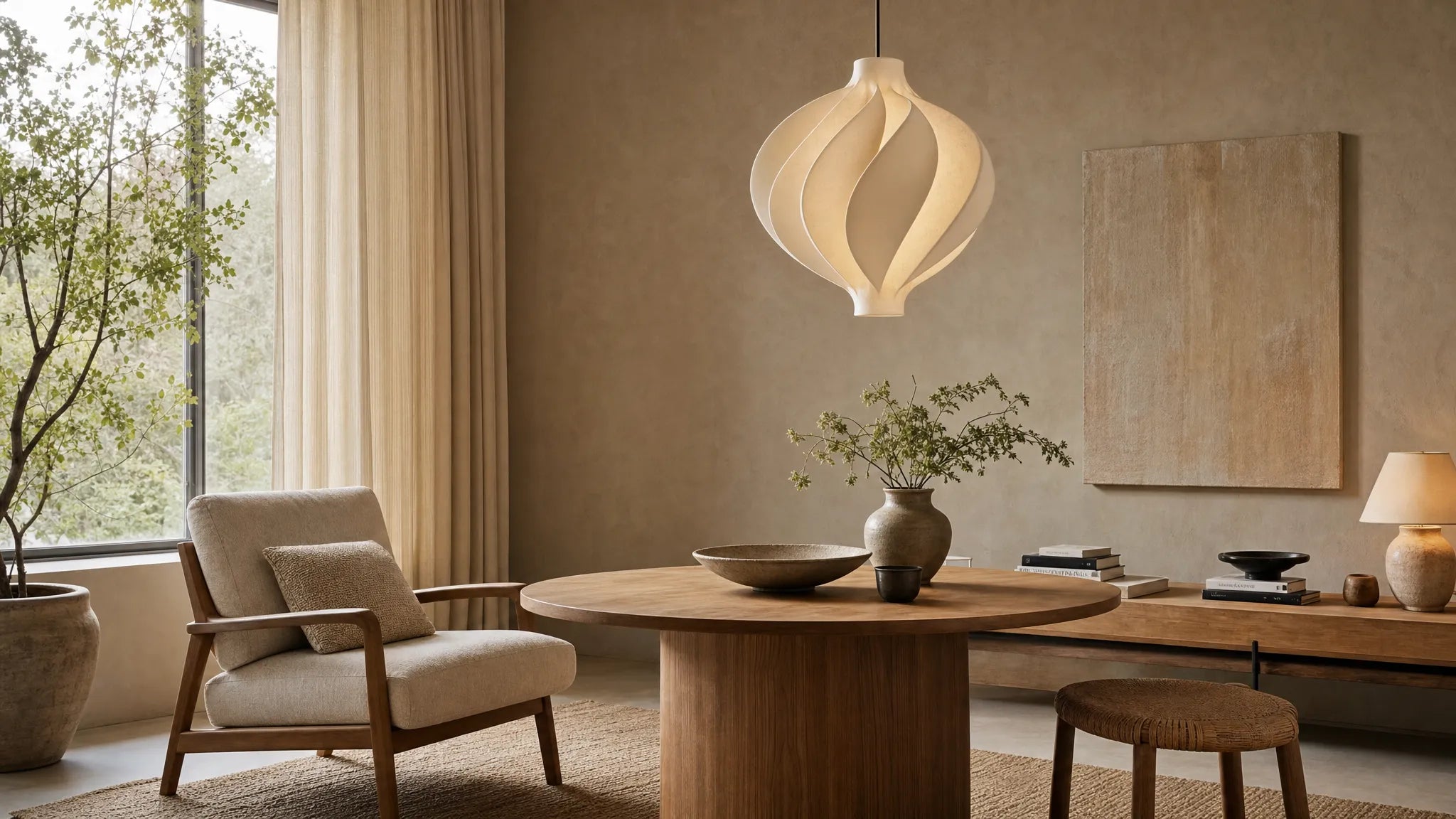
A white pendant light can be more present in the dining room. It looks particularly beautiful over a wooden table because the material balances the clear color. Make sure you have a comfortable height; a distance of around 60 to 75 cm between the table top and the lower edge of the lamp often works. For very high ceilings or large tables, an individual cable length can make sense.
White is practical in the kitchen because it goes well with light fronts, worktops and modern architecture. To prevent it from appearing sterile, warm accents help: wood, stone, ceramic, brass or a warm tile tone. Functional light can be a little clearer here, but should still not be uncomfortably cold.
In the bedroom, cream white or textile lamps are usually more pleasant than high-gloss white models. The light should be soft and glare-free. 2,200 to 2,700 Kelvin are very pleasant, especially in the evening.
Shape and proportion: White needs contour
Because white visually recedes, the shape of a white lamp can often be a little stronger. A sculptural white pendant light, a large opal glass ball or an organic shade look elegant without weighing down the room. This is precisely what makes white lamps interesting for modern interiors.
On the other hand, white lights that are too small disappear quickly. The lamp should have enough volume above a large dining table, in an open living area or in a high room. Otherwise it doesn't look elegant, but rather random. If you are unsure, a simple test can help: cut the planned diameter out of paper or mark it on the floor with adhesive tape. From a few meters away you can immediately see whether the lamp fits the room.
When it comes to ceiling lights, diameter, height and light distribution all come into play. A flat white lamp can be ideal in low rooms, while a pendant light creates more presence in high rooms. You can find practical measures in the guide Choose lamp ceiling.
Details such as cables and canopy also influence the effect. A white cable makes the lamp appear quieter. A black cable gives contour. A canopy in white appears reserved, a canopy in a contrasting color can deliberately be a design accent. For offset power outlets or special ceiling heights, an adapted solution is worthwhile.
Elegant combinations that almost always work
A white lamp can be interpreted in many different ways. These combinations are particularly reliable if you want the room to appear elegant and not cool.
- White lamp plus wood: Light wood looks Scandinavian, walnut looks more elegant, oak is the homely all-rounder.
- White lamp plus beige or greige: Ideal for quiet, modern rooms with a soft basic tone.
- White lamp plus brass: Brings warmth and value, especially in pendant lights and chandeliers.
- White lamp plus black: Very modern, but only used in doses, for example for cables, chair frames or picture frames.
- White lamp plus texture: Linen, bouclé, rattan, ceramic or structured plaster prevent sterile surfaces.
White is also a good strategic starting point for interior designers and renovation projects. A white lamp can exist in different style worlds, from Japandi to minimalism to modern classic. This means the room remains more flexible in the long term, even if furniture or wall colors change later.
Typical mistakes when combining white lamps
The most common mistake is not enough heat in the rest of the room. If the floor, wall, furniture and light source all seem cool, a white lamp cannot compensate. It then reinforces the objective mood.
Another flaw is lack of texture. Smooth white wall, smooth white lamp, smooth white furniture, that quickly appears flat. Matte surfaces, fabrics, wood grain, ceramics or textured walls make the room more lively.
Light that is too cold or too bright is also problematic. Many lights are bought based on their design, but in everyday life it is the light that makes the difference. A white lamp should not be blinding and should not have to illuminate every corner evenly. Comfort is often created through gradation: bright enough for function, soft enough for atmosphere.
Finally, size is often underestimated. White lamps appear lighter than dark models. That's why the diameter can sometimes be a little more generous without dominating the room.
Short buying checklist for white lamps
Before you buy a white lamp, it's worth a quick reality check. It saves you from making bad purchases and helps you choose the lamp that really suits the room.
| Question | Why it is important |
|---|---|
| Is the white tone pure, warm, cream or matt? | The tone decides whether the lamp appears clear or homely. |
| What color of light does the lamp or bulb have? | For living spaces, 2,700 to 3,000 Kelvin is usually ideal. |
| Is there glare from below or to the side? | Glare-free light appears higher quality and more pleasant. |
| Does the diameter match the zone? | White lamps should not be too small. |
| Is the light dimmable? | Dimming makes white lights much more comfortable in the evening. |
| Do the cables, canopy and suspension fit the ceiling? | These details determine a clean integration. |
| Are there warm materials in the room? | Wood, fabric, ceramic or brass prevent sterile effects. |
Frequently asked questions about white lamps
Which light color goes best with a white lamp? For living spaces, 2,700 to 3,000 Kelvin is usually ideal. In the bedroom it can be even warmer at 2,200 to 2,700 Kelvin. In the kitchen or bathroom, 3,000 to 3,500 Kelvin can make sense if more functional clarity is desired.
Does a white lamp on a white wall look boring? Not necessarily. It then appears particularly calm and architectural. So that it doesn't become flat, the shape, shadows, material or structure should be interesting, for example through opal glass, ceramic, linen or a sculptural silhouette.
Which materials make a white lamp more comfortable? Wood, linen, cotton, ceramics, rattan, natural stone and brass bring warmth. Matt surfaces also appear softer than high gloss.
Does a white lamp go with dark furniture? Yes very good. White lights can visually balance dark furniture and make the room lighter. The combination of white lamp, walnut, black detail and warm light is particularly elegant.
Are white lamps high-maintenance? Matte white surfaces often show dust less than glossy surfaces, but can be more sensitive to fingerprints. Regular dry or slightly damp wiping is sufficient for most materials. Always follow the manufacturer’s care instructions.
Which white lamp is suitable above the dining table? Good options include matte pendant lights, opal glass lights or modern white chandeliers. What is important is glare-free light, a suitable size for the shape of the table and a suspension that does not disrupt communication at the table.
Choose white designer lights to match the room
A white lamp looks elegant when it is not viewed in isolation. The decisive factors are white tone, surface, light color, proportion and the materials in the surrounding area. With warm white light, matt or textured surfaces and natural accents, white does not become cool, but calm, high-quality and timeless.
At BUYnBLUE you will find a curated selection of modern designer lights for different living areas. Particularly practical: pendants and chandeliers can be adapted free of charge to your room situation, for example in terms of cable length, canopy or color. This means that the lamp not only fits your home stylistically, but also technically and spatially.