Dimmable wall lights inside for atmospheric lighting zones
Dimmable indoor wall lights are one of the most elegant ways to make rooms not only brighter, but more conscious. In contrast to a single ceiling light, they direct light onto walls, niches, furniture and paths. This creates light zones that provide orientation in the morning, calm in the evening and provide functional additional light when required.
This type of planning is particularly worthwhile in open living areas, hallways, bedrooms and modern renovation projects. A dimmable wall light can remain discreetly in the background, accentuate a work of art, define a reading corner or serve as a soft night light. It's not just the light itself that's important, but the interaction between position, light color, dimming technology and furnishings.
Why side, dimmable light changes rooms
Wall lights have a different effect than light from above. They illuminate vertical surfaces, such as walls, curtains, shelves or structured surfaces. It is precisely these lighter wall areas that the eye notices strongly. This can make a room appear more spacious, deeper and more homely, even if the actual light output remains moderate.
Dimming makes this effect flexible. When tidying up, the lighting can be brighter; when having dinner or watching TV, a lower light level is often sufficient. In the hallway, a dimmed wall light provides orientation without causing glare at night. In the bedroom, it replaces harsh general lighting with a calm, sidelight.
If you would like to get into the topic even more fundamentally, the BUYnBLUE-Contribution to Wall lights provide inviting light from the side a good overview of areas of application, assembly and style variants.
Plan light zones: first use, then light
Before you decide on the shape, color or material, you should clarify what task the wall light will perform. A light zone is more than a corner with a lamp. It describes a specific use in the room, such as reading, arriving, relaxing, presenting or guiding safely.
In practice, a simple question proves itself: What mood or function exactly should this wall create? This determines whether the light should fall directly downwards, indirectly upwards, diffusely to the side or specifically on an object.
| Space zone | Aim of lighting | Effect of dimming | Planning tip |
|---|---|---|---|
| Sofa or lounge area | Relaxing, conversations, movie night | From soft background light to brighter everyday light | Place glare-free lights to the side or behind the seating area |
| Hallway and entrance area | Orientation and friendly welcome | Low brightness in the evening, more light when you arrive | Distribute several lights evenly instead of choosing one very bright light |
| bedroom | Quiet atmosphere, reading, night light | Plan to be very finely dimmable, especially for late hours | Make switches or dimmers accessible from bed |
| Dining area | Depth and atmosphere around the table | Complements pendant or ceiling light without competition | Align wall lights on a sideboard, mural or structural wall |
| Stairs | Safety and spatial impact | Dimmed orientation light for night and evening | Pay attention to even distances and glare-free viewing directions |
| Home office | Concentration and balance from screen work | Adaptation to the time of day and work mode | Lateral, indirect light can reduce harsh contrasts |
This planning also helps with the question of whether a single light is sufficient or whether several wall lights work better. In long hallways, wide living walls or stairwells, a series is often quieter and of higher quality than a single, very bright light point.
Dimming technology: Not every beautiful wall light can be dimmed automatically
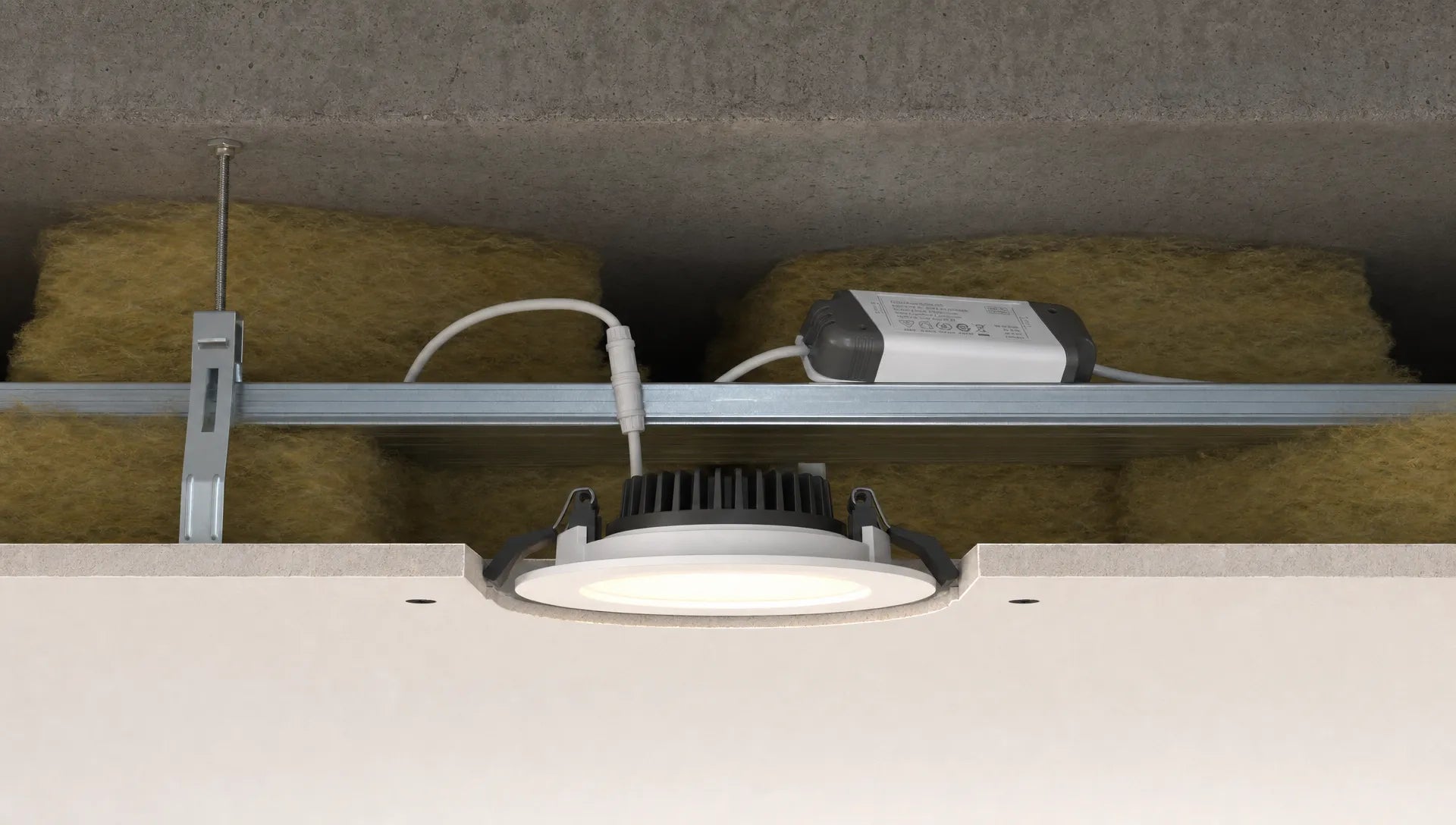
With dimmable indoor wall lights, the technology decides whether the light zone will actually work pleasantly later. The compatibility between the light, LED driver, light source and dimmer is particularly important.
For wall lights with permanently installed LEDs, the ability to dim depends on the integrated driver. For lights with replaceable bulbs, the bulb itself must be dimmable and the existing wall dimmer must match. Common terms include phase control, phase control, touch dimmer, radio dimmer or smart control. If these components don't fit together, LEDs can flicker, hum, dim only in a small area, or fail prematurely.
Before you buy, clarify as specifically as possible:
- According to the manufacturer, is the desired wall light suitable for dimming?
- Which type of dimmer is recommended?
- Should it be controlled via a wall dimmer, switch, remote control, app or smart home system?
- Are there several lights on a circuit that are dimmed together?
- Should the light remain stable and flicker-free even at very low brightness?
A qualified electrician should always be involved in new installations or changes to fixed power connections. This is not only a safety issue, but also prevents planning errors that are expensive or difficult to correct later.
Mounting height and distance: Small differences, big impact
The best wall light loses its effect if it is installed too high, too low or in the wrong direction. As a rough guide, wall lights in living areas are often planned with the center of the light at approximately eye level. This can vary depending on the room, type of light and usage.
| Location | Often appropriate orientation | What you should pay attention to |
|---|---|---|
| Living room wall | Light center often about 150 to 170 cm above the ground | Do not shine directly into seated people |
| bed side | Depending on the bed height and reading position, often lower than in the living room | Plan switches to be easily accessible |
| hallway | Uniform height along the running zone | Do not place a light at shoulder height in narrow spaces |
| Staircase area | Orientate yourself along the running line | Avoid glare when climbing up and down |
| About sideboards | Pay attention to the proportions of the piece of furniture | Do not aim the light cone too hard at shiny surfaces |
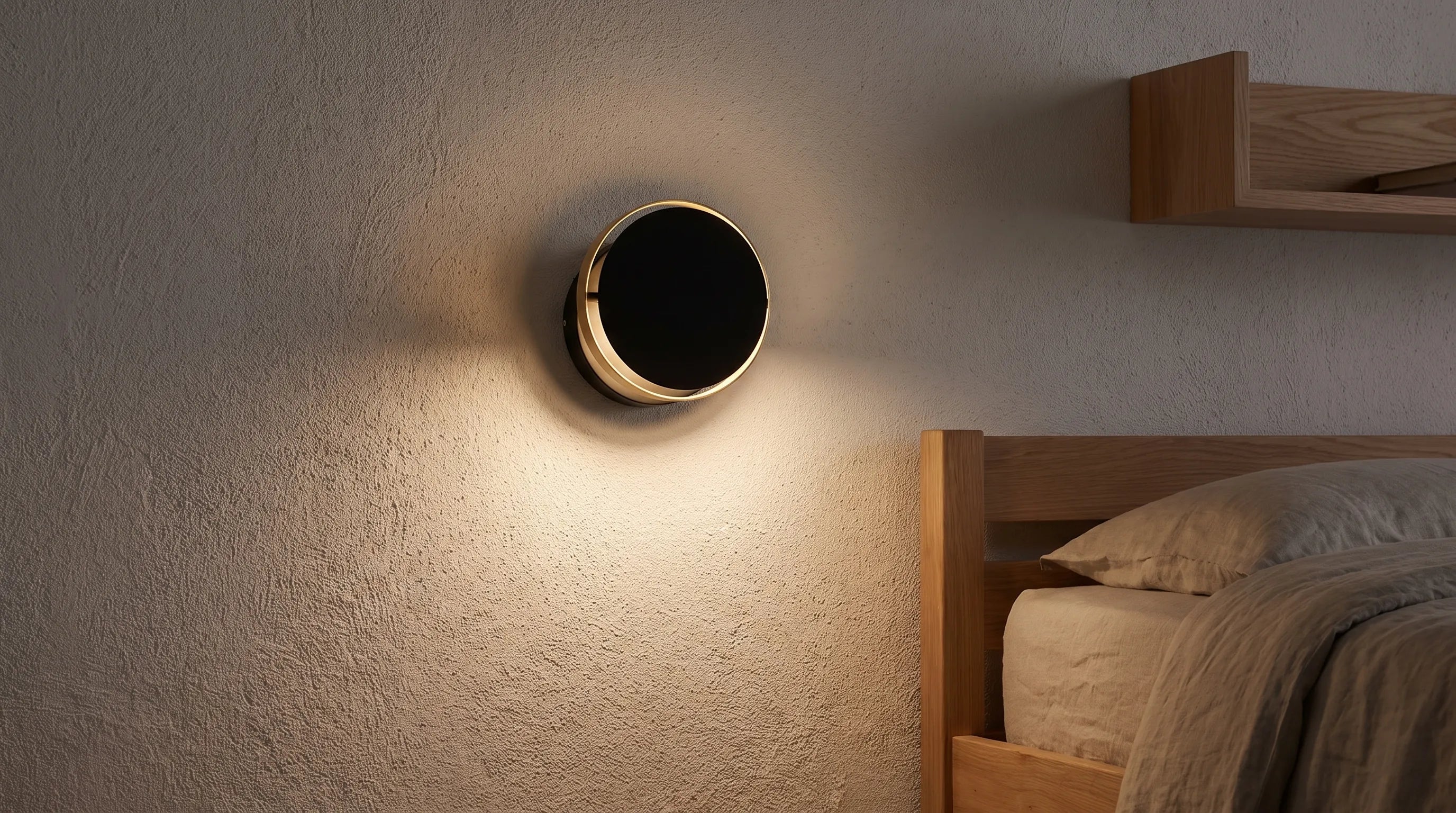
For clear wall surfaces, modern hallways or reduced living areas, a strong but not overloaded luminaire can work particularly well. The Royal Semina wall light relies on clear shapes, a modern, unusual design and a simple, minimalist effect. Such designs work well if the light zone should remain architecturally calm and the wall itself is part of the design.
It is important to always check the technical dimmability specifically for your planned installation. Design, lighting effect and control should be considered together.
Light color: Mood is not just created by brightness
Dimming reduces the amount of light. The light color also determines whether a zone appears cozy, functional or fresh. For living spaces, many people prefer warm white light in the range of around 2700 to 3000 Kelvin. For a particularly relaxed evening atmosphere, an even warmer impression can be pleasant, especially if the light emits indirect light.
In work areas or hallways, a more neutral white can be useful as long as it doesn't look cold or uncomfortable. Color rendering also plays a role for art, wood, textiles and decorative surfaces. A high color rendering index makes materials appear more natural, which can be clearly visible in high-quality interiors.
The dimming behavior itself also influences the atmosphere. Some LED systems remain the same color when dimmed, others become warmer when the brightness decreases. The latter is reminiscent of classic incandescent lamps and can be very pleasant for living rooms and bedrooms.

Style and form: The wall light as part of the architecture
Dimmable indoor wall lights are not just technical light sources. They shape the wall design even when switched off. Therefore, the shape should match the architecture and furnishings.
Minimalist lights work particularly well in quiet, modern rooms with clear lines. Round, organic or sculptural shapes create accents and can function as decorative objects. Metallic surfaces often suit urban or elegant interiors, while matt colors, wooden details or soft lines create a more homely effect.
Anyone who wants to combine Nordic simplicity with a special eye-catcher will find it in the Nordic Sia wall light an interesting example. Their spiral-shaped look brings movement to the wall, but remains easy to combine thanks to the Nordic, reduced design language. When planning lighting zones, such a luminaire can be particularly impressive where not only light but also a design accent is required.
If you have eye-catching shapes, make sure that they have enough space. A decorative wall light appears stronger when it is not squeezed between shelves, pictures and furniture edges.
Combine wall lights with ceiling, floor and pendant lights
The most beautiful lighting atmosphere is rarely created by a single lamp. Interiors appear balanced when multiple light sources perform different tasks. Ceiling lights provide basic brightness, pendant lights emphasize table areas, floor lamps create cozy islands, and wall lights connect these levels across the vertical surface.
For a living room, this can mean: the ceiling light remains switched off or heavily dimmed during a movie night, while wall lights bring gentle brightness to the wall. When reading, a floor or table lamp complements the zonal light. For guests, several light sources are combined in a moderate manner so that the room appears lively without becoming bright.
If you specifically want to work with soft wall and ceiling reflections, see the post on indirect lighting in the living room further ideas for lighting mood, zoning and cozy transitions.
| Scene | Ceiling light | Wall lights | Complementary lights |
|---|---|---|---|
| Movie night | Off or very low | Warm and dimmed low | Small table lamp or floor lamp |
| Guest evening | Medium light | Accents on walls | Pendant light over table or sideboard light |
| Read | Low to medium | As a background light | Directional reading light |
| Night way | Off | Dimmed very low | No or only indirect additional source |
| Cleaning | Bright | Bright or neutral | Additional work light if required |
Room by room: Where dimmable wall lights are particularly useful indoors
Wall lights create depth in the living room. They can divide a long wall, frame a sofa or highlight a sideboard. Especially in open floor plans, they help to visually separate areas without creating structural boundaries.
In the hallway, wall lights improve orientation and first impressions. Since hallways are often narrow, low-glare light is particularly important. Several weaker wall lights usually have a higher quality effect than a single bright point of light.
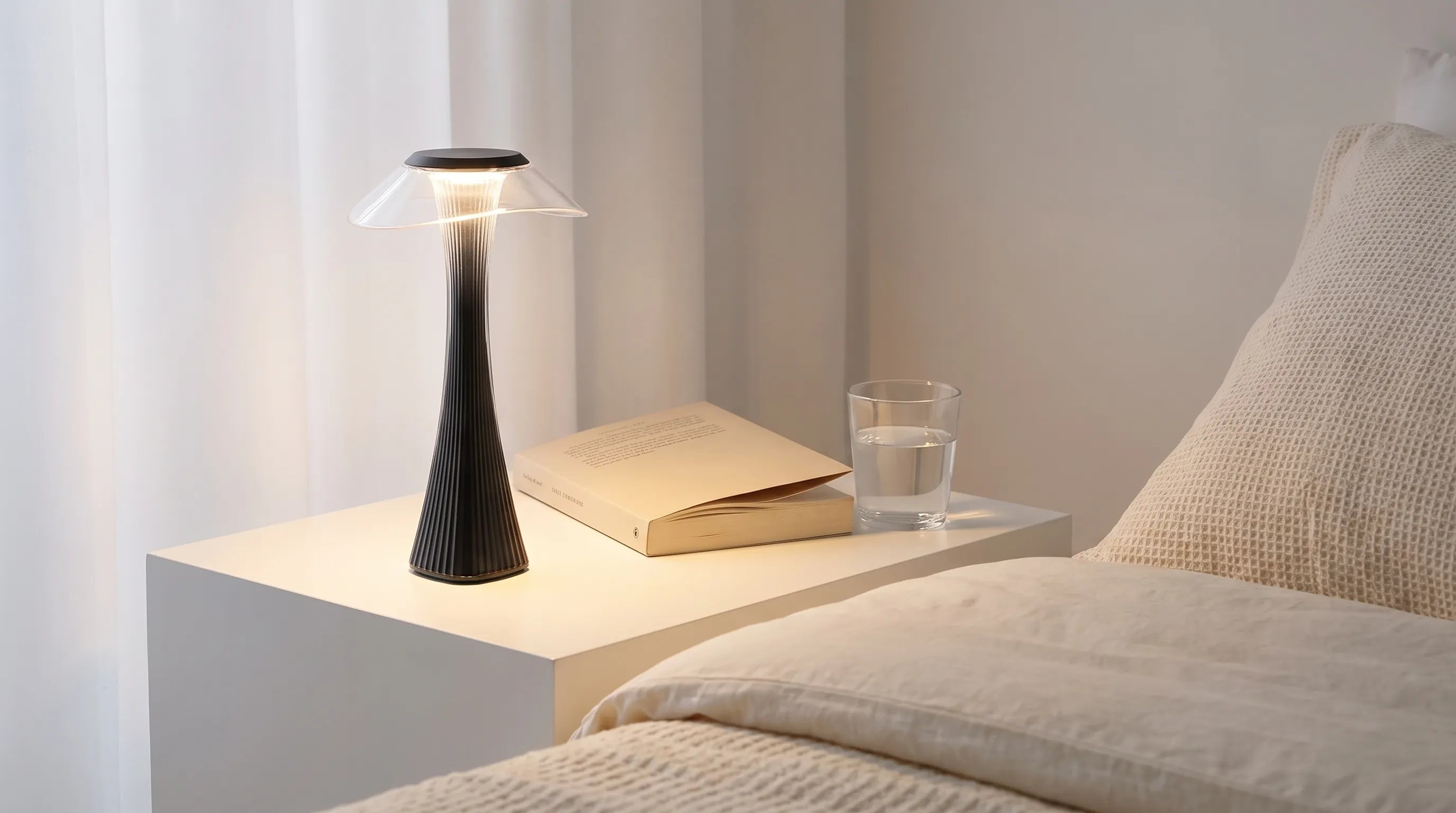
Dimmable wall lights are ideal in the bedroom if you want to support a quiet evening routine. Side light on the bed can replace or complement bedside lamps. It is important that it is convenient to use so that the light does not have to be laboriously switched off at the door.
In the dining area, wall lights are suitable as an atmospheric complement to the pendant light above the table. They prevent the room outside the table from appearing dark. This creates a harmonious transition, especially in open living-dining areas.
Wall lights can also be interesting in the bathroom, for example next to the mirror or as soft additional light. However, special safety requirements apply here with regard to moisture and protected areas. Therefore, have the planning checked professionally and only choose suitable lights for the respective area.
Common mistakes with dimmable wall lights
Many problems arise not from bad lights, but from incomplete planning. You should avoid these mistakes:
| Error | Possible consequence | Better solution |
|---|---|---|
| Dimmability not tested | Flickering, humming or no dimming function | Before purchasing, clarify the compatibility of the lamp, bulb and dimmer |
| The light color chosen was too cold | Room appears matter-of-fact or uncomfortable | For living areas, usually plan warm white |
| Luminaire dazzles at eye level | Unpleasant light when sitting or walking | Test the beam direction and mounting height |
| Just one light source in the room | Flat, inflexible lighting | Combine multiple light zones |
| Too small a light on a large wall | Design seems lost | Pay attention to the proportions of the wall, furniture and room height |
| Switch inconveniently placed | Light is rarely used in everyday life | Plan operations based on real walking routes |
A good practical test is to imagine a normal daily routine. Where do you enter the room? Where are you sitting? When do you want bright light, when just a soft glow? If the wall lights support these situations, the planning is suitable for everyday use.
Buying advice: What you should pay attention to before ordering
When it comes to dimmable indoor wall lights, three levels count: lighting effect, design and installation. A luminaire should fit the wall, create the right atmosphere and be technically compatible with the existing or planned control system.
Also check the size of the light in relation to the wall. Small lights can be perfect in niches or next to the bed, but lost on a large living room wall. Conversely, a very prominent wall light can quickly dominate a narrow hallway.
The surfaces in the room are also relevant. Light walls reflect more light and often make dimmed lighting appear softer. Dark walls absorb more light, but create a particularly elegant, intimate atmosphere. Shiny surfaces can cause reflections, which is why diffuse or indirect radiation is more pleasant.
When wall lights are combined with pendant lights or chandeliers, it is worth taking a look at the proportions and hanging heights. BUYnBLUE offers free customization for chandeliers and pendant lights, for example in terms of length, canopy or color. This means that the overall lighting can be better tailored to the room height, furniture and style.
Frequently asked questions
Are dimmable wall lights suitable for indoor use as the main light? Depending on the light output, they may be sufficient in small rooms or hallways. They are usually most prominent in living and dining areas as part of a lighting concept with ceiling, pendant, table or floor lamps.
Which light color is best for wall lights in the living room? For cozy interiors, warm white light is often preferred, around 2700 to 3000 Kelvin. For a particularly calm evening atmosphere, an even warmer effect can be pleasant.
Why does a dimmable LED wall light flicker? This is often due to a lack of compatibility between the LED, driver and dimmer. A minimum load that is too low or an unsuitable type of dimmer can also cause flickering.
How many wall lights do I need in a room? This depends on the size of the room, the length of the wall and the desired effect. One light is often enough for a lighting zone; for long hallways or large wall surfaces, several evenly placed lights have a more harmonious effect.
Can I use wall lights in a rented apartment? Permanently connected wall lights require suitable wall connections and should be installed professionally. In rental apartments, it usually makes sense to coordinate with the rental agency before making any structural changes.
Stylish lighting zones with BUYnBLUE plan
If you use dimmable wall lights indoors, your rooms will gain depth, comfort and flexibility. What is crucial is a well-thought-out interaction between the lighting zone, dimming technology, assembly and design.
At BUYnBLUE Find a curated selection of modern designer lights for different living areas, including secure payment options, free worldwide shipping, real-time order tracking, 24/7 customer service and 14-day return policy. This means you can choose your lighting not only stylishly, but also to suit your room concept.