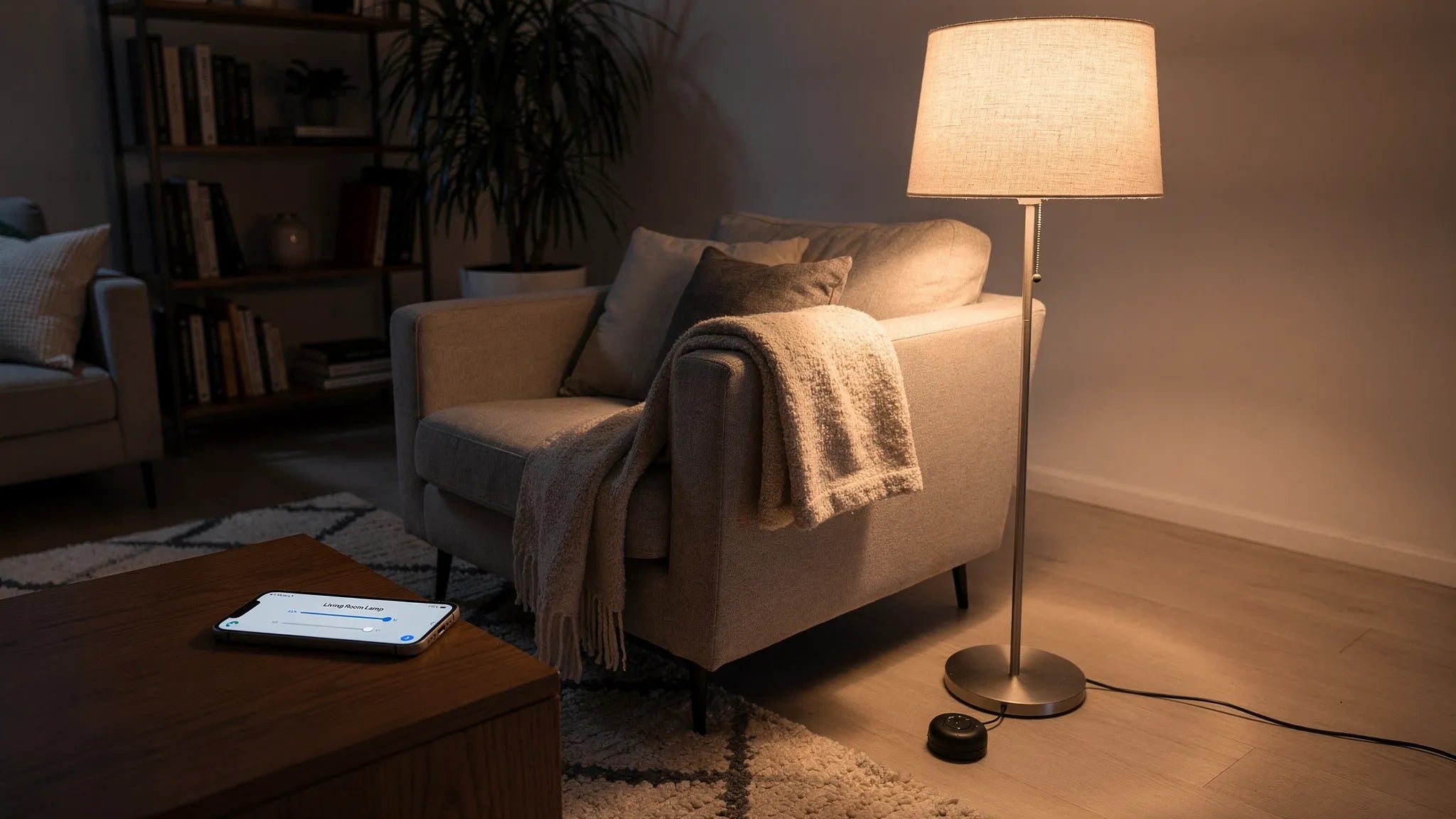
Buy a designer lamp: check the material, details and proportions
A designer lamp can shape a room concept for years, or disappoint after a few months due to wobbly details, visible material defects or incorrect proportions. Who one Buy designer lamp If you want to, you should not just decide based on style, but also pay particular attention to material quality, workmanship and scale. It is precisely these three points that distinguish a “beautiful picture in the shop” from a long-lasting design object that impresses in everyday life.
1) Check the material: Anything that feels high quality usually lasts longer
When it comes to designer lights, the material is more than just looks. It influences stability, maintenance effort, lighting effect (reflection, glare) and aging (patina, scratches, yellowing).
Metal: Solid, coated, brushed or just thinly painted?
Metal is particularly common in modern lighting, but the differences in quality are large.
- Stainless steel scores with corrosion resistance, high dimensional stability and a high-quality feel. It is particularly suitable for clear, minimalist lights and for rooms where humidity plays a role.
- Aluminum is light and enables delicate constructions. It looks particularly high-quality when edges are cleanly deburred and surfaces are evenly anodized or coated.
- Brass (or brass-colored surfaces) looks warm and elegant. Pay attention to whether it is solid brass, an alloy or just a coating, as this affects scratch sensitivity and patina.
Practice check: Run your finger over edges and transitions (if possible). When well made, edges feel clean, without sharp burrs, and the surface appears uniform without “clouds” or color differences.
Glass: Opal, clear, fluted, hand-blown
Glass determines how “soft” or “brilliant” light appears.
- Opal glass diffuses light, reduces glare and creates a calm, homely light area.
- Clear glass shows illuminants and reflections more strongly. This can be deliberately decorative, but requires more care when choosing the light source and positioning it.
- Handcrafted or mouth-blown glass can have slight variations that just define the character. It is important that these variations are recognized as a craftsmanship feature, not as a production defect.
If you are interested in artisan glassware: BUYnBLUE also sheds light on the topic in the article hand-blown lamp glass from Germany.
Wood, stone, textile: atmospheric, but more maintenance-intensive
- Wood looks warm and goes well with Japandi, Scandi or soft minimalism. Make sure the seal is clean so it doesn't get stained.
- Natural stone (e.g. marble look) is a strong statement, but quickly seems “heavy”. Proportions and suspension are crucial here.
- Textile umbrellas are acoustically and atmospherically pleasant, but attract dust. The fabric tension and clean seam patterns are important quality features.
Quick material comparison (for the purchase decision)
| material | Typical strengths | Typical weaknesses | What to pay attention to when buying? |
|---|---|---|---|
| Stainless steel | Robust, low-corrosion, high quality | Fingerprints depending on finish | Even finish, clean welds/transitions |
| Aluminum | Lightweight, delicate shapes possible | Dents/scratches depending on thickness | Clean edges, even anodized/powder coating |
| Brass / warm metal finish | Noble appearance, homely | Coatings can be sensitive | Is it solid or coated? Care instructions |
| Opal glass | Low glare, soft light | May have less sparkle | Uniform glass thickness, clean fit in the frame |
| Textile | Very homely, decorative | Dust, possibly yellowing | Tension, seams, inner coating to prevent show-through |
2) Check details: workmanship, technology and “invisible” quality features
Many disappointments arise not from the design, but from details: rattling frames, poor finishes, impractical assembly or blinding light.
Processing: transitions, gaps, symmetry
A designer lamp appears high-quality if its geometry is “right”.
Pay particular attention to:
- Symmetry: For multi-armed lights, the distances and angles should be visibly consistent.
- gap dimensions: Irregular joints between glass and metal quickly appear cheap.
- Surface consistency: Gloss level and color should appear the same across all components.
Suspension and canopy: The most common practical stumbling block
Especially with pendant lights, the ceiling area determines the overall impression.
- Canopy (ceiling rosette): Does it match the ceiling, the cable and the light, or does it seem like a foreign body?
- Cable and strain relief: The cable should not “kink” and be routed cleanly.
- Cable length: Many lights look perfect in the catalog, but are too long or too short for your ceiling height.
BUYnBLUE offers a concrete advantage here: Chandeliers and pendant lights can be customized for free, for example at Cable length, canopy or colorso that the lamp really fits the room situation.
Light quality: Not only beautiful, but also pleasant
A designer lamp is a design object, but it remains a lighting tool. Parameters that are not given enough attention in many shops are therefore crucial:
- Color temperature (Kelvin): Warm white areas often make sense for residential areas, while neutral white is more useful for functional zones. You can find an understandable classification in the guide What is Kelvin?.
- Color rendering (CRI/Ra): The higher, the more natural colors of furniture, art and skin tones appear.
- Glare: Clear glass plus visible bulbs can look great, but can quickly dazzle. Opal diffusers, reflectors or deep-seated bulbs help.
If you want to safely dimension the brightness, this post will be helpful: LED lighting: This is how you calculate lumens per m² correctly.
Safety and compliance: CE, energy label, manufacturer information
For lights, the “paper layer” should be right, especially if you are ordering internationally or planning projects.
- CE marking is relevant for many products in the EU; it signals that the manufacturer complies with EU requirements.
- The EU energy label is also an important orientation system for light sources. The EU Commission provides official information on the energy label and the EPREL product database.
- RoHS (Restriction of Hazardous Substances) is another standard in the electronics sector. Details can be found at the EU Commission RoHS directive.
The goal is not to “collect paragraphs”, but rather to avoid risks: missing information, unclear components or incorrect electrical specifications are typical warning signals.

3) Check the proportions: This is how the lamp really looks right in the room
Proportions are the most common reason why designer lights appear “wrong” in real rooms: too small, too dominant or at the wrong height.
Scale: Lamp, furniture and room must fit together
A lamp should relate to an element, for example a dining table, coffee table, kitchen island or seating area.
- Above one Dining table A lamp that is too small will quickly appear lost, while one that is too large will destroy the table.
- In Living room The following applies: It is better to have several points of light and a harmonious gradation of size, rather than just one central object without reference.
There is already a separate one for very specific size considerations BUYnBLUE-Guide: Lamps in the right size for every room.
Height: The “designer look” often depends on a few centimeters
Pendant lights in particular tend to tip over quickly if the suspension is not correct.
- Too deep: acts like an obstacle, disrupts lines of sight.
- Too high: the light loses its zone effect and the table “stands in the dark”.
When it comes to the dining area, this article will help with practical planning: Find the optimal lamp for the dining table.
Shape and viewing angle: Round, linear, multi-flame
- Round lights harmonize with round tables and soft floor plans.
- Linear pendant lights go well with long tables, kitchen islands and clear axes.
- Multi-flame clusters are ideal if you want to “use” ceiling height and room volume, but they require precise planning (distances, cables, canopy).
Tip for renovators and planners: Do a quick “proportion test” with painter’s tape on the floor (for floor lamps) or with a cardboard template on the ceiling (for ceiling and pendant lights). This way you can see whether the diameter and position are correct before you buy.
4) Mini pre-purchase checklist (without technical studies)
When you buy a designer lamp, a few targeted questions are often enough to avoid making the wrong purchase:
- Material honestly described? (solid vs. coated, type of glass, care)
- Surfaces processed cleanly? (edges, transitions, uniformity)
- Light information understandable? (Lumen, Kelvin, CRI, dimmable yes/no)
- Installation realistic? (weight, ceiling, canopy, cable length)
- Proportions tested? (Relation to furniture, height, lines of sight)
- Service clarified? (Shipping, returns, support, adjustments)
Frequently asked questions (FAQ)
How do I recognize a high-quality designer lamp online without touching it? Pay attention to clear material information, detailed photos (canopy, transitions, socket), technical data (lumens, Kelvin, CRI) and comprehensible information on returns and support.
Is “metal” sufficient as a material indication? No. The decisive factors are the type of metal (e.g. stainless steel, aluminum), wall thickness, surface treatment (powder-coated, anodized, brushed) and the quality of workmanship on edges and transitions.
What role does proportion play in a designer lamp? A very large lamp can enhance a room, but can also overwhelm it. A light that is too small quickly appears random. Proportions determine whether the lamp feels like an integrated part of the design.
Can I have the cable length and canopy adjusted later? Depending on the light, this is possible, but the easiest way is to clarify these points before purchasing. At BUYnBLUE can pendant lights and chandeliers according to the offer customized for free (e.g. cable length, canopy, color).
How important is the light color (Kelvin) in designer lights? Very important. It influences the material effect (wood warmer, white tones cooler) and well-being. Warm white is often pleasant for living areas, while neutral white makes sense for work areas.
Conclusion: Design is the choice, material and proportions are the obligation
If you choose a designer lamp based solely on its shape, if in doubt, buy a decorative piece. If you material, Details and Proportions Check carefully, invest in a long-lasting design object that impresses both visually and functionally.
Found a designer lamp but unsure about the height, canopy or color?
At BUYnBLUE many can Chandeliers and pendant lights customized free of charge (e.g. cable length, canopy, color). Come to this free shipping worldwide, 14 days return and support.
Browse the collection of modern lights BUYnBLUE Or, before you buy, have a quick check to see which version really works well in your room.