Choose the right lamp light for your mood and function
A lamp is bought quickly. But good light only comes about when the luminaire, light source, room size, use and mood all fit together. This is exactly where the difference lies between a room that is just bright and a room that feels pleasant, high quality and functional.
In everyday life, everything is often referred to as a “lamp”. Technically, the lamp is the visible body, i.e. pendant lamp, ceiling lamp, Floor lamps or wall light. The bulb produces the light, today mostly LED. This distinction is helpful for home planning, because a beautiful lamp can still provide unsuitable light if the brightness, light color or radiation are not right.
If you want to choose the right lamp and light, you should not start with the design, but with a simple question: What should happen in this area? Eating, reading, cooking, relaxing, putting on make-up, working or just arriving? Only when the lighting task is clear can the appropriate shape, size and technical equipment be sensibly selected.
The most important rule: think mood and function separately
A common mistake in living spaces is expecting a single ceiling light to do everything. It should be bright enough for cleaning, comfortable for the sofa, glare-free when watching TV, decorative for guests and practical for reading. This rarely works.
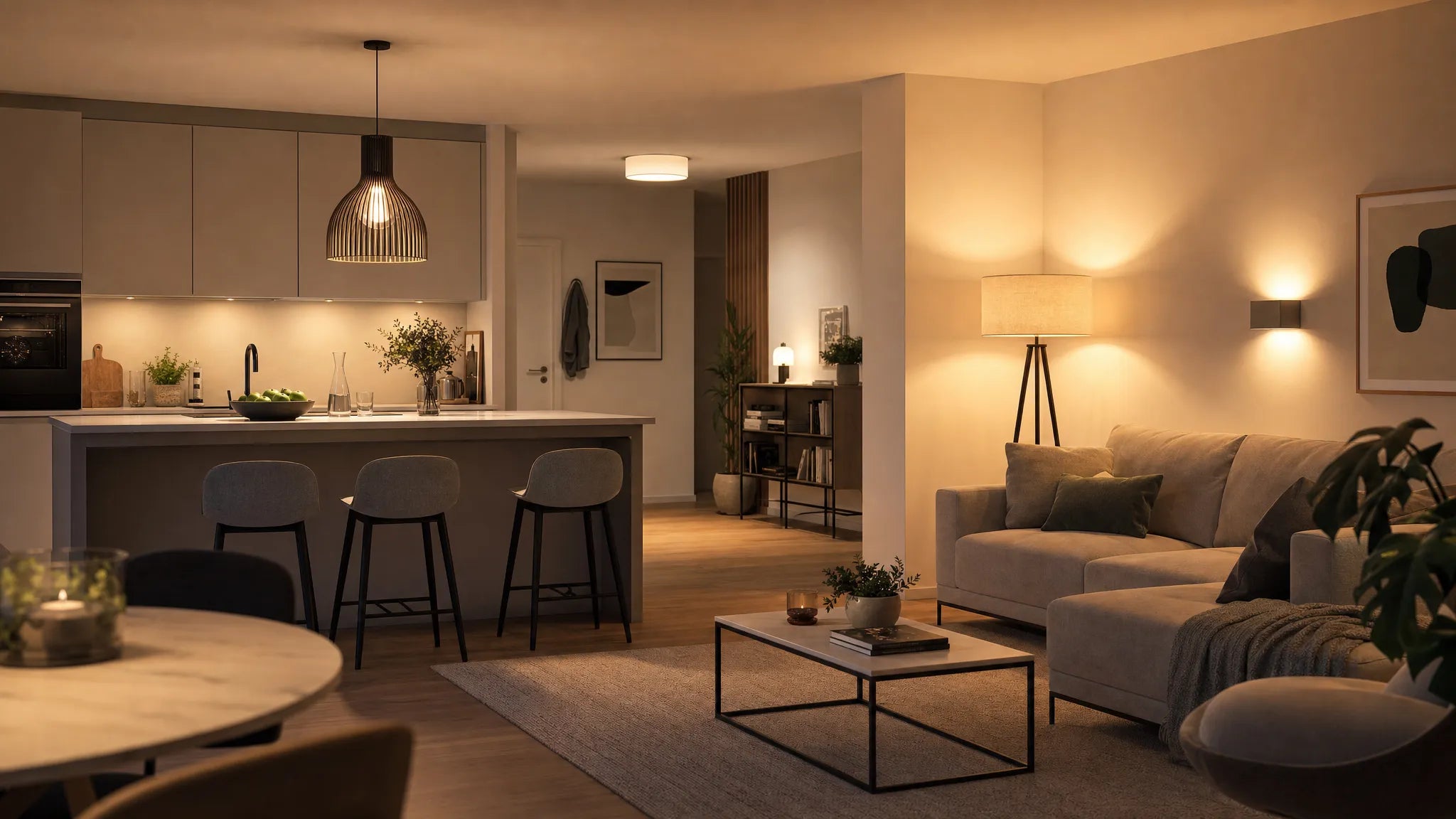
A lighting concept consisting of several levels is better. Functional light ensures that you can see well and act safely. Mood lighting creates depth, warmth and atmosphere. Both tasks may overlap, but should not depend entirely on one light.
In practice this means: A pendant light above the dining table can be an atmospheric eye-catcher, while an additional one Floor lamps or wall light in the living room provides readable, directed light. A kitchen island needs precise lighting, while indirect light under shelves or on the wall makes the hard work area more homely.
Lumen, Kelvin, CRI: These values determine the lighting effect
When buying, people often still think in terms of watts. However, with LED lighting, watts is primarily an indication of power consumption, not perceived brightness. The luminous flux in lumens is more important. Kelvin is important for the color of light, and the color rendering index CRI or Ra is important for natural colors.
The following table helps as a quick guide:
| Value | What it means | Good orientation for living spaces |
|---|---|---|
| Lumens | Indicates how much light a lamp emits | The larger or darker the room, the more lumens are required |
| Kelvin | Describes the light color from warm to cool | 2200 to 2700 K cozy, 3000 K homely and clear, 4000 K functional |
| CRI or Ra | Shows how natural colors look | At least 80, for kitchen, bathroom, art and high-quality materials better 90 or more |
| Beam angle | Determines whether light is distributed broadly or specifically | Wide for basic light, narrower for accents and work areas |
| Dimmability | Allows flexible brightness depending on the situation | Particularly useful in living rooms, dining rooms and bedrooms |
If you would like to understand the technical basics in more detail, this will help BUYnBLUE Guide Understanding light lamp with an in-depth explanation of lumens, Kelvin, CRI and dimmability.
Energy efficiency also remains relevant. The Federal Environment Agency recommends LED lighting as an efficient alternative to older lamps because, if you choose well, it uses less power and can be long-lasting. What is important, however, is that efficiency is not a substitute for lighting planning. An economical lamp in the wrong place still looks uncomfortable or impractical.
Plan light in three levels
A harmonious room rarely needs more brightness, but rather better distributed light. It is worth thinking in three types of light.
Basic lighting provides orientation. It often comes from ceiling lights, recessed lights, larger pendant lights or indirect light sources. It doesn't have to be bright, but rather uniform enough so that the room can be safely used.
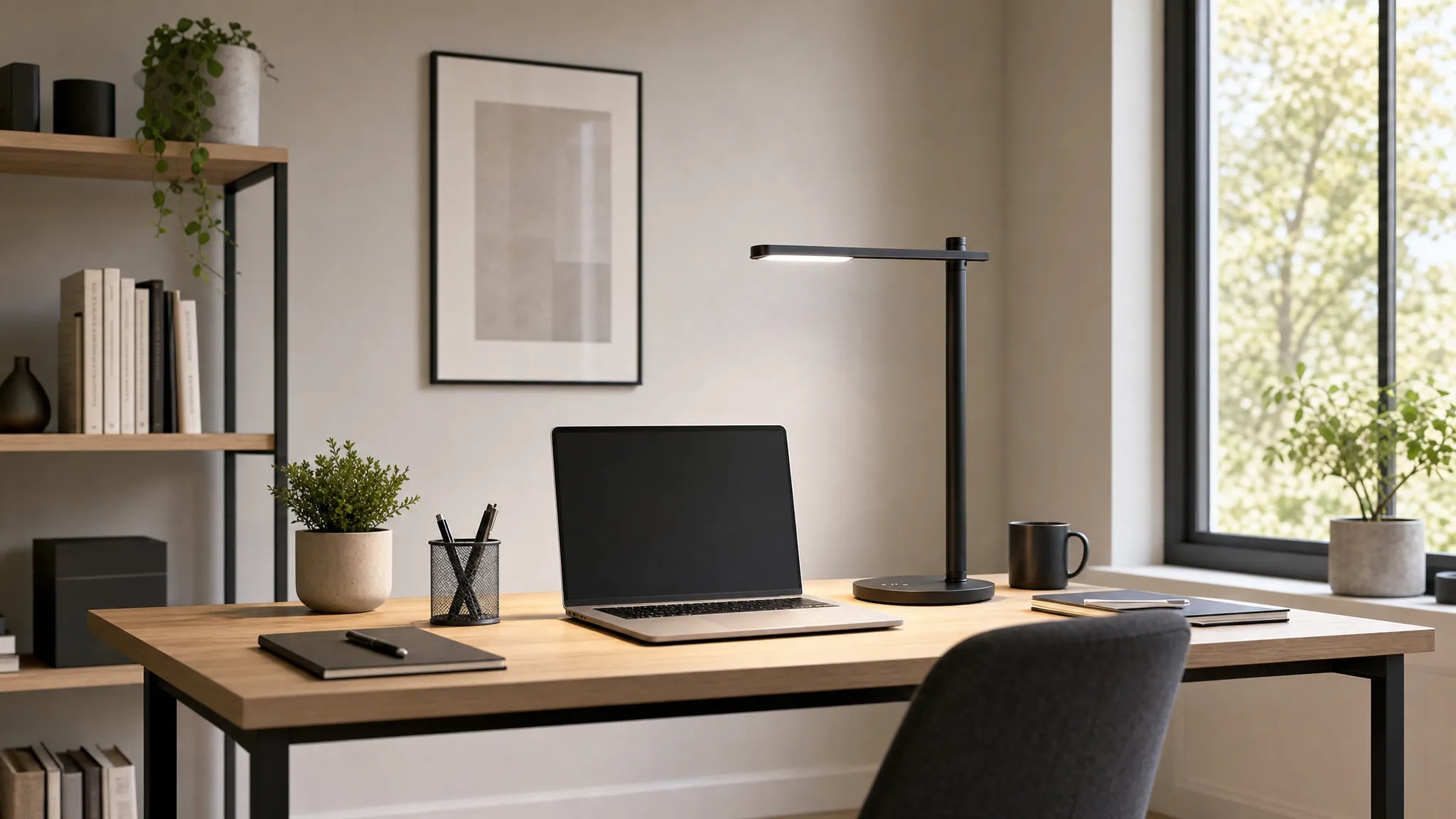
Zone lighting supports specific activities. These include reading lamps, pendant lights over dining tables, light over kitchen work surfaces, mirror lights in the bathroom or a desk lamp in the home office. Here precision counts more than decoration.
Accent lighting brings atmosphere. It draws the eye to art, plants, niches, wall structures or special furniture. Accents make rooms come alive because they create contrasts. Without accent lighting, even expensive interiors often appear flat.
This division is particularly valuable for renovations. If you're planning new sockets, ceiling outlets or switches anyway, you shouldn't just consider the middle of the room. Light is needed where people sit, work, cook, read or use paths.
Room by room: Which lamp needs which light
Each room has a different mix of function and mood. The following values are not rigid standards, but rather practical orientation. Dark wall colors, high ceilings, matte shades or large rooms may require more light output.
| space | Light target | Useful types of lamps | Light color and hints |
|---|---|---|---|
| Living room | Relax, read, receive guests | ceiling light, Floor lamps, Wall lamp, table lamp | 2200 to 3000K, multiple dimmable light points instead of one strong source |
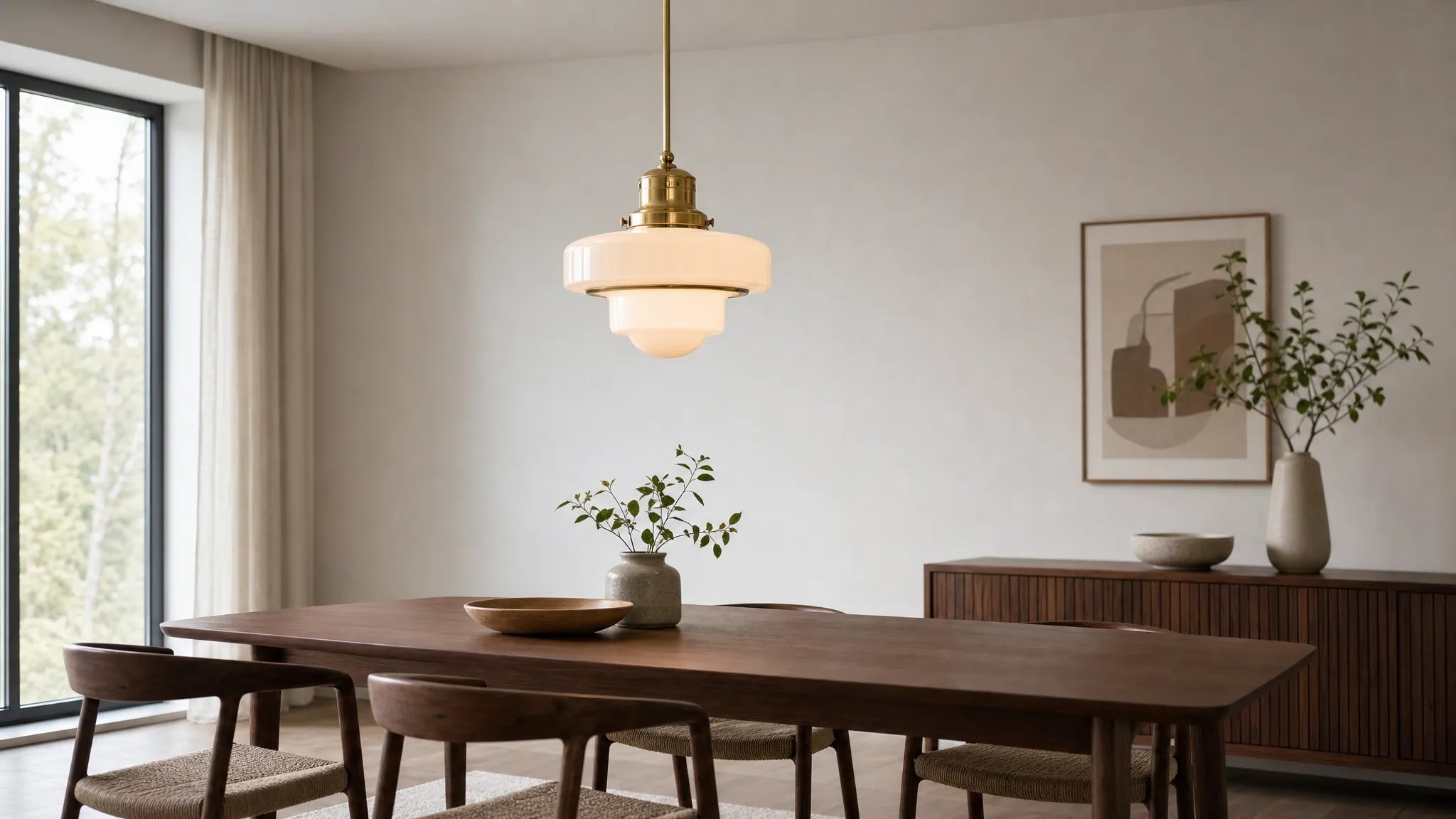
| Dining room | Stage the table, illuminate faces pleasantly | Pendant lamp or chandelier above the table | 2400 to 3000 K, glare-free, ideally dimmable |
| Kitchen | Cut, cook and clean safely | Ceiling light, pendant lights over islands, under cabinet lights | 3000 to 4000K, high CRI for natural food and material colors |
| bedroom | Calm down, dress, read | Ceiling lamp, bedside lamps, wall lamps | 2200 to 2700 K for quiet, separate bedside reading lights |
| bathroom | See your face clearly while remaining comfortable at the same time | Mirror lights, ceiling lights, accent lights if necessary | 3000 to 4000 K on the mirror, good CRI, appropriate protection class depending on the area |
| hallway | Orientation and reception | Ceiling light, wall light, indirect light | 2700 to 3000 K, even illumination without dark tripping zones |
Accuracy is particularly important in the dining room. A pendant light should hang low enough to define the table as the focal point, but not so low that it interferes with eye contact. A distance of around 60 to 75 cm between the table top and the lower edge of the lamp works well above many dining tables. For very high ceilings, long panels or asymmetrical floor plans, an adjusted cable length can be crucial.
Mood is created by light color, shadows and material
Coziness has little to do with maximum brightness. It is created through warm light colors, soft transitions and deliberately placed shadows. A living room with only bright ceiling light often appears objective. If warm wall lights, a low table lamp and an indirect light component are added, the entire effect of the room changes.
Materials play a big role here. Glass can diffuse light elegantly or reflect it brilliantly. Metal appears precise and sculptural. Fabric, paper or matte surfaces soften light. Natural materials bring warmth, but can absorb light and therefore often require stronger or more targeted lighting.
The direction of the light also changes the mood. Light directed downwards appears concentrated and functional. Light directed upwards brightens ceilings and makes rooms appear larger. Side light emphasizes textures, such as stone, plaster, wooden slats or curtains. It is precisely this combination of direction and material that makes modern lighting interesting.

Function comes from placement and lack of glare
A lamp can be technically bright enough and still perform poorly if it is blinding or positioned incorrectly. Glare often occurs when lamps are directly visible, shiny surfaces reflect strongly or a lamp is hanging at eye level.
In the kitchen, light shouldn't sit behind you when you're standing at the counter. Otherwise you will cast your own shadow on the cutting surface. In the bathroom, a single light above the mirror is often inconvenient because it creates shadows under the eyes, nose and chin. Side or wide-spreading mirror lights are usually more pleasant.
In the living room, light should not reflect directly into the television. For reading places, it makes sense to have a directional floor or wall lamp whose light falls on the book or armchair and not on your face. In the home office, a separate work light helps, even if the room lighting already seems bright.
Dimming is not an extra, but a convenience
Dimmability is one of the easiest ways to combine mood and function. Light can be brighter in the morning or when tidying up. It should be gentler in the evening. When you eat, the table can light up without the whole room looking like an office.
Technical compatibility is important. Not every LED is suitable for every dimmer. For permanently installed LED lights, it should be clear whether they are dimmable and what type of control is required. For lights with replaceable bulbs, the bulb and dimmer must match.
Dim-to-warm solutions are particularly pleasant. When you dim them down, they not only become darker, but also warmer in light color. This is similar to the behavior of classic light bulbs and appears more natural in the living area than a consistently cool LED tone.
If you are specifically looking for a modern LED solution, you can find it in the guide Buy LED lamp additional criteria for brightness, light color, beam angle and suitability for everyday use.
When standard lamps do not fit the room
Many lighting problems arise not from poor design, but from standard dimensions. The light is nice, but the cable is too short. The canopy does not sit where the table is. The color almost, but not quite, matches the interior concept. Or the ceiling height requires a special solution.
It is therefore worth taking a look at customization options, especially when it comes to pendant lights and chandeliers. Cable length, canopy shape, finish and sometimes color determine whether a light works as planned or looks like a compromise. This is particularly important in old buildings, galleries, open living areas, stairwells and long dining tables.
BUYnBLUE offers free customization for chandeliers and pendant lights, for example in terms of cable length, canopy or color. If you would like to examine in more detail which options really make sense, you can find the guide on the question of when one is appropriate configurable lamp worth it.
Common mistakes when choosing lamps and lights
Many rooms don't look uncomfortable because the furnishings are wrong. Often it's because of the light. You should avoid these mistakes:
- Only plan for a central ceiling light and want to solve all tasks using it.
- Choose a light color that is too cool in the living room or bedroom.
- Judge brightness by watts instead of lumens.
- Buy lights without taking the ceiling height and furniture into account.
- Ignoring the CRI, even though materials, colors or foods should appear natural.
- Check dimmability only after purchase.
Another mistake is too much symmetry. Of course, symmetry can be elegant, such as over a dining table or in a hallway. But living spaces also need islands of light. A floor lamp next to the sofa, a small table lamp on a sideboard and an accent on the wall can create more atmosphere than four identical ceiling spotlights.
A simple decision logic before purchasing
Before you decide on a lamp, a quick check will help. It saves you from making bad purchases and makes the selection much clearer.
Ask about the main function first. Should the lamp provide orientation, help work, decorate or define a specific zone? Then check the light color. Warm values are usually better for peace and comfort. For precision in the kitchen, bathroom or work areas, the light can be clearer.
Then it's about size and position. Does the light match the height of the room? Is it harmonious in relation to the table, sofa, kitchen island or hallway width? Will she blind? Can it be dimmed? And does the material not only suit the style, but also the desired lighting effect?
Only at the end does the question of style arise. Modern, Japandi, classic, minimalist or glamorous are important choices. But design only works in the long term if the light supports everyday life.
Frequently asked questions about choosing lamps and lights
What is more important, lumens or watts? Lumens are more important for brightness. For LEDs, watt primarily describes the energy consumption. Two LED lamps with the same wattage can appear differently bright.
Which light color is ideal for cozy rooms? For the living room, bedroom and dining area, 2200 to 2700 Kelvin is usually comfortable. 3000 Kelvin seems a little clearer, but remains comfortable. 4000 Kelvin is more suitable for functional areas such as the kitchen, bathroom or work areas.
How many lamps does a living room need? In most living rooms, three to five light sources make sense. This includes basic lighting, one or two zone lights and accent lighting. It is not the number alone that is important, but rather the mixture of direct, indirect and dimmable light.
Should every lamp be dimmable? Not all, but the most important lights in the living room, dining room and bedroom should be dimmable. The same room can appear bright and functional or calm and atmospheric.
Which CRI is recommended for home? CRI 80 is a good minimum value. If you want colors, wood, textiles, art, food or skin tones to appear particularly natural, CRI 90 or higher is the better choice.
Conclusion: The best lamp is the one that understands space and everyday life
The right lamp is not just a beautiful object. It defines zones, makes activities easier, influences the mood and highlights materials. If you choose light correctly, you combine brightness, light color, position, dimmability and design into a harmonious whole.
At BUYnBLUE You will find a curated selection of modern designer lights for different living areas, with high-quality materials, free worldwide shipping, 14-day return policy and secure payment options. Particularly helpful: Pendant lights and chandeliers can be adjusted free of charge so that the cable length, canopy or color really matches the room height, floor plan and furnishings.