Combine vintage ceiling lamps in a modern way without retro kitsch
A vintage ceiling lamp can give a modern space exactly what many minimalist interiors lack: depth, patina and personality. The key point, however, is not to make it seem like a prop from a bygone era. A vintage-style ceiling lamp is combined in a modern way not with as many retro details as possible, but rather with clear contrasts, good proportions and a calm overall composition.
Instead of making the whole room feel nostalgic, the lamp should function as a conscious accent. It can tell a story, but it shouldn't dominate the entire room. That's exactly the difference between characterful and cheesy.
The most important principle: vintage as an accent, not a theme
The most common mistake when decorating with vintage elements is thinking in terms of complete theme worlds. If the ceiling lamp is accompanied by a patterned carpet, heavy curtains, antique picture frames, dark furniture and decorative small items in the same style, the room quickly becomes stage-like.
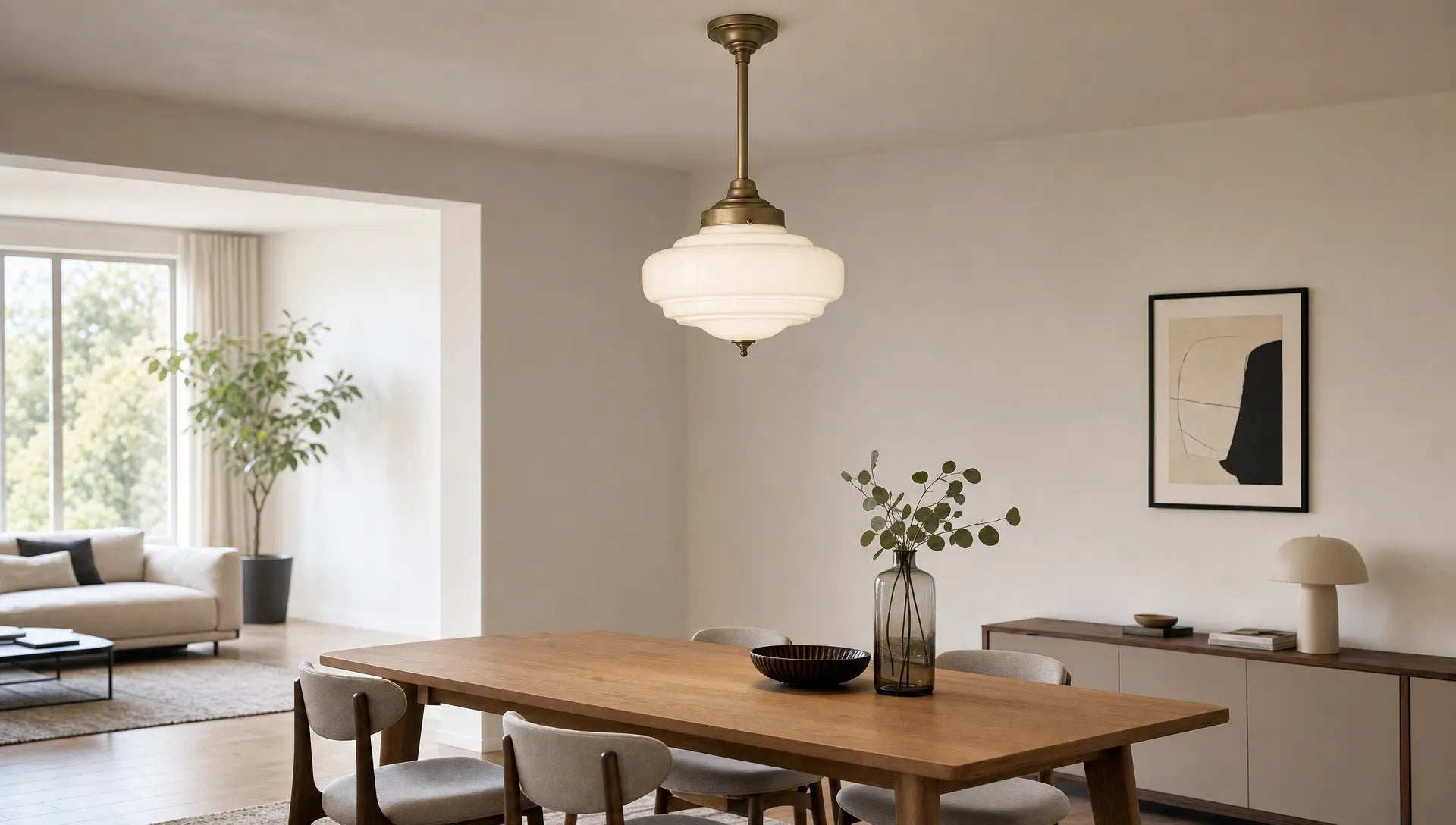
It looks more modern if the ceiling lamp has a vintage character while the rest of the room remains deliberately reduced. A brass lamp with opal glass can look more exciting over a simple wooden table than in a room that is already full of historical references. A lamp with smoky glass often looks more elegant against a smooth white ceiling than against heavily patterned wallpaper.
A good rule of thumb is: the more expressive the lamp, the quieter its surroundings should be. This means it remains a design statement without becoming intrusive.
What makes a vintage ceiling lamp look modern
Not every lamp with a retro reference automatically fits into a contemporary interior. The decisive factors are shape, material, workmanship and lighting effect. Models that incorporate classic details but are not overloaded work particularly well.
A clear spherical shape made of glass, a slim metal body, a reduced pendulum suspension or a subtly aged finish usually appear more durable than very playful shapes with lots of ornaments. The condition also plays a role. A high-quality patina can be charming, but visible cheap looks or artificially exaggerated signs of wear quickly appear decorative instead of elegant.
| Design feature | Seems modern, though | It quickly seems cheesy, though |
|---|---|---|
| Brass or gold tones | the shape remains simple and the finish is matt or brushed | very shiny surfaces can be combined with lots of flourishes |
| Glass | Opal, clear or slightly tinted is used | Colorful glasses and strong patterns dominate the room |
| Retro shapes | contrasting them with modern furniture | several pieces of furniture and accessories repeat the same retro look |
| Cable and canopy | they are cleanly proportioned and color coordinated | Cables are too short, too long or appear to be visually unsettling |
| light color | warm and cozy, but not orange | the light is too yellowish or too dark |
It's worth taking a closer look at the details, especially when it comes to ceiling lights. Unlike a table lamp, a ceiling lamp cannot be moved spontaneously. It sits in the center of a room or above an important area and thereby shapes the entire effect.
Material mix: The modern counterpart to nostalgia
Vintage needs an opponent. In modern living spaces, tension usually arises from the contrast between old touches and contemporary surfaces. Brass looks less nostalgic when combined with natural stone, light wood, concrete, stainless steel or matt lacquered fronts. Smoked glass looks much more elegant against smooth walls than in a room with many small patterns.
Combinations with a maximum of three dominant materials are particularly harmonious. For example: oak, matt black and opal glass. Or travertine, brushed brass and cream-colored textiles. If too many surfaces compete with each other, the vintage ceiling lamp loses its effect.
Colors should also be used consciously. Modern rooms benefit from a calm base of white, sand, greige, gray, black or natural wood tones. A vintage accent in brass, copper or bronze can then appear warm and high-quality instead of old-fashioned.
If you want to combine several lights in the room, you shouldn't make every lamp an eye-catcher. A further look at the interaction of different light sources can be found in BUYnBLUE-Guide about Combine vintage lamps in a modern way instead of overloading them.
Proportions determine elegance
A ceiling lamp can be stylistically perfect and still appear wrong if the size and height are not right. This is particularly important with vintage designs because many shapes are deliberately more present than very flat, modern LED lights.
In low rooms, compact ceiling lights, flat glass shapes or short pendants often work better than large chandeliers. In old buildings with high ceilings, the luminaire can be more generous. Here, longer suspensions, multi-flame models or sculptural shapes can even calm the room because they visually divide the height.
A vintage ceiling lamp can be much more present above the dining table than in the hallway. In the living room it should not compete with the sofa, the coffee table and the wall design. In addition to the appearance, what counts in the kitchen is glare-free, functional light.
As a rough guide, the luminaire should be large enough to look deliberately chosen, but not so large that it visually overwhelms furniture and movement areas. If standard dimensions don't fit, an adjustment can make a big difference. At BUYnBLUE Selected chandeliers and pendant lights can be customized free of charge, for example in terms of cable length, canopy or color. This is particularly helpful with unusual ceiling heights, open floor plans or precisely planned furnishing concepts.

Light color and bulb: Less retro, more atmosphere
Many people automatically associate vintage lamps with very warm, amber-colored light. This can be cozy, but in a modern living space it quickly appears heavy or stagey. Warm white light is usually ideal for living and dining areas, often in the range of around 2700 to 3000 Kelvin. It looks homey without turning the room orange.
The brightness should also suit the usage. A decorative vintage ceiling lamp must not only look beautiful, it must illuminate the room in a meaningful way. In the dining room, the light should fall pleasantly onto the table surface without causing glare. In the living room, a single ceiling lamp is rarely enough if the room is also used for reading, relaxing or working.
Good lighting planning combines several levels: basic lighting, accent lighting and zone lighting. The ceiling lamp does not always play the main role. Sometimes it is the atmospheric focal point, while wall lamps, floor lamps or indirect light sources complement the practical lighting. It's also worth taking a look at for the basics of modern room lighting BUYnBLUE-Post about modern ceiling lamps for stylish living spaces.
The quality of the light is also important. A good color rendering index makes materials, wall colors and textiles appear more natural. This makes a visible difference, especially with brass, wood, stone and fabrics.
Room by room: The combination appears deliberate rather than random
Living room
A vintage ceiling lamp works particularly well in the living room if it is not solely responsible for the entire atmosphere. A central light can structure the room, but should be supplemented with softer light sources. Modern sofas, reduced shelves and large, quiet surfaces create the necessary balance.
Instead of distributing many small retro objects throughout the room, a single recurring material is often enough. If the ceiling lamp has brass details, a narrow picture frame or side table leg can pick up the same tone. Most of the time you don't need anything more.
Dining room
Above the dining table, a ceiling lamp can show more vintage character. Here the lamp is part of the staging and automatically becomes an eye-catcher. It looks particularly contemporary over a clear table, such as wood, stone or matt lacquer.
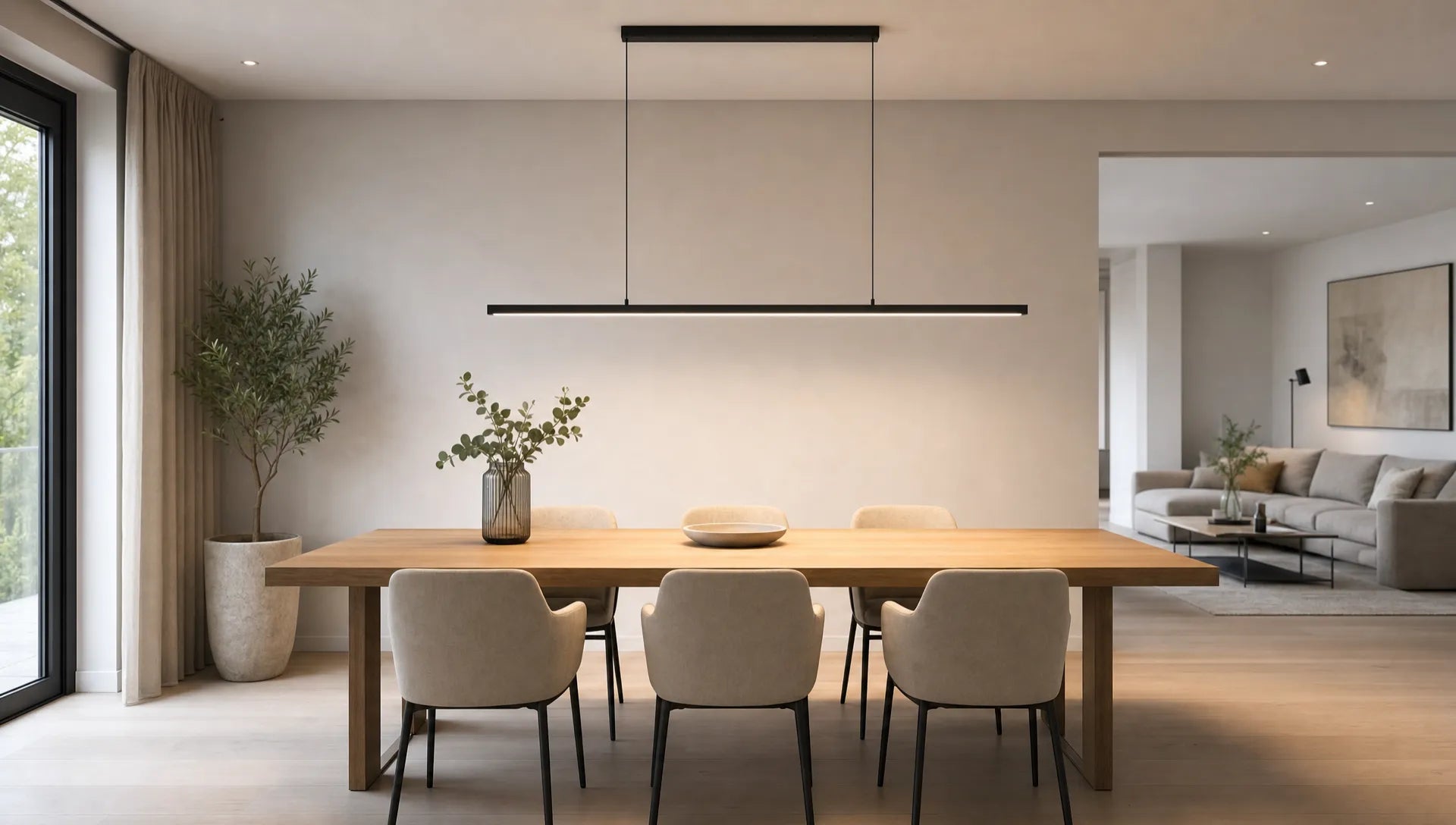
The suspension is important. If the lamp sits too high, it loses its connection to the table. If she sits too low, she disrupts eye contact and freedom of movement. For elongated tables, linear lights or several pendants can make sense, while round tables harmonize well with central shapes.
Kitchen
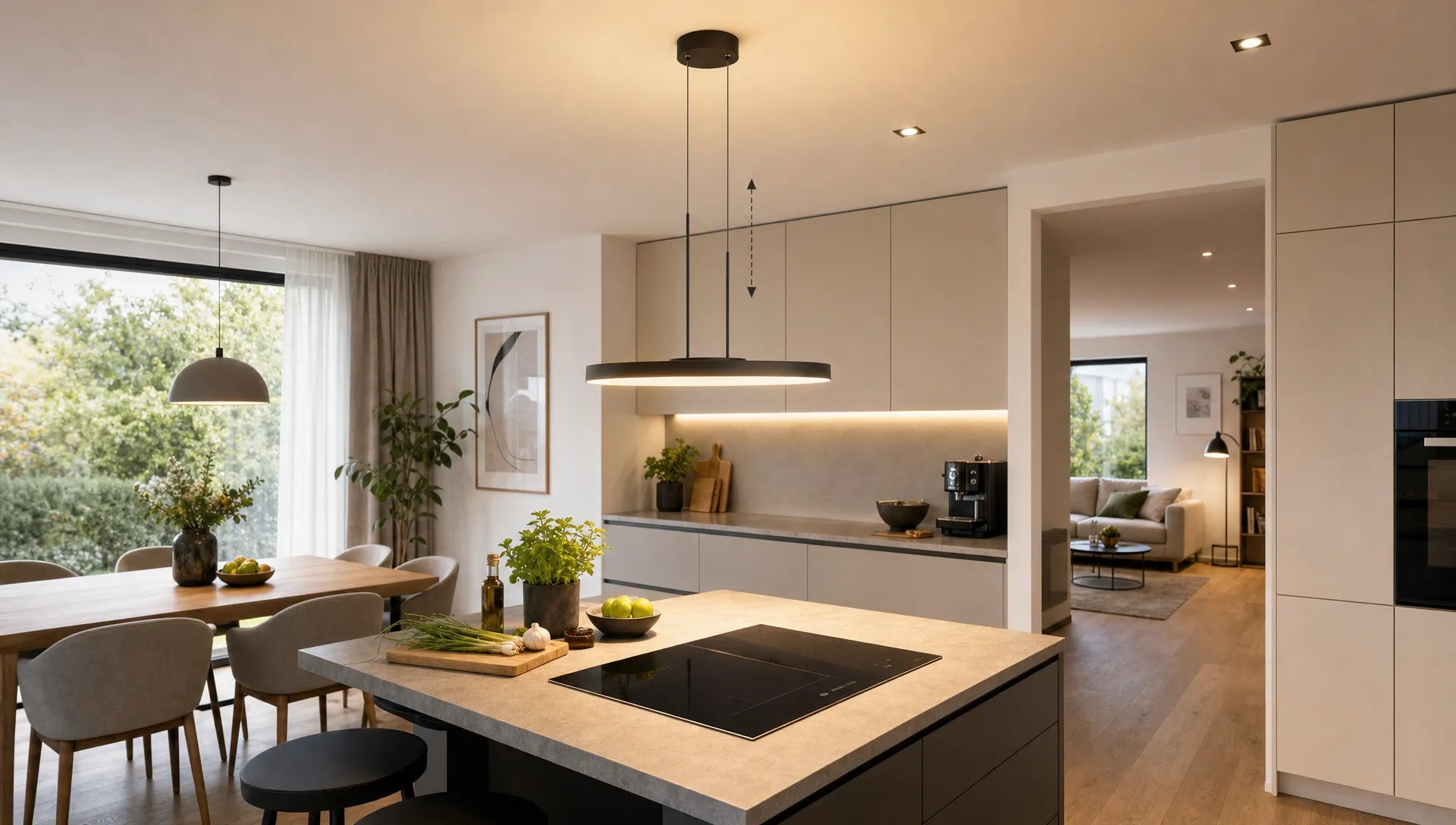
Vintage should be used more cautiously in the kitchen because functionality and cleanliness are the priority. A glass and metal lamp can look very elegant above a kitchen island if the rest of the kitchen has clear fronts and quiet work surfaces.
Shapes that are too playful are often impractical here because they appear visually and functionally restless. Closed or easy-to-clean materials and a lighting effect that supports work areas in a meaningful way are better.
bedroom
In the bedroom, a vintage ceiling lamp can have a soft and calm effect when combined with textiles, warm wall colors and minimalist furniture. Opal glass, matt metal tones and soft light work particularly well here. Very dominant chandeliers only work if the room is sufficiently large and high.
If you don't just want to use vintage on the ceiling, you can also work with smaller lighting accents. For consoles, chests of drawers and sideboards, the article offers over Vintage table lamps on sideboard and console suitable design ideas.
The anti-kitsch check before purchasing
Before you decide on a vintage-style ceiling lamp, it's worth a quick reality check. It is not the individual lamp that determines the effect, but rather its interaction with the room, furniture and lighting requirements.
| Question | Why it is important |
|---|---|
| Are there already a lot of nostalgic elements in the room? | Then the lamp should be simpler so that the room does not appear overloaded. |
| Does the size match the height of the room? | A lamp that is too large appears heavy, and one that is too small appears haphazard. |
| Is the material repeated elsewhere? | Subtle repetition provides connection without creating a set feeling. |
| Is the light suitable for use? | Looks alone are not enough, especially in the kitchen, hallway and dining area. |
| Can the light be adjusted? | Cable length, canopy and color often determine perfect integration. |
A good sign is if the lamp works without additional vintage decoration. Then it is strong enough as a unique piece and modern enough for a long-term furnishing concept.
Common mistakes and better alternatives
A typical mistake is trying to match the color of the lamp exactly to all the other metals in the room. This is not always necessary. Different metal tones can appear high-quality as long as they are deliberately distributed and do not appear random. Brass and black, chrome and smoked glass or bronze and natural stone can look very modern.
Another mistake is too much visible nostalgia. Filament lamps, patterned glass, dark furniture and patterned wallpaper can quickly seem too heavy at the same time. It's better to emphasize a vintage feature and keep the other elements contemporary.
Too little light is also a problem. Some decorative lights create a mood, but are not sufficient as functional room lighting. That's why it should be clear before you buy whether the ceiling lamp should be the main light, zone light or decorative accent.
Combine vintage in a modern way: The 5 best design rules
- Focus on one main accent: A characterful ceiling lamp is often enough to create a vintage flair.
- Keep the environment quiet: Clear furniture, neutral colors and smooth surfaces make the lamp appear more high-quality.
- Pay attention to dimensions and height: Proportions are more important than a spectacular design.
- Choose homely but clear light: Warm white is usually better than strong yellow nostalgic light.
- Avoid complete retro sets: The look becomes modern through contrast, not through repetition.
FAQ
Which vintage ceiling lamp suits modern interiors? Models with a clear shape, high-quality glass, matt metal and reduced details are particularly suitable. They bring character into the room without appearing too decorative.
How do I keep a vintage ceiling lamp from looking dated? Combine them with modern furniture, calm colors and few accessories. It is important that the lamp acts as a deliberate accent and does not become part of a complete retro theme.
Which light color is ideal for vintage ceiling lamps? Warm white light in the range of around 2700 to 3000 Kelvin is usually suitable for living rooms. It looks cozy but remains more modern than very yellow or amber light.
Can a vintage ceiling lamp work in small spaces? Yes, if the proportions are right. In small or low rooms, compact shapes, short suspensions and light-colored materials are often the better choice.
Should all lamps in the room have the same style? No. A modern mix often appears to be of higher quality. It is important that materials, light color or design language create a connection without everything looking identical.
Plan stylishly instead of decorate randomly
A vintage ceiling lamp looks modern if it is not over-staged in a nostalgic way. It needs space, clear counterparts and a lighting effect that suits everyday life. If you pay attention to high-quality materials, appropriate proportions and a quiet environment, you won't get retro kitsch, but rather a timeless statement.
At BUYnBLUE You will find curated designer lights for modern living spaces, including ceiling lamps, pendant lights and chandeliers with high-quality workmanship. Particularly practical: Many lights can be adjusted free of charge, for example in terms of cable length, canopy or color. This means your new lamp will fit perfectly into your home not only stylistically but also spatially.