Recognize designer ceiling lamps and choose them correctly
A ceiling lamp has a greater impact on a room than many people expect when purchasing it. It sits in the field of vision, influences the proportions and decides whether a living room is cozy, a hallway is inviting or a dining area is high-quality. Anyone looking for designer ceiling lamps is therefore not simply looking for a beautiful object, but rather a lamp that combines design, light quality and suitability for everyday use.
The most important difference: A real designer lamp doesn't just look good in product photos. It works in the room, fits the architecture and remains convincing even when trends change. That's exactly why it's worth paying attention not only to shape and color before buying, but also to workmanship, lighting effect, dimensions and adaptability.
What really sets designer ceiling lamps apart
Designer ceiling lamps are not necessarily recognized by their loudest look. It is often the quiet, precise details that distinguish a high-quality model from a decorative standard lamp: clean transitions, harmonious proportions, high-quality surfaces and a clearly recognizable design idea.
A good designer ceiling lamp has a visual idea. It can be minimalist, organic, sculptural or classically inspired, but it doesn't appear randomly put together. Shape, material and lighting follow a line. In the best case scenario, the lamp fits into the room and at the same time sets a deliberately designed accent.
The lighting technology is also part of the quality. A beautiful lamp quickly disappoints if it dazzles, creates dark corners or distorts the colors in the room. Especially in modern living spaces, where kitchen, dining and living often merge into one another, a ceiling lamp has to be able to do more than just be bright.
| Quality feature | How do you recognize it? | Why it matters |
|---|---|---|
| Clear form idea | The lamp looks harmonious from every angle | It remains timeless for longer and is less dependent on trends |
| Clean processing | Edges, transitions and surfaces are precisely executed | Small details determine the high-quality overall impression |
| Good lighting | The light is pleasant, even or deliberately accentuated | The room appears more homely and functional |
| Appropriate proportion | The size and height harmonize with the room and furniture | The lamp appears neither lost nor overwhelming |
| Customizability | Length, canopy or color can be coordinated if required | The lamp fits better to real room conditions |
First understand the room, then choose the lamp
The most common mistake when buying is starting with the design. It is better to analyze the room first. Measure floor area, ceiling height, outlet location and key usage zones. A designer ceiling lamp can only work properly if it matches the architecture and furniture.
In a small hallway, a compact, flat model can appear more premium than an eye-catching chandelier. In a spacious living room, on the other hand, the lamp can have more volume, especially if there are high ceilings, large sofa areas or open lines of sight. The additional guide is worthwhile for detailed planning of diameter, height and light distribution Choose a ceiling lamp: diameter, height and light distribution.
Guidelines help with brightness and should always be adapted to wall colors, furniture and the desired atmosphere. Dark surfaces absorb more light, light walls reflect it better.
| room or area | Orientation for basic light | Recommended light color | Planning note |
|---|---|---|---|
| Living room | 100 to 150 lm per m² | 2700 to 3000 K | Warm, dimmable light creates flexibility |
| Dining area | 150 to 250 lm per m² | 2700 to 3000 K | Match the lamp to the shape and length of the table |
| Kitchen | 200 to 300 lm per m² | 3000 to 4000 K | Provide additional targeted lighting for work surfaces |
| bedroom | 100 to 150 lm per m² | 2700K | Prefer low-glare, soft light |
| hallway | 100 to 200 lm per m² | 2700 to 3000 K | Uniformity is more important than dramatic effects |
Find the right design language
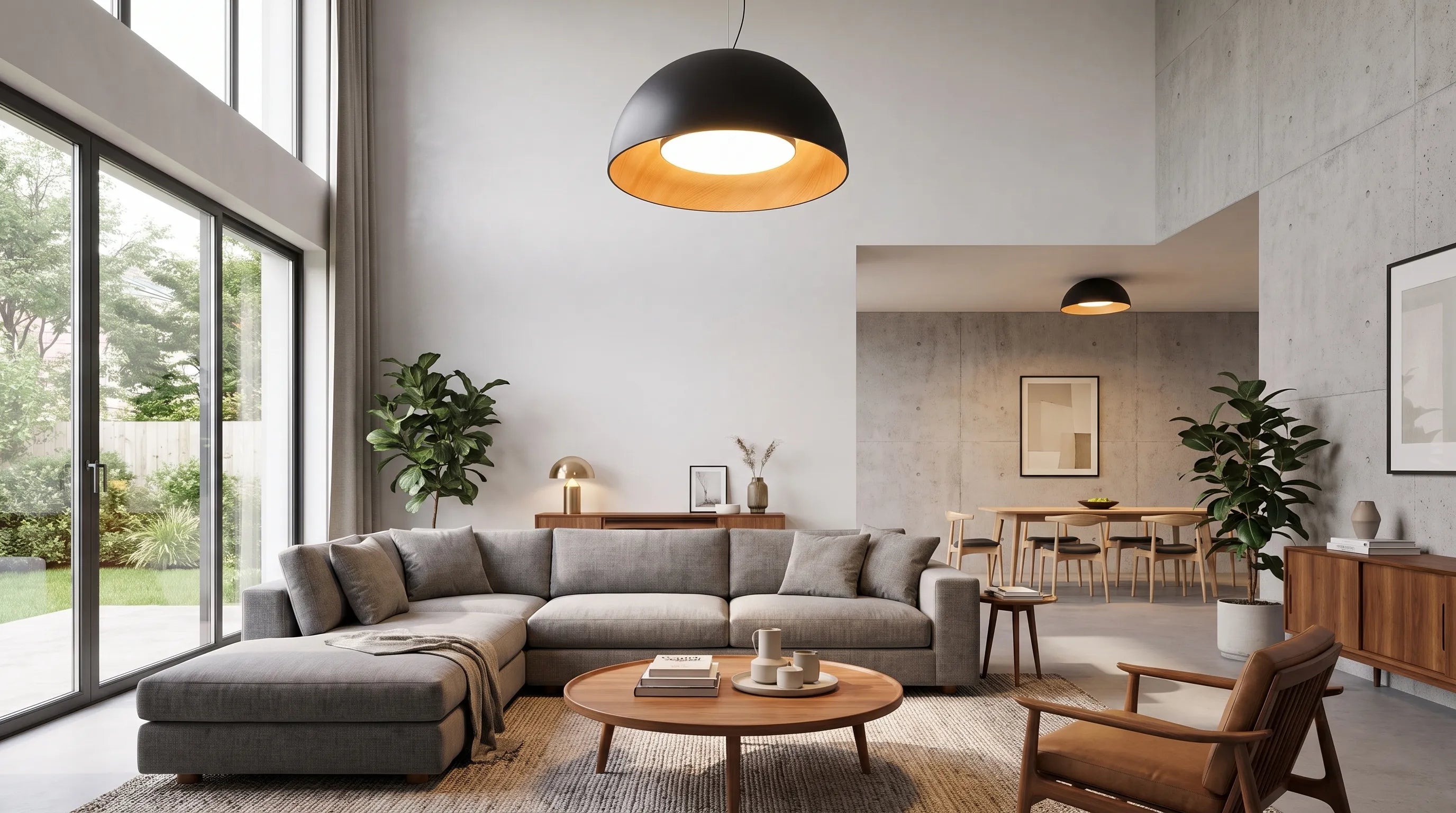
Designer ceiling lamps should not be viewed in isolation. What matters is how they communicate with furniture, materials and lines in the room. A room with lots of straight edges, concrete, glass or handleless cabinets often benefits from a softer, organic lamp shape. A very homely room with wood, textiles and round furniture, on the other hand, can gain in tension with a clearer, graphic lamp.
A bowl-like ceiling light like the Modern Ciotola ceiling lamp is a good example of a calm, modern shape that does not have to be loud. The name Ciotola translates from Italian as bowl, and it is precisely this simple, modern look that can enhance a room without overloading it. Such shapes are particularly suitable if you are looking for a clear ceiling solution but do not want a dominant chandelier.
For interior designers and design-conscious homeowners, the line of sight is also important. Ask yourself: Can you see the light from the entrance? Is it reflected in windows or glass surfaces? Is it hanging over a central piece of furniture? The more prominent the position, the more important shape precision and material quality are.
Correctly evaluate the material and surface
High-quality designer lights thrive on surfaces. Matte coatings often appear calmer and more architectural, while shiny metals reflect more light and attract more attention. Glass can appear light and elegant, but needs to be well coordinated with the light source, diffuser and environment so that no unpleasant reflections arise.
Pay attention to whether the surface matches existing materials. In open living areas, lights should not only harmonize with the ceiling, but also with door handles, fittings, furniture legs and window profiles. That doesn't mean everything has to be identical. A deliberate contrast can appear very high-quality, but it should be planned.
A practical test: Look at the lamp not only from the front, but also from below and at an angle. Ceiling lamps are perceived from many perspectives in everyday life. A designer lamp should therefore look clean and well thought out even from unusual angles.
Lighting effect: The underestimated design factor
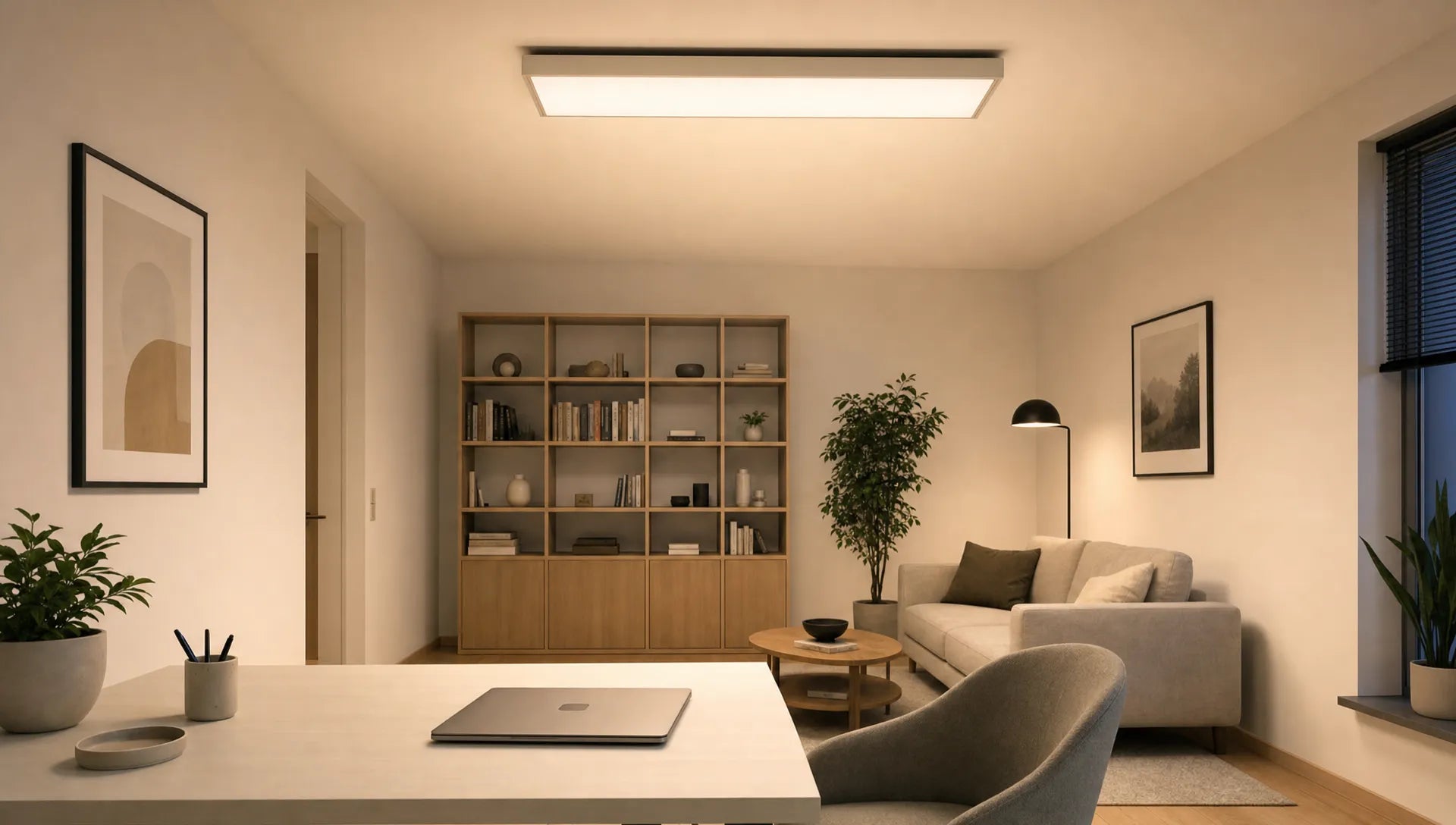
The lighting effect decides whether a ceiling lamp is convincing in everyday life. Direct light is suitable for tables, kitchen areas or areas where clear visibility is important. Diffused light appears softer and more pleasant, especially in living rooms, bedrooms and hallways. Indirect light can visually raise ceilings and create an elegant atmosphere, but depending on the room, it is not always sufficient as sole lighting.
Color reproduction is equally important. A high color rendering index, often stated as CRI or Ra, ensures that wood, fabrics, art and wall paints appear natural. At least Ra 80 is common for living spaces; for high-quality interiors or color-sensitive materials, Ra 90 or higher is often the better choice.
Dimmability is particularly useful in multifunctional rooms. A living room needs different light in the evening than when tidying up, a dining area needs different light during dinner than when working at the table. If dimming is important to you, the light, LED driver, bulb and wall dimmer should be compatible. You can find more details about this in the article Choose the right ceiling light with dimmer.

Plan size, height and assembly realistically
No matter how beautiful a designer ceiling lamp is, if it is too small or too large, the room loses its balance. Above a dining table, the lamp may be more closely related to the table. In the middle of the room it should fit the entire area. For low ceilings, flat or semi-flat models are often the better choice, while high ceilings can tolerate more height and volume.
The outlet position is also crucial. In existing apartments, the power outlet is not always where the furniture is today. For new buildings, renovations or renovations, the luminaire position should therefore be defined early in the planning. This is particularly important for architects and interior designers because lighting, furniture and walkways have to be thought of together.
An often underestimated selection criterion is adaptability. At BUYnBLUE Chandeliers and pendant lights can be adapted free of charge to specific requirements, for example by changing the cable length, an individual canopy or a different color. This is particularly helpful for high ceilings, offset outlets or projects in which several lights need to be precisely coordinated with each other.
Selection by room: What works in practice
In the living room, the ceiling lamp should not be solely responsible for creating the atmosphere. High-quality basic lighting works best together with floor lamps, table lamps or wall lights. The ceiling lamp provides the visual direction, the other light sources provide depth.
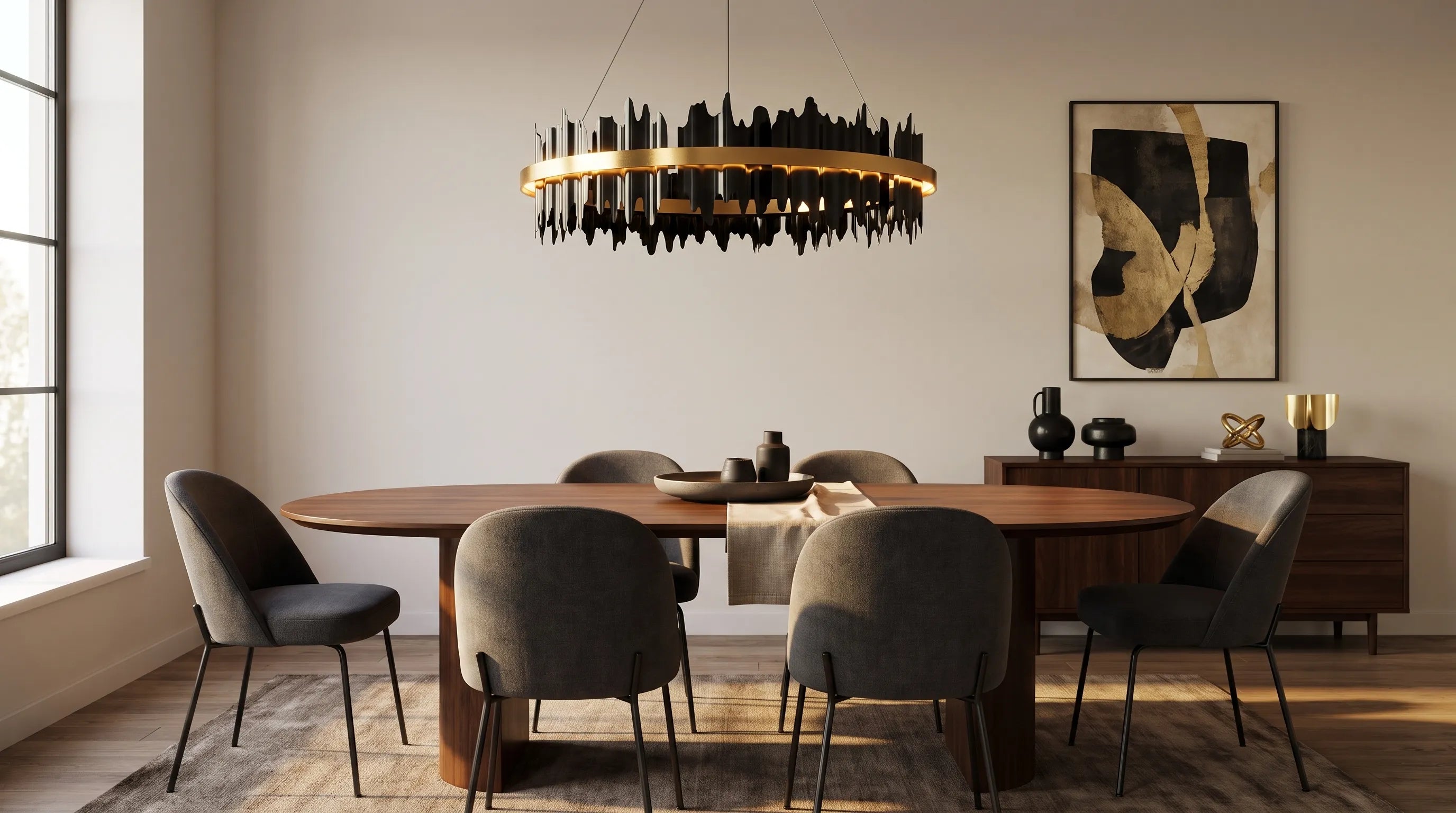
In the dining room or above a kitchen island, the lamp can be showcased more prominently. This creates a natural focal point. It is important that it does not dazzle and does not disturb the view over the table. With round tables, round or organic shapes often work particularly harmoniously. For long tables, elongated lights or several lights in a row can be useful.
In the bedroom, a designer ceiling lamp should radiate calm. Contrasts that are too strong, very cold light or blinding lamps can make the room uncomfortable. Flat, diffuse or softly shaped models are usually more pleasant here.
Orientation counts in the hallway. Since hallways are often narrow, oversized lights can quickly appear uneasy. A clear, high-quality ceiling lamp with even light distribution can still significantly enhance the entrance area.
Additional requirements apply in the kitchen and bathroom. In the kitchen, ceiling lighting should be combined with work lights. Moisture and protective areas must be taken into account in the bathroom. Therefore, always check whether a model is suitable for the respective location.
Common mistakes when buying designer ceiling lamps
Many bad purchases are not because the light is bad, but because it is used incorrectly. The effect in real space is particularly often underestimated. Product images often show ideal ceiling heights, perfect wall colors and professional lighting atmospheres. Different conditions apply at home.
You should check these points before purchasing:
- Is the lamp large enough for the room but not too dominant?
- Does the construction height match the ceiling height and walkways?
- Does the surface harmonize with furniture, handles, fittings and floors?
- Is the light color appropriate for the use of the room?
- Is there enough brightness or does the room need additional light sources?
- Is the lamp dimmable if different moods are desired?
- Can the light be adjusted if necessary?
Another mistake is to only buy based on trends. Trendy colors and eye-catching shapes can be exciting, but a ceiling lamp often stays in the room for many years. If you are unsure, it is better to choose a clear shape with a high-quality surface and place stronger accents over smaller, more easily replaceable elements.
Short buying checklist for designer ceiling lamps
Before you make your final decision, it helps to follow a simple order: first room data, then light requirements, then style. This will prevent a nice model from not working later.
Note room size, ceiling height, outlet position, furniture arrangement and desired atmosphere. Determine whether the luminaire should provide basic light, accent light or both. Then check the material, surface, light color, color rendering and mounting options. Only then should design and effect be the focus.
If a lamp convinces in all of these points, it is most likely not just a beautiful object, but a really suitable designer lamp.
Frequently asked questions
How do I recognize high-quality designer ceiling lamps? You can recognize high-quality models by their clear design idea, precise workmanship, harmonious proportions, pleasant lighting effect and durable materials. It is also important that the lamp looks good from multiple angles and fits the room concept.
What size should a ceiling lamp be? The appropriate size depends on the room area, ceiling height, furniture position and function. In small rooms, compact models appear more harmonious; in large living areas, the lamp can have more volume. Above tables it should be based on the shape and length of the table.
Are designer ceiling lamps only suitable for large rooms? No. Small rooms in particular benefit from well-designed ceiling lights because the proportions, light distribution and material quality are particularly visible there. What is important is not the size of the room, but rather the appropriate scaling.
Which light color is ideal for living spaces? Warm light colors of around 2700 to 3000 K are usually pleasant for living rooms, bedrooms and dining areas. For kitchens or functional areas, 3000 to 4000 K can be useful, especially if clear work light is needed.
Is an adjustable ceiling light worth it? Yes, especially with high ceilings, unusual outlet positions or individual room concepts. Adjustments to cable length, canopy or color can ensure that the lamp not only looks good, but also fits perfectly technically and spatially.
Plan designer lighting to suit the room
When selecting designer ceiling lamps for a residential project, renovation or interior concept, it is worth taking a curated look at shape, light and adaptability. At BUYnBLUE Find modern designer lighting for different living areas, with free customization for chandeliers and pendant lights, free worldwide shipping, 14-day return policy and supportive service from selection to delivery.