Use the height-adjustable pendant lamp sensibly
A pendant light is more than just a beautiful eye-catcher. The height of a dining table, kitchen island or coffee table determines whether a room appears cozy, functional and harmonious. That's exactly why one is Pendant lamp height adjustable particularly practical if it is not just bought, but consciously planned and used correctly in everyday life.
The biggest advantage is flexibility: you can bring the light closer to a surface when you're concentrating on working or eating, and hang the lamp higher when you want the room to appear more open, airy or representative. To ensure that this flexibility does not remain just a technical detail, it is worth taking a closer look at the height of the room, furniture, lines of sight and lighting requirements.
What does “height adjustable” mean for pendant lights?
Not every adjustable pendant light works the same. Some models can only be adjusted in length during assembly. Others have a cable, a counterweight or a telescopic mechanism with which the height can be changed later in everyday life. This makes a big difference in terms of usage.
A pendant light that can be shortened or adjusted once is ideal if the light hangs permanently above a fixed dining table, counter or sideboard. The most important thing here is that the suspension fits exactly to the ceiling height and furniture. A pendant light that can be adjusted daily or occasionally makes sense if an area serves multiple functions, such as dining, home office, game night and homework.
The visual effect is also different. Cable pulls and counterweights often add a technical accent. Slim cable suspensions appear quieter and more minimalist. Anyone who prefers a very clear, architectural spatial effect should therefore consider not only the adjustability but also the type of mechanics in their decision.
Why the right height is so important
The height of a pendant lamp influences three things at the same time: the lighting effect, visual comfort and the proportions in the room. If the lamp is hung too high, the light is often distributed too widely and loses its presence above the table. If it hangs too low, it dazzles, blocks the view or is disruptive in everyday life.
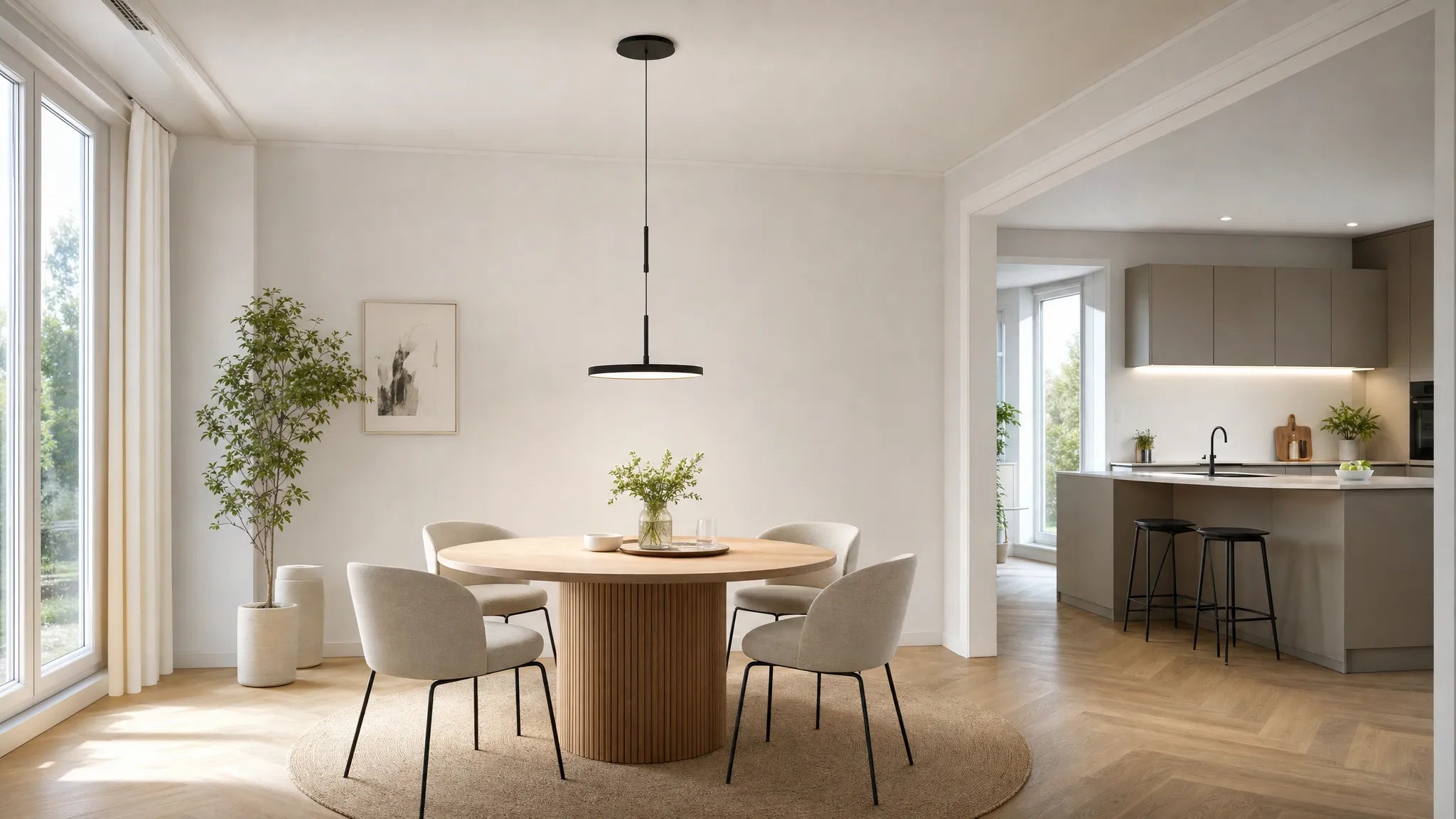
Balance is particularly crucial above the dining table. The lamp should emphasize the table surface, illuminate faces pleasantly and still allow a clear view of the people opposite. In the kitchen, occupational safety is also an important factor: when cutting, cooking or arranging, your body must not cast any disturbing shadows on the work surface.
Proven guidelines help as a guide. They do not replace individual planning, but they do provide a good starting point for the first adjustment.
| Location | Recommended bottom edge of the lamp | Goal of the setting |
|---|---|---|
| Dining table | approx. 60 to 75 cm above the table top | Pleasant table light without a visual barrier |
| Kitchen island or counter | approx. 70 to 90 cm above the work surface | Bright light with good headroom |
| Coffee table | depending on the model, often higher than dining table lamps | Homely zoning without obstacles in the room |
| Hallway or passageway | at least approx. 200 to 210 cm clearance height | Safe movement without bumping |
| Bedside table or bedroom side | individually according to bed and bedside table height | Glare-free light for reading and orientation |
These values are deliberately formulated as areas. A large lampshade, an opal glass ball or a wide chandelier often needs more distance than a slim, downward-pointing spot. The height of the residents and the height of the room also play a role.
Where a height-adjustable pendant light is particularly useful
Above the dining table
The dining table is the classic place for a height-adjustable pendant light. Usage changes particularly frequently here. During dinner, the light should be cozy and focused. When working on a laptop or doing crafts with children, it can appear a little more functional and brighter. At a celebration or when the table is expanded, a higher setting can make the room appear more spacious.
An adjustable solution is also practical if you occasionally move or extend the table. A rigid light can suddenly no longer appear central. An adjustable suspension helps to better align the light zone with the table, at least visually.
Above the kitchen island
In open kitchen-living rooms, the pendant light takes on a dual role. It provides light for the work surface and marks the kitchen island as a design center. Height adjustability is particularly useful here if the island is used for both cooking and sitting.
When preparing food, the lamp can be hung higher so that movement remains free and no annoying shadows are created. When eating or sipping a glass of wine at the bar, a slightly lower position can create more atmosphere. It is important that the light does not collide with extractor hoods, upper cabinets or frequently used movement paths.
In the living room
In the living room, it's less about pure task lighting and more about creating zones. A pendant light above the coffee table, a reading nook or a side table can structure the room without requiring additional walls or furniture.
Here the height should be chosen particularly carefully. Lights that are mounted too low quickly appear dominant in the seating area. Lights that are mounted too high lose their decorative character. An adjustable pendant light helps to find the right balance between design object and homely light source.
In rooms with high ceilings
Old building apartments, galleries and open stair areas benefit greatly from individually adapted pendant lengths. With high ceilings, a standard light often hangs too close to the ceiling and appears lost. A longer suspension brings the light where it is needed, namely in the lounge area.
Especially here it is important to check not only the height of the lamp, but also the maximum cable length, the canopy size and the desired distance from the piece of furniture before purchasing. If standard dimensions do not fit, individually adapting the suspension can be a much better solution.
How to set the ideal height
Don’t start with the light, start with the function of the area. First ask: Is this where you eat, work, read, decorate or just create a sense of space? The more specific the purpose, the easier it is to determine the appropriate height.
A simple practical test helps before final assembly. Mark the planned bottom edge of the lamp with ribbon, string or a lightweight cardboard model. Sit at the table, walk around the room and check from different angles whether the planned height looks comfortable. This step is particularly valuable because plans on paper often only incompletely show the actual spatial effect.
Also pay attention to the light distribution. A narrow beam of light must be positioned more precisely than a diffused umbrella. A pendant light with opal glass or a fabric shade is more forgiving of small height deviations, while direct LED modules or spots should be aligned more closely with the surface.
For a quick assessment, you can use these questions as a guide:
- Is the light blinding when sitting or standing?
- Is the table or work surface illuminated evenly enough?
- Is there a clear view of other people?
- Does the light fit proportionally to the height of the room and the size of the furniture?
- Is there enough distance from doors, cupboard fronts and walkways?
If the answer to one of these questions is clearly no, it is worth readjusting. Small changes of 5 to 10 cm can significantly improve the effect.
Design and proportion: Height isn't everything
A height-adjustable pendant light only works well if the size, shape and material suit the room. A delicate lamp can seem lost above a long dining table. A massive lamp body can seem too heavy in a small room, even if the height is adjusted correctly.
For rectangular tables, linear pendant lights or several small pendants often look harmonious. Round umbrellas, ball lights or compact chandeliers work particularly well above round tables. In open living areas, a pendant light can also be deliberately used as a unifying element, for example by using the material or color to reference chairs, handles, fittings or shelves.
| spatial effect | Suitable luminaire properties | What you should pay attention to |
|---|---|---|
| Quiet and minimalist | Slim cables, clear shapes, matt surfaces | Keep mechanics as discreet as possible |
| Warm and homely | Fabric, wood, brass, opal glass | Check the absence of glare and the color of the light |
| Architectural and modern | Linear shapes, visible structure, reduced colors | Exact alignment over furniture is important |
| Expressive | Sculptural umbrellas or chandeliers | Plan enough room height and visual distance |

Assembly and planning: You should clarify these points before purchasing
It's worth carrying out a quick technical check before purchasing. What is important is not only whether the pendant light is height-adjustable, but also how well it fits your specific room situation. Measure the ceiling height, furniture height and the distance between the power outlet and the desired center of the light. Especially with dining tables, the power connection is not always exactly where the lamp should hang ideally.
Also check whether the canopy is large enough to neatly cover the connection and any offsets. If there are several pendants or larger lights, the weight is also relevant. The ceiling must be suitable for fastening, especially in old buildings, suspended ceilings or plasterboard.
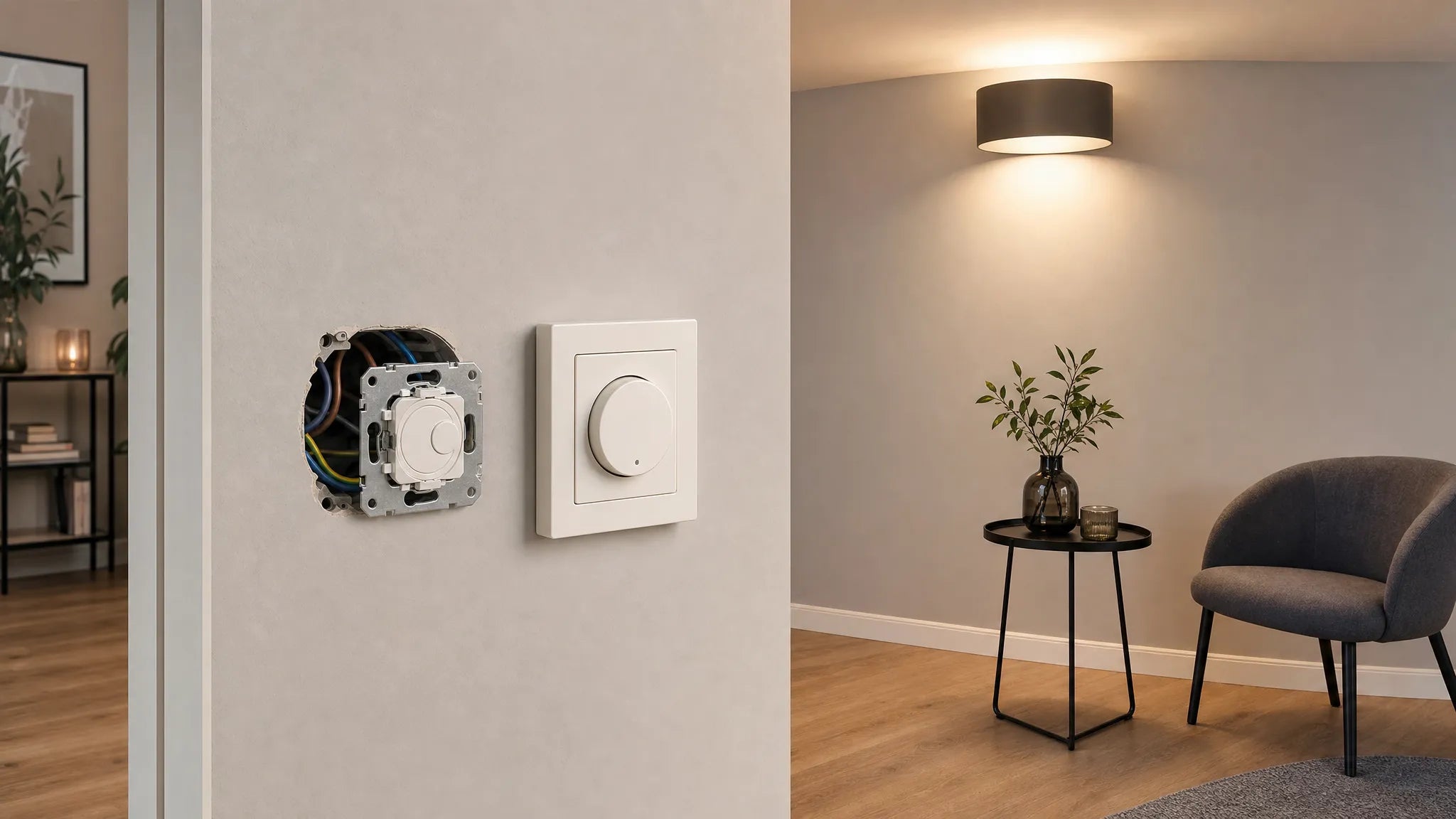
For safety reasons, work on permanently installed 230-volt lights should be carried out by a qualified electrician. This is especially true when new connections are made, lights are moved or dimmers are installed. Good planning in advance saves time, repairs and unnecessary drilling holes.
If you are interested in a specific model, an independent look at its suitability for everyday use can help. In Practical check on the Lindby Amidala LED pendant light, height adjustable For example, typical test points such as adjustability, lighting effect and usage situations are examined in more detail.
When individual adjustment is better than daily adjustment
Not every room needs a light that is constantly moving. In many cases, a precise one-time adjustment is even more elegant. If the dining table is fixed, the room height is known and the use is clearly defined, a precisely adjusted cable length is often sufficient. The result appears quieter because no visible mechanics are required for frequent adjustment.
This is where custom work comes into play. At BUYnBLUE Chandeliers and pendant lights can be adapted free of charge to specific requirements, such as cable length, canopy or color. This is particularly useful for high ceilings, asymmetrical room layouts or if a lamp needs to fit perfectly into an interior design concept. You can find an overview of modern designs directly at modern lights and lamps from BUYnBLUE.
So the decision is not always “adjustable or not adjustable”. It's often a question of whether you need flexible everyday settings or a tailor-made solution for a fixed location. Both ways can make sense if they suit the usage.
Common mistakes with height-adjustable pendant lights
A common mistake is to choose the lamp based solely on its appearance. A beautiful design is of little help if the lamp is blinding, blocks the view or does not provide enough light to the surface. It is equally problematic to only measure the room height and forget the furniture height. The decisive factor is almost always the distance to the surface below, not just the distance to the ceiling.
The color of light is also often underestimated. Many people find warm white light more pleasant in dining and living areas. For work surfaces in the kitchen, the light can be clearer and more functional. If a light is dimmable, you should check before purchasing whether the light source, LED driver and existing dimmer fit together.
Another mistake is a maximum suspension that is too short. A standard cable is sometimes not enough, especially with high ceilings. Conversely, a very long lamp can become impractical in low rooms. The best pendant light is therefore not the one with the maximum adjustment option, but rather the one with the right adjustment range for your room.
Care and use in everyday life
To ensure that the adjustment mechanism works well for a long time, it should not be operated jerkily. Change the height slowly and evenly, especially on models with a counterweight or cable pull. If several people in the household use the lamp, a short joint explanation is useful so that no one accidentally pulls too hard or adjusts the lamp at an angle.
Clean screens, cables and mechanics regularly with a dry or slightly damp soft cloth. Aggressive cleaning agents should be avoided on glass, metal or painted surfaces. Dust on shades and LED covers can visibly reduce the lighting effect, especially in lights above the dining table and kitchen island.
It also makes sense not to constantly change the height without reason. Identify two or three favorite positions for typical situations, such as everyday life, work and a guest evening. This way you can make conscious use of the flexibility without putting unnecessary strain on the mechanics.
Frequently asked questions
How low should a height-adjustable pendant light hang above the dining table? As a guideline, there is approximately 60 to 75 cm between the table top and the lower edge of the lamp. For very large umbrellas, tall people or very dazzling light, a slightly larger distance may be more comfortable.
Is a height-adjustable pendant light also suitable for low ceilings? Yes, if the minimum distance to the ceiling is short enough and the luminaire does not protrude into walkways. In very low rooms, flatter pendant lights or ceiling lights are often the better choice.
Do I need a pendant light that can be adjusted daily or is an adjusted cable length sufficient? If an area has multiple functions, daily or occasional adjustment is practical. If the furniture and usage remain the same over the long term, a precisely adjusted cable length is usually quieter and more elegant.
Can I change the height of a pendant light myself? Small adjustments to the mechanics provided are possible in everyday life. Changes to the electrical connection, fixed mounting or cable routing should be carried out by a qualified electrician.
Which light color suits a height-adjustable pendant light? Warm white light is often pleasant for the dining table and living room. More neutral light can be useful for kitchen islands and work areas. Dimming function and good glare control make the light more versatile.
Conclusion: Use flexibility consciously
A height-adjustable pendant light makes sense if it is tailored to the room, furniture and everyday life. The right height creates atmosphere, improves function and makes proportions appear more harmonious. It is crucial not only to consider the design before purchasing, but also the adjustment range, light distribution, mounting point and usage situations.
If you are looking for a lamp that not only looks good, but also fits exactly with your ceiling height and room planning, an individually adaptable solution is worth it. At BUYnBLUE Find curated designer lighting with high-quality materials, free worldwide shipping, and free customization on select pendant lights and chandeliers to make light and space truly work together.