Wabi-Sabi lighting for more peace in the room
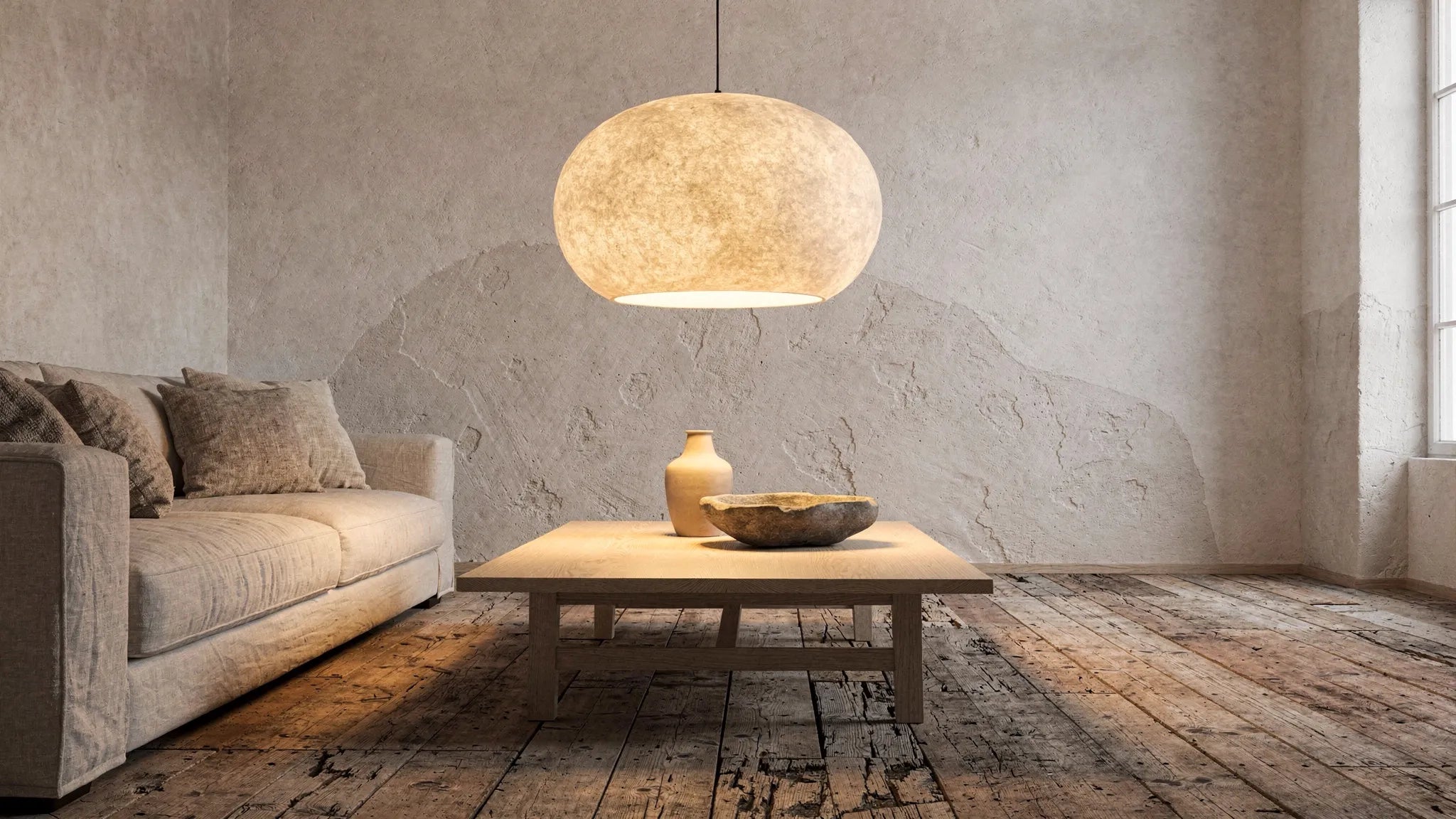
Wabi-Sabi lighting doesn't start with the most spectacular lamp, but with a question: How should a room feel when you enter it? Calm, grounded, honest and pleasantly calm. This is precisely the strength of this Japanese-inspired design approach. It celebrates natural materials, gentle irregularities, patina and the beauty of simplicity.
For lighting planning, this means: less bright ceiling light, less visual clutter, more depth, shadows and warm islands of light. Wabi-Sabi lighting doesn't just make rooms brighter. It makes them softer.
What Wabi-Sabi lighting is all about
Wabi-Sabi is closely linked to the idea that beauty does not have to be perfect, shiny or flawless. In the living room, this is reflected in reduced shapes, natural surfaces and an atmosphere that does not appear staged. Lighting is therefore not about maximum brightness, but about consciously placed light.
A suitable lamp can appear handcrafted, have a matt surface or use materials that gently refract light. Instead of hard spots and cold light colors, diffuse shades, indirect lighting and dimmable light sources dominate. Shadows are not a mistake, but part of the design.
If you want to delve deeper into the interior design style as a whole, see the BUYnBLUE-Guide to Wabi-Sabi as a modern and simple furnishing style further basics. In this article we deliberately focus on the lighting effect.
The 6 principles for calm wabi-sabi light
Wabi-Sabi lighting does not follow any rigid rules. Nevertheless, there are clear principles that immediately make rooms appear calmer.
- Warm instead of cool: Warm white light colors support relaxation and make natural materials appear more homely.
- Diffuse instead of blinding: Light should be diffused softly, for example through opal glass, fabric, paper look or indirect reflection.
- Less instead of more: Every light should have a purpose, otherwise it creates visual clutter.
- Material instead of effect: Matte surfaces, glass, wood, ceramic, linen or brushed metal work better than high-gloss effects.
- Asymmetry instead of perfection: A slightly offset table lamp or a deliberately placed pendant lamp can appear more natural than absolute symmetry.
- Shadows instead of full illumination: Quiet rooms need contrasts, but no hard light-dark edges.
These principles make Wabi-Sabi particularly interesting for modern living spaces. The style is reduced, but not cold. It looks high-quality without being loud.

The right light color: Warm white is the basis
The color temperature has a strong influence on whether a room appears calming or sober. It is given in Kelvin. The lower the Kelvin value, the warmer the light appears.
Warm light colors between around 2,200 and 3,000 Kelvin are usually suitable for Wabi-Sabi rooms. A range of 2,200 to 2,700 Kelvin is particularly pleasant in living and sleeping areas. 3,000 Kelvin can be useful if you want a little more clarity, for example in the kitchen, hallway or bathroom.
| room or zone | Recommended light color for Wabi-Sabi effect | Why it works |
|---|---|---|
| Living room | 2,200 to 2,700 K | Feels soft, cozy and relaxing |
| Dining area | 2,700K | Makes food and materials appear warm |
| bedroom | 2,200 to 2,700 K | Supports a calm evening atmosphere |
| hallway | 2,700 to 3,000 K | Friendly, but still clear enough for orientation |
| Bathroom outside the mirror | 2,700 to 3,000 K | More homely than cold white bathroom light |
| Reading corner | 2,700 to 3,000 K | Pleasant, but more functional than very warm light |
Important: Light color alone is not enough. Brightness, glare, color rendering and position also play a role. If you want to brush up on technical basics, this will help BUYnBLUE-Contribution What is Kelvin and what does this number mean for lamps and lights?.
Brightness: Wabi-Sabi does not need uniform, full lighting
Many rooms appear restless because they are lit too evenly and too brightly. A single strong ceiling light takes away the depth of the room. Furniture, textures and wall surfaces appear flat because there are hardly any shadows.
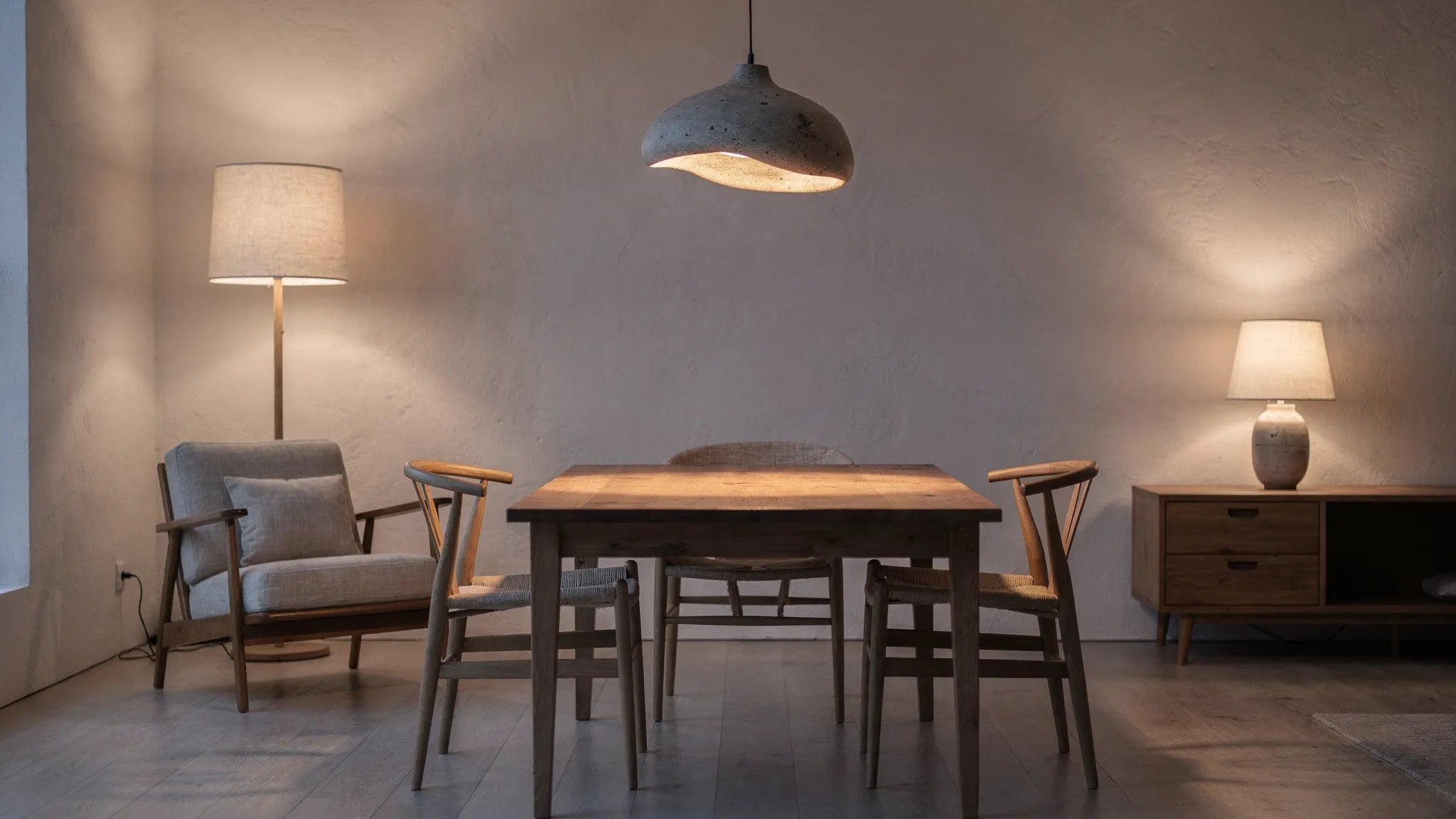
Wabi-Sabi lighting works better with multiple soft light sources. A pendant lamp can define the dining table, a floor lamp creates depth in the living room, a wall lamp emphasizes structure, a small table lamp brings warmth to a corner. This creates a room that is not completely illuminated, but rather offers different quiet points.
This doesn't mean the room has to be dark. Rather, he should graduated act. A sofa needs different light than a bookshelf, a dining table needs different light than an empty wall. This idea also corresponds to the principle of light layers that you describe in the article Plan LED lighting: 3-layer light for the entire home can read in more detail.
The best types of lights for Wabi-Sabi rooms
Not every modern lamp automatically fits Wabi-Sabi. What matters is whether the shape, material and light distribution create calm. Lights that have a clear silhouette and do not appear too technical are particularly suitable.
Pendant lights as a quiet focal point
A pendant light above the dining table, coffee table or kitchen island can define a room center without being dominant. Organic shapes, matt surfaces, opal glass, textile shades or reduced metal bodies in black, bronze, sand, cream or warm metal tones are particularly suitable.
Make sure that the light does not dazzle. The light emission should either be shielded downwards or be gently diffused. The right height above the dining table is also crucial. A lamp that is mounted too high loses security, while a lamp that is too low disrupts eye contact and everyday life. Practical guidelines can be found in BUYnBLUE-Guide Dining table pendant light: Plan the height, width and distance correctly.
An advantage at BUYnBLUE: Pendant lights and chandeliers can be customized free of charge to individual requirements, such as cable length, ceiling rose or color. This is particularly valuable with wabi-sabi concepts because proportions and placement contribute greatly to the calm overall effect.
Wall lights for soft transitions
Wall lights are ideal for softening hard edges in a room. They bring light onto vertical surfaces and make rooms appear deeper and more homely. Up-and-down lights, indirect wall lights or models with matt glass are particularly suitable for Wabi-Sabi.
A single wall light next to a reading chair can have a stronger impact than a symmetrical row. In hallways, several subtle wall lights help to mark the path without overloading the room with harsh ceiling lighting.
Table and floor lamps for intimate islands of light
Table and floor lamps are the quietest tools in Wabi-Sabi lighting. They create small islands that can be changed according to everyday life and mood. A table lamp on an old wooden chest of drawers, a floor lamp next to a linen armchair or a small lamp on the bedside table brings warmth exactly where it is needed.
Here materials can be particularly tactile. Linen, ceramic, glass with a light tint or a matt stone look work well. It is also important here: the shade should diffuse the light pleasantly and not make the lamp directly visible if it is dazzling.
Materials and surfaces: The light can show traces
Wabi-Sabi thrives on materials that are allowed to age. A lamp does not have to be raw or rustic, but it should have a certain material honesty. Very smooth, reflective surfaces can quickly appear cool. Matt, structured or slightly translucent materials blend in more calmly.
| Material or surface | Effect in space | Particularly suitable for |
|---|---|---|
| Opal glass | Soft, diffuse, timeless | Pendant lights, table lamps, ceiling lights |
| Linen or fabric | Warm, cozy, textile | Bedroom, living room, reading nooks |
| Ceramics | Handcrafted, grounded | Table lamps, accent lights |
| Brushed metal | Modern, reserved | Dining area, hallway, minimalist spaces |
| Wooden details | Of course, warm | Japandi and Wabi-Sabi concepts |
| Smoked glass | Subdued, atmospheric | Accent light, dining room, living room |
It becomes particularly beautiful when material and light work together. A matt wall reflects light more softly than high-gloss paint. A linen fabric filters light differently than glass. A slightly structured surface gets more depth through light from the side.
Wabi-Sabi lighting in the living room
The living room is often the most important room for quiet light because several functions come together here: relaxing, reading, entertaining guests, watching TV, sometimes working. Wabi-Sabi helps to organize these functions not through technology, but through atmosphere.
Start with a gentle basic mood. This can be a dimmable ceiling or pendant light, but it doesn't have to play the main role. Add at least two other light sources, such as a floor lamp near the sofa and a small table lamp on a sideboard. If the room has architectural details, such as niches, shelves or textured walls, indirect light can quietly emphasize these elements.
Avoid a large, cold area of light in the middle of the room. It makes the living room bright, but rarely relaxing. Light zones with soft transitions are better. This means the room remains flexible without appearing restless.
Wabi-Sabi lighting in the bedroom
Restraint is particularly important in the bedroom. The light should calm the body and not activate it. Warm, dimmable light sources work best here. A central ceiling light can be practical, but should not be the only source of light.
Bedside lamps, small pendant lights next to the bed or simple wall lights create a calmer atmosphere. It looks particularly harmonious when the light sources do not shine directly into the eyes. Asymmetrical solutions can also be beautiful, for example a pendant lamp on one side and a table lamp on the other.
The following applies to the bedroom: it is better to have less brightness but better placement. A soft light in the wardrobe, a small lamp by the bed and dimmed general lighting are often enough.
Wabi-Sabi lighting in the dining area
The dining area is ideal for a characterful but calm pendant light. It marks the table as the focal point and creates closeness. In the Wabi-Sabi style, it shouldn't look too perfect or too decorative. A clear shape, a soft shade or a natural material is often enough.
What is important is the balance between function and atmosphere. The food should remain visible, faces should be pleasantly lit, but no one should be blinded. A dimmable solution is particularly useful because breakfast, family meals and dinner require different lighting moods.
If the ceiling connection is not exactly above the table or the ceiling height is unusual, it is worth making an adjustment. BUYnBLUE offers free customizations for pendant lights and chandeliers such as cable length, ceiling rose or color so that the light fits not only visually but also spatially.
Wabi-Sabi in the hallway, bathroom and kitchen
Functional rooms also benefit from quiet lighting. Corridors in particular are often lit too brightly and harshly, even though they are transitional spaces. A combination of wall lights, small ceiling lights and indirect accents looks more inviting than a single strong point of light.
In the bathroom, Wabi-Sabi is a little more demanding because function and safety are more important. The mirror needs clear light with as few shadows as possible. However, warm white, dimmable and protected lights can be used for the rest of the bathroom atmosphere. In damp rooms, always pay attention to appropriate IP protection classes and professional installation.
Working light in the kitchen should not be too dark. Wabi-Sabi doesn't mean sacrificing function. Work surfaces need sufficient bright light, while dining areas, open shelves or a quiet wall can be complemented with warmer accents. This keeps the kitchen practical but not clinical.
Common mistakes with Wabi-Sabi lighting
The most common mistake is confusing wabi-sabi with darkness. A room can appear subdued, but must remain usable. Equally problematic is an overly decorative implementation where every lamp wants to be “special”. Wabi-Sabi thrives on silence, not competition.
Other typical errors include cold white lamps in living areas, visible glare points, too many small light sources without a concept and shiny surfaces that create reflections. Even perfectly symmetrical lighting planning can appear unnatural if it does not leave the room with a lively balance.
A simple control question helps: Does this lamp make the room quieter or louder? If a lamp only attracts attention but does not create a pleasant lighting effect, it probably does not fit the concept.
How to plan Wabi-Sabi lighting step by step
Good planning does not start in the online shop, but in the room. First, observe where daylight falls, which corner remains dark in the evening and where you actually need light. Then choose not as many lights as possible, but the right ones.
- Define the feeling of space: Decide whether the room should appear safe, meditative, natural, elegant or particularly reduced.
- Set main zone: Choose the most important area, such as the dining table, sofa, bed or reading area.
- Select central light: Use a pendant, ceiling or floor lamp as a calm anchor.
- Add two to three light islands: Use table lamps, wall lights or indirect light for depth.
- Match the light color: In living areas, usually stay between 2,200 and 2,700 Kelvin.
- Test glare: Check from seat height whether lamps or reflections are directly visible.
- Adjust proportions: Pay attention to cable length, height, shade size and distance to furniture.
This process is suitable for both private living spaces and interior design projects where a calm, high-quality atmosphere is required.
Wabi-Sabi and modern designer lights: no contradiction
Wabi-Sabi is sometimes equated with purely rustic or handmade objects. That falls short. Modern designer lights can be an excellent fit if they are minimalist, material-conscious and timelessly designed. A clear glass light, a sculptural chandelier in a matte finish, or a simple pendant light with perfect proportions can seem very wabi-sabi.
It is not important whether a lamp is old or new. What matters is whether it gives the room peace. High-quality workmanship, durable materials and a restrained design language support this claim. This is exactly where a curated selection is worthwhile instead of quick trend purchases.
At BUYnBLUE You will find modern designer lighting for different living areas, from pendant lights to chandeliers. By adapting selected pendants and chandeliers free of charge, lights can be better coordinated with the room height, furniture and color concept. This is particularly helpful if you want a room to appear non-standard.
FAQ: Wabi-Sabi lighting
Which light color suits Wabi-Sabi best? Warm light colors between 2,200 and 2,700 Kelvin are usually suitable for living rooms and bedrooms. In functional areas such as the kitchen, hallway or bathroom, 2,700 to 3,000 Kelvin can make sense.
Which lamps suit the Wabi-Sabi style? Pendant lights, wall lights, table lamps and floor lamps with matt surfaces, diffuse light and natural or calm-looking materials such as glass, linen, ceramics, wooden details or brushed metal are well suited.
Does Wabi-Sabi lighting always have to be dark? No. Wabi-Sabi light is not just dark, but balanced. It uses multiple soft light sources, dimmable brightness and targeted shadows to keep the space calm yet functional.
Does Wabi-Sabi lighting suit modern new buildings? Yes, particularly good. In very clear new buildings, warm, diffused light can soften the architecture. What is important is appropriate proportions, reduced shapes and lighting planning that does not appear too technical.
How many lights does a Wabi-Sabi living room need? Three to five well-placed light sources are usually enough. Basic lighting, a lamp on the sofa, an accent lamp and possibly indirect light often create more atmosphere than a single bright ceiling lamp.
Conclusion: Peace comes from conscious omission
Wabi-Sabi lighting is an invitation to use light more consciously. Not every corner has to be bright. Not every light has to shine. Not every detail has to look perfect. A quiet room is created through warm light colors, diffuse transitions, natural materials and lights that blend into the atmosphere.
If you want to design your home with wabi-sabi light, start with a room and a central question: Where do I really need light and where can shadows remain? The right designer lamp, correctly placed and proportionately adjusted, can create a living feeling that lasts for a long time.
Discover at BUYnBLUE High-quality modern lights for quiet, timeless rooms. With curated selections, free customization of pendant lights and chandeliers, free worldwide shipping, and 14-day returns, it's easier to find light that truly fits your home.