Finding the right shade for an arc lamp
The shade of an arc lamp has a greater impact on the spatial effect than many people assume when purchasing it. It determines whether the light is soft over the sofa, whether it dazzles when reading, whether the lamp appears elegant or is too bulky in the room. When you're looking for a new shade for an arc lamp, it's not just about color and shape. Dimensions, fastening, weight, material and the question of how the light is used in everyday life are also crucial.
An arc lamp is particularly sensitive to proportions. Its long arm brings the umbrella far into the room, often over a coffee table, a reading nook or a dining table. An umbrella that is too small will appear lost, while one that is too large can visually pull the arch downwards or impair its stability. The right lampshade combines design and function.
First clarify: replacement shade or new lighting concept?
Before you take measurements, it's worth taking a quick inventory. Are you looking for a replacement because the old shade is damaged or do you want to change the entire effect of your arc lamp? A white fabric shade makes the same lamp appear more homely, a dark metal shade focuses the light more strongly, and a rattan-look shade brings warmth and structure to the room.
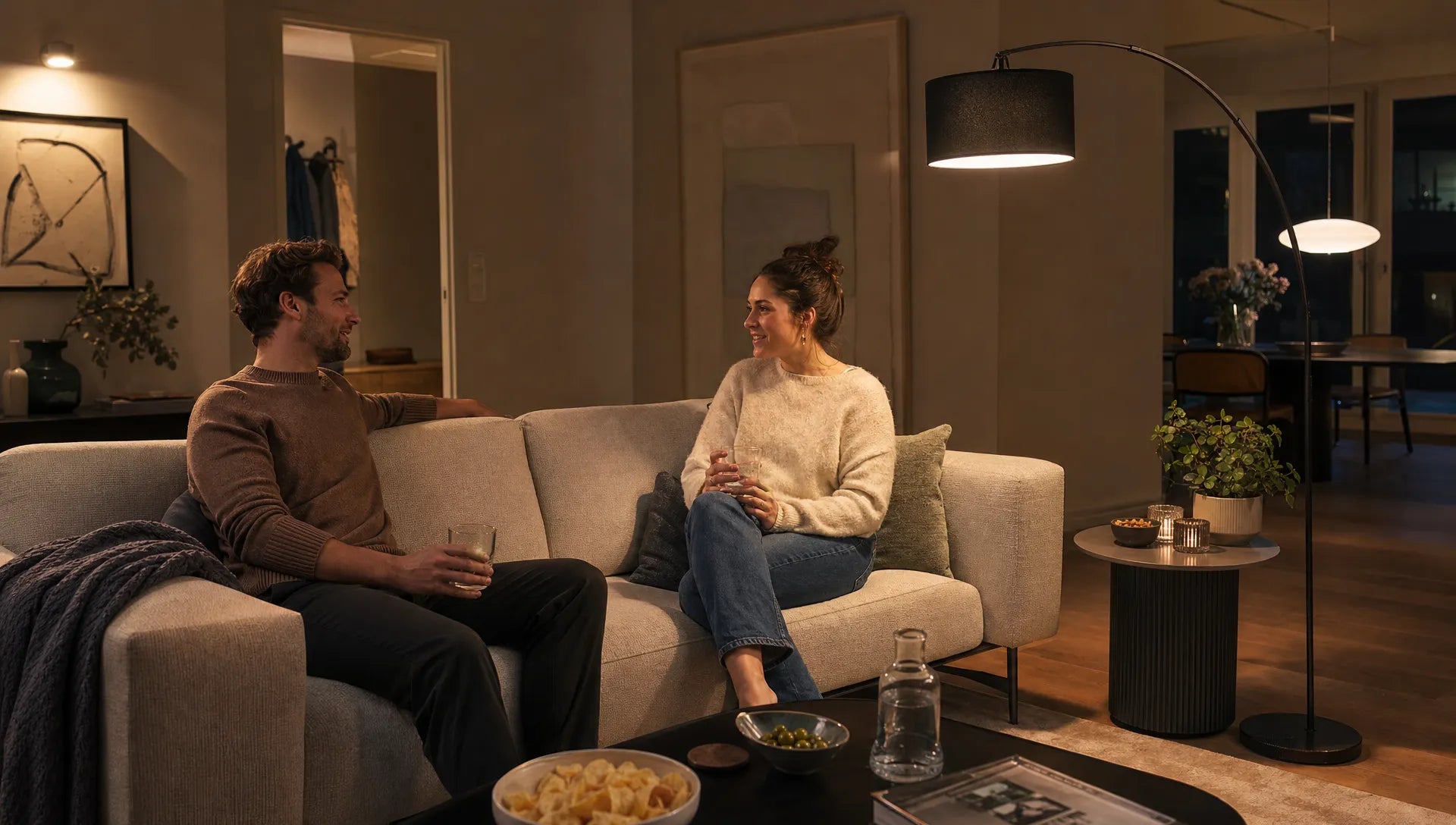
The location also plays a role. Above the sofa, the lamp should often provide relaxing light without harshly illuminating faces. In a reading corner, the light beam can be more targeted. The umbrella should sit above the dining table in such a way that it illuminates the table surface but does not shine into your eyes. If you reassemble or align the lamp when changing the shade, a safe sequence of steps helps. The BUYnBLUE Guide on the topic Set up the arc lamp without errors shows what you should pay attention to when it comes to construction and stability.
The most important basic rule is: The new shade must fit the lamp, not just the room. A nice lampshade is not a good choice if the attachment is not compatible, the shade is too heavy, or the light source is too close to the material.
The most important dimensions for the right umbrella
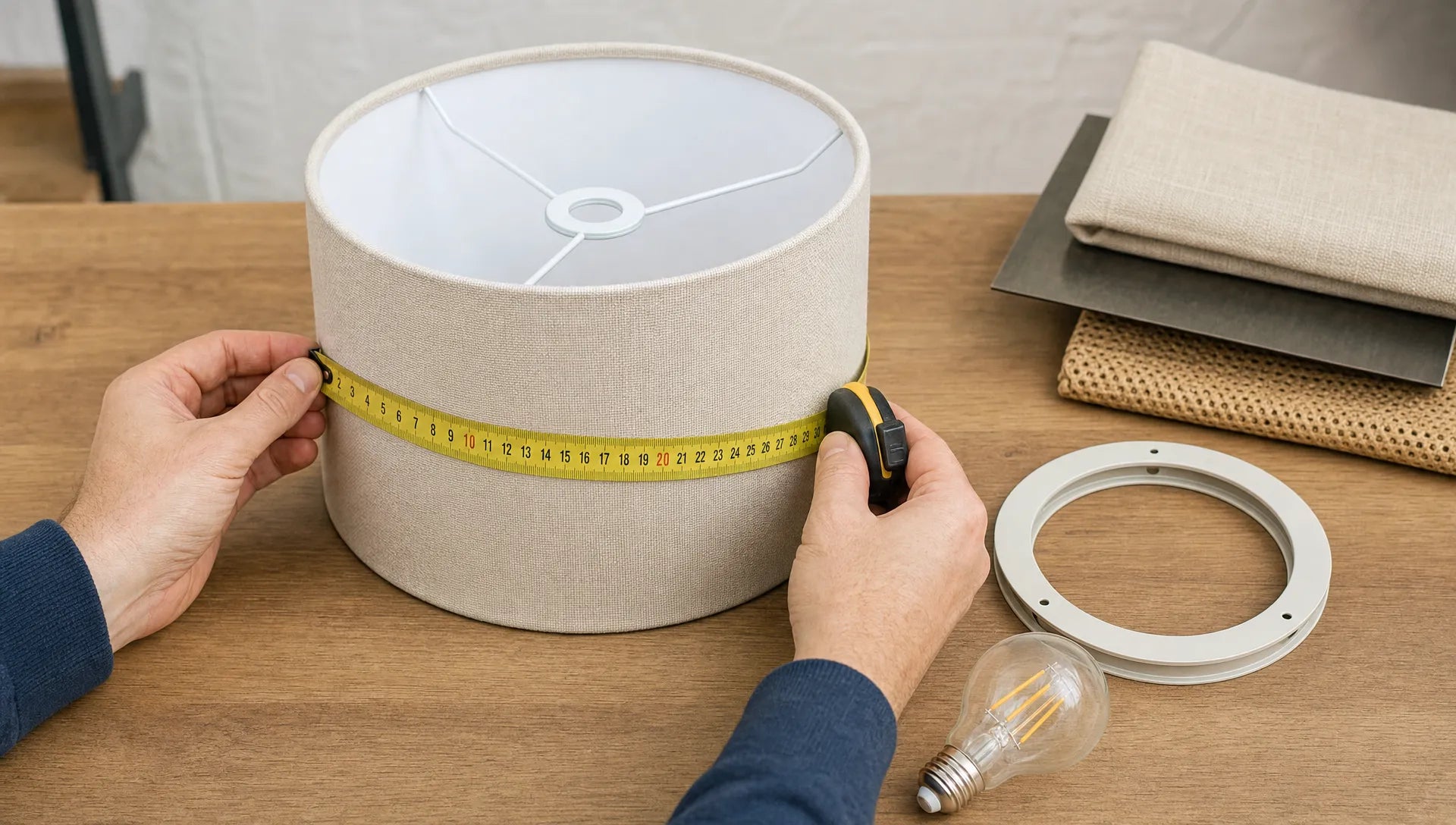
If you are looking for a shade for an arc lamp online, you should measure carefully before purchasing. Many bad purchases occur because only the diameter is taken into account. For arc lamps, height, opening, attachment point and weight are also relevant.
| Dimension | How to measure correctly | Why it matters |
|---|---|---|
| Shade diameter | At the widest point from outside edge to outside edge | Influences proportion, light cone and spatial effect |
| Umbrella height | From top to bottom edge | Determines how visible the light source is |
| Opening at top and bottom | Measure inside edge to inside edge | Important for glare, light emission and air circulation |
| mounting hole | Check the diameter of the opening or ring | Must fit the socket or mount |
| Weight | Check the manufacturer's instructions or weigh the old umbrella | Too much weight can put strain on the bow |
Measure the old shade if it is still there. Also take photos of the frame and the attachment from several sides. Especially with older arc lamps, there are special solutions that are not immediately visible in product photos.
As an orientation, a shade has a harmonious effect if it is in a clear relationship to the span of the arc lamp. If the arch extends far over a sofa, the umbrella can be visually present. With a slim lamp in a small corner, a more compact shade usually appears quieter. What is important is not the absolute size, but the balance between the base, bow arm and umbrella.
Check attachment: Does the umbrella fit technically?
Attachment is the point where design desires often meet reality. Not every lampshade can be mounted on every arc lamp. Therefore, first check how the existing umbrella is held.
In many floor and arc lamps, the shade sits on a ring that is attached to the socket. In Germany, the E27 socket is very common, smaller lights sometimes use E14. But there are also shades with a central opening for a threaded rod, shades with a clamp attachment to the lamp or models that were designed specifically for a specific series of lights.
| Fastening type | How you recognize them | What you should pay attention to |
|---|---|---|
| Setting ring | The shade is fixed to the socket with a screw ring | Inner ring and socket must fit together |
| Threaded rod with locking nut | Umbrella has a hole at the top or in the middle | Check hole diameter and rod length |
| Clamp screen | Small clip sits directly on the bulb | More suitable for small shades, not ideal for heavy arc lampshades |
| Integrated special umbrella | Screen is part of the construction | Replacement usually only makes sense through the manufacturer or suitable series |
Before changing the screen, pull out the power plug. Also check the maximum power specified for the light. Modern LED lamps generate less heat than classic incandescent lamps, but every umbrella still needs sufficient distance from the light source and air circulation. Especially with fabric, paper, rattan and other natural materials, the lamp should not be directly on the shade.
Which shape suits your arc lamp?
The shape of the shade changes where the light is directed. This is particularly visible with an arc lamp because the shade usually hangs freely in the room and is viewed from several sides.
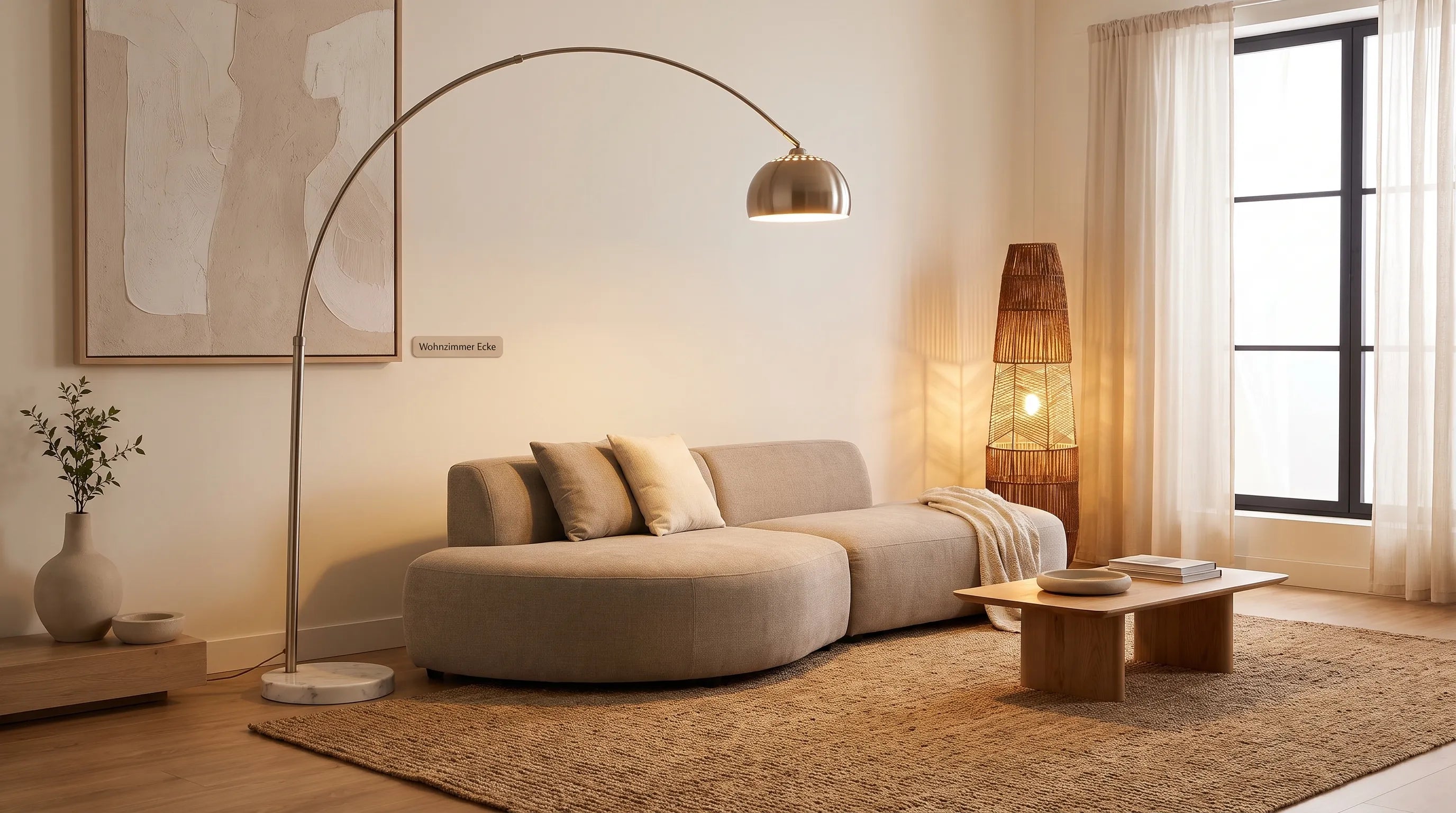
A hemispherical shade has a classic modern look and goes well with clean lines, marble feet and metal arches. It focuses the light downwards and is suitable for a sofa, reading chair or coffee table. A cylindrical fabric shade distributes the light more softly throughout the room and takes away the harshness of a large arc lamp. Conical umbrellas appear lighter because they open upwards or downwards. Large drum shades make a conscious statement and work particularly well in rooms with sufficient ceiling height.
| Umbrella shape | Light effect | Fits particularly well |
|---|---|---|
| hemisphere | Directed downwards, clear beam of light | Modern living rooms, reading areas, coffee tables |
| Cylinder | Soft, even, homely | Sofa areas, bedrooms, open floor plans |
| Cone | Directional, but visually lighter | Mid-century style, small seating areas |
| drum | Large and decorative | High rooms, spacious living rooms |
| Braid or rattan look | Warm light with structure | Boho, Japandi, natural facilities |
Make sure that the shape matches the lines of the arc lamp. A very delicate bow cannot tolerate an overly heavy umbrella. A solid arch with a large base, on the other hand, can support a more striking lampshade.
Material and color: This is how the shade changes the light
The material determines whether an arc lamp is functional, decorative or atmospheric. Fabric shades diffuse light pleasantly and soften living areas. They are a good choice if the arc lamp is used as a background or mood light. Dense fabrics reduce glare more, but allow less light into the room.
Metal shades direct light downwards in a more targeted manner. They suit minimalist, industrial and elegant interiors. A metallic shade can appear very high-quality, but it needs to be in the right position so that it doesn't dazzle. The Floor lamps Palle Colore shows as a style example how a gold-colored metal frame and a matching shade can create a luxurious, clear effect.
Natural structures bring a different atmosphere. Rattan look, bamboo or woven surfaces filter the light more vividly and create shadow patterns. It seems warm, relaxed and less technical. If you like this character, you will find it in the Floor lamps Solea a fitting example of natural design with a slim, hand-woven rattan-look umbrella.
Color is also more than decoration. Bright shades reflect a lot of light and make rooms appear larger. Dark shades appear calmer and more elegant, but absorb the brightness. Interior surfaces in white diffuse light neutrally, golden or copper-colored interior surfaces make it warmer. In very minimalist rooms, a colored shade can intentionally serve as an accent, but should have a connection to other materials in the room.

Plan the right lighting effect
A new shade is of little use if the lamp doesn't match. Therefore, check the shade and lamp together. Warm light colors are popular for cozy living areas, often in the warm white light range. For reading corners, the light intensity can be higher as long as the shade is aligned so that it is glare-free.
Glare is a common problem with arc lamps over seating areas. It occurs when the light source is directly visible from the side or while sitting. A deeper shade, a matt diffuser or a bulb with an opal surface can help. The height of the arc lamp is also relevant: the shade should illuminate the area without hanging directly at eye level.
For interior designers and ambitious furnishers, it is worth taking a look at the color rendering. If you want materials, wall colors and textiles to appear as natural as possible, a light source with good color rendering makes sense. This can make the difference between flat and harmonious light, especially in rooms with wood, natural stone, art or colored fabrics.
Proportions in the room: When does the shade work correctly?
The right shade for an arc lamp must work from multiple angles. View the lamp not only from the front, but also from the door, from the sofa and from adjacent areas. In open living spaces, an arc lamp is often part of a larger visual axis.
A good test is the silhouette. Imagine the lamp as a dark line: the base, arch and shade should create a balanced shape. If the shade looks like a foreign body, it is usually too big, too small or stylistically too far away from the lamp. The height of the lower edge of the umbrella also counts. If it hangs too low, the lamp can appear oppressive. If it sits too high, the light cone loses its cozy effect.
Also, align the shade with the furniture. A round or hemispherical umbrella looks particularly calm above a round coffee table. For straight sofas and rectangular tables, a cylindrical or slightly conical shade can accommodate the geometry. In a room with lots of soft textiles, a metal shade can create tension, while in very cool interiors a fabric or wicker shade adds warmth.
Avoid common mistakes when buying
The most common mistake is a lampshade that looks good but doesn't fit technically. This is immediately followed by incorrect size, excessive weight and a lighting effect that does not suit the purpose of the lamp.
Before purchasing, check these points:
- Is the attachment compatible with the socket or holder?
- Does the diameter match the span of the arc lamp?
- Is the umbrella light enough for the bow arm?
- Does the shade cover the lamp sufficiently to prevent glare?
- Can the material tolerate the heat generated by the chosen light source?
- Do the color and material harmonize with the sofa, table, carpet and wall color?
Another mistake is to look at the screen in isolation. Lampshades often appear different in the store or in product pictures than in your own room. The combination of daylight, wall color, ceiling height and furniture size is crucial. If you are unsure, work with proportion instead of gut feeling: measure the old umbrella, mark the possible diameter with paper or cardboard and check the effect directly on site.
Think about care and suitability for everyday use
A lampshade shouldn't just look good on the first day. Fabric umbrellas need regular dusting, preferably with a soft cloth or an upholstery nozzle on a low setting. Metal shades are easy to clean, but show fingerprints more quickly depending on the surface. Braided screens collect dust in the structure and should be cleaned carefully with a soft brush or cloth.
Stability is particularly important in households with children or pets. A heavy shade on a wide arc lamp can be unfavorable if the lamp is easily knocked. Then pay particular attention to a solid base, a secure position and sufficient distance from walkways.
The future of the space also counts. Those who change or renovate frequently often do better with a timeless, neutral umbrella. If you want to make a conscious statement, you can use color, metallic shine or natural structure in a targeted manner. The advantage of an arc lamp is that it acts like a mobile architectural detail: it can create zones, direct light and add height to the room without the need for a ceiling outlet.
Frequently asked questions
Can I use any lampshade for an arc lamp? No. The shade must match the mounting, socket, size and load capacity of the lamp. In particular, the weight and type of fastening should be checked before purchasing.
What shade size is ideal for an arc lamp? This depends on the span, base, room size and use. The shade should be large enough to comfortably cover the light area, but not so large that it visually or technically overloads the arch.
Which material is best for reducing glare? Fabric, matt surfaces and shades with diffusers usually reduce glare better than open, highly reflective metal shades. It is also important that the light source is not directly visible.
Does a rattan shade fit a modern arc lamp? Yes, if material and form are consciously combined. A natural shade can make a modern metal lamp appear softer and is particularly suitable for Boho, Japandi and warm living concepts.
Should the shade be light or dark on the inside? A bright interior reflects more light and appears more functional. A dark interior creates a calmer, more focused lighting effect, but may not illuminate the room as much.
Plan in style BUYnBLUE
If a single replacement shade isn't enough and you want to rethink your lighting holistically, it's worth taking a look at the curated selection BUYnBLUE. There you will find modern designer lights for different living areas, from expressive floor lamps to pendant and ceiling solutions.
It is also helpful for projects with special room dimensions BUYnBLUE offers a free customization service for chandeliers and pendant lights, for example in terms of cable length, canopy or color. This means that the lighting can be planned not only beautifully, but also to match the architecture.