Use vintage ceiling lamps in a modern way without retro kitsch
A vintage ceiling lamp is rarely just a light source. It brings history, material depth and a certain naturalness into the room. But that is exactly where the challenge lies: if it is staged too literally, the look quickly tips towards themed rooms, flea market romance or retro kitsch.
Used in a modern way, a vintage ceiling lamp works differently. It doesn't compete with old furniture, patterned wallpaper and nostalgic decoration, but rather has a clear framework. Reduced colors, contemporary lamps, good proportions and a conscious mix of materials ensure that the lamp shows character without dominating the room.
This guide shows you how to confidently use a vintage ceiling lamp in modern living spaces, renovation projects and interior concepts.
What makes a vintage ceiling lamp look modern
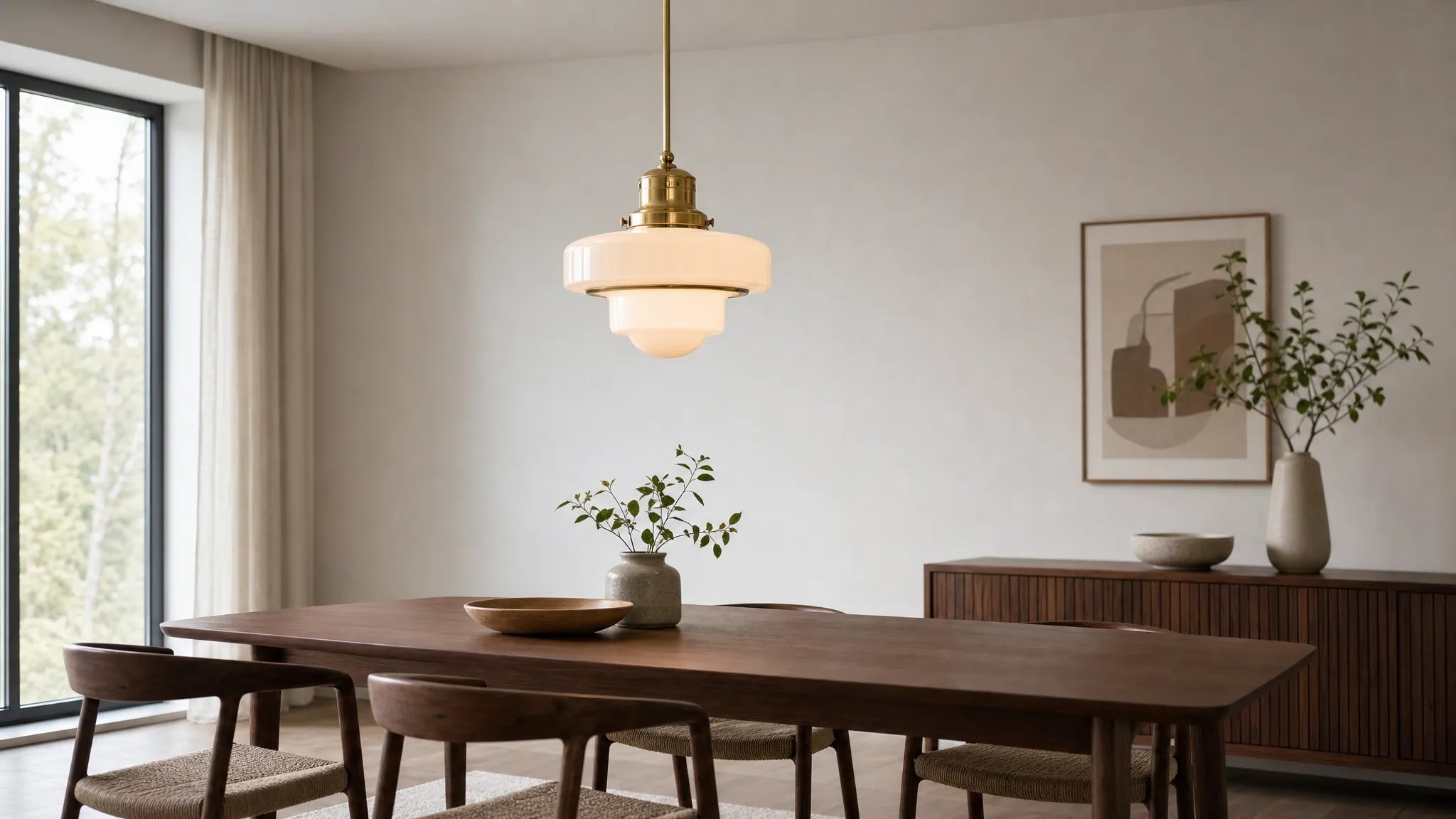
Vintage does not automatically mean old-fashioned. What is crucial is which properties of the lamp are emphasized. A curved shape, patinated brass, opal glass, ribbed glass or a classic shade can look very contemporary when combined with clean lines and calm surfaces.
The look becomes modern primarily through contrast. An old or vintage-inspired ceiling lamp looks particularly strong above a simple dining table, in a hallway with smooth walls or in a living room with pared-down sofas and clear architecture. The space gives the lamp calm, the lamp gives the room depth.
The technical level is also important. A vintage look should not mean that light quality, dimmability or suitability for everyday use are neglected. Warm but not too yellow light, appropriate brightness and clean assembly make the difference between lovingly curated and accidentally old.
The most important rule: a vintage statement is often enough
The most common mistake when decorating with vintage lamps is overdosing. An eye-catching vintage ceiling lamp doesn't automatically need an antique sideboard, floral curtains, retro posters and gold accessories in the same room. Modern interiors in particular benefit from allowing the vintage accent to stand alone.
A good rule of thumb is to choose one key historical reference and consciously keep the rest quieter. If the ceiling lamp is the defining element, furniture, carpets and wall colors can be more reserved. This creates tension instead of scenery.
If you want to continue the style with smaller lights, you should make a conscious distinction between main light and accent light. For side tables, consoles or bedside tables BUYnBLUE Guide to Vintage table lamp as a modern accent a suitable addition without weakening the focus of the ceiling light.
Materials: the right mix prevents nostalgia overload
Materials play a big role in whether a vintage ceiling lamp looks fresh or old-fashioned. Brass, bronze, glass, ceramic and dark metal can appear elegant if they are not isolated but combined with contemporary surfaces.
Combinations with natural stone, light wood, matt wall colors, linen, lime plaster or smooth kitchen fronts are particularly harmonious. These materials take away the decorative aspect of the lamp and anchor it in today's living context.
| Vintage element | Modern partner | Effect | Better to avoid |
|---|---|---|---|
| Brass or bronze | Lime white, travertine, oak, matt ceramic | Warm, high quality, quiet | Too many shiny gold accents in the same room |
| Opal glass | Minimalist furniture, light walls, chrome details | Soft, timeless, graphic | Very yellow bulbs and heavy patterns |
| Smoked glass | Dark wood, clean lines, neutral textiles | Elegant, urban, reserved | Dark walls plus dark furniture with no balance |
| Crystal or cut glass | Simple architecture, low color palette | Festive but modern | Playful furniture and decor in the same style |
| Black metal | Concrete, stainless steel, light natural tones | Industrial, clear, precise | Completely industrial look without any homely elements |
Colors should also be chosen consciously. A vintage brass ceiling lamp does not necessarily need other brass elements throughout the room. One or two subtle repetitions are enough, for example on a picture frame, a handle or a small wall lamp. Too many repetitions quickly appear planned and therefore less elegant.
Room by room: this is how you can use the vintage ceiling lamp in a targeted manner
Not every light fits every room. A vintage ceiling lamp can appear as a flat ceiling light, a pendant light, a small chandelier or a multi-bulb ceiling light. The effect depends heavily on the ceiling height, room size and use.
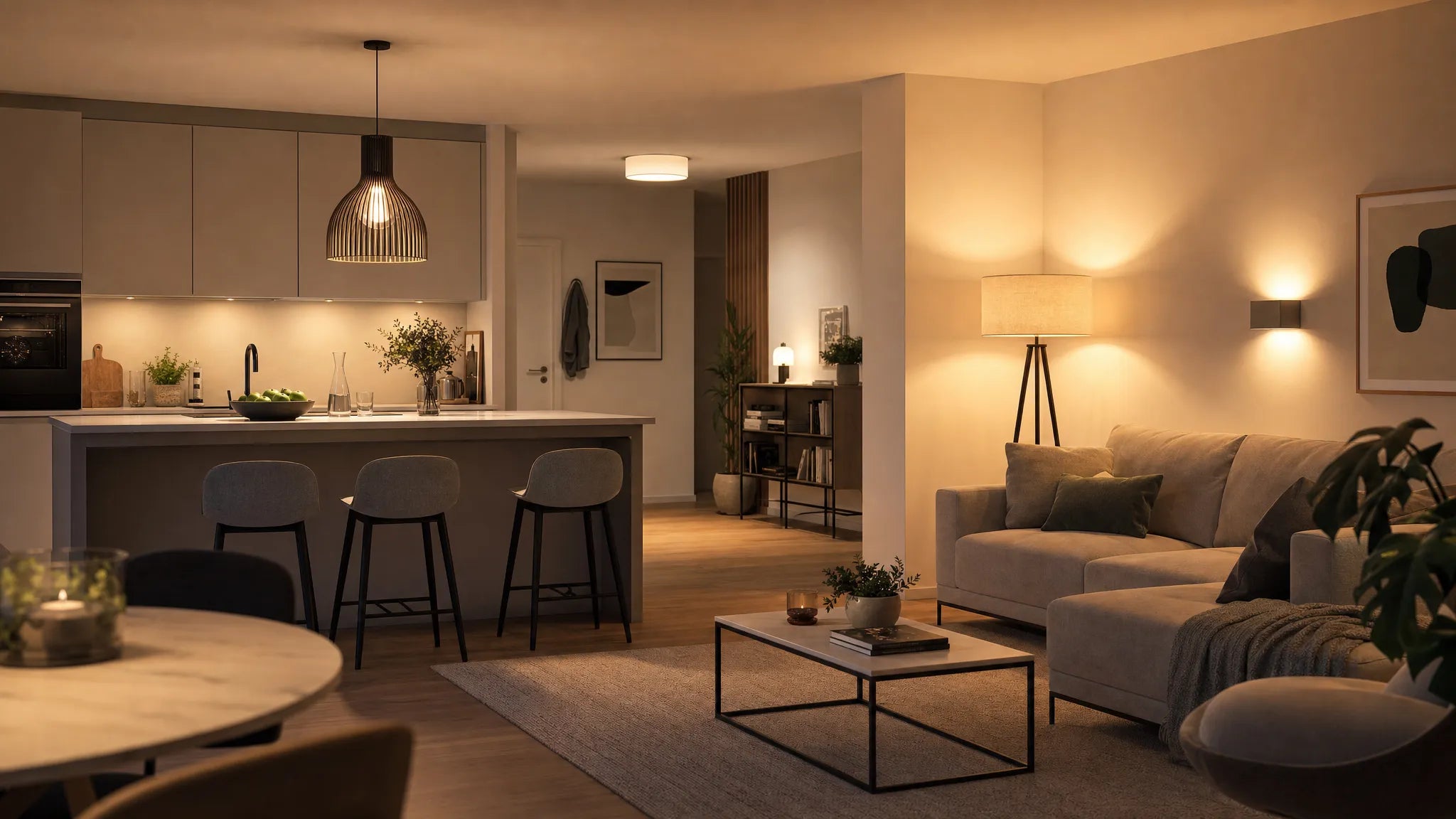
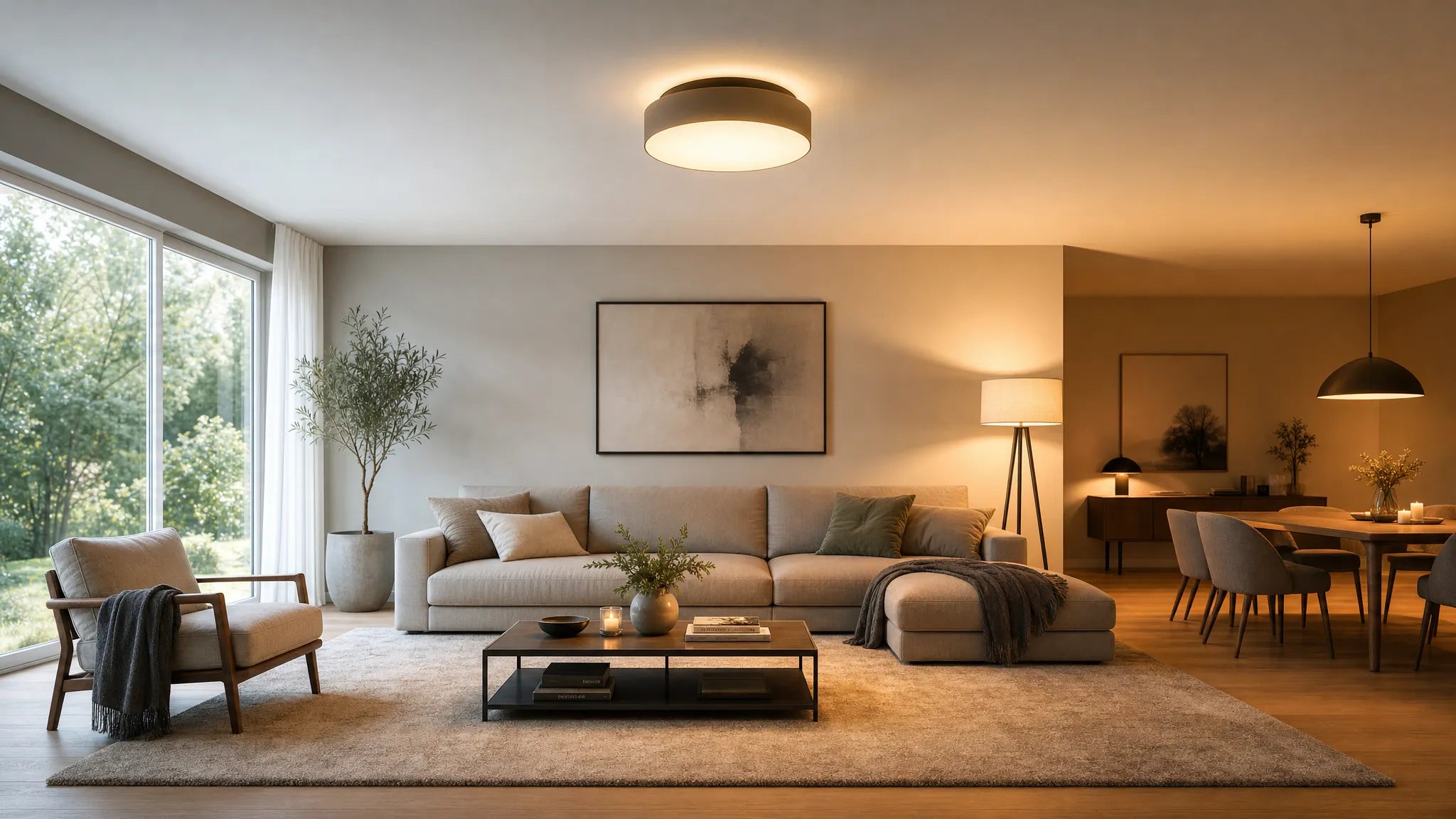
It can be more present in the living room, as long as it is not the only point of light. Combine them with indirect light, floor lamps or wall lights so that the room does not appear flat in the evening. A central vintage ceiling light is nice, but layers of light are what make the room feel comfortable.
A vintage-inspired pendant light works particularly well above the dining table because it defines the focal point of the room. Height is important: The lamp should hang low enough to create atmosphere, but high enough to allow eye contact. For longer tables, linear shapes or several small shades often look more modern than a single, very heavy candlestick.
In the hallway, a vintage ceiling lamp can add character without taking up space. Flatter models make sense here, especially with standard ceiling heights. In old building hallways with high ceilings, however, the luminaire can protrude more into the room.
| space | Appropriate use | Modern trick |
|---|---|---|
| Living room | Central ceiling lamp as an eye-catcher | Combine with indirect light and quiet furniture |
| Dining area | Pendant lamp or small chandelier above the table | Match the shape of the table and the shape of the lamp |
| hallway | Flat vintage ceiling light or glass ceiling | Keep walls simple so that the entrance does not appear cluttered |
| bedroom | Soft, warm main light with a vintage character | Plan for dimmability and textile surfaces |
| Kitchen | Ceiling lamp with clear glass or metal shape | Solve the work light separately so that the vintage lamp can remain atmospheric |
If you are still unsure which shape of ceiling light suits a calm, modern room, it is worth taking a look at the basics modern ceiling lamps in stylish living rooms. There it's more about the general spatial effect, while this article focuses on the vintage accent.
Light color: the underestimated anti-kitsch factor
Many vintage looks appear kitschy not because of the shape, but because of the wrong lighting. Lamps that are too yellow can quickly make brass, wood and dark materials appear heavy. Light that is too cold, on the other hand, destroys the warmth that actually characterizes vintage elements.
A range of around 2700 to 3000 Kelvin is usually comfortable for living rooms. 2700 Kelvin looks warm and homely, 3000 Kelvin seems a little clearer and more modern. The clearer version can be useful in kitchens, hallways or work areas, while dining rooms and bedrooms often benefit from warmer light.
Also pay attention to good color reproduction. A high color rendering index, often stated as CRI or Ra, makes wood, textiles and wall colors appear more natural. Poor color reproduction can distort the entire design, especially with glass, brass or colored shades.
Dimmability is also crucial. A vintage ceiling lamp should perhaps appear sculptural during the day, but create atmosphere in the evening. This bandwidth can be used better with dimmable LED lamps. If you use filament-like bulbs, you should choose them carefully: a visible filament can be charming, but too many visible retro bulbs quickly make the look appear decorative instead of elegant.

Proportions: the lamp must speak to the room
A vintage ceiling lamp looks modern when it stands in a clear relationship to the room. If it's too small, it looks lost. When chosen too large, it appears theatrical. Particularly when it comes to ceiling lamps, proportion is more important than style.
Above a dining table, the lamp should visually match the table. Round or symmetrical lights work particularly well with round tables. For rectangular tables, elongated pendants, multi-flame designs or a series of smaller shades often appear more balanced.
For low ceilings, flat vintage ceiling lights, opal glass ceilings or short pendants are the better choice. If the ceiling is high, a light may appear more vertical, but it should not hang so low that it visually weighs down the room.
| situation | Practical orientation |
|---|---|
| Dining table | Place the lamp in the middle above the table and keep eye contact clear when sitting |
| Low ceiling | Prefer flat or short-hung models |
| High old building ceiling | Use a larger shape or longer suspension so that the lamp does not appear lost |
| Small room | Choose a clear shape and reduce decor in the surrounding area |
| Open living area | Use the light as a zoning element, for example above a table, island or seating area |
When renovating, it is worth planning the ceiling connections early on. A vintage ceiling lamp can only appear natural if it is in the right place. Particularly in open floor plans, the existing power outlet is not always where the luminaire would be ideal in terms of design.
Ceiling canopy, cable length and color: small details with a big impact
Many high-quality lighting concepts fail not because of the luminaire, but because of the details. An inappropriate canopy, a cable that is too long or too short, or a color that doesn't match the room can disrupt the carefully planned look.
This is where the advantage of adjustable lights becomes apparent. If a pendant light is used in an old building with a 3.20 meter ceiling height, it needs different proportions than in a new building with a 2.50 meter ceiling. A canopy may also need to be adjusted depending on the ceiling connection, spatial axis and number of cables.
BUYnBLUE offers free customization of chandeliers and pendant lights, for example in terms of cable length, canopy or color. This is particularly helpful when a vintage-inspired lamp needs to be integrated in a modern and architecturally clean manner, rather than seeming like an afterthought.
Combination with modern furnishing styles
A vintage ceiling lamp can work in many current home styles. The trick is not to recreate the entire vintage style, but to adopt a certain quality from it: warmth, craftsmanship, depth of materials or a particular silhouette.
In minimalist rooms, the lamp is often the only decorative focal point. Clear shapes made of opal glass, brass or black metal are suitable here. The rest of the room should remain calm, with few, high-quality materials.
Vintage lights work in the Japandi style if they are not too ostentatious. Soft glass, muted metals and natural textiles create a warm but reduced atmosphere.
In modern old apartments the contrast can be stronger. Stucco, floorboards and high ceilings can tolerate a more expressive light as long as the furniture and colors do not also go in a historical direction. A modern dining table under a vintage-inspired chandelier can look very convincing here.
For a more comprehensive understanding of how vintage elements generally interact with modern lamps, see the article on Combine vintage lamps in a modern way instead of being overloaded additional design ideas.
Typical mistakes that make a vintage ceiling lamp look kitschy
Retro kitsch is rarely created by a single object. It's usually the sum of too many signals, too little quiet and the wrong light. You should avoid these points:
- Combining too many vintage furniture, patterns and accessories in one room.
- Use very warm, yellowish lamps with dark furniture and heavy fabrics.
- Repeat brass, gold or crystal several times and very shiny.
- Choose a light that is too small in high or large rooms.
- Use visible retro bulbs as the only design idea.
- Accept the existing ceiling connection, even though the light is positioned incorrectly.
The modern way is more reserved. Let the vintage ceiling lamp tell the story, but give it a clear stage. The more precisely the space around them is designed, the higher the quality of the historical reference appears.
Planning tips for renovation, architecture and interior design
If you are planning an entire room concept, you should not choose the vintage ceiling lamp at the end. Light should be included in the design early on, especially when connections, switches, dimming technology or special lengths are relevant.
For architects and interior designers, the ceiling lamp is often a good way to add emotional depth to a very clear space. In visualizations, it is worth thinking of the lamp not just as an object, but as a lighting effect. Shadows, glass diffusion and reflections on metal surfaces have a greater impact than many product images suggest.
A simple process is helpful for private renovations: first clarify the room's function, then determine the position of the lamp, then choose the style and material. This is followed by technical details such as dimming, lamps, cable length and installation. Electrical work should always be carried out professionally, especially in the kitchen, bathroom or older installations.
Frequently asked questions about vintage ceiling lamps
Does a vintage ceiling lamp fit into a modern apartment? Yes, modern apartments in particular benefit from a targeted vintage accent. It is important that the furniture, colors and materials remain calm enough so that the lamp does not compete with too many nostalgic elements.
Which light color is ideal for a vintage ceiling lamp? For living spaces, 2700 to 3000 Kelvin usually makes sense. 2700 Kelvin seems more comfortable, 3000 Kelvin seems a little clearer and more modern. It is crucial that the light appears warm, but not excessively yellow.
How do I avoid retro kitsch with a vintage ceiling lamp? Use the lamp as a single statement, combine it with modern furniture and reduce decorative repetition. Good proportions, high-quality materials and dimmability also help.
Is a vintage ceiling lamp suitable for low ceilings? Yes, if the model is flat or only briefly suspended. Plafonds, compact glass lights or short pendant lights usually look more harmonious with low ceilings than large chandeliers.
Can a vintage-inspired pendant light be customized? At BUYnBLUE Chandeliers and pendant lights can be adjusted free of charge, for example in terms of cable length, canopy or color. This is particularly useful for special ceiling heights or different room layouts.
Conclusion: character yes, costume no
A vintage ceiling lamp looks modern when it is not used as a decorative theme, but as a conscious design element. The room needs clarity, the luminaire needs good proportions, and the light must fit the use. Then you don't end up with retro kitsch, but rather an interior with depth, warmth and personality.
If you are looking for a high-quality ceiling or pendant light that fits your room and not just a style image, look no further BUYnBLUE a curated selection of modern designer lighting. With free customization, free worldwide shipping, a 14-day return policy and secure order processing, even a vintage-inspired lamp can be precisely integrated into modern living concepts.