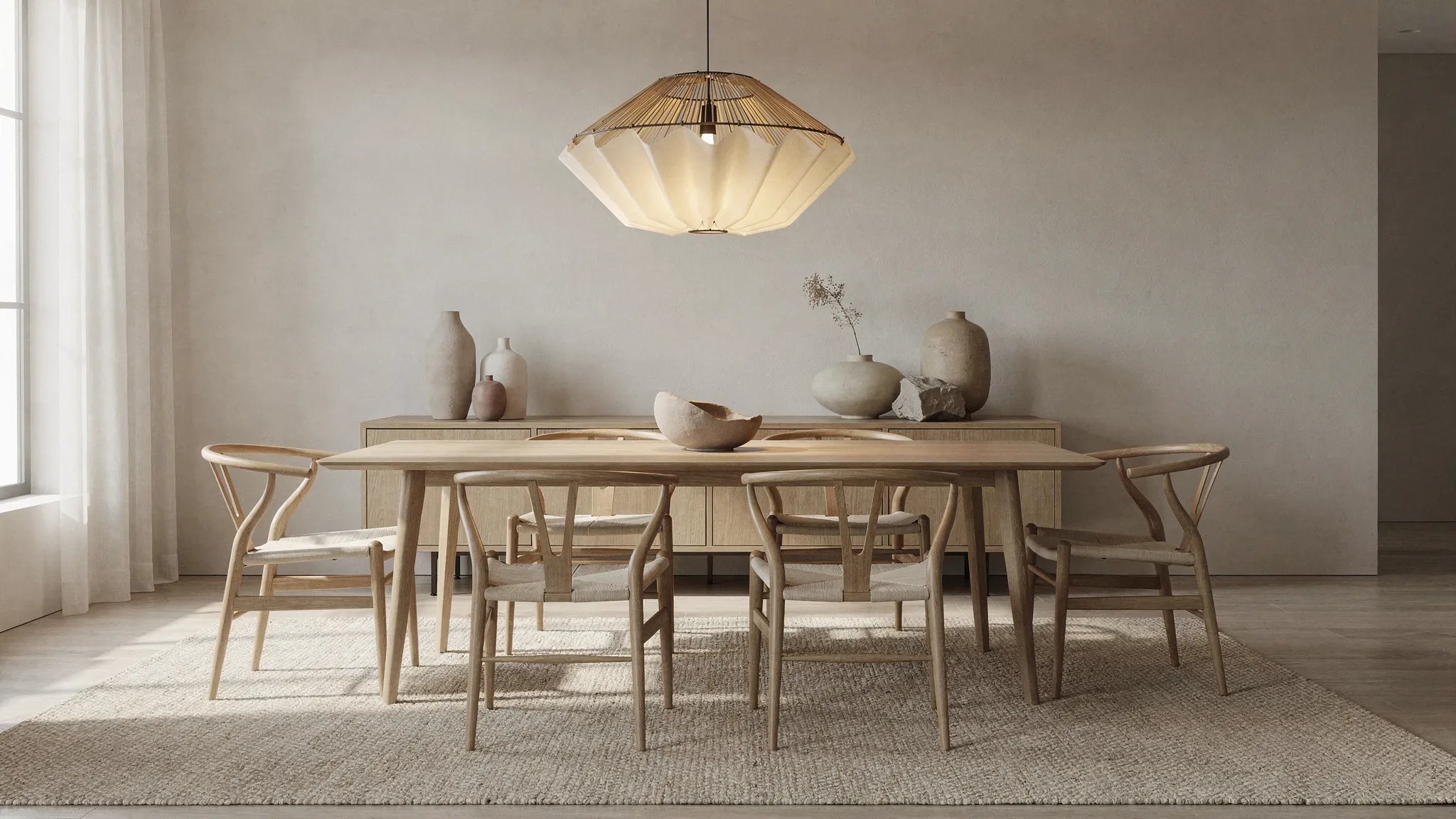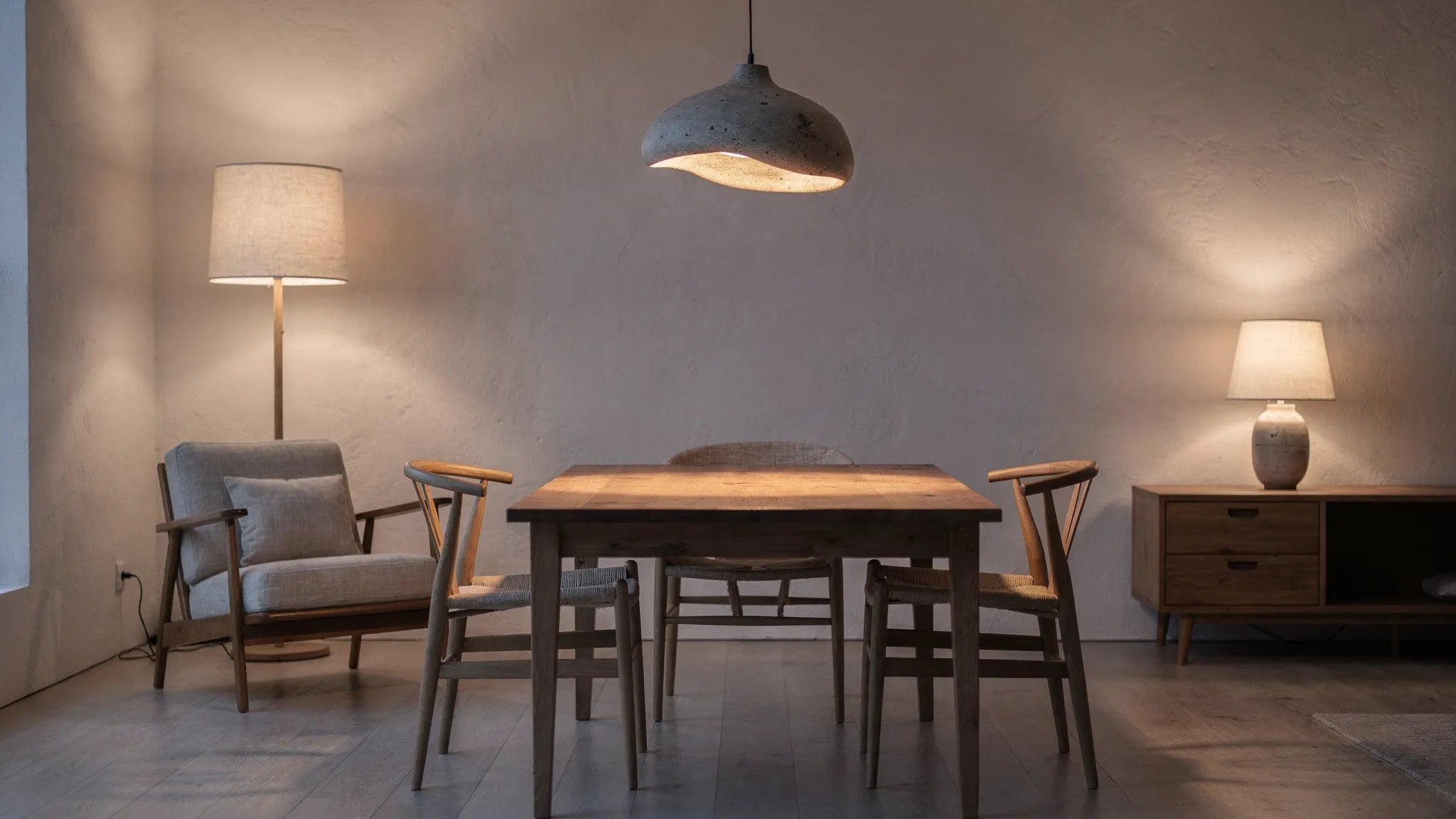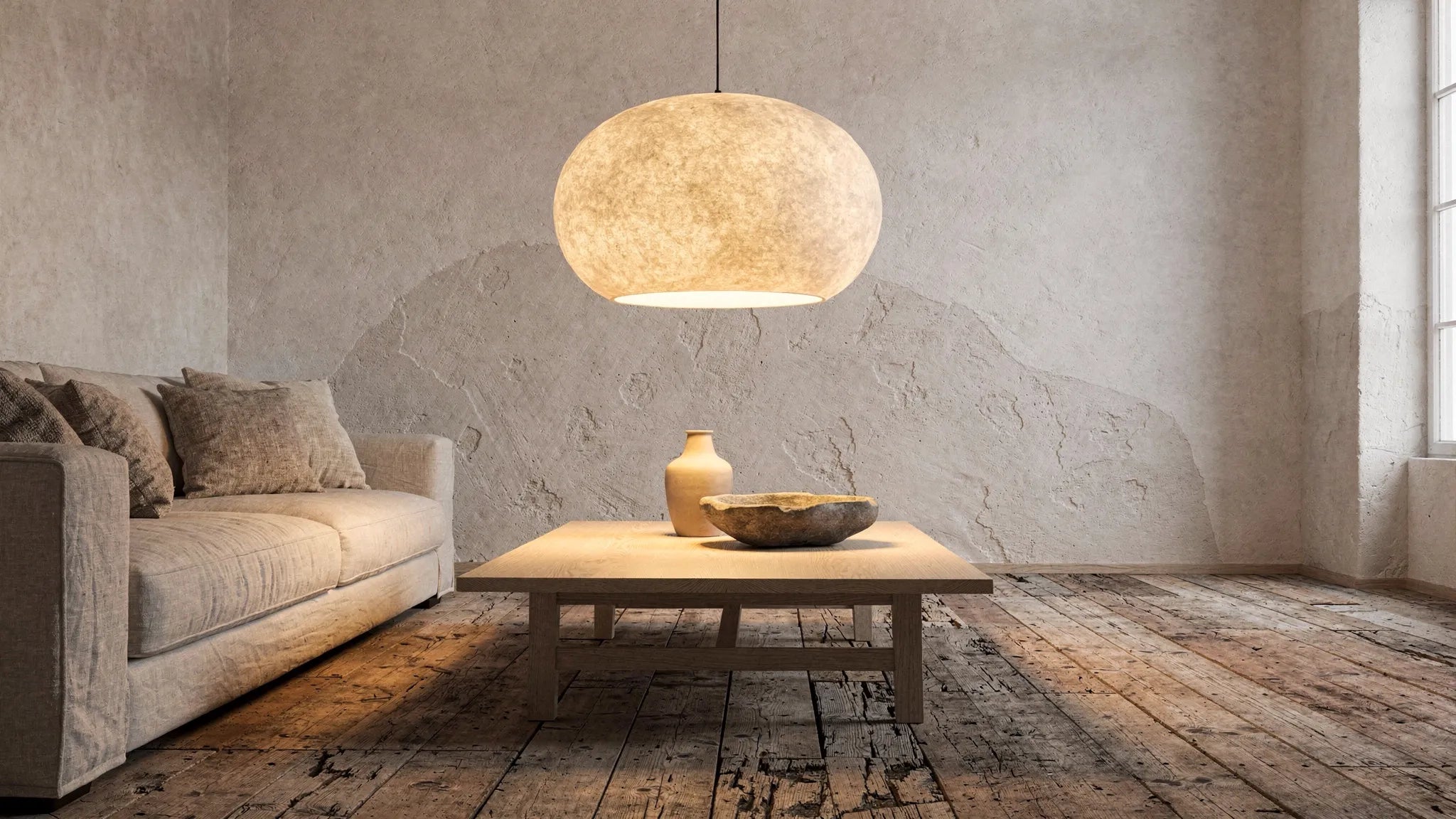
Wabi-Sabi lamps for calm, natural living spaces
A room doesn't automatically appear calm just because it's painted beige. Real peace arises when materials, shapes and light speak the same language: soft, honest, reduced and close to nature. This is exactly where Wabi-Sabi lamps come into play. They don't bring loud perfection into the room, but rather a quiet, warm presence.
One Wabi-Sabi lamp is less a firmly defined lamp type than a design approach. It can be organically shaped, have a matt surface, show visible textures or appear deliberately irregular. What is crucial is that it does not dominate, but rather creates atmosphere. For living rooms, bedrooms, dining areas and hallways, this approach is ideal if you want to create a home that feels relaxed, natural and timeless.
What makes Wabi-Sabi lamps special
Wabi-Sabi comes from Japanese aesthetics and values the simple, imperfect and ephemeral. Applied to lighting, this means: A lamp does not have to be mirror-smooth, strictly symmetrical or conspicuously shiny. It can appear like a handcrafted object that shows traces of material, structure and production.
Compared to purely minimalist lamps, Wabi-Sabi lamps are often softer and more sensual. Instead of cool perfection, the focus is on natural surfaces, diffuse lighting effects and restrained shapes. A lamp can be simple without appearing sterile. It is precisely this balance that makes the style so homely.
Typical features are:
- Matte instead of high-gloss surfaces
- Organic, slightly asymmetrical shapes
- Warm, muted light colors
- Materials such as paper, linen, wood, ceramic, stone look, glass or rattan
- Visible textures and soft shadows
- A calm overall impression without decorative overload
If you want to deepen the interior design style as a whole, it's worth adding BUYnBLUE Guide to Wabi-Sabi furnishing style. This article deliberately focuses on the selection and effect of the right lamps.
The right quality of light: soft, warm and glare-free
Wabi-Sabi lives not only from the design of the lamp, but above all from the quality of the light. No matter how beautiful a lampshade is, it loses its effect if the light is harsh, cold or blinding. For quiet living spaces, the light should be softly diffused and appear more like a natural glow than technical illumination.
Warm white light is usually suitable for living and sleeping areas. Values of around 2,700 to 3,000 Kelvin create a pleasant, homely atmosphere. In very quiet evening zones, particularly warm light can also be useful, provided the lamp or lamp allows this. Light that is too cool, on the other hand, quickly appears objective and fits more into work areas than into a wabi-sabi living room.
Freedom from glare is also important. Lampshades made of fabric, paper, opal glass or structured materials diffuse light more gently than open, direct light sources. If LEDs are visible, they should be well shielded. A dimmable light is particularly recommended because Wabi-Sabi rooms are used differently throughout the day: brighter in the afternoon, more subdued in the evening.
| light feature | Recommendation for Wabi-Sabi rooms | Effect |
|---|---|---|
| color temperature | approx. 2,700 to 3,000 K | Warm, homely, relaxing |
| Light distribution | Diffuse or indirect | Soft shadows, less harshness |
| Dimmability | Highly recommended | Flexible mood depending on the time of day |
| Color rendering | The best possible CRI value | Natural representation of wood, textiles and wall colors |
| Glare | Concealed or shielded light source | Calm viewing comfort |
If you would like to delve deeper into the topic of color temperature, see the article What is Kelvin? an understandable explanation. Conscious choice of light is also worthwhile from a health perspective: Harvard Health Publishing points out that strong blue light in the evening can influence the sleep-wake cycle. Warm, dimmed light is particularly suitable for relaxed evening rooms.

Materials: Naturalness instead of perfection
The choice of material largely determines whether a lamp has a wabi-sabi effect. Natural or natural-looking materials bring depth to the room because they not only reflect light, but also filter, refract and structure it. A slightly irregular surface can appear more beautiful than perfect industrial smoothness.
Paper and fabric shades create a particularly soft light. Ceramic, plaster or stone look have an earthy and sculptural effect. Wood and rattan bring warmth, but should not be used too decoratively or ornately. Metal can also work if it is matte, patinated or finished in a calm finish, such as black, bronze, champagne or brushed finishes.
| material | Wabi-Sabi effect | Particularly suitable for |
|---|---|---|
| Paper or rice paper | Light, calm, poetic | Bedroom, reading corner, dining area |
| Linen or fabric | Soft scatter, homely | Living room, bedside table, hallway |
| Ceramic or clay optics | Artisanal, earthy | Sideboard, dining room, calm accents |
| Wood | Warm, natural, grounded | Living room, dining area, hallway |
| Rattan or wicker | Airy, organic | Summer living rooms, winter garden |
| Matt metal | Modern, reduced | Japandi and modern wabi-sabi interiors |
| Opal glass | Gentle, timeless, elegant | Ceiling, wall, table lamp |
What is important is that not every natural material automatically appears calm. Too many different types of wood, strong grains or coarse weaves can quickly appear unsettling. The Wabi-Sabi approach works best when the materials are consciously reduced. Two to three natural main materials are usually enough.
Which types of lamps suit Wabi-Sabi living spaces?
Wabi-Sabi lighting works particularly well when different light sources are combined. Instead of a single bright ceiling lamp, atmosphere is created through calm islands of light. This method also fits modern lighting planning concepts that combine basic lighting, zone lighting and accent lighting.
Pendant lights as a quiet focal point
A pendant light above the dining table, coffee table or kitchen island can be the central focal point of a wabi-sabi room. Large, simple shapes with a matt surface look particularly harmonious. A round, oval or slightly organic shade brings calm without appearing austere.
Above the dining table, the pendant light should hang low enough to create an intimate lighting zone, but not so low that it interferes with visual contact and movement. You can find practical planning values in BUYnBLUE Guide to Pendant lamp above the dining table.
Precise adjustment is particularly worthwhile for pendant lights. BUYnBLUE offers free customization for chandeliers and pendant lights, for example in terms of cable length, ceiling rose or color. This is particularly helpful if the lamp needs to sit perfectly in an old building, under high ceilings or in an open living-dining area.
Ceiling lamps for quiet basic lighting
A Wabi-Sabi ceiling lamp should not look like a technical panel, but should gently hold the room together. Flat, matt or diffusely luminous models are ideal for hallways, bedrooms and smaller living areas. Simple ceiling lights with opal glass or a textured shade also work well.
In very small rooms, the ceiling light can remain almost invisible. Then table, wall or floor lamps take on the emotional effect. In low rooms this is often a better solution than a dominant one Pendant Lamp.
Wall lights for depth and shadow
Wall lights are particularly effective in the Wabi-Sabi style because they model surfaces. A soft up-and-down light or a side-diffusing light adds depth to light lime, clay or textured walls. The light can make small unevenness visible. It is precisely these shadows that create liveliness.
In the hallway, next to the bed or in the living room next to an armchair, wall lights appear quieter than selective spots. Look for glare-free models and a mounting height that brings the light comfortably into your field of vision without shining directly into your eyes.
Table and floor lamps for cozy islands of light
Table lamps and floor lamps are ideal for making Wabi-Sabi rooms appear lively but not full. A ceramic table lamp on a sideboard, a simple linen lamp by the bed or a floor lamp with a diffuse shade next to the sofa creates targeted warmth.
The combination with natural objects is particularly beautiful: a stoneware bowl, a linen curtain, a raw wooden table or a single vase with twigs. The lamp should be part of a calm composition, not the only decorative element.
Room by room: How to use Wabi-Sabi lamps correctly
Every room needs a different balance of function and atmosphere. Wabi-Sabi does not mean dark, but consciously dosed. The goal is a lighting concept that fulfills tasks and still remains quiet.
| space | Matching lamps | Light effect | Tip |
|---|---|---|---|
| Living room | Floor lamp, table lamp, diffuse ceiling lamp, wall lamp | Soft, zoned, relaxing | It is better to have several weak light sources than one very bright one |
| Dining room | Large pendant lamp or group of simple pendants | Centered, warm, sociable | Choose a lamp proportional to the table |
| bedroom | Bedside lamps, wall lights, dimmed pendant lamp | Calming, low, glare-free | Prefer warm light and textile umbrellas |
| hallway | Matte ceiling lamp, wall lights | Inviting, calm, orientating | Use shadows consciously, but avoid dark corners |
| Kitchen | Pendant light over island or table, functional work light | Of course, but sufficiently bright | Combine Wabi-Sabi optics with good work lighting |
| bathroom | Ceiling or wall lights suitable for wet rooms | Clear, safe, homely | Observe IP protection areas |
A combination of three to five light sources is particularly suitable in the living room. Diffuse basic lighting, a warm reading light and an accent light on a wall or sideboard are often enough. If you are planning a complete lighting concept, you can BUYnBLUE Guide to Living room lighting use additionally.
Wabi-Sabi, Japandi and modern minimalism: what's the difference?
Wabi-Sabi, Japandi and modern minimalism are often confused with each other. They may overlap, but have different focuses. Minimalism reduced to the essentials. Japandi combines Japanese tranquility with Scandinavian functionality. Wabi-Sabi focuses even more on atmosphere, material traces and imperfect beauty.
A Wabi-Sabi lamp can therefore appear more sculptural and handcrafted than a strictly minimalist lamp. At the same time, it should be less decorative than rustic or boho lamps. The room should not look like a theme, but rather like calm.
| style | Lamp effect | Typical materials | Overall impression |
|---|---|---|---|
| Wabi sabi | Organic, imperfect, calm | Paper, ceramic, linen, wood, stone look | Meditative, natural, timeless |
| Japandi | Clear, functional, warm | Wood, glass, fabric, matt metal | Tidy, elegant, homely |
| Minimalism | Reduced, precise, reserved | Metal, glass, smooth surfaces | Clear, objective, modern |
| Boho natural | Decorative, loose, textile | Rattan, bamboo, macrame, fabric | Warm, playful, lively |
If you are torn between Japandi and Wabi-Sabi, this post will help Japandi lamps. For very quiet rooms, Wabi-Sabi is usually the softer, earthier choice.
Proportions: Why size matters more than decoration
One of the most common mistakes when it comes to Wabi-Sabi lamps is a lamp that is too small. Because the style appears reduced, many people choose very inconspicuous models. This can leave the room looking unfinished. Simple lamps in particular need good proportions to be effective.
A pendant light can be generous above a dining table. In a high living room, a large screen made of paper, fabric or matte finish can create calm and presence. On a sideboard, a table lamp should be high enough so as not to get lost like an accessory. In the bedroom, two smaller, asymmetrical bedside lamps can be very harmonious.
As a guide, the lamp should not only fit the size of the room, but also the furniture that accompanies it. A delicate lamp above a solid wooden table often seems lost. A heavy, dark lamp above a small table, on the other hand, can be depressing. Wabi-Sabi thrives on balance, not chance.
Colors: Earth tones, off-whites and matte contrasts
The color palette for Wabi-Sabi lamps is calm, but not boring. Particularly suitable are off-white tones, sand, greige, taupe, warm grey, clay, terracotta, black-brown and matt metal tones. Pure high-gloss white often appears too sterile. Highly saturated colors should only be used very sparingly.
A black Wabi-Sabi lamp can look very elegant if it is matt and combined with natural materials. A cream-colored shade brings more lightness. Ceramics in clay or stone colors create an earthy effect. It is important that the lamp forms a calm family with the wall color, floor and textiles.
Common mistakes with Wabi-Sabi lighting
The style seems simple, but is not arbitrary. Precisely because Wabi-Sabi is reduced, incorrect lighting decisions are quickly noticed.
- Light that is too cold: Neutral white or cold white can make the room appear matter-of-fact and uncomfortable.
- Too many statement lights: Wabi-Sabi needs a clear focus, not multiple competing points of view.
- Wrong mix of materials: Too many types of wood, metals and textures create unrest.
- Lack of dimmability: Without a dimmer, the flexible evening atmosphere is missing.
- Only one light source: A single ceiling lamp makes the room flat and not very livable.
- Surfaces that are too perfect: high gloss, chrome and reflective surfaces rarely match the soft wabi-sabi atmosphere.
The best solution is usually a conscious lighting concept: a calm main light, one or two functional light sources and a gentle accent. This keeps the room natural, but not dark.
Purchase checklist for your Wabi-Sabi lamp
Before choosing a lamp, check not only the design photo, but the room context. A lamp always works in conjunction with the ceiling height, wall color, furniture and daylight.
A good Wabi-Sabi lamp ideally meets these criteria:
- It has a matte, natural or textured surface.
- It produces warm, diffuse and low-glare light.
- It fits proportionally to the table, sofa, bed or room size.
- It can be dimmed or combined with suitable dimmable lamps.
- Even when switched off, it appears like a calm object.
- It complements existing materials instead of introducing new disturbances.
- If necessary, it can be adjusted in cable length, ceiling rose or color.
The last point is particularly crucial when it comes to pendant lights and chandeliers. If the cable length isn't right or the ceiling rose doesn't look right, even a high-quality light will seem improvised. BUYnBLUE offers free customization so that the lamp fits the room not only stylistically but also structurally.
Care and longevity: Allow patina, avoid dust
Wabi-Sabi does not mean that lamps should appear unkempt. The style accepts natural aging but not neglect. Paper and fabric umbrellas should be carefully dusted regularly. Ceramics, glass and matt metal surfaces can usually be cleaned with a soft, dry or slightly damp cloth. For textured surfaces, gentle pressure is better than strong rubbing.
Patina can be beautiful if it is part of the material. Scratches, small color nuances or craftsmanship irregularities make a lamp come alive. Dust, grease film or yellowed lamps, on the other hand, disrupt the quiet effect. The light source itself should also be checked occasionally: flickering, incorrect color temperature or excessive brightness can significantly affect the atmosphere.
Frequently asked questions
What is a Wabi-Sabi lamp? A Wabi-Sabi lamp is a lamp that creates a calm atmosphere through natural materials, matt surfaces, organic shapes and warm, calm light. It doesn't have to look perfectly symmetrical or flawless.
Which light color suits Wabi-Sabi lamps? For living rooms and bedrooms, 2,700 to 3,000 Kelvin is usually ideal. This warm white light looks cozy and supports the calm, natural room effect.
Do Wabi-Sabi lamps also fit into modern homes? Yes. Especially in modern homes, Wabi-Sabi lamps create a pleasant contrast to smooth surfaces, clear lines and technical equipment. A reduced range of materials and colors is important.
Which materials are particularly suitable? Paper, linen, ceramic, wood, rattan, opal glass, stone look and matt metals fit very well. It is crucial that the surface appears calm, natural and not too shiny.
Should a Wabi-Sabi lamp be dimmable? Dimming function is highly recommended. This means the lighting mood can be adjusted depending on the time of day and usage, from brighter everyday light to a subdued evening atmosphere.
How many lamps does a Wabi-Sabi living room need? Three to five light sources are usually enough: soft basic lighting, a reading or floor lamp, a table lamp and possibly a wall or accent light. This creates depth without overloading.
Quiet living spaces start with the right light
Wabi-Sabi lamps bring naturalness, warmth and serenity into modern living spaces. They are ideal if you are not just looking for a light source, but rather an atmosphere that slows down your everyday life.
At BUYnBLUE You will find a curated selection of high-quality designer lights for various living areas. Particularly practical: pendant lights and chandeliers can be adjusted free of charge, for example in terms of cable length, ceiling rose or color. Plus free worldwide shipping, secure payment options, real-time shipment tracking, 24/7 customer service and a 14-day return policy.
Discover modern lights that fit your space, not the other way around.