Select a dimmable LED panel for even room lighting
A LED panel dimmable Choosing sounds easy at first: choose the right size, place it on the ceiling, and you're done. In practice, however, the interaction between the light surface, brightness, light color, driver and dimmer determines whether a room appears pleasantly uniform or cool, flat and restless.
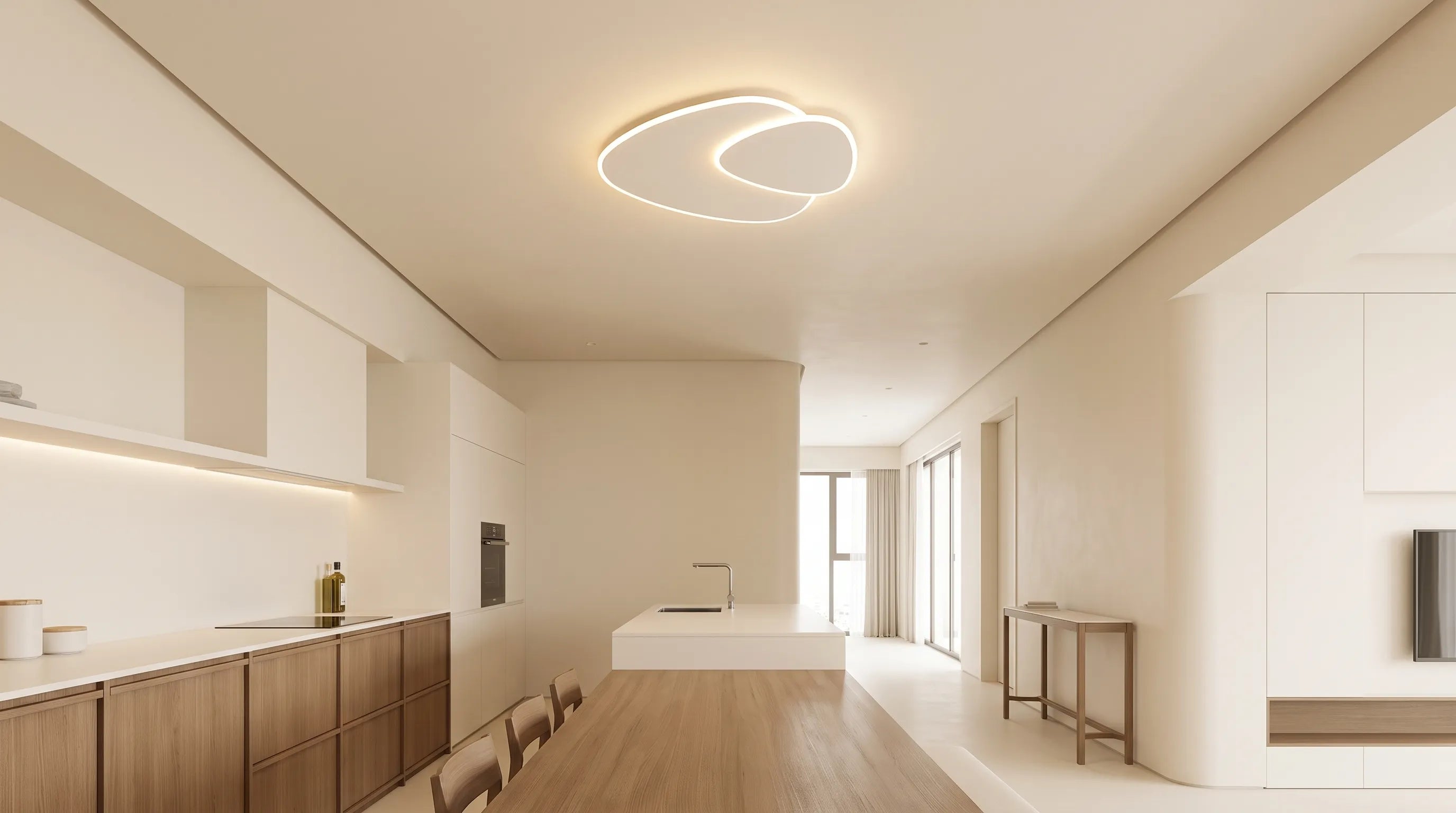
LED panels are particularly popular in modern apartments, open kitchens, hallways, offices and renovated rooms because they combine a large light area with a slim look. They almost disappear optically into the ceiling and provide broad, diffuse illumination. In order for the result to look high-quality, the panel should not only be bright enough, but also match the room function, furnishings and desired atmosphere.
What a dimmable LED panel can do particularly well
An LED panel is designed to provide even room light. Unlike a single spot, it does not concentrate the light strongly, but rather distributes it over a larger area. This creates softer shadows and a calmer basic brightness. This is ideal for rooms where you don't just want to illuminate one point, but need consistent orientation and a clear sense of space.
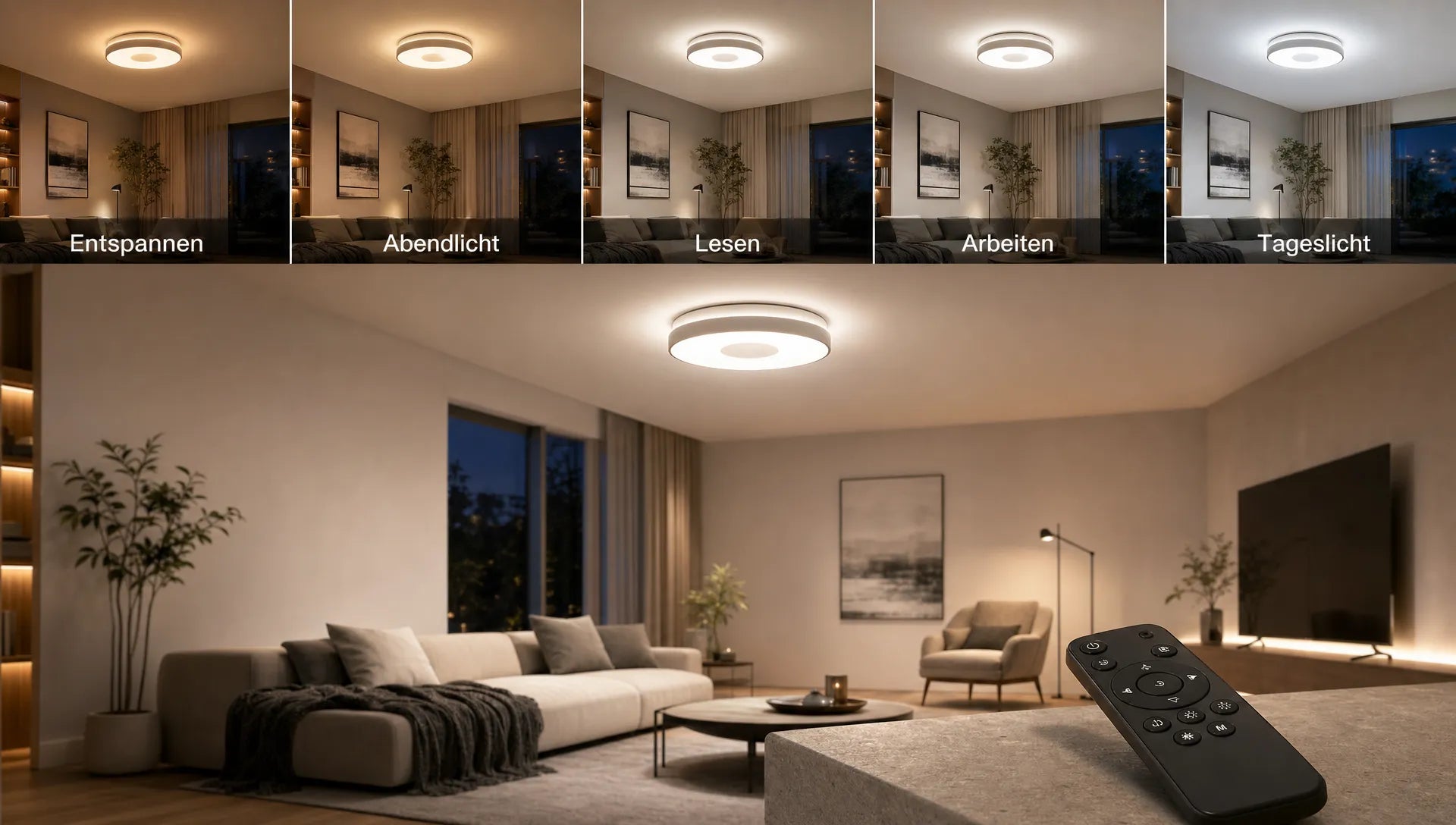
Dimmable makes the panel particularly versatile. It can have a bright and activating effect in the morning and be gently reduced in the evening. In the kitchen it supports concentrated work, in the living area it can shine brightly when tidying up and can later be dimmed to a more comfortable level.
It is important, however, that “dimmable” does not automatically mean that every panel works with every existing wall switch or dimmer. If the driver, dimmer and LED module do not fit together, flickering, humming, a dimming range that is too small or an improper switch-off can occur. You can find a more in-depth overview of compatibility in the guide dimmable LED ceiling light.
The right brightness: Compare lumens instead of watts
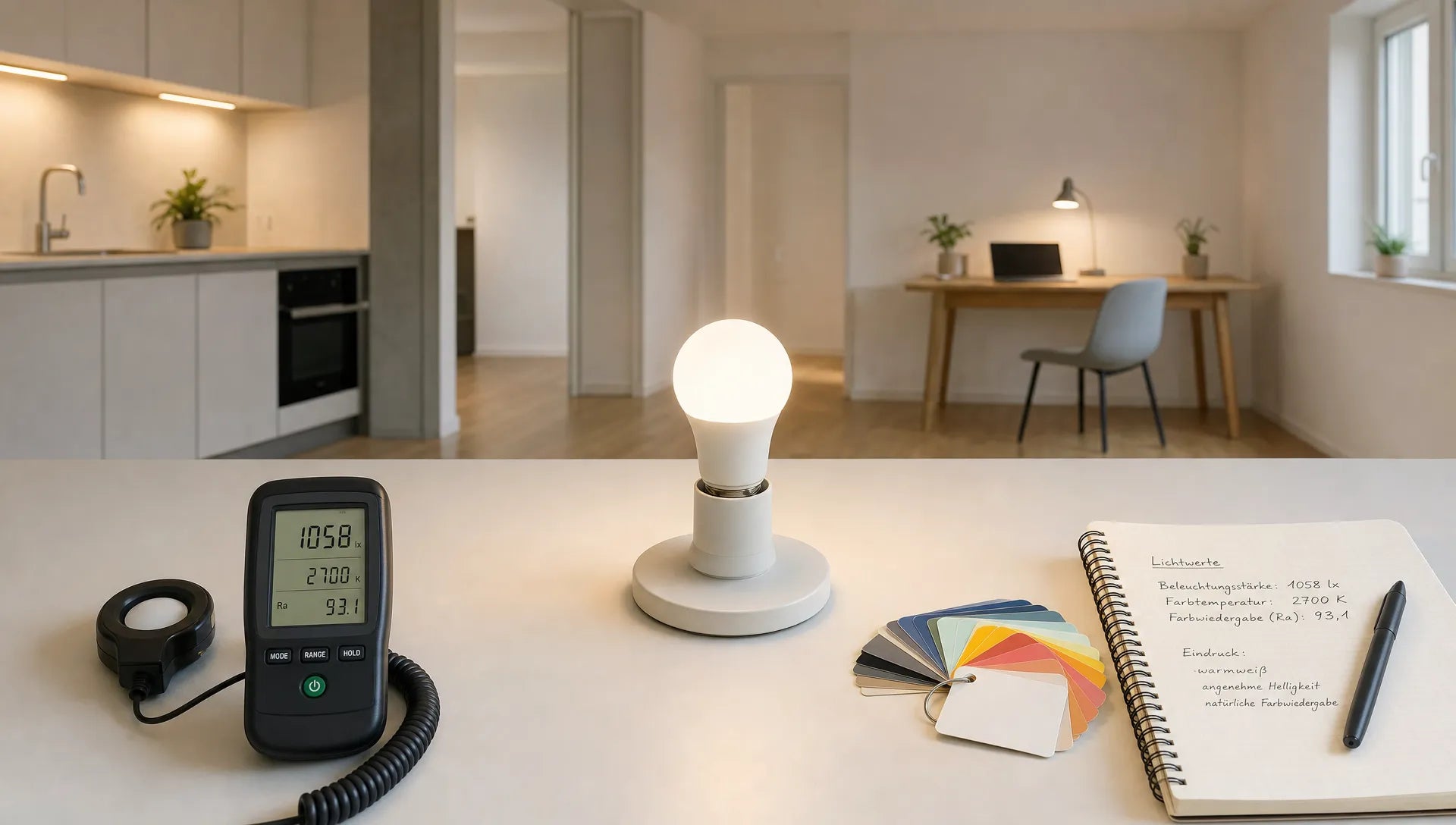
With LED panels, watts are only of limited use. The electrical power indicates how much energy is consumed, but not directly how bright the room appears. The decisive factor is the luminous flux in lumens and, for planning purposes, the illuminance in lux.
As a simple guide: Lux describes how much light reaches a surface. A room with 12 square meters and a desired basic brightness of 150 lux requires around 1,800 lumens. In practice, you should plan some reserve because walls, furniture, lamp cover, room height and radiation influence the effect.
| Room type | Useful basic brightness as orientation | Often suitable light color | Planning note |
|---|---|---|---|
| Living room | approx. 100 to 200 lux | 2,700 to 3,000 K | Use the panel as basic light and supplement it with accent light |
| Kitchen | approx. 300 lux, work surfaces often brighter | 3,000 to 4,000 K | Additional targeted lighting on the worktop |
| hallway | approx. 100 to 150 lux | 2,700 to 3,500 K | Uniformity is more important than maximum brightness |
| bedroom | approx. 100 to 150 lux | 2,700 to 3,000 K | Large dimming area ensures quiet in the evening |
| Home office | approx. 300 to 500 lux | 3,500 to 4,000 K | Avoid glare and shadows on the desk |
| bathroom | approx. 200 to 300 lux as basic light | 3,000 to 4,000 K | Plan mirror lights separately, as overhead lights can shade faces |
These values are not rigid rules for private living spaces. However, they help to realistically assess the dimensions of an LED panel. A panel that is too weak appears tired even at full power, a panel that is too strong has to be permanently dimmed and can remain unpleasantly present despite being dimmable.
Size, shape and placement: uniformity comes from surface area
The visible light surface is crucial for uniform room lighting. A larger panel distributes light more softly than a very small, spot light. In square rooms, square or round solutions often look harmonious; in elongated hallways or kitchens, rectangular panels can better reflect the shape of the room.
The type of installation also influences the result. An LED panel mounted flush or very close to the ceiling has a calm and architectural appearance. A surface-mounted panel is more flexible when there is no suspended ceiling. Flat panels are particularly practical in rooms with low ceilings because they hardly take up any room height.
For larger rooms, a single, very bright panel is not always the best solution. Several moderately bright points of light can appear more even because they reduce shadow areas. This is particularly true for open kitchen-living rooms, long hallways or rooms with large cupboards, kitchen islands and dining tables.
Light color and color rendering: not just bright, but homely
The light color is given in Kelvin. Warm white light of 2,700 to 3,000 K has a homely and relaxing effect. Neutral white light around 3,500 to 4,000 K appears more objective and clear. Daylight white above 5,000 K can quickly appear cool in living spaces, but is useful in certain work areas.
For a dimmable LED panel in the home, 3,000 K is often a good compromise. It's bright enough for everyday situations, but remains comfortable. In the home office or in the kitchen, 4,000 K can be useful if a clear, concentrated lighting effect is desired.
Also pay attention to the color rendering index, often given as CRI or Ra. A value of at least 80 is common in living areas; higher values make colors appear more natural. This is relevant if materials, wooden surfaces, textiles, art or food need to be shown to their best advantage.
Dimming technology: The panel must match the dimmer
The most common mistake when purchasing is assuming that every dimmable LED panel will work on every existing dimmer. In fact, the dimming quality depends heavily on the installed LED driver and the intended control.
| Dimming type | Typical use | advantage | What to pay attention to? |
|---|---|---|---|
| Phase control or phase control | Retrofitting with wall switch dimmer | Practical with existing installation | Dimmer must be explicitly compatible with LED and driver |
| Push dim | Modern installations with buttons | Simple dimming at the touch of a button | Requires appropriate wiring and drivers |
| DALI | Architecture, office, high-quality lighting control | Very precise and professional | Planning by a specialist makes sense |
| 1 to 10V | Technical installations | Stable with suitable components | Separate control line required |
| Smart dimming | App, remote control or smart home | Comfortable scenes and routines | Clarify the radio standard and wall operation beforehand |
For private renovations, it is often crucial whether the existing electrical installation should continue to be used. If an old rotary dimmer is available, it must be checked whether it is suitable for the minimum load and the LED technology of the panel. Modern LEDs consume little power, which means that older dimmers sometimes do not work properly.
A good dimmable panel should not only work at 100 percent, but also remain stable in the lower range. A low, low-flicker dimming value is particularly important in the evening. If the light pulsates, jumps or hums at low brightness, living comfort suffers significantly.

Avoid glare: Uniform light should not appear bright
An LED panel can provide a lot of light without looking dominant. However, it can still be blinding if it is too bright, inconveniently placed or has a cover that is too clear. Glare is caused not only by a direct view of very bright LEDs, but also by strong contrasts between the illuminated surface and the surroundings.
A matte diffuser surface helps to diffuse light more evenly. Light-colored walls and ceilings also improve the lighting effect because they reflect light and reduce contrast. In dark rooms, the panel often has to work harder, which makes the illuminated surface appear brighter.
When working from home, the panel should not be positioned so that it is reflected directly in the screen or casts shadows on the keyboard. In the kitchen, it should not only illuminate work areas from behind, otherwise the body will cast shadows on the worktop. For dining tables, a panel is possible as basic light, but an additional pendant light or decorative light object is often nicer to create atmosphere.
Why an LED panel alone is rarely the perfect solution
A dimmable LED panel provides excellent basic light. However, basic lighting alone is often not enough for a high-quality living experience. Rooms look particularly pleasant when they consist of several layers of light: general light, functional light and accent light.
The panel ensures orientation and uniform brightness. Spots can emphasize pictures, shelves, plants or architectural details. A table, wall or pendant lamp creates additional depth. In this way you avoid the typical effect that a room is bright but appears flat and not very homely.
If you want to combine a panel with targeted accents, a modern spot can be a suitable addition. The LED Spot Light Modern According to the product description, it is particularly suitable for illuminating certain objects or for illuminating a room in a space-saving and unobtrusive manner. This is exactly what makes spots a useful counterbalance to the flat, calm effect of a panel.
For rooms where you are looking for a simple, minimalist ceiling light instead of a classic panel, this can also be used LED ceiling lamp minimalism be interesting. It is particularly suitable if the ceiling light is not only intended to be functional, but is also intended to consciously become part of a reduced furnishing concept.
Planning according to room: This is how a dimmable LED panel looks harmonious
In the living room, the panel should not dominate the entire lighting atmosphere. A dimmable basic brightness is practical when cleaning, reading or playing. For the evening, we recommend a lower brightness plus warm accent lighting on the sideboard, wall or corner of the sofa.
In the kitchen, uniformity is more important. A panel in the middle of the room can work well if there is additional light on work surfaces. For kitchen islands or long kitchen units, multiple light sources are often better than a single large panel.
A dimmable LED panel is particularly impressive in the hallway because it quickly provides clear orientation. Neutral, glare-free lighting makes sense here. In long hallways, several smaller lights can better accompany the length of the room.
In the bedroom, the dimming area is crucial. A panel that only dims from very bright to medium bright is less suitable. What counts here is a gentle lower dimming level so that the light does not appear too activating in the evening.
In the study, freedom from glare and sufficient brightness are important. The panel should support the desk, but not be directly in your eyes or create reflections on the monitor. An additional desk lamp often makes sense because it specifically illuminates the work surface.
Quality features that you should check before purchasing
An LED panel is not just about design and lumens. Especially with permanently integrated LED technology, the quality of the components determines lighting comfort and service life. Therefore, check not only product images, but also technical information.
| criterion | Why it matters | Good decision-making aid |
|---|---|---|
| Dimming release | Prevents compatibility issues | Check dimming type and recommended dimmers |
| Luminous flux | Determines the usable brightness | Consider the size of the room and the desired lux number |
| light color | Shapes atmosphere and function | Warm white for living, neutral white for work and kitchen |
| CRI/Ra | Affects natural color reproduction | At least Ra 80, preferably higher if design demands |
| diffuser | Reduces harsh light spots | Prefer matte, even coverage |
| Design | Must match the ceiling and room | Clarify construction, installation or pendant mounting in advance |
| Driver quality | Affects flickering, humming and dimming range | Pay attention to appropriate control and clean dimming |
If you are renovating, it is worth combining the lighting planning with the electrical planning at an early stage. Positions, cables, switches, buttons and dimmers can be adjusted much more easily during the shell construction or conversion phase than after the ceiling is finished.
Common mistakes with dimmable LED panels
A common mistake is too little light reserve. If you only make tight calculations, you will permanently use the panel at its maximum. This can seem uncomfortable and leaves no flexibility for dark winter days, dark wall colors or changed furniture.
The second mistake is the wrong light color. A very cool panel can appear technical and impersonal in living spaces. Conversely, a very warm panel in a kitchen or home office may not provide enough clarity.
The third error concerns dimming. An existing dimmer does not guarantee a functioning installation. Especially with older phase dimmers, it should be clarified before purchasing whether the combination with the LED driver is suitable.
The fourth mistake is pure basic lighting planning. A panel makes the room bright, but not automatically atmospheric. Those who include accent lighting and decorative lights usually achieve a significantly higher quality result.
Frequently asked questions about the dimmable LED panel
Is every LED panel dimmable? No. An LED panel can only be dimmed if the LED module and driver are designed for this. In addition, the control, for example wall dimmer, button or smart home system, must be compatible.
Which light color makes sense for a dimmable LED panel in the living room? For living rooms, 2,700 to 3,000 K is usually comfortable. This warm white light color looks homely and, when dimmed, can be easily combined with accent lights.
How many lumens does an LED panel need for a room? This depends on the size of the room, usage and desired brightness. As a rough calculation, you can multiply square meters by the desired lux number and then plan a reserve for room height, dark surfaces and light loss.
Why is my dimmable LED panel flickering? This is often due to an incorrect combination of LED driver and dimmer. A minimum load that is too low, inferior drivers or unsuitable smart home components can also cause flickering.
Can an LED panel be the only light in the room? Technically yes, but not always ideal in terms of design. For hallways, storage rooms or work areas, one panel alone can be sufficient. In living rooms, the combination of basic lighting, accent lighting and decorative lights usually looks more pleasant.
Conclusion: Even room lighting starts with good planning
A dimmable LED panel is a strong solution if you want modern, quiet and flexible basic lighting. Pay attention to the right lumens, pleasant light color, glare-free diffusion and, above all, the correct dimming technology. This then creates a light that not only makes you bright, but also makes the room appear even, high-quality and suitable for everyday use.
If you don't plan your lighting in isolation, but rather as an overall concept, the result will be much more harmonious. At BUYnBLUE You will find a curated selection of modern lights for different living areas, from simple ceiling solutions to accent and designer lights. A dimmable panel can be sensibly combined with other light sources to suit the room height, furnishings and desired atmosphere.