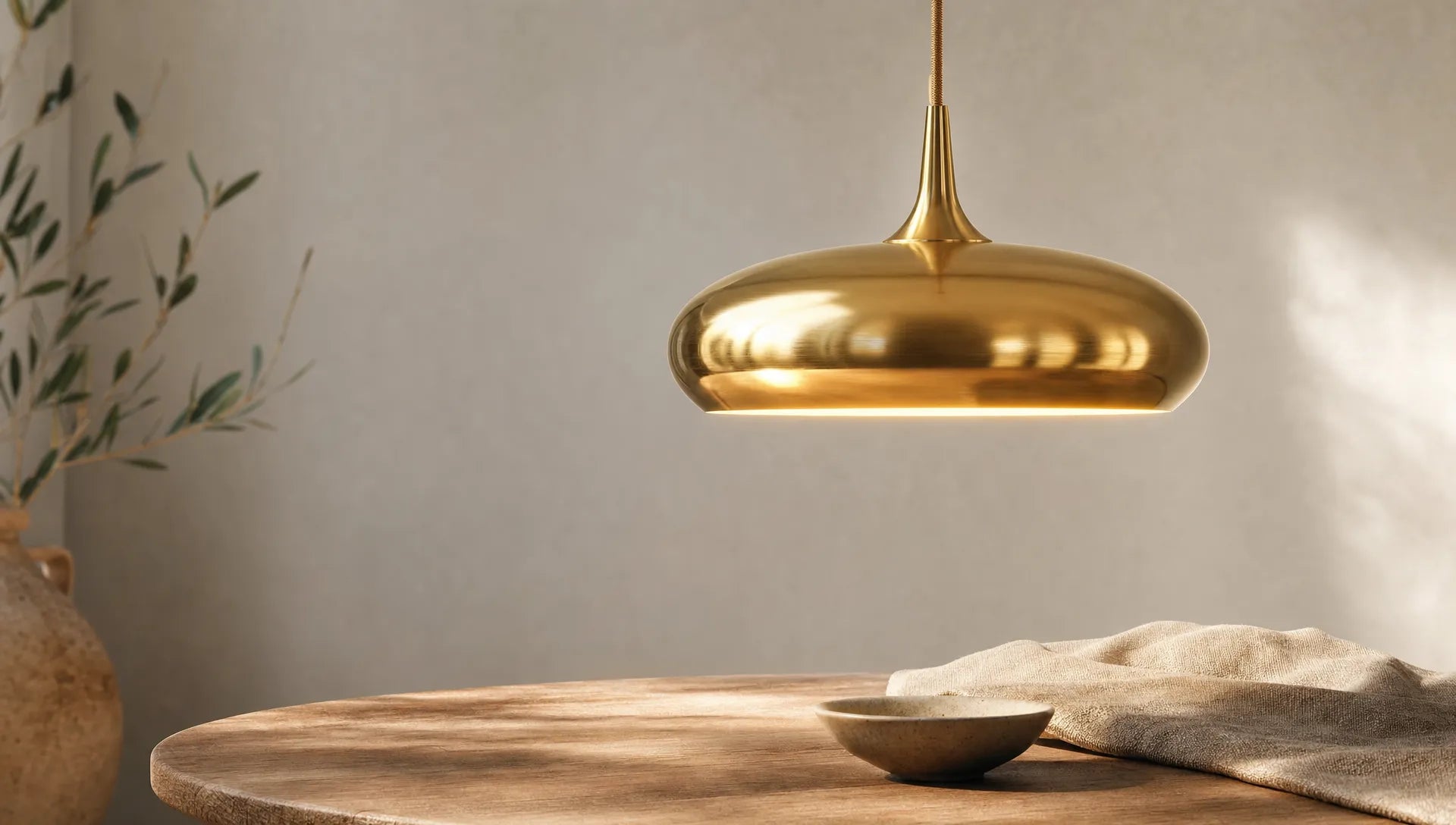
Choose a glass lamp to suit your living style
One Glass lamp can appear reserved, almost invisible, or become the strongest eye-catcher in the room. This is exactly where its strength lies: glass changes light without visually weighing down the room. Depending on the shape, color, transparency and surface, it fits minimalist homes, warm Japandi interiors, modern classics or luxurious dining areas.
So that the lamp does not look random, it should not only be beautiful. It must match the architecture, the materials in the room, the desired lighting effect and the size of the area. This guide shows you how to choose a glass lamp to suit your home style and avoid typical bad purchases.
Why glass lamps are so versatile
Glass is not a neutral material. Clear glass allows the lamps and construction to be visible. Opal glass diffuses light softly and calmly. Smoked glass adds depth and appears more elegant, but also a little darker. Structured glass creates reflections and can make even simple shapes appear more high-quality.
That's why it's not just the silhouette that counts when it comes to a lamp made of glass. The combination of glass type, metal finish, light color and placement is always important. A small, clear pendant light with a black socket has an urban look. The same shape in satin glass and brass can appear warm, classic or even Scandinavian.
| Type of glass | Effect in space | Matching living styles | What to pay attention to? |
|---|---|---|---|
| Clear glass | Light, transparent, technical | Modern, industrial, minimalist | The bulb is visible, so choose designer bulbs |
| Opal glass | Soft, quiet, low-glare | Scandi, Japandi, modern, bedroom | Very good for even light distribution |
| Smoked glass | Elegant, subdued, rich in contrast | Urban, Loft, Modern Classic | May appear less bright, check lumens |
| Colored glass | Expressive, decorative | Art deco, eclectic, maximalist | Match color with textiles or art |
| Fluted glass | Lively, crafted, reflective | Vintage-modern, mid-century, bathroom, hallway | Reflexes can appear intentional or restless |
| Crystal or crystal glass | Luxurious, sparkling, representative | Glamour, modern classic, high rooms | Check the size and ceiling height particularly carefully |
First read the living style, then choose the glass lamp
Before you decide on a specific lamp, look at the room like an interior designer. Which materials dominate? Are there a lot of straight lines or more soft shapes? Is the room bright and reduced or deliberately decorative? A glass lamp should either continue this language calmly or provide a targeted contrast.
Minimalist and modern
In a minimalist home style, glass lamps work best when they are clearly shaped. Spheres, cylinders, flat disks or geometric pendulums work well because they don't create too much visual clutter. Opal glass is particularly popular here because it hides the light source and illuminates the room evenly.
Clear glass can also appear minimalist if the frame remains reduced. Black metal, chrome or brushed steel underline the modern line. It is important that the cable, canopy and lamps look high-quality, because with transparent glass you can see every detail.
Scandinavian, Japandi and warmly modern
Warm living styles don't need a rustic lamp. A lamp made of glass can have a very soft effect, especially when combined with wood, linen, natural stone or light carpets. Opal glass balls, milky shades or slightly structured glass surfaces are ideal.
Anyone who hesitates between glass and wood can consciously compare the effect of both materials. In a warm, modern space, a glass light can appear more elegant and light, while wood can bring more grounding. It's also worth taking a look at the guide on how to do one Wooden lamp looks modern instead of rusticif you want to weigh up both materials in the furnishing concept.
Modern classic and luxurious
Modern Classic thrives on symmetry, high-quality materials and a certain shine. A glass lamp can be more powerful here. Chandeliers, multi-light pendant lights, crystal elements or colored glass details can significantly enhance the room, especially above a dining table, in a gallery or in a high-ceilinged living room.
For spacious living or dining areas Designer chandelier Fiore an example of a lamp that sets modern, floral accents. According to the designer, its structure is based on the lotus flower, which means it fits particularly well in rooms that combine elegance with an organic design language.
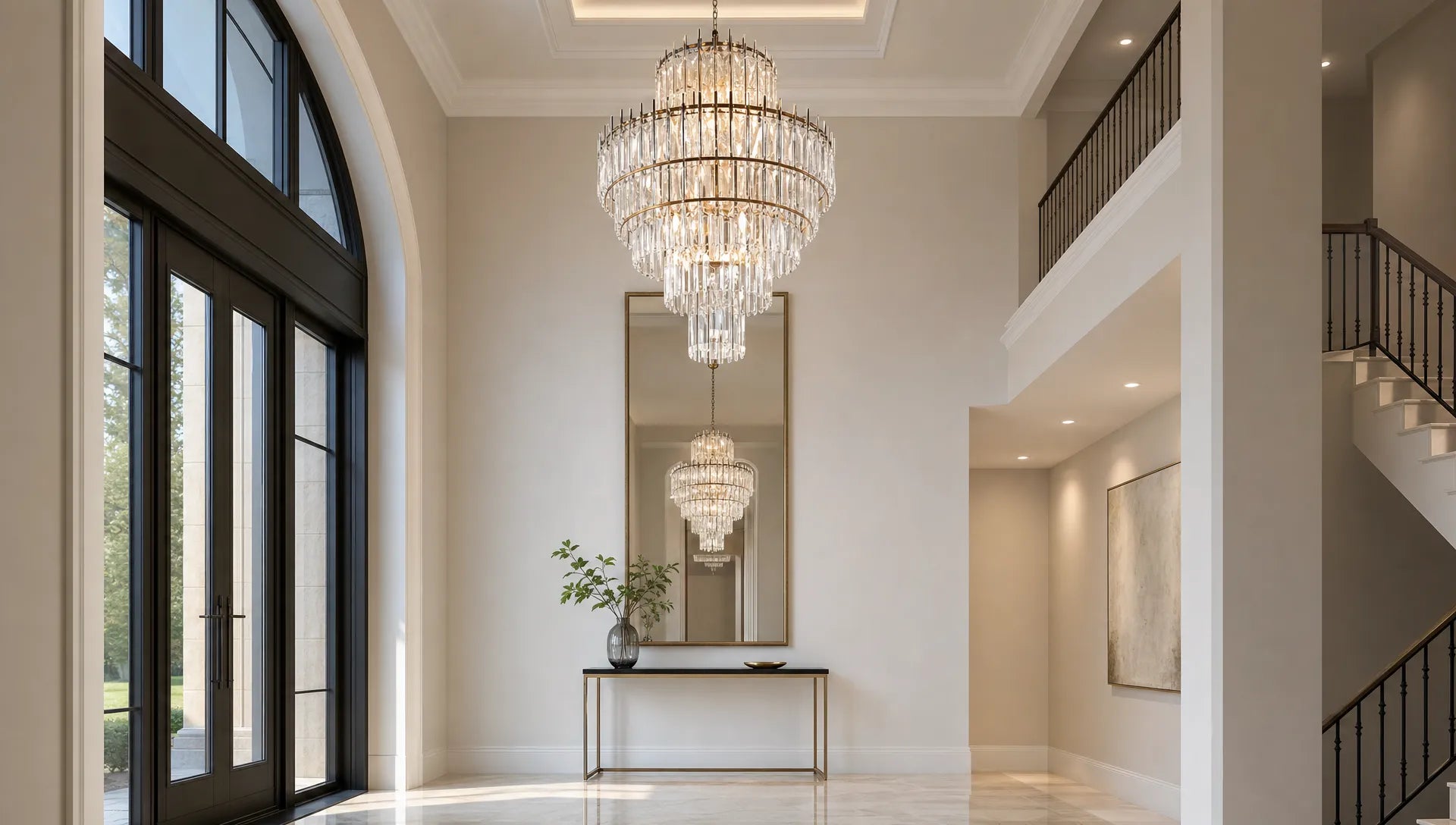
If the focus is on light reflections and a luxurious material effect, this shows Designer chandelier Fonderahow precisely arranged K9 crystal elements in a heart- or pear-like shape can create a representative atmosphere. Such lights have the strongest effect when they have enough space around them.
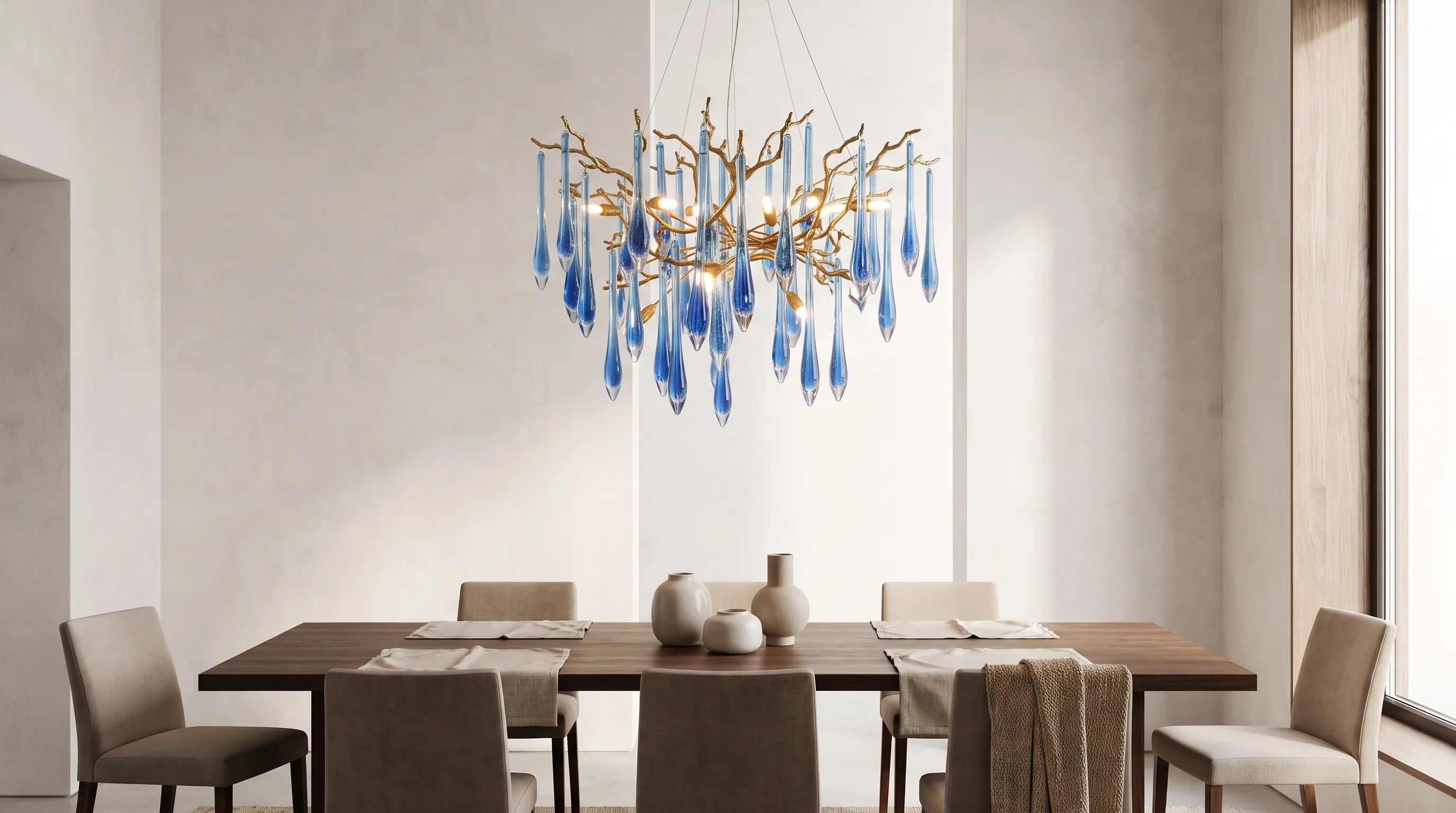
For a bolder, color-focused concept, the Designer chandelier Felice Bleu be interesting. Its blue makes it not only a light source, but also a design focal point, especially in interiors with neutral walls, dark wood, velvet, brass or art objects.
Industrial and loft
In the industrial style, glass lamps can appear more technical. Clear glass, smoked glass, visible bulbs and black or dark metal frames work well with concrete, brick, steel and leather. A single large pendant light can have a strong impact above a dining table, while several smaller glass pendants add rhythm above a kitchen island.
Pay particular attention to the light color here. Light that is too cool can quickly make the room harsh and uncomfortable. Warm white light in the range of around 2700 to 3000 Kelvin is usually more pleasant for living areas than neutral white work light.
Art deco, eclectic and maximalist
Anyone who likes to work with color, shine and patterns can use glass as a decorative material. Colored glass, ridged surfaces, gold details and unusual shapes look great in Art Deco or eclectic spaces. It is only important that the glass color does not appear to be chosen at random.
Repeat the color of the lamp in at least one other place in the room, such as in pillows, pictures, vases or carpet details. In this way, the lamp becomes part of the concept instead of an isolated foreign body.
Choose the right glass lamp for your room
A lamp can be stylistically perfect and still disappoint in everyday life if it does not fit the function of the room. She can stage things in the dining room. In the kitchen it also has to be practical. It is intended to create peace in the bedroom. In the hallway it must provide orientation without overloading the area.
| space | Suitable glass lamp | Good lighting effect | Common mistake |
|---|---|---|---|
| Living room | Opal glass, smoked glass, multi-bulb lights | Cozy, zoned, low-glare | Use only a central light source |
| Dining room | Pendant lamp, chandelier, glass cluster | Focus on the table and atmosphere | Choose a light that is too high or too small |
| Kitchen | Clear or opal glass, pendulum over island | Direct and easy to control | Underestimate the care required due to cooking fumes |
| bedroom | Opal glass, small pendants, wall lights | Calm, soft, warm | Light too bright or too cool |
| hallway | Compact glass ceiling light or pendant | Inviting and orientating | Light hanging too low on passageways |
| bathroom | Glass lamp with appropriate protection class | Clear, functional, safe | Ignore IP protection and zones |
Especially in the living room, it's worth thinking of glass as more than just a ceiling light. A combination of pendant lamp, table lamp and indirect light creates more depth. For high rooms, galleries or open living areas, you can find additional ideas in the article above Lighting for living room and gallery.

Proportions: This means that the glass lamp does not appear too small or too dominant
Glass appears lighter than metal, ceramic or fabric. This can be an advantage, but sometimes leads to a lamp being chosen too small in the room. The lamp should have enough volume to be noticed, especially above dining tables, in stairwells or in open living areas.
Above a dining table, a light fixture width of about a third to half the width of the table is often a good starting point. For long tables, several pendants or an elongated lamp can be more harmonious than a single small glass lamp. The distance between the table top and the lower edge of the lamp is often around 60 to 75 centimeters, depending on the room height, lamp design and lines of sight.
Headroom is what counts most in passage areas. Hanging glass lights in the hallway should not disturb when doors are opened or people walk underneath. For low ceilings, flat ceiling lights, short pendants or wall solutions are usually better than large hanging lamps.
With high ceilings the opposite is true. A light that is too small will be visually lost. Multi-flame glass lamps, cluster pendants or chandeliers can be used here so that the height does not appear empty.
Light quality: Glass alone does not produce good light
The most beautiful lamp made of glass only looks pleasant in everyday life if the light source, light color and brightness are right. The light source plays a design role, especially with transparent glass. Filament lamps can look decorative, but depending on their position, they are more dazzling than opal versions.
Warm white light is usually the best choice for living and dining areas. Around 2700 Kelvin seems comfortable, 3000 Kelvin seems a little clearer and more modern. Kitchens or work areas can be brighter and more neutral as long as the residential character is not lost.
Dimmability is also crucial. A glass lamp above the dining table should create an atmospheric effect when eating, but provide enough light when playing or working. Therefore, check whether the lamp, bulb and existing dimmer fit together.
To achieve a harmonious effect, you should also avoid glare. Opal glass and frosted glass diffuse light more softly. Clear glass is more decorative but requires more careful selection of bulb and position.
Combine color, metal and details correctly
A glass lamp rarely stands alone. It appears on handles, fittings, table legs, picture frames, curtain rods and other metal or color accents. Therefore, the finish should be chosen consciously.
Brass and gold look warm and elegant. Black looks graphic, modern and rich in contrast. Chrome and silver are cooler and go well with minimalist or very contemporary interiors. Bronze, dark nickel or smoked glass create depth and are well suited to rooms with dark wood, stone or muted wall colors.
With colored glass, restraint often makes sense elsewhere. A blue, amber or green glass can look great if the room has enough calm spaces. In very colorful interiors, the lamp should either match an existing color or be deliberately used as the main accent.
Configurability: When room height and style require special solutions
Many bad purchases occur not because the lamp looks wrong, but because it doesn't fit properly structurally. The cable is too short, the canopy doesn't cover the connection well, or the color doesn't harmonize with the ceiling. Such details are quickly noticeable, especially with glass lamps.
At BUYnBLUE Chandeliers and pendant lights can be adapted free of charge to specific requirements, for example with a different cable length, an individual canopy or an alternative color. This is particularly helpful for high ceilings, galleries, sloping ceilings, large dining tables or rooms with unusually placed power outlets.
If you want to know more about which adjustments really make a difference, see the guide on the topic Buy a configurable lamp further decision-making aids regarding length, color and canopy.
Common mistakes with glass lamps
A glass lamp is durable if selected correctly. Nevertheless, some planning mistakes are repeated in many apartments. You should check the following points before purchasing:
- Plan for too little brightness: Smoked glass, colored glass and heavily tinted glass can absorb light. Therefore, check the lumens and number of light sources.
- Underestimating glare: Clear glass looks light, but can cause unpleasant glare if the wrong light source is used.
- Ignore scale: In large rooms, small glass lights quickly seem lost. In small rooms, lavish chandeliers can seem overwhelming.
- Forget maintenance: Clear and shiny glass shows dust and fingerprints more than opal or textured glass.
- Creating a break in style without connection: Contrast works better when the color, shape or material is echoed elsewhere in the room.
In the bathroom there is another point: safety. The luminaire must match the respective wet zone. Glass as a material is optically suitable, but does not replace a suitable IP protection class.
Care and suitability for everyday use
Glass lamps appear high-quality if they remain clean and clear. A soft microfiber cloth is usually sufficient for regular care. For removable glass shades, lukewarm water with a mild cleaning agent can help, provided the manufacturer's instructions allow this. Before each cleaning, the light should be switched off and cooled down.
In kitchens, we recommend a shape that doesn't have too many narrow grooves or hard-to-reach spaces, as grease and dust can settle there more quickly. More decorative glass structures may be used in the dining room or living room because the load is lower.
Crystal and multi-part lights require more attention, but reward this care with a particularly intense lighting effect. If you want little effort, you are often better off with opal glass balls or simple shades.
Short checklist before purchasing
Before you choose a glass lamp, answer these questions:
- What role should the light play? Should she be the center of attention or blend in quietly?
- Which type of glass suits the atmosphere? Clear, opal, smoky, colored, ridged or crystal-like?
- Is the lamp big enough for the room and furniture? Check especially above tables, kitchen islands or in high rooms.
- Does the light color match the room? Warm white for comfort, clearer light for work areas.
- Are the cables, canopy and color matching? If the room has special dimensions, an adjustment is worthwhile.
- How complex is the care? The clearer and shinier the glass, the more visible dust and fingerprints are.
Frequently asked questions
Which glass lamp suits a small room? Opal glass balls, compact ceiling lights or simple pendants with transparent glass are suitable for small rooms. They appear light and visually take up less space in the room. Avoid very dark smoked glass if the room already has little natural light.
Is clear glass or opal glass better? Clear glass appears airier and more decorative, but shows the light source and can cause more glare. Opal glass distributes light softer and calmer. For dining rooms, bedrooms and living areas, opal glass is often more suitable for everyday use, while clear glass works very well in modern or industrial concepts.
Does a glass lamp go well with wood and natural materials? Yes, particularly milky, fluted or slightly tinted glass harmonizes very well with wood, linen, stone and ceramics. The combination appears more modern than purely rustic furnishings and brings lightness to warm rooms.
What height makes sense above the dining table? A distance of around 60 to 75 centimeters between the table top and the lower edge of the lamp often works as a guide. Ceiling height, size of the lamp and eye contact at the table are also crucial.
Can a glass lamp be adapted to particular room heights? Yes, at BUYnBLUE Chandeliers and pendant lights can be adjusted free of charge, for example in terms of cable length, canopy or color. This makes sense if standard dimensions do not match the ceiling height, room layout or connection position.
Choose the right glass lamp carefully
A glass lamp really fits the style of living when the material, shape, lighting effect and proportion work together. Minimalist rooms benefit from calm opaline glass, loft interiors from clear or smoky glass, luxurious dining areas from multi-bulb lights, crystal elements or colorful accents.
At BUYnBLUE You will find a curated selection of modern designer lighting for different living areas. By making free adjustments to the length, canopy or color, the light can be better matched to the room height and furnishings. Plus free worldwide shipping, 14-day returns, secure payment options, real-time order tracking and 24/7 customer support.