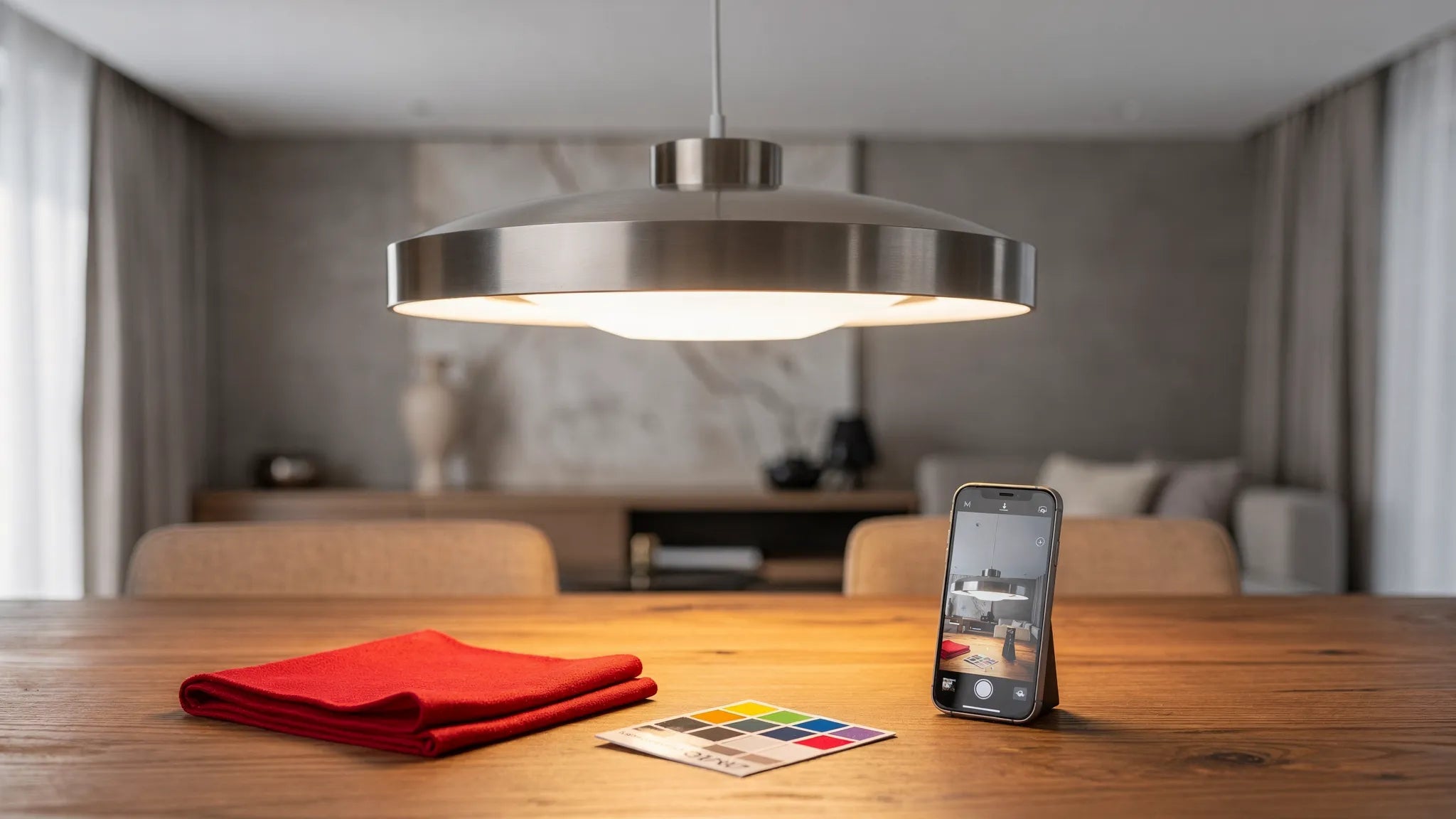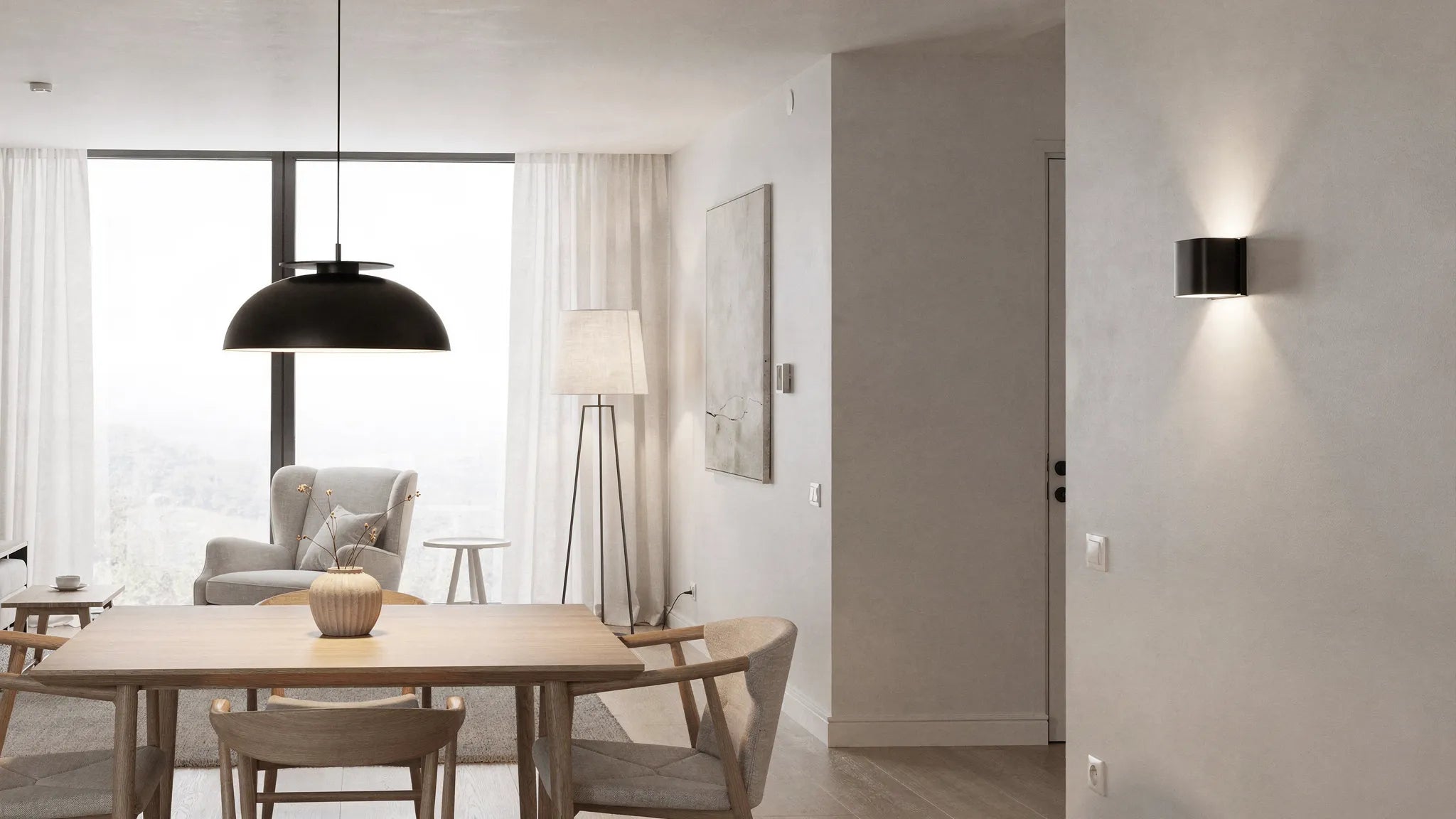
Lamps and lights: differences, terms and typical errors
Many people talk about “lamps” in everyday life, but they actually mean the entire ceiling light, the pendant light above the table or the wall light in the hallway. However, in catalogs, from electricians and in technical data sheets, there is often a clear separation. That sounds like a quibble, but it has real consequences: incorrect orders (base doesn't fit), poor visual comfort (glare), unnecessary returns or dimming problems.
This guide clarifies the terms involved Lamps and lights, shows typical misunderstandings and helps you avoid the most common mistakes when planning and purchasing.
Lamp or luminaire: what's the difference?
In short:
- lamp (English luminaire): The complete “device” including housing, screen, socket, cable, canopy, if necessary drivers and assembly.
- lamp (technically correct): That Light bulbs, i.e. the light source that is inserted into a socket (e.g. LED lamp with an E27 base).
In everyday life it is often the other way round: one says “lamp” and means “light”. You can find both in shops and product descriptions, so it's worth a quick reality check.
| term | everyday language (common) | Technical language (planning/electrical) | Example |
|---|---|---|---|
| lamp | complete pendant light | Light bulbs | “LED lamp E27, 2700 K” |
| lamp | rarely used | complete lamp body | “Pendant lamp with canopy” |
| Light bulbs | “pear” | light source | LED, halogen (historic), retrofit |
| version | is often overlooked | mechanical/electrical recording | E27, E14, GU10 |
Why this is important: If a light has an “integrated LED”, do not buy a separate light source. If a lamp has an E27 socket, the bulb determines the light color, brightness, CRI and often also dimmability.

Terms that most often lead to errors when it comes to lamps and lights
You don't have to be a lighting technology professional. But these terms save the most trouble in practice.
| term | What it means | Typical mistake | Better that way |
|---|---|---|---|
| Base | Connection to the lamp (e.g. E27, GU10) | Wrong base ordered | Read the base on the old lamp or check it in the lamp |
| version | Mounting in the lamp (fits the base) | Bought an “E27 lamp”, the light is E14 | Check the socket type in the luminaire data |
| Driver/ballast | Electronics for LED modules | Dimmer hums, flickers, switches off early | Pay attention to driver and dimmer compatibility |
| Lumens (lm) | Luminous flux, “how much light comes out” | Watt used as a measure of brightness | Select brightness by lumen, see guide Watts vs Lumens |
| Kelvin (K) | Light color from warm to cold | The living room appears “cold” and uncomfortable | Select Kelvin according to usage, see Kelvin explains |
| CRI/Ra | Color reproduction, how natural colors appear | Wood, skin tones or art appear “gray” | In living areas, often aim for CRI 90+, details in the article Kelvin, CRI & Flicker |
| Beam angle | how wide the light is distributed | Spot glares or shines too selectively | Choose wider for areas, narrower for accents |
| IP protection rating | Protection against dust/water | Bathroom or outdoor area planned incorrectly | Check IP requirements in humid areas, getting started: extreme environments & IP |
The industry portal is also a neutral guide to the basics (lighting concepts, planning). licht.de helpful.
Common Buying and Planning Mistakes (and How to Avoid Them)
1) Confusing watts with brightness
Watt primarily describes energy consumption, not the amount of light. Especially with LEDs, “low watts, lots of light” and “lots of watts, little light” are no longer close together. The practical question is therefore always: How many lumens do I need for the zone?
2) Incorrect light color (Kelvin) for the room
Warm white can be calming, neutral white appears more sober, cold white is very functional, but can quickly become “clinical” in living spaces. Common mistake: A very cool light color in the living room just because it seems “bright”.
A pragmatic starting point:
| area | Often useful | Why |
|---|---|---|
| Living/sleeping | approx. 2700 to 3000 K | cozy, relaxing |
| Kitchen/Bathroom (General, depending on zone) | approx. 3000 to 4000 K | clearer, more functional |
| Work/Office (depending on the person) | approx. 3500 to 5000 K | concentrated, awake |
3) Only plan one light source
A central ceiling light “can do everything”, but is rarely the best solution. Hard shadows, glare or a flat spatial effect are typical.
Better: basic light plus targeted zones. If you want to go deeper, the light zones approach helps, see Lamps in the living room: light zones.
4) Underestimating glare
Bright LED points, open lamps at eye level or incorrectly positioned spots quickly cause discomfort. Pay attention to:
- Shielding (shade, diffuser, indirect lighting)
- Suspension height and viewing axes
- suitable beam angle
5) Dimmable does not automatically mean “dimmable in your setup”
A classic: The light source is dimmable, but the dimmer doesn't fit, or the light has an LED module with a non-dimmable driver. Result: flickering, humming, very short dimming range.
If dimming is important, read the combination of light, bulb and dimmer as system. You can find a compact overview of flickering and its causes in Kelvin, CRI & Flicker.
6) Choose proportions and dimensions only “according to your feeling”.
Lights that are too large appear bulky; lights that are too small are drowned out. Particularly critical:
- Diameter/length of the lamp in relation to the table or room
- Suspension height above dining table or kitchen island
Measuring rules are extremely helpful for pendant lights above the table, see Dining table pendant light: height, width and distance.
7) Don't think about the power outlet and canopy
“Fit visually” is not enough if the outlet is located decentrally or the canopy is too small to cover the installation cleanly. This is not a cosmetic problem, but rather it quickly appears unfinished.
8) Misjudge IP protection and installation location
Zones and humidity levels apply in the bathroom, while weather and temperature apply outside. This often leads to bad purchases if decisions are made based solely on design.
9) Incorrectly assess integrated LED vs. replaceable light source
Integrated LEDs can have a strong design and efficiency, but you don't just have to change the bulb. With replaceable light sources you have more flexibility (Kelvin, lumen, smart lamp). The right choice depends on how important subsequent conversion is to you.
10) Underestimating installation (security and effort)
Assembly involves weight, fastening and electrical safety. If you are unsure, a qualified electrician should take care of it. We provide instructions as an introduction to the process (without replacing specialist knowledge). Connect lamp.
10-minute pre-purchase checklist (useful for renovations and new construction)
This short list is often enough to avoid most bad purchases when it comes to lamps and lights:
- What do I buy? Luminaire (complete) or lamp/bulb (replacement)?
- Which version/base? E27, E14, GU10, fixed LED module?
- How bright should it be? Roughly define target in lumens.
- Which Kelvin zone? cozy (warm white) or functional (more neutral)?
- CRI important? For wood, art, mirrors, dining tables and kitchens, often yes.
- Dimming planned? Check compatibility (light, driver, dimmer, bulb).
- Beam angle suitable for the task? Surface or accent?
- IP requirement on site? Bathroom, outside, humidity.
- Dimensions and height: Suspension, diameter, viewing axes, doorways.
- Power outlet/canopy: Cover, cable routing, position.
When a tailor-made lamp is worthwhile
Especially with pendant lights and chandeliers, frustration rarely arises because of the design, but rather because it doesn't fit the room:
- Ceiling height is unusual (old building, gallery, sloping roof)
- Power outlet doesn't fit perfectly
- The table can be pulled out and its use changes
- Canopy should be larger, shaped differently or have a matching color
BUYnBLUE offers one for selected chandeliers and pendant lights free customization For example, adjust the cable length, configure a suitable canopy or choose a different color. This is particularly helpful if you want to avoid making bad purchases using standard measurements. You can find out more about this directly on buynblue.com.

Conclusion
The difference between “lamp” and “luminaire” is more than language; it determines compatibility, light quality and installation. If you carefully check the base, lumen, Kelvin, CRI, dimmability, IP protection and proportions, you will avoid the most common errors with lamps and lights and get exactly the effect you want for your room.
Frequently Asked Questions (FAQ)
What is the difference between lamp and luminaire? Technically, the lamp is the light source (the light source), the luminaire is the complete product including the socket, shade, cable and assembly.
Why do so many people say “lamp” when they mean a light? This is everyday language. However, in crafts, planning and many shops, the distinction is often made correctly. That's why it's worth taking a look at the data sheet.
What is more important: watts or lumens? Lumens are crucial for brightness. Watt primarily describes consumption. More about this in the guide Watts and lumens.
Which Kelvin number is “comfortable”? 2700 to 3000 K often appears warm and homely. More neutral values are often chosen in the kitchen or bathroom, depending on the zone and taste.
How do I know whether a light is dimmable? Check whether the light and, if applicable, the LED driver are dimmable, whether the light source is dimmable and whether the existing dimmer is compatible. Flicker and dimming basics explained Kelvin, CRI & Flicker.
Can I shorten or adjust the cable of a pendant light? Often yes, but depending on the light and type of connection, this should be done professionally. At BUYnBLUE For many pendant lights and chandeliers, the cable length can be adjusted free of charge before shipping.
What typical mistakes happen with pendant lights above the dining table? They are often hung too high or too low or too large/too small. Practical guidelines can be found in Dining table pendant light: height, width and distance.
Find suitable designer lights (without compromising on dimensions)
If you are looking for a lamp that not only looks good, but also really fits the ceiling height, table dimensions and room layout, take a look BUYnBLUE over. There you will find a curated selection of modern designer lights, plus free customization for many pendant lights and chandeliers (cable length, canopy, color), free worldwide shipping and a 14-day return policy.