Tailor-made lamp: Which adjustments really make sense
A tailor-made lamp initially sounds like luxury. In practice, it is often the most pragmatic solution when ceiling height, dining table position, room layout or furnishing style do not fit standard dimensions. What is crucial, however, is that not every adjustment improves the result. Some special requests solve a real planning problem, others just make the lamp more expensive, more complicated or less timeless.
This guide shows which adjustments really make sense for pendant lights, chandeliers and designer lamps, which dimensions you should know in advance and when you should stick with the standard.

Why a tailor-made lamp often works better than a standard model
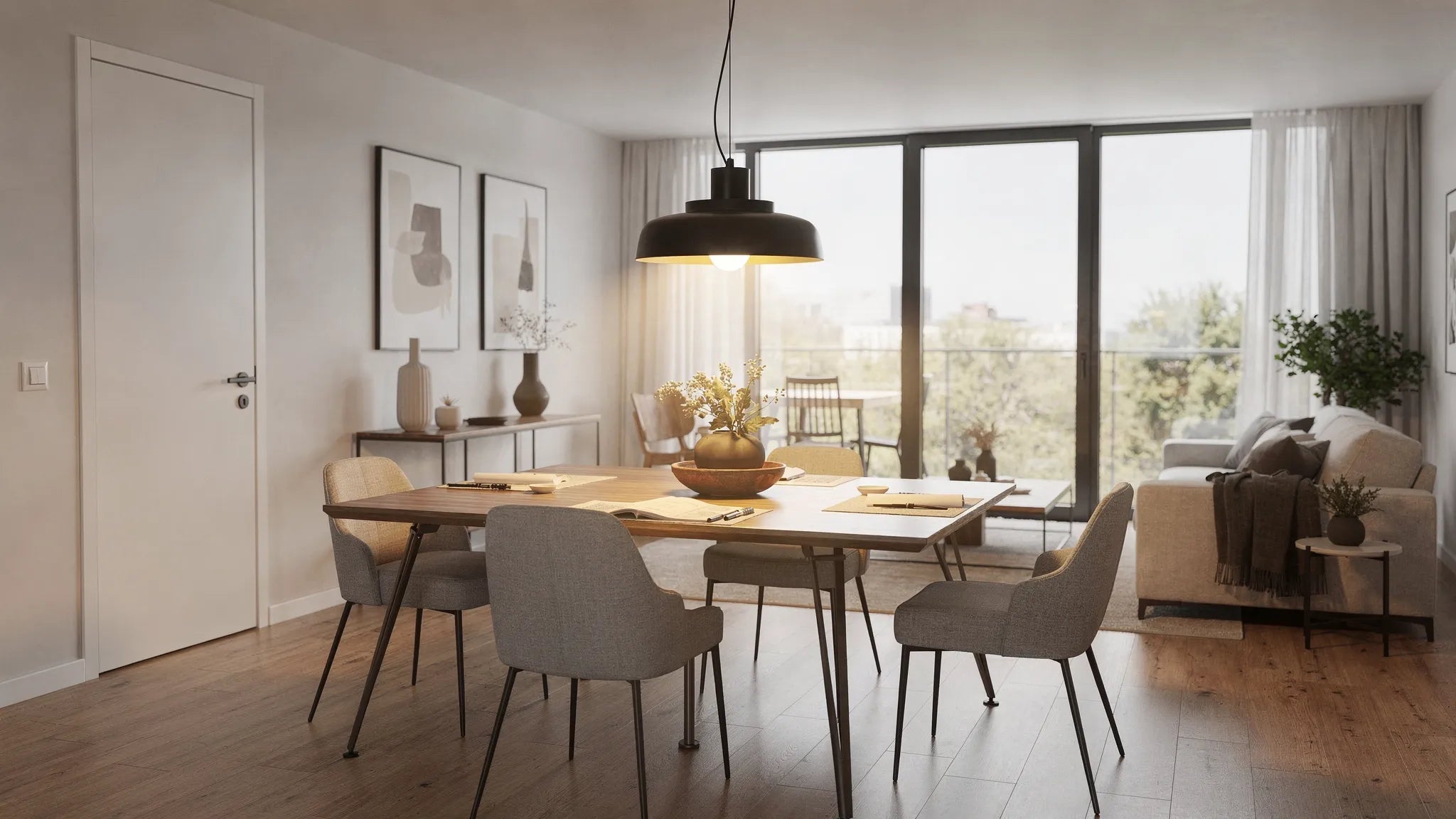
A lamp rarely sits in a vacuum. It hangs above a table, next to a kitchen island, in a stairwell, under a sloping roof or in an open living area. Just a few centimeters can decide whether a pendant light appears elegantly proportioned or disrupts everyday life.
A tailor-made lamp is therefore particularly useful if it solves a specific problem: ceilings that are too high, a ceiling outlet that is not in the middle, a long dining table, special color concepts or a room in which standard cable lengths appear visually unsettling. This precision is particularly worthwhile with high-quality designer lamps because the lamp remains part of the furnishings for many years.
At BUYnBLUE Chandeliers and pendant lights can be customized free of charge, for example with a suitable cable length, an individual canopy or a different color. This is particularly helpful when design, spatial geometry and technical requirements need to be brought together neatly.
Before fitting: You really need these measurements
Before you decide on color, shape or details, the most important room dimensions should be determined. An adjustment is only good if it is based on real data, not estimates.
This information is particularly important for pendant lights and chandeliers:
- Room height from finished floor to ceiling
- Height and size of the furniture under the lamp, for example dining table, coffee table or kitchen island
- Position of the power outlet in relation to the furniture
- Desired bottom edge of the lamp
- Size of the room and lines of sight from adjacent areas
- Colors and materials of furniture, handles, fittings and other lights
A simple formula helps with the cable length above the dining table:
Required suspension = ceiling height - table height - desired distance above the table top - height of the lamp body
Example: With a ceiling height of 260 cm, a table height of 75 cm, a distance of 70 cm above the table and a lamp height of 25 cm, this results in a suspension of 90 cm. This value is not automatically the visible cable length, as the fastening and canopy must also be taken into account, but it is a very good planning basis.
It's also worth it for detailed guidelines above the dining table BUYnBLUE Guide to correct height, width and position of pendant lights above the dining table.
The most important adjustments at a glance
| Adaptation | Particularly useful | Benefit for the room |
|---|---|---|
| Cable length or suspension | High ceilings, dining tables, kitchen islands, galleries | Correct viewing height, better proportions, less glare |
| Canopy or ceiling rose | Off-center ceiling outlet, several pendants, large lights | Clean ceiling look, harmonious alignment, elegant finish |
| Color and surface | Well-thought-out material concepts, visible metal accents | Harmonizes with furniture, handles, fittings and room style |
| Size and number of elements | Long tables, open floor plans, large rooms | Better scaling, more consistent impact |
| Lighting technology and dimmability | Multifunctional rooms, dining areas, living rooms | More comfort, suitable mood, more flexible use |
| Beam direction and light distribution | Countertops, art, accent lighting | Better vision, targeted atmosphere, less scattered light |
Not every light can be changed in all aspects. It is therefore important to clarify early on what adjustments are possible to the desired model and what technical limitations there are.
Cable length: The adjustment with the greatest effect
If only one adjustment is possible, it is usually the cable length for pendant lights. It influences proportion, comfort and lighting effect at the same time.
Ideally, a pendant light should sit above a dining table in such a way that it clearly marks the table but does not disturb eye contact. A frequently used guideline is a distance of around 60 to 75 cm between the table top and the lower edge of the lamp. With very delicate lights, hanging a little lower can look nice; with massive chandeliers or wide shades, more distance is often more pleasant.
The situation is different on running paths. Headroom counts there. There should generally be around 200 to 210 cm free under the light so that no one has to move out of the way. In stairwells, galleries or entrance areas with high ceilings, however, a luminaire can extend significantly deeper into the volume of the room because it is intended to act as an architectural eye-catcher.
An adjusted cable length makes particular sense if standard cables are too long and would later have to be stowed awkwardly in the canopy. Custom-made work is also important for very high ceilings, because a designer lamp that is hung too high appears lost and cannot develop its design effect.
Canopy and ceiling rose: Often underestimated, visually crucial
The canopy is the end of the ceiling. It covers the connection and fastening and at first glance seems like a small detail. In fact, it has a major influence on whether a luminaire looks integrated to a high standard.
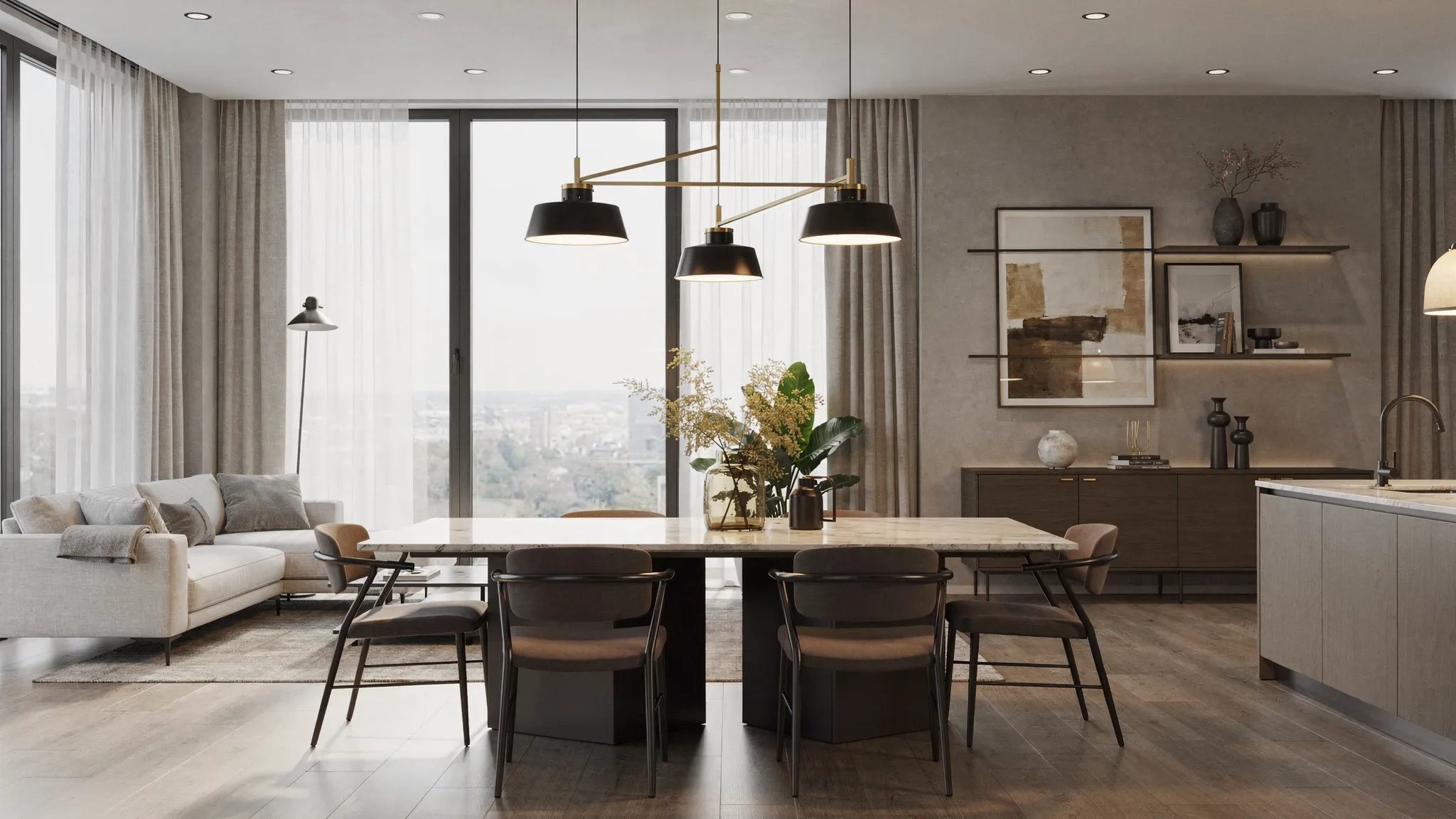
An individual canopy makes sense if the ceiling outlet is not exactly above the table, if several pendants need to be brought together neatly or if the ceiling area is particularly prominent. In open living rooms, the ceiling finish is often visible from several directions. A canopy that is unsuitable, too small or has the wrong color will quickly be noticed.
Even on long dining tables, an elongated canopy can appear more harmonious than a small round end, especially if several light points are arranged in a linear manner. For round tables or central chandeliers, however, a round ceiling rose is often the most elegant solution.
Important: A canopy does not replace safe electrical planning. If the power outlet is significantly offset or cables need to be laid, a qualified electrician should be consulted. You can find information on safe installation in the BUYnBLUE Post Connecting a lamp: instructions for beginners.
Color and surface: Makes sense if it strengthens an existing concept
Color changes are one of the most popular customizations. But they only really make sense if they make the room appear calmer, of higher quality or more consciously designed.
A different color is particularly worthwhile if there are already clear metal accents. Black window frames, brass handles, stainless steel fittings or golden furniture details can be picked up with a matching lamp surface. This means that the lamp does not look like a foreign body, but rather like part of a well thought-out interior concept.
Matt surfaces are often a good choice for minimalist rooms because they are less reflective and more reserved. Glossy surfaces, on the other hand, can stand out more in glamorous, classic or very modern rooms. Black sets clear graphic accents, gold appears warmer and more luxurious, silver or chrome goes well with cool, technical or very bright interiors.
A special color makes less sense if it only follows a short-term trend. A high-quality lamp usually lasts longer than a wall color or a single piece of furniture. If you are unsure, it is better to choose a surface that matches permanently existing elements, such as door handles, kitchen fronts, fittings or table frames.
Size and proportion: Not bigger, but more fitting
When it comes to a custom-made item, many buyers first think about length and color. But the proportion is at least as important. A lamp can hang technically perfectly and still appear wrong if it is too small or too dominant.
Above a rectangular dining table, the lamp should accompany the table without protruding over the edge of the table. For linear pendant lights, a length of around half to two thirds of the table length often appears balanced. For round tables, a round or cluster-like lamp works particularly well because it reflects the shape of the table.
In the living room, the right size depends more on the volume of the room, ceiling height and furniture. A low room often benefits from flatter, wider lights. A tall room can tolerate more volume, for example a multi-piece chandelier or a sculptural pendant light.
If you are unsure, test the size with a simple paper template or tape on the floor before purchasing. Photograph the situation from the most important angles. This way you can quickly see whether the light looks too small, too wide or just right. You can find further general rules of thumb in the guide Living room ceiling lamp: How to find the perfect size.
Lighting technology: The adjustment that you will feel most later
A beautiful lamp is only suitable for everyday use if the light is right. That's why light color, brightness, dimmability and light distribution are among the adjustments that make a lot of sense, provided they are possible for the respective model.
Warm white light is often pleasant for living and dining areas, around 2700 to 3000 Kelvin. In kitchens, work areas or home office zones, the light can be more neutral so that colors and details appear clearer. Anyone who uses a room multiple times benefits from dimmable or controllable solutions.
Color reproduction is also important. A high CRI value ensures that wood, textiles, food and wall colors look more natural. The quality of light should not be underestimated, especially over dining tables, kitchen islands and art areas.
| room or zone | Meaningful lighting effect | What to pay attention to |
|---|---|---|
| Dining table | Warm, inviting, low-glare | Dimmable, good color rendering, correct height |
| Kitchen island | Sure, functional, but not cold | Sufficient brightness, good shadow control |
| Living room | Flexible and comfortable | Combination of direct and indirect light |
| bedroom | Calm and soft | Warm white, dimmable, no harsh glare |
| hallway | Safe and friendly | Enough headroom, consistent orientation |
| bathroom | Bright, safe, suitable for damp rooms | Appropriate IP protection class and professional installation |
For holistic planning, it is worth taking a look at the principle of light layers. The BUYnBLUE Guide Plan LED lighting: 3-layer light for the entire home explains how basic light, work light and accent light work together.
Which adjustments are often less useful
Custom work does not mean changing everything that can be changed. Some wishes sound attractive, but have little or even disadvantages in everyday life.
For example, very extreme cable lengths only make sense if they are spatially justified. A pendant lamp that hangs very low for design reasons can look beautiful above a coffee table, but can be annoying in a passageway. Strong special colors should also be carefully considered because they make the lamp less flexible if you later move or redesign the room.
Technical modifications to drivers, sockets, protection classes or electrical components should never be improvised. A light for dry indoor spaces does not become suitable for bathrooms or outdoors by choosing a different color or a different cable. In damp rooms, the appropriate IP protection class is important. You can find out more about this in BUYnBLUE Guide Bathroom lamp: Which IP protection class do you need where?.
Simply increasing brightness is not always the best solution. A single very bright point of light often makes a room less comfortable than several well-distributed light sources. Instead of just choosing more lumens, the light distribution should be planned.
Tailor-made lamp for architects and interior designers
A tailor-made lamp is particularly valuable for architects, interior designers and renovation projects because it can close planning gaps. In reality, power outlets are rarely located where the table will later be located. Ceiling heights vary, kitchen islands are moved, open floor plans change lines of sight.
An early adjustment saves later compromises. If the cable length, canopy shape, color and luminaire size have already been compared with the floor plan, furniture and material concept, the result appears significantly higher quality. Particularly in projects with several lights, it is advisable to define surfaces and light colors uniformly so that there is no random mix.
The same applies to private builders on a smaller scale: the more precisely you know the future use, the easier it is to adapt the light. A lamp for the family table has to function differently than a sculptural light object in a gallery.
Practical checklist before ordering
Before requesting a customization, you should have gathered the most important information. This speeds up coordination and reduces wrong decisions.
- Photo of the room in daylight and with existing lighting
- Room height and dimensions of the piece of furniture under the lamp
- Distance of the power outlet to the desired center of the lamp
- Desired lower edge of the lamp or desired distance from the table top
- Preferred finish, for example black, gold, silver or another color
- Information as to whether dimmability or smart control is desired
- Notes on special conditions such as sloping ceilings, galleries, damp rooms or very high ceilings
When these points are clear, a vague special request becomes a precise adjustment. This is exactly when a tailor-made lamp shows its strengths.
Conclusion: Meaningful adaptation always follows the space
The best adaptation is not the most striking one, but the one that combines space, furniture and lighting effects. Cable length, canopy, color, proportion and lighting technology are the areas where customization makes the biggest difference.
A tailor-made lamp is particularly worthwhile if it fulfills a clear task: better height, cleaner ceiling look, more harmonious materials or more pleasant light. Changes that only follow short-term trends or ignore technical limitations are less useful.
If you measure carefully and choose the adjustments consciously, you will not receive just any custom-made lamp, but rather a lamp that looks as if it had been planned for this exact room from the start.
Frequently asked questions about the customized lamp
What customization is most important in a custom lamp? In most cases, the cable length is the most important because it directly influences proportion, glare-free properties and suitability for everyday use. This is followed by the canopy, color and lighting technology.
When is an individual canopy worthwhile? An individual canopy is worthwhile if you have several pendants, off-center ceiling outlets, long dining tables or if you want the ceiling to look particularly high-quality.
Can each lamp be adjusted later? Not always. Some adjustments only make sense before production or before shipping. Electrical changes should never be improvised and, if in doubt, should be made in the hands of a specialist.
Which color is the most timeless? Black, white, nickel, chrome, brass and gold tones can usually be combined well in the long term. It is crucial that the surface matches fixed elements in the room, such as handles, fittings, table frames or window frames.
Does a tailor-made lamp also make sense for rental apartments? Yes, especially when it comes to cable length, color and canopy. If no structural changes are necessary, an adapted pendant light can often be easily integrated. When working on the power connection, a specialist should still check what is possible.
Find the lamp that really suits your room
If you're looking for a modern pendant light or chandelier that not only looks beautiful but also fits the exact room height, furniture and style, discover curated designer lighting from BUYnBLUE. Many chandeliers and pendant lights can be customized free of charge, such as cable length, canopy or color.
You also benefit from high-quality materials, free worldwide shipping, 14-day return policy, secure payment, real-time order tracking and 24/7 customer service. This is how a good lamp becomes a solution that is really planned for your home.