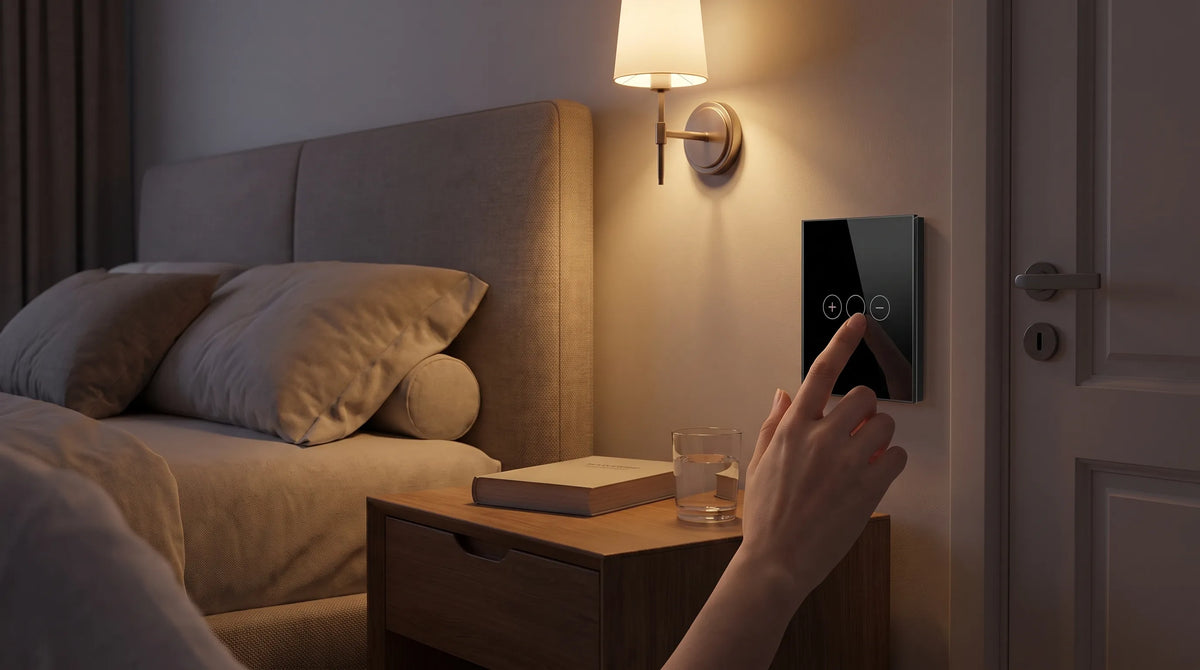
Choose suitable ceiling lights for warm light
If you are looking for a “warm light ceiling lamp”, it is usually not just about a lamp, but about a specific room effect: cozy, quiet, inviting and still bright enough for everyday life. The right choice therefore depends on four factors: light color, brightness, lack of glare and how the lamp fits into the room.
Warm light is often underestimated, especially when it comes to ceiling lights. A beautiful shape alone is not enough if the lamp appears too bright, shadows fall unfavorably or the light color does not match the furnishings. If you correctly classify a few technical details before purchasing, you will make a safe decision more quickly.
Ceiling lamp warm light: understanding Kelvin, lumens and CRI
The light color is given in Kelvin. The lower the value, the warmer the light appears. For living spaces, 2,700 to 3,000 Kelvin is usually the most comfortable choice. 2,200 Kelvin looks very homely and almost candle-like, but can appear too dark for general room lighting. 3,000 Kelvin stays warm, but appears a little clearer and is therefore well suited for kitchens, hallways or work areas.
Lumen describes the amount of light. A ceiling light with warm light should not automatically be dim. What matters is whether the brightness matches the size of the room and its use. A lumen output that is too low makes rooms appear tired, while a lumen output that is too high without a diffuser can cause glare.
| Room type | Rough orientation for basic light | Suitable light color |
|---|---|---|
| Living room | approx. 100 to 150 lm per m² | 2,700 to 3,000 K |
| bedroom | approx. 80 to 120 lm per m² | 2,200 to 2,700 K |
| hallway | approx. 100 to 150 lm per m² | 2,700 to 3,000 K |
| Kitchen | approx. 250 to 300 lm per m², supplemented by work light | 3,000K |
| Dining area | depending on table size and lamp height | 2,700 to 3,000 K |
If you choose a “warm light ceiling lamp”, you should also pay attention to the color rendering index. A CRI of at least 80 is common for many living areas; a higher value of around 90 makes wood, textiles, skin tones and wall colors appear more natural. This is particularly relevant in dining rooms, open-plan kitchens and rooms with high-quality materials.
Choose warm light to suit the room
In the living room, the ceiling light can create atmosphere without being the only source of light. Warm ceiling light works particularly well here when combined with floor lamps, table lamps or indirect light. This creates depth instead of flat illumination from above.
In the bedroom, freedom from glare is more important than maximum brightness. A flat lamp with a diffused cover works well if the room is low or the bed is directly below the ceiling outlet. The Kanso ceiling lamp fits into such situations because its reduced, flat design and soft, glare-free light appear unobtrusive. With a diameter of 30 cm and a height of 11 cm, it remains visually restrained, for example in the hallway, bedroom, living room or kitchen.
A balanced mix of orientation and comfort is important for hallways and corridors. The search intention “ceiling lamp warm light” often leads to lights that are intended to appear friendly but still clearly illuminate the path. The light in the entrance area should not be too dark, as the wardrobe, key rack and mirror must remain sufficiently visible.
In living spaces with natural materials, the lamp itself can contribute to the warm effect. The Intenso ceiling lamp combines wood and color and is therefore suitable for a friendly atmosphere in the living room, corridor or bedroom. Especially when furniture, floors or wall colors already have warm tones, such a combination of materials appears more harmonious than a purely technical-looking lamp.
Shape, material and shielding determine the effect
Warm light is not only created by Kelvin. The shape of the ceiling light also influences whether a room appears comfortable or stressful. Open lights with visible bulbs can be decorative, but they dazzle more quickly. Closed shades, opal diffusers or bowl-shaped bodies distribute the light more softly.
Metal can appear modern and precise, wood brings optical warmth, glass provides lightness. Matt surfaces reflect more calmly than shiny ones. In minimalist spaces, a very simple ceiling light can be ideal for warm light because it doesn't compete with furniture or art.
If you would also like to calculate size, height and light distribution, the guide on how to do one will help Choose a lamp on the ceiling based on diameter, height and light distribution. These points are particularly important if the room has an unusual layout or the ceiling outlet is not in the middle.

Dimming makes warm light more flexible
In everyday life, a ceiling light rarely works equally well at any time of day. In the morning you need more brightness in the hallway, in the evening you need a more subdued atmosphere in the living room. That's why a dimmable solution is worthwhile, as long as the lamp, light source and existing dimmer fit together.
Dimming is particularly useful when selecting a “warm light ceiling lamp” because warm light does not automatically cover every situation. A bright 3,000 Kelvin light can be pleasant during the day, but seem too present in the evening. With dimming, the same light can be used more comfortably without having to change the light source.
Technical compatibility is important. LED lamps must explicitly be dimmable, and not every wall dimmer works with every LED. If you want to go deeper, the article explains Ceiling light with dimmer, what you should pay attention to when it comes to brightness, dimmer compatibility and light quality.
Smart lamps can also be a solution if the lamp is suitable for it. Depending on the system, they allow brightness and light color to be adjusted. Nevertheless, the basic rule remains the same: the lamp should fit the room when it is switched off and be low-glare when it is switched on.
Avoid common mistakes with warm ceiling lights
Many bad purchases begin with the fact that “warm light ceiling lamp” is only understood as a Kelvin value. In practice, two lights with 2,700 Kelvin can have completely different effects if one directly dazzles and the other diffuses softly via a diffuser.
Another mistake is a light that is too small in a large room. Then the ceiling looks empty and the light distribution remains selective. Conversely, a ceiling lamp that is too dominant can have an oppressive effect in small rooms, especially if the ceiling height is low.
The wall color also changes the effect. Warm white walls, beige, greige, wood and natural tones reinforce a cozy lighting effect. Cool gray tones or very shiny surfaces make the same light color appear more objective.
| Error | Effect | Better solution |
|---|---|---|
| Buy by Kelvin only | Light can still be blinding or too dark | Check Kelvin, lumen and diffuser together |
| Select too few lumens | Room seems tired and impractical | Adjust brightness to suit room size and usage |
| Incorrect lamp size | Proportions appear unbalanced | Measure the diameter and ceiling height in advance |
| Do not plan for dimming | Light is often too strong in the evening | Check dimmable LED and suitable dimmer |
| Ignore material | Light does not match the furnishings | Match the surface and furniture style |
Purchase checklist for the right ceiling light
Before you decide on a model, it's worth doing a quick room check. This will prevent the lamp from looking nice but not being convincing in everyday use.
- Measure room size and ceiling height
- Determine the desired lighting effect, such as calm, clear, homely or representative
- Check light color between 2,700 and 3,000 Kelvin for most living areas
- Select lumen output to suit the size of the room
- Pay attention to the diffuser, shade shape and lack of glare
- Coordinate the material and color with the furniture, floor and wall
- Only plan for dimmability if the light, LED and dimmer are compatible
In the end, a good ceiling lamp for warm light is not a chance purchase. It combines technology, proportion and design. At BUYnBLUE You will find a curated selection of modern designer lights for different living areas, including secure payment options, free worldwide shipping, 14-day return policy and support for all aspects of your order.
Frequently asked questions
Which Kelvin number is ideal for warm light in ceiling lights? For living spaces, 2,700 to 3,000 Kelvin is usually ideal. 2,700 Kelvin looks particularly cozy, 3,000 Kelvin is a little clearer and more practical for hallways, kitchens or larger rooms.
Is a “warm light ceiling lamp” also suitable for the kitchen? Yes, if it is sufficiently bright and ideally supplemented with work lights under wall cabinets or above the work surface. For kitchens, warm white light around 3,000 Kelvin is often a good compromise.
How do I avoid glare from a warm ceiling lamp? Pay attention to opal covers, diffuse shades, indirect light components or a lamp where the bulb is not directly visible at eye level.
Do I absolutely need a dimmable ceiling light? Not mandatory, but dimming significantly increases flexibility. Warm light can be better adapted to the time of day and mood, especially in the living room, bedroom and dining area.
Plan warm light consciously
If you want a ceiling light to look cozy, what counts is the interplay of light color, brightness, shape and room design. Therefore, before purchasing, take a moment to consider the dimensions, usage and desired mood. This way you can find a lamp that not only looks modern, but also works comfortably every day.