Choose the right dimmable wireless battery-powered table lamp
A wireless battery-powered table lamp is one of the easiest ways to plan light more flexibly. It works on the bedside table without a visible cable, on the sideboard without one Power plug nearby, on the dining table as an atmospheric addition and in the home office as a mobile light source. However, it is not only important that it is wireless. The right choice depends on brightness, dimming behavior, light color, battery power, operation and design.
If you are looking for a battery-powered table lamp that can be dimmed wirelessly, you should first clarify what the lamp is really used for in everyday life. Should it help you read, create soft evening light, have a decorative effect or move between rooms regularly? The more precise the area of application, the easier it is for you to find a model that not only looks beautiful, but also remains practical over the long term.
Why a wireless battery-powered table lamp makes sense
The biggest advantage is obvious: you are not tied to sockets. This makes battery-powered table lamps particularly attractive in modern living spaces where cables quickly disrupt the calm overall impression. Islands of light can also be created in old apartments, open floor plans or furnished corners without a power connection without having to subsequently lay cables.
The wireless solution is also interesting for interior designers and architects. Light can be placed where it fits compositionally, not just where one Power plug is available. This creates more freedom in the room design on consoles, side tables, shelves or window sills.
Comfort is just as important in everyday life. A dimmable battery-powered table lamp can be set to low brightness in the evening, used brighter when reading and simply taken to another room if necessary. It is particularly suitable for rental apartments, temporary living situations, guest rooms and flexible work areas.
The most important selection criteria at a glance
A good wireless table lamp should not be chosen based on looks alone. Design is important, but technology and light quality determine whether the lamp impresses in everyday life.
| criterion | What you should pay attention to | Why it matters |
|---|---|---|
| brightness | Compare lumens instead of watts | Shows how much light is actually emitted |
| Dimmability | Multiple levels or stepless control | Adjusts light to mood and task |
| light color | Warm white for atmosphere, more neutral for work | Influences spatial effect and visual comfort |
| Battery | Check charging time, running time and charging connection | Determines how flexible the lamp can be used |
| Freedom from glare | Pay attention to the shade, diffuser or directed light | Prevents unpleasant direct light |
| material | Metal, glass, wood or high-quality plastics | Influences value, stability and care |
| Service | Touch, switch or remote control | Decides on suitability for everyday use |
| size | Check height, base diameter and proportions | Ensures a harmonious effect on furniture |
These criteria help to compare different models fairly. Balance is particularly important: a very bright lamp without good dimming can be annoying in the bedroom, while a very decorative lamp with a weak battery quickly becomes impractical in everyday life.
Brightness: Choose lumens to suit the purpose
Many buyers still focus on watts, but lumens are the better indicator for LED lights. Watt primarily describes the power consumption, lumen the amount of visible light. This is particularly relevant for a wireless table lamp because a battery can only store a limited amount of energy.
As a rough guide, low lumen values are often sufficient for decorative mood lighting. For a bedside lamp or a soft light on the sideboard, less brightness is usually more pleasant. For reading or working, the lamp should provide significantly more light or at least be close enough to the usable area.
These guidelines are helpful for living areas:
| Area of application | Typical lighting effect | Practical orientation |
|---|---|---|
| bedside table | Quiet, warm, not blinding | Low to medium brightness with fine dimming |
| Sideboard | Decorative, atmospheric | Rather soft, diffuse light |
| Dining table | Atmospheric, flexible | Dimmability is particularly important |
| Home office | Functional, focused | Higher brightness and good light control |
| hallway or shelf | Accent light | Compact shape and pleasant dispersion |
The important thing is: more brightness is not automatically better. A small lamp at eye level can be blinding even at moderate light output if the light spot is visible. Therefore, pay attention not only to the lumens, but also to the shape of the shade, diffuser and beam direction.
Dimmability: better to be finely adjustable than just light or dark
A dimmable battery-powered table lamp is more versatile than a model with only a fixed brightness. Ideally, it offers several well-graded brightness levels or continuous dimming. So it can serve as a gentle additional light in the morning, as a cozy accent light in the evening and as a brighter light source when reading.
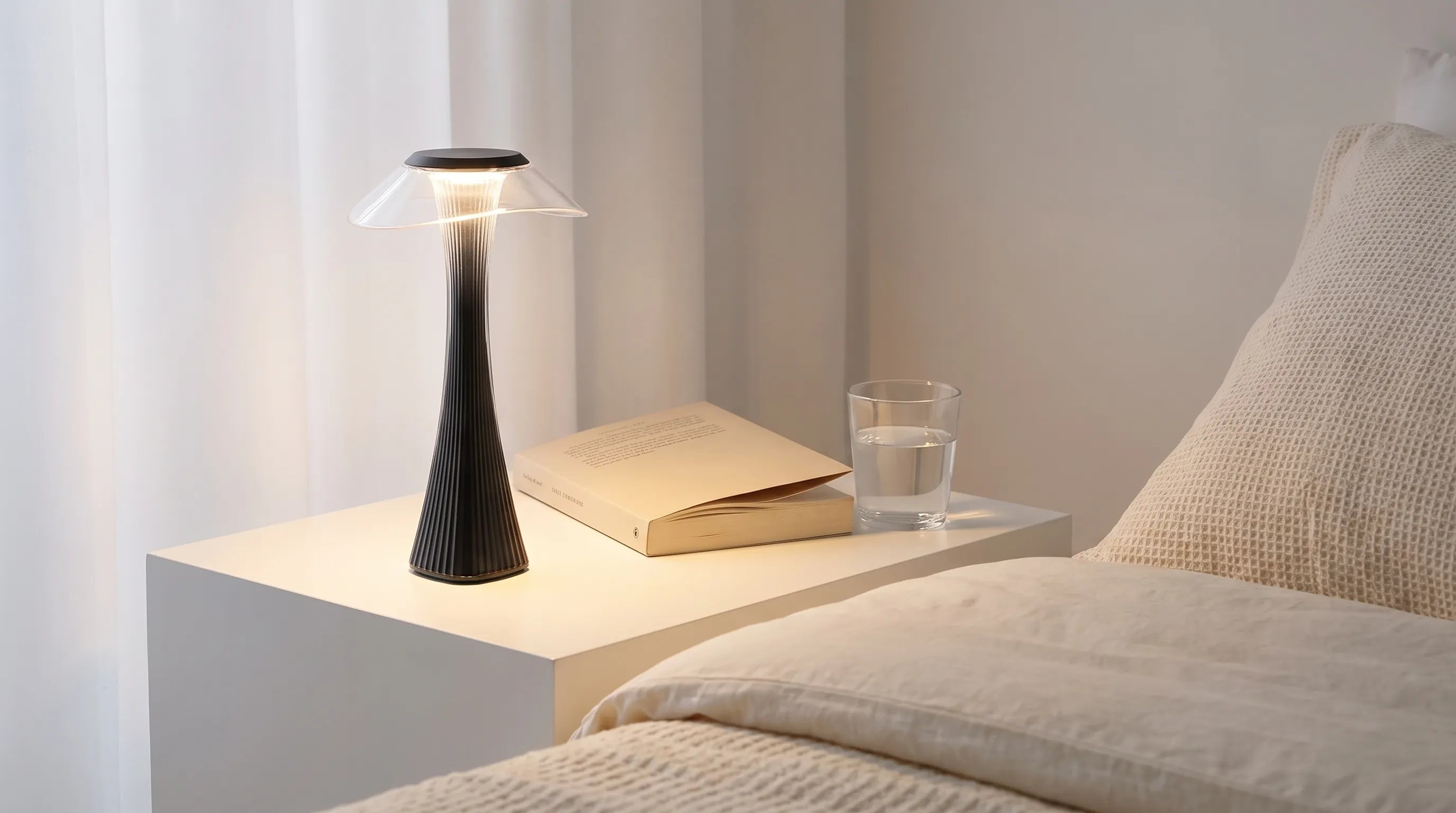
A low dimming level is crucial, especially in the bedroom. Light that is too bright right before going to bed appears restless and can disrupt the atmosphere. If you want to pay particular attention to warm evening light, see the BUYnBLUE Guide to Dimmable bedside lamp with warm light further information on light color, lumens and freedom from glare.
When buying, it's worth taking a look at the type of dimming. Touch operation is convenient, especially at the bed or on the desk. A classic switch often appears more reduced and is intuitive. In very minimalist models, the switch should be easily accessible so that the lamp does not have to be lifted or turned every time.
Light color: warm white for comfort, more neutral for concentration
The light color is given in Kelvin. The lower the value, the warmer the light appears. Many people find warm white light particularly pleasant in living and sleeping areas. Values in the range of around 2200 to 2700 Kelvin create a cozy, evening atmosphere. Around 3000 Kelvin, light still appears homely, but a little clearer. A more neutral light can be useful for concentrated work, as long as it doesn't appear too cool or bright.
The light color is particularly important for a wireless battery-powered table lamp because it is often used as a visible design element. A lamp on a sideboard, bedside table or side table shapes the atmosphere more than a purely functional ceiling light. Therefore, match the light color to the existing lighting. Warm light next to very cool ceiling spotlights can appear restless, while a consistently warm lighting concept makes the room more harmonious.
If the lamp offers different light colors, that is practical. However, you should check which setting you will actually use. In living spaces, a good, warm light level is usually more important than many technical modes.
Battery and charging time: pay attention to realistic usage
With a wireless table lamp, the battery determines how freely you can actually use the lamp. A short loading time is pleasant, but a suitable running time is just as important. Since runtime depends heavily on brightness level, battery capacity and LED technology, you should read product information carefully and compare it with your usage pattern.
Before purchasing, ask yourself: Will the lamp be used for several hours a day or only occasionally as an accent light? Is it permanently in a fixed place or should it move regularly between the living room, bedroom and terrace? Is it mostly used at a low dimming level or often at full brightness?
A USB charging cable is practical because it can be easily integrated into existing charging habits. At the Wireless table lamp Nordic Ambrosios from BUYnBLUE For example, a USB cable is included and the lamp is fully charged in 3-5 hours according to the product description. The modern, elegant and at the same time timeless design makes it particularly interesting for rooms in which a wireless light should not only be functional but also visibly decorative.

Size and proportions: choose to suit the furniture and room
A battery-powered table lamp only looks high-quality if its proportions are right. A wide base can be annoying on a small bedside table. On a long sideboard, however, a very small lamp quickly looks lost. Therefore, take into account the height, diameter and optical weight of the lamp.
A compact, stable shape makes sense for bedside tables. The light source should not be directly at eye level when you are lying in bed. On sideboards and consoles, the lamp can be a little more sculptural, as it is perceived more as a decorative object there. On the dining table, the most important thing is that the lamp does not block the view between people and can be easily put aside.
The choice of material also influences the spatial effect. Metal appears clear and modern, glass is lighter and more elegant, wood is warm and natural. Matte surfaces are less reflective and fit well into calm, minimalist interiors. Glossy surfaces create stronger accents, but often require more care.
Don't underestimate the lack of glare and light distribution
A beautiful lamp can be disappointing in everyday life if it is blinding. This happens particularly often with small, bright LED light points without a sufficient diffuser. If the lamp is at eye level, for example on a sideboard next to the sofa, the light should be softly diffused or directed downwards.
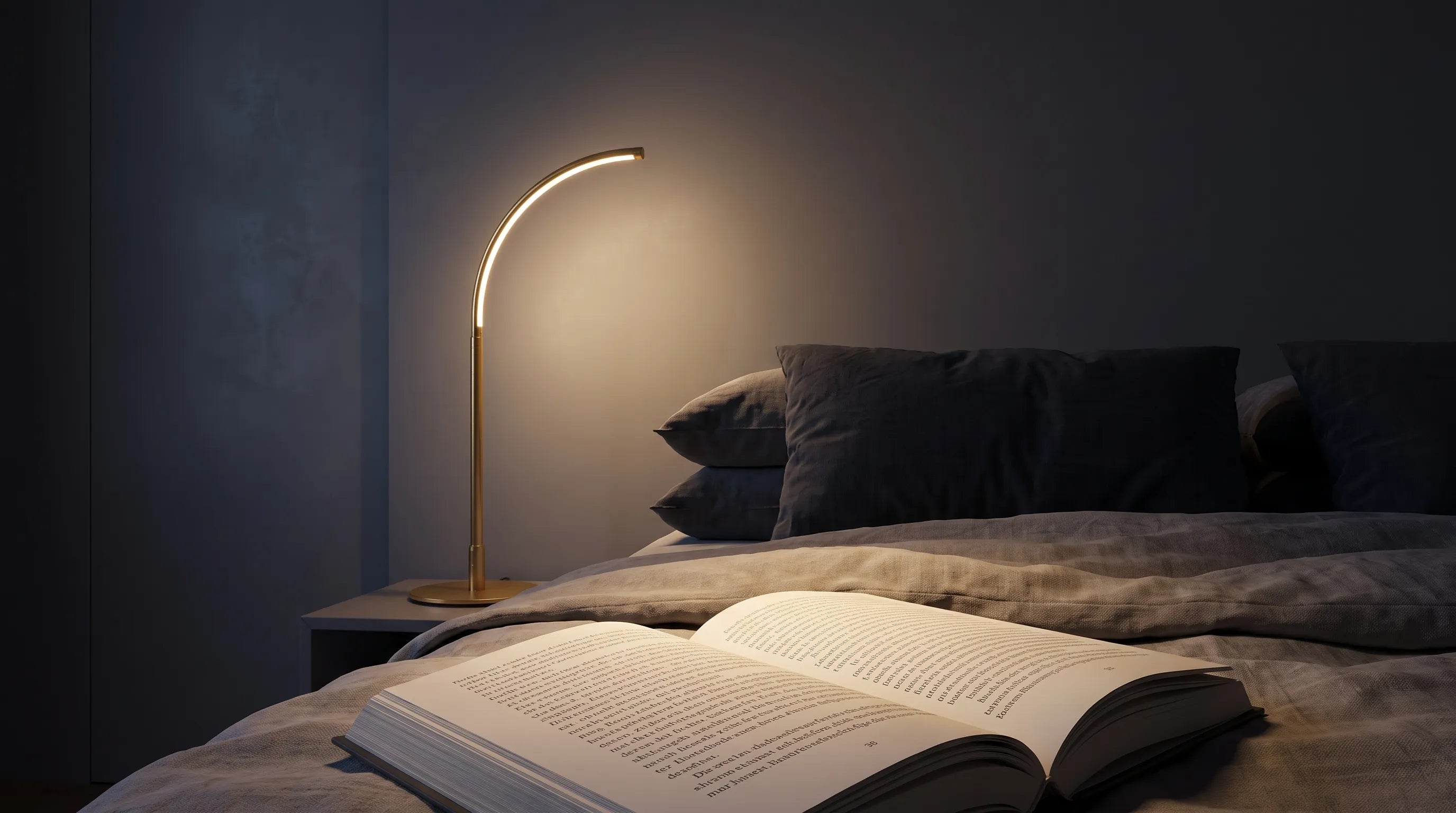
Directional light is useful for reading light so that the page or work surface is well illuminated. Diffused light is more pleasant for the mood in the room. Some battery-powered table lamps are more decorative, others more functional. Both can be correct as long as the purpose is clear.
A simple practical test: Imagine where the lamp is and from which position you see it. If you were to look directly at the light source, the model should have a low dim level or a good shade. In open living areas, freedom from glare is particularly important because the lamp can be seen from multiple angles.
Locations: which battery-powered table lamp fits where?
Not every room has the same requirements. A lamp that looks perfect on the sideboard may be too bright on the bed or too decorative on the desk.
What counts in the bedroom is warm light, easy operation and low dimming levels. In the living room, the design effect is more important, especially if the lamp is part of a lighting concept with floor, wall and ceiling lights. In the dining area it should be stable, have low glare and create enough atmosphere without dominating the table.
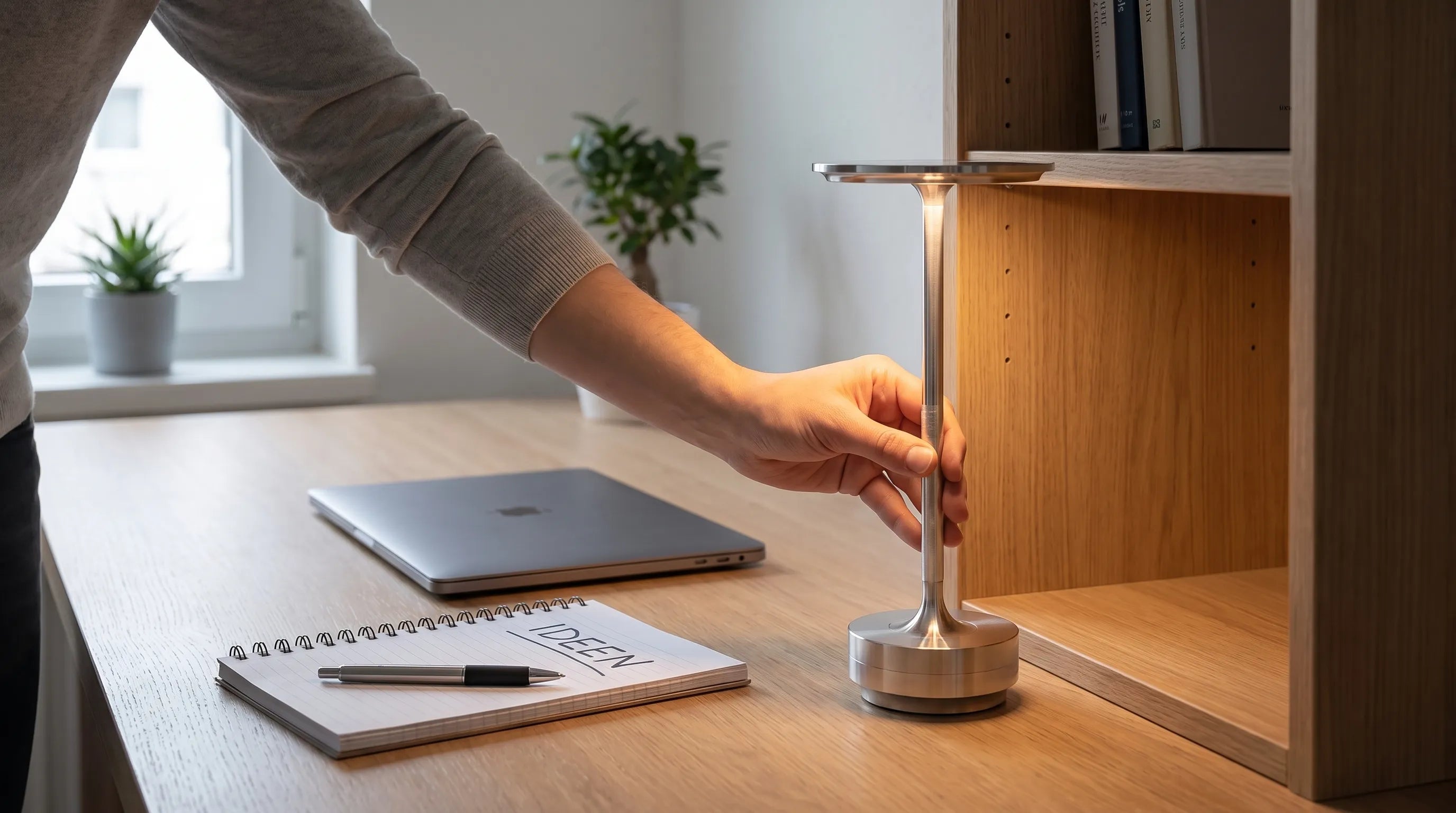
More functional light is needed for the desk or home office. A battery-powered table lamp only makes sense here if it is sufficiently bright and specifically illuminates the work surface. You should be particularly careful for outdoor use: not every wireless lamp is suitable for moisture. If it is to be used on a balcony or terrace, make sure it has a suitable IP protection rating and the manufacturer's instructions.
Avoid common mistakes when purchasing
Many bad purchases occur because only a single criterion is taken into account. A particularly beautiful design is convincing at first glance, but without suitable dimming, pleasant light color or sufficient battery, the joy can quickly fade.
Typical errors are:
- Choose too cool light for bedrooms or cozy living areas.
- Just pay attention to watts instead of checking lumens and light distribution.
- Pay attention to the charging time, but forget the desired usage time.
- Buy a lamp that is too large for small bedside tables or narrow sideboards.
- Planning outdoor use without paying attention to IP protection and manufacturer approval.
- Choose a visible LED light source even though the lamp is at eye level.
Before you buy, take a moment to realistically consider the future location. Which surface is available? How close are you sitting or lying to the lamp? Should it be used daily or serve more as a decorative accent? These questions often lead to the right decision more quickly than pure design comparisons.
Mini pre-purchase checklist
Before you decide on a wireless dimmable table lamp, a quick check will help. It shouldn't be complicated, but should bring together the most important points.
| Question | Good decision-making aid |
|---|---|
| Where is the lamp mainly located? | Location determines size, brightness and light distribution |
| Is it used for reading? | Then make sure there are enough lumens and directed light |
| Should it have a calming effect in the evening? | Choose warm white light and a low dimming level |
| How often is it charged? | Compare charging time and typical usage time |
| Is it visibly staged in space? | Pay particular attention to material, shape and proportions |
| Will it be used outside? | Only use suitable models with the appropriate protection class |
A good battery-powered table lamp doesn't have to do everything. It has to fit your room, your lighting needs and your furnishing style. It is precisely this clarity that makes the difference between a spontaneous decorative lamp and a long-lasting part of your lighting concept.
Frequently asked questions
How bright should a wireless battery table lamp be? That depends on the use. Moderate brightness with good dimming is sufficient for mood and decoration. For reading or working, the lamp should be brighter and direct the light specifically to the surface.
What color light is best for a dimmable table lamp? Warm white light is particularly pleasant for the bedroom, living room and evening atmosphere. Values around 2200 to 2700 Kelvin seem comfortable, while 3000 Kelvin seems a little clearer and more modern.
Is touch operation better than a normal switch? Touch is useful if the lamp is frequently dimmed or is placed by the bed. A classic switch can appear more robust and intuitive. It is crucial that the operation is easily accessible in everyday life.
Can I use a battery-powered table lamp on the terrace? Only if the model is suitable for it. Pay attention to the manufacturer's information and a suitable IP protection class against moisture. A normal indoor table lamp should not be left outside permanently.
What should I pay particular attention to when it comes to the battery? What is important are charging time, connection type and the expected running time at the desired brightness. Since high dimming levels use more energy, the running time at full brightness is usually shorter than with dimmed light.
Conclusion: The best wireless battery table lamp fits your everyday life
A dimmable wireless battery-powered table lamp is ideal if you want to place light flexibly and avoid cables. Pay attention not only to the design, but also to the light color, dimming quality, battery, operation and lack of glare. Warm, finely adjustable light is usually the best choice for living spaces, while work areas require more brightness and targeted light distribution.
BUYnBLUE offers a curated selection of modern lights for stylish living areas, with a focus on high-quality design, selected materials and a pleasant shopping experience. If you are looking for an elegant wireless solution, it is worth taking a look at the Nordic Ambrosios and the other modern lights in the BUYnBLUE Assortment.