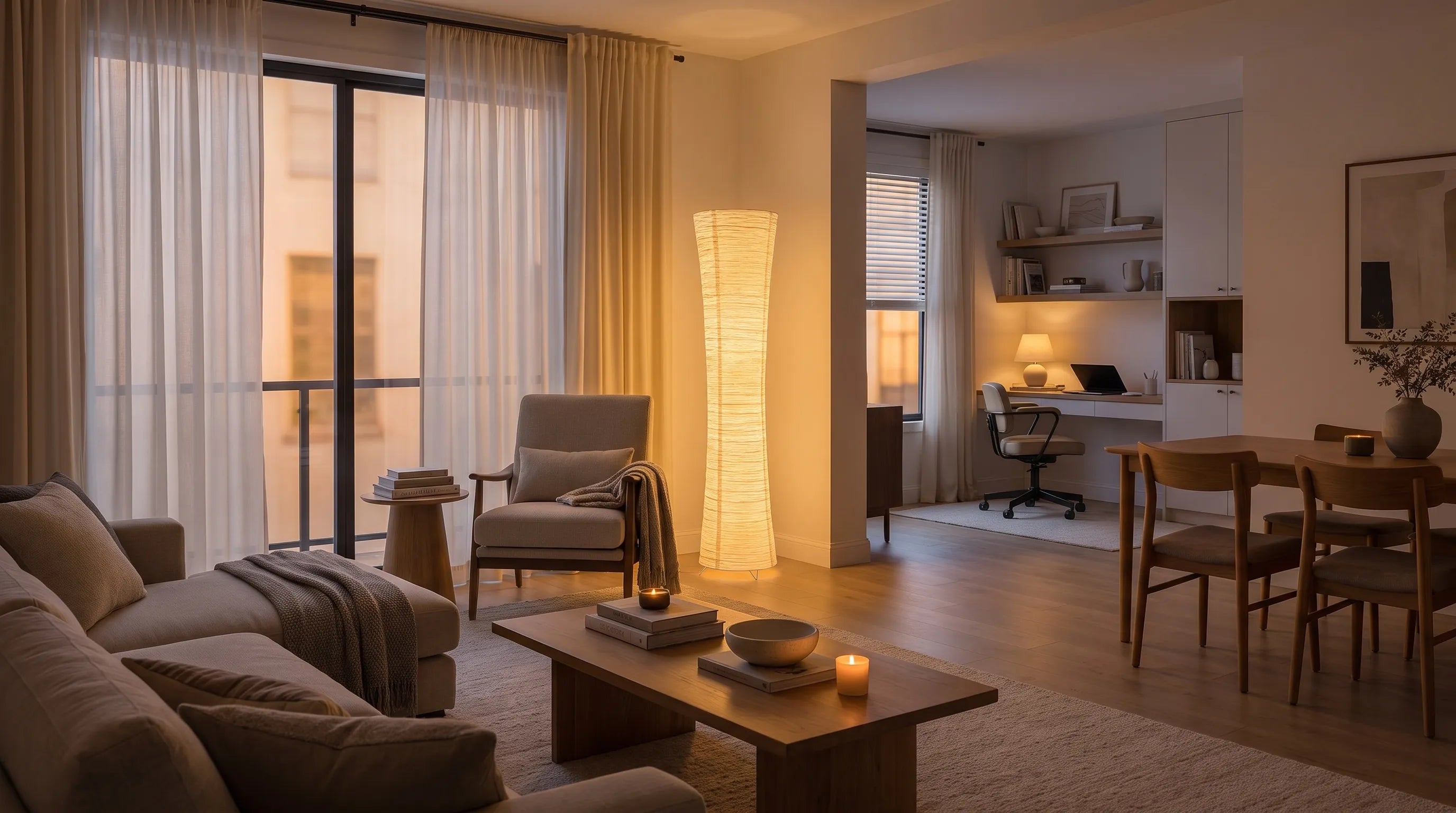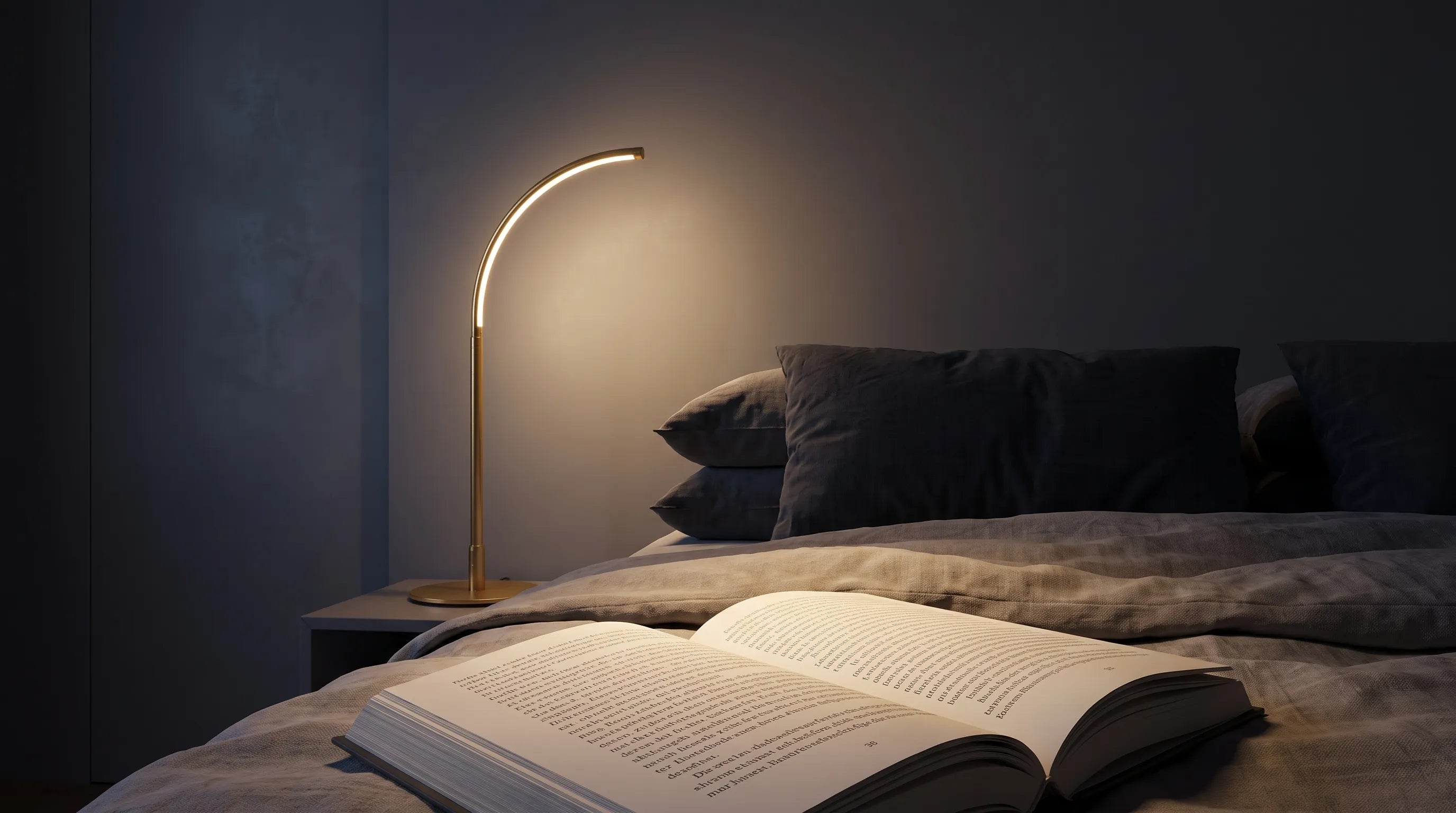
Dimmable reading lamp on the bed for relaxed evening light
A good reading lamp by the bed is rarely the brightest lamp in the room in the evening. It is the lamp that provides just enough light for reading without putting the bedroom back in the daytime mood. This is precisely why dimmability is so important: it allows you to change from functional reading light to a gentle fade without having to get up or turn on the entire room lighting.
If you choose a dimmable reading lamp for your bed, you shouldn't just pay attention to the design. The decisive factors are light color, brightness, lack of glare, operation and the correct position in relation to the book or e-reader. Only when these points fit together does what many people look for emerge: a relaxed evening light that looks cozy and is still suitable for everyday use.
Why bedside lighting should be planned differently than room lighting
In the bedroom, light takes on multiple roles. In the morning it should help with getting dressed and tidying up, in the evening it should calm you down and disturb you as little as possible at night. A single bright ceiling light can hardly fulfill these different tasks. It is often too unfocused for reading in bed, too bright for the evening and unpleasant for the eyes.
A reading lamp by the bed works better if it is thought of as a separate lighting zone. The light should shine on the book, magazine or tablet, not directly on your face. At the same time, it should not completely darken the room, because strong contrasts between the light book page and the dark background tire the eyes more quickly. A gentle cone of light with a soft environment is ideal.
Sleep rhythm also plays a role. Harvard Health Publishing points out that blue light in the evening can affect the natural day-night rhythm. This doesn't mean that any cold light is immediately problematic, but warm, dimmed light is usually the better choice for the bedroom.
Light color: warm, homely and not too yellow
For relaxed evening light, a color temperature between around 2200 and 2700 Kelvin is often recommended. 2200 Kelvin seems very warm and almost candle-like, 2700 Kelvin is reminiscent of classic light bulbs and often remains a little clearer when reading. 3000 Kelvin can also work in the bedroom, but it looks fresher and less comfortable.
More important than a single ideal value is the question of how you use the bed light. If you only read a few pages before falling asleep, the light can be set very warm and low. If you read for longer or very small fonts, you need more brightness and good color rendering. A color rendering index of Ra 80 is solid for many applications, Ra 90 often appears more natural on paper, fabrics and skin tones.
If you generally want to deal with warm light on the bedside table, the guide is also worth reading Dimmable bedside lamp with warm light for the evening. For a real reading situation, the light source should also be precisely aligned and well shielded.
Brightness: Lumens are more helpful than watts
With modern LED lights, the wattage only provides a limited indication of how bright a lamp appears. Orientation based on lumens is better. However, the actual perceived brightness depends heavily on whether the light is spread widely or directed specifically onto the book page.
This table can help as a rough guide:
| Bedside situation | Meaningful lighting effect | Rough brightness orientation | Recommendation |
|---|---|---|---|
| Relax before sleeping | Very soft and indirect | About 30 to 120 lumens | Dim warm, avoid glare |
| Short reading | Gentle beam of light on a book or e-reader | About 150 to 300 lumens | Illuminate the reading area in a targeted manner |
| Longer reading | Clear, even light area | About 300 to 500 lumens | Choose good shielding and a stable position |
| Getting up at night | Orientation without a stimulating effect | About 10 to 50 lumens | Prefer a very low dimming level |
These values are not a norm for every bedroom. A dark screen, a large distance from the book or a very matt surface change the impression significantly. That's why continuous or finely graduated dimming is so practical: you can adapt the lamp to the type of day, reading time and environment.
What makes a good dimmable bedside reading lamp
A good bedside reading lamp combines comfort and control. It should be quickly accessible, intuitive to use and not produce bright jumps in light even when you're half asleep. Models that do not immediately start at full brightness when switched on or that have a memory function, if this is supported by the respective product, are particularly pleasant.
Also pay attention to the shielding of the light source. Visible, very bright LED dots can be blinding, even if the lamp as a whole is not extremely bright. A shade, opal glass, a downward-facing lamp head or a well-positioned diffuser make the light more pleasant. An adjustable head is helpful for reading arms because you can direct the beam of light exactly to the page.
The design should match the bedroom, but not at the expense of function. A minimalist table lamp can appear calmer on a bedside table than a technical-looking reading arm. The Table lamp Nordic Erla is a good example of this: According to the product description, its timeless, minimalist design fits particularly well in bedrooms or office areas and can be combined with many furniture styles. If dimmability is a must for you, check carefully for each light which bulbs, switches or dimming options are provided in the specific setup.
The correct placement on the bed
A dimmable reading lamp is of little use if it is placed incorrectly. On the bedside table, the lampshade or light outlet should be positioned approximately so that the light falls on the reading surface from above. If you sit upright to read with pillows on your back, a slightly higher light source is often more pleasant than a very low table lamp.
Consideration is important when it comes to double beds. Two separate reading lights are usually better than one bright light together. This means one person can read while the other is already asleep. Narrower beams of light, swiveling heads or deeply dimmable lamps that do not shine across the bed are particularly helpful.
Wall lights or side pendant lights can be an elegant alternative to the classic bedside lamp, especially when space is limited. For pendant lights next to the bed, the cable length, height and position are very important. BUYnBLUE offers a free customization service for chandeliers and pendant lights, for example for cable length, canopy or color. This can be useful for special ceiling heights or asymmetrical floor plans.

Which type of dimming suits your everyday life?
Not every dimming feels the same. A classic rotary dimmer allows very fine settings, but needs an easily accessible space. Touch dimmers look modern and are convenient, but they can be accidentally triggered in the dark. Cable switches are simple, but should be located so that you don't have to look for them.
Smart home solutions are practical when you want to use scenes such as reading, relaxing and night light. But they should not be the only operating option. No one wants to search for their smartphone before bed just to turn off the lights. A good bed lamp can also be operated analogue.
Technical compatibility is important. Not every LED bulb can be dimmed cleanly with every dimmer. Flickering, buzzing or a very small dimming range are typical signs that the lamp and dimmer do not fit together optimally. If you use a replaceable bulb, pay attention to the word “dimmable” and the appropriate socket.
Material, shade and light character
The lampshade largely determines whether a reading lamp looks cozy or stressful. Fabric shades diffuse light in a soft and homely way, but often absorb some of the brightness. Metal or glass lights can appear more precise, but should be designed so that they do not cause glare. Opal glass creates an even distribution of light, clear glass shows the light source more clearly and appears more decorative, but sometimes brighter.
For relaxed evening lighting, matt surfaces are often more pleasant than high-gloss, reflective materials. This is especially true in small bedrooms where light is quickly reflected from cupboard fronts, glass or light-colored walls. The wall color also plays a role: warm wall tones increase coziness, very white surfaces make light appear brighter and more objective.
If your bedroom is furnished in a modern style, it is worth having a calm interplay of lamps, bedside tables, bed frames and textiles. A lamp does not have to be flashy to appear high-quality. A restrained shape is often the better choice because it supports the bed as the center of the room.
Common mistakes when choosing
Many people first buy a bed lamp based on how it looks and later realize that it is too bright, too low or impractical in everyday life. Especially with a reading lamp, it's worth taking a closer look at the usage situation: Do you read on the left or right side? Is the bedside table higher or lower than the mattress? Do you use books, tablets or e-readers?
Above all, avoid these typical mistakes:
- Light in the bedroom that is too cold and appears matter-of-fact instead of calming in the evening.
- A visible light source that shines directly into the eyes.
- A switch that is difficult to reach from bed.
- Too little dimming scope between reading light and night light.
- A lamp that looks good but is too big for the bedside table.
- A non-dimmable LED lamp in an actually desired dimming situation.
A good practice test is simple: sit in bed the way you actually read. The lamp should illuminate the page evenly without requiring you to turn your head or squint your eyes. If you feel the need to move the lamp differently after a few minutes, the position is not yet correct.
Purchase check: How to find the right solution
Before you decide, define the main purpose. If the lamp is intended primarily for reading, it needs more precision. If it is primarily intended to create atmosphere, soft diffusion and particularly low dimming levels are more important. Many bedrooms benefit from a combination of both: a targeted reading lamp on the bed and another, indirect light source in the room.
When comparing, pay attention to light color, lumens, type of dimming, lack of glare, dimensions and cable routing. Cables in particular are often underestimated. A beautiful lamp looks less high-quality if the cable runs awkwardly over the bedside table or the Power plug is too far away. For wall and pendant lights, the position should be carefully planned before drilling or installing.
Service and customizability can also be crucial. When a bedroom is being renovated or has unusual dimensions, standardized solutions are not always ideal. In such cases, it is helpful if cable lengths or visible details can be adapted to the room concept.
Frequently Asked Questions
Which light color is ideal for a dimmable bedside reading lamp? Warm light colors between around 2200 and 2700 Kelvin are usually suitable for evening reading. If you read for a long time or prefer small fonts, you may also find 3000 Kelvin pleasant, as long as the light is glare-free and not too bright.
How bright should a bedside reading lamp be? For reading, around 150 to 500 lumens are often enough, depending on the distance, screen and light distribution. It is important that the lamp can be dimmed significantly so that it functions as a gentle evening light after reading.
Is a table lamp or a wall lamp better for reading in bed? A table lamp is flexible and easily replaceable, but takes up floor space. A wall light saves space and can illuminate very precisely, but must be well planned and installed appropriately.
Can I retrofit a normal lamp with a dimmable light source? This can work if the socket, bulb and dimmer are compatible. Always check the manufacturer's instructions, as some LED bulbs flicker or do not dim properly if the technology does not match.
What is important when two people sleep in bed? Two separate, dimmable reading lamps are usually the most convenient solution. This means each person can adjust their own brightness without unnecessarily illuminating the other side of the bed.
Consciously create relaxed evening light
A dimmable bedside reading lamp is more than just a practical detail. It influences how quiet a bedroom appears, how pleasant it is to read and how easy it is to transition into the evening. When light color, brightness, position and design match, the result is lighting that is both functional and atmospheric.
At BUYnBLUE Find modern lights for different living areas, with curated selection, high-quality materials, free worldwide shipping and 14-day return policy. For bedrooms with special requirements, it's worth taking a closer look at lights that fit harmoniously into your room concept and really support your evening ritual.