design Floor lamps place correctly in the living room
One design Floor lamps is much more than an additional light source. When placed correctly, it combines function, atmosphere and interior design: it makes the sofa corner more comfortable, creates a reading zone, emphasizes materials or helps to visually structure open living areas. If placed incorrectly, even a high-quality model can quickly become distracting, blinding or getting in the way.
The most important principle is: The lamp should not only look beautiful, but also have a clear role in the room. Only when function, proportion and lighting effect fit together does it become one Floor lamps a conscious design element.
First clarify the function: what is it supposed to do? Floor lamps afford?
Before you make a design Floor lamps If you place it in your living room, it's worth taking a quick look at your daily use. Do you sit on the sofa and read in the evening? Do you often watch films? Is there a dark corner that makes the room seem smaller? Or do you want to highlight a sculpture, a wall structure or a sideboard?
Many placement errors occur because a Floor lamps is only selected based on appearance. The lighting task determines the shape, height, shade, distance to the seat and light source.
| Light task | Appropriate placement | What to pay attention to? |
|---|---|---|
| Reading light | Next to sofa or armchair | Light should fall on the book or newspaper from above |
| Mood lighting | In the corner of the room or next to the sideboard | Choose warm, soft light without direct glare |
| Accent light | In addition to art, plants or structural walls | Aim the light carefully, don't choose it too bright |
| Space zoning | Between the living and dining area or next to the seating area | Use lights as a visual boundary and keep walking paths clear |
| Supplement basic lighting | In dark room zones | Prefer indirect or upward light distribution |
Especially in modern living spaces with open floor plans, one can Floor lamps help define areas without using furniture or walls. This works particularly well if the lamp's material, color or shape connects to other elements in the room.
The best positions for a design Floor lamps in the living room
Next to the sofa: the classic with many possibilities
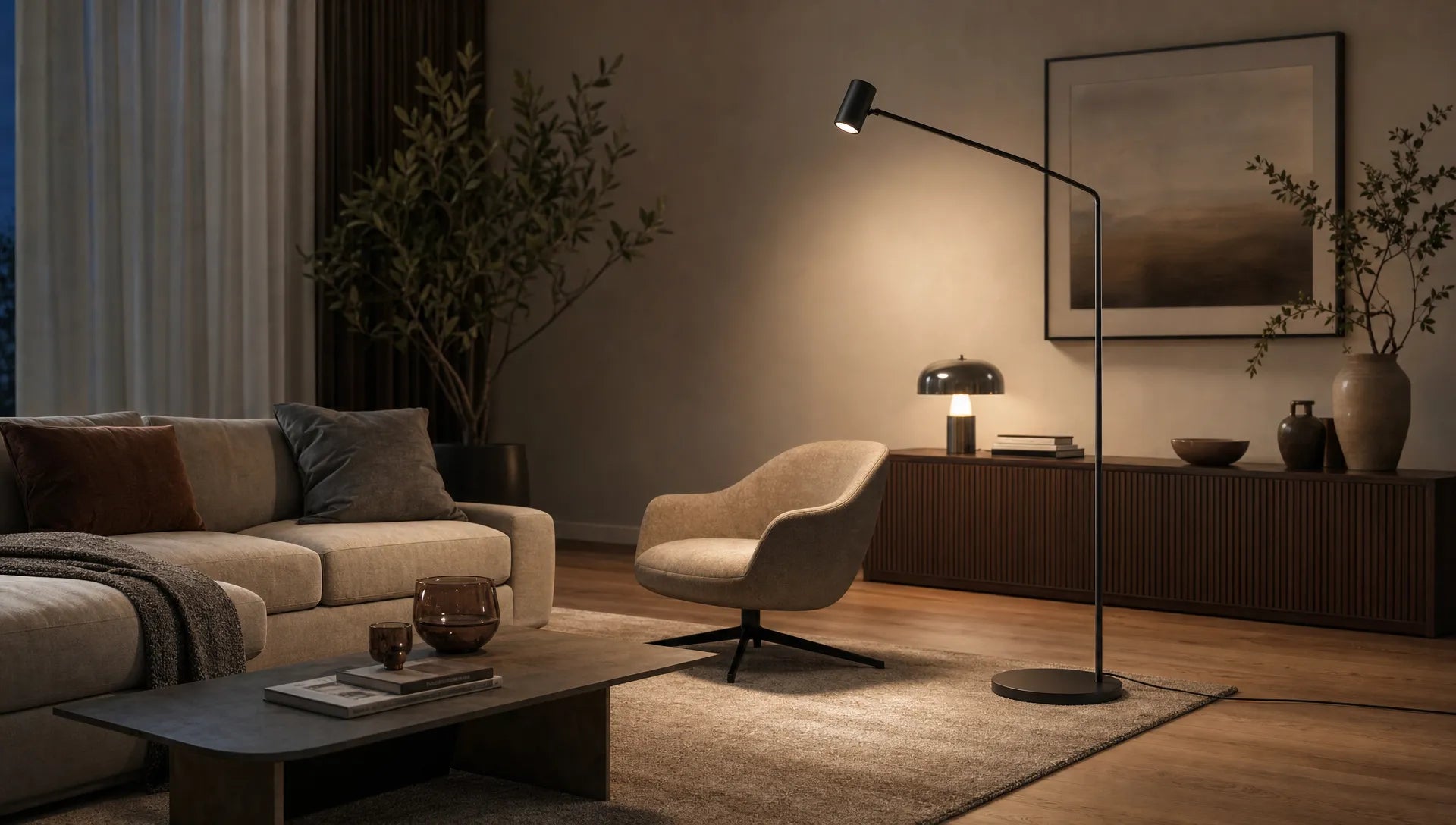
The most common and most sensible position is next to the sofa. It can there Floor lamps Serve as a reading light, mood light or design counterpoint. A distance of around 30 to 60 centimeters from the edge of the sofa is ideal. This means the light is close enough to be functional, but doesn't appear squeezed in.
For a sofa with a low backrest, the Floor lamps be a little more present. Next to a high, voluminous sofa, a slim lamp body often looks more elegant. Make sure that the shade or lamp head does not glare directly at eye level when you are sitting.
The placement looks particularly harmonious if the Floor lamps relates to a side table, carpet or coffee table. It should not be isolated in the room, but should become part of a small residential island.
Behind or next to the reading chair
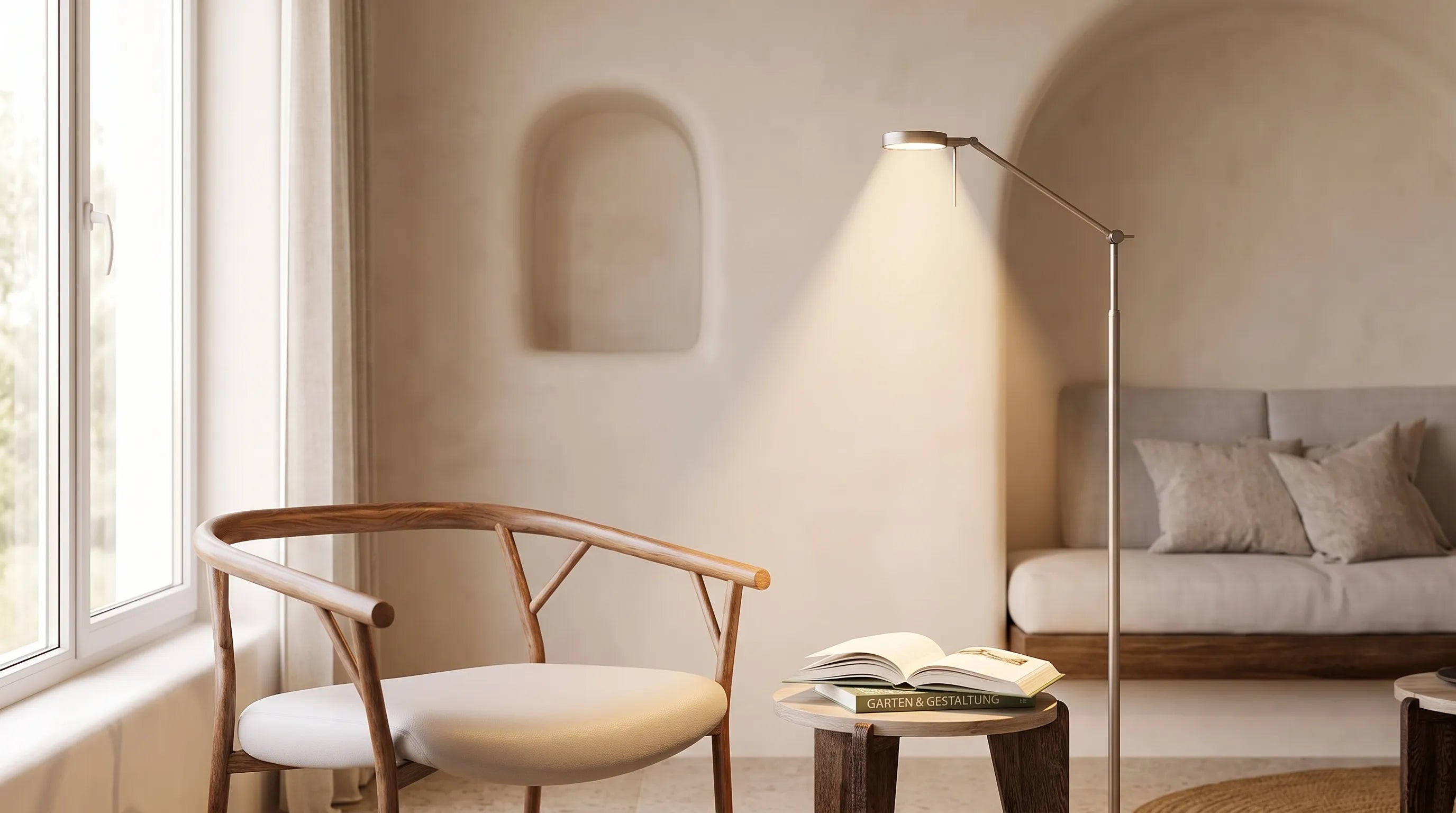
A reading chair only looks really inviting when the light is right. The Floor lamps should be positioned slightly behind the armchair to the side so that the light falls over the shoulder onto the reading surface. For right-handed people, the left side is often comfortable; for left-handed people, the opposite is the case because their own arm then casts less shadow.
Adjustable models, lights with a directed head or combinations of ambient light and reading arm are suitable for this zone. If you would like to learn more about how to design a functional reading area, see the article on how to create one Floor lamps Cleverly dimmable with reading lamp, additional practical ideas.
In the corner of the room: more depth and softness
Dark corners make a living space appear smaller and less inviting. One Floor lamps in the corner can change a lot right here. Particularly indirect light, which gently brightens the wall or ceiling, creates depth and takes away the severity of harsh shadows.
It is important not to press the lamp too tightly into the corner. A small distance from the wall prevents heat build-up, protects surfaces and allows the light to emerge softer. For large, empty corners, the lamp can be more sculptural. In small rooms, a slim model with a calm silhouette is recommended.
Next to a sideboard, shelf or console
A designFloor lamps next to a sideboard can be an elegant alternative to a table lamp. It brings height to the composition and can balance the horizontal line of the furniture. This looks particularly nice when materials are repeated, such as metal handles, a black lamp base or warm wood tones.
This placement is also suitable for atmospherically framing decorations, ceramics, books or art objects. However, make sure that the lamp does not compete with tall vases, large pictures or shelves. A clear hierarchy is better: one main object, one light source, a few additional details.
Proportions: correctly assess the height, shade and distance
One design Floor lamps must fit the scale of the room. A model that is too small will disappear next to large sofas and high ceilings. A lamp that is too dominant can overload small rooms. That's why it's worth considering not just the absolute height, but also the base, shade width, projection and visual weight.
As a rough guide, these guidelines work in many living spaces:
| situation | Recommended guideline | Effect |
|---|---|---|
| Next to sofa | Lamp head or lower edge of shade slightly above seat height | Pleasant light without strong glare |
| Next to reading chair | Light emission at approximately shoulder to head height when sitting | Good readability and fewer shadows |
| In the corner of the room | Height often 140 to 180 cm, depending on the model and ceiling height | Space appears higher and deeper |
| Next to low sideboard | Higher than the furniture, but not higher than dominant wall art | Balanced vertical line |
| In small rooms | Slim shape, narrow base, restrained shade | Lightweight look and more freedom of movement |
The unloading is also important. With arc lights or models that project far, the arc should not run where you often walk. An arc lamp can look very elegant above a coffee table if it is sufficiently high and stable. For this special type of light, it's worth taking a look at how you can get one Use designer arc lamps correctly in the living room.

Light quality: warm, glare-free and suitable for use
The placement decides a lot, but not everything. A perfectly positioned lamp looks uncomfortable if the light color, brightness or radiation are not right. Many people find warm white light between 2,700 and 3,000 Kelvin pleasant in living spaces. It supports a relaxed atmosphere and goes well with wood, textiles, warm wall colors and subdued evening atmospheres.
For pure reading functions, the light can be a little brighter and more targeted. Dimmable light is ideal for movie nights or relaxed conversations because it can be adjusted to the time of day and mood. Freedom from glare is also important: if you look directly into the lamp from the sofa, it will be there Floor lamps usually too close, too low or at the wrong angle.
When choosing the bulb, pay attention to three factors: light color, brightness and color rendering. A high color rendering index ensures that textiles, art and wooden surfaces appear more natural. Especially when it comes to designer lights with high-quality materials, it is worth choosing a light source that does not distort the surfaces.
Style and Material: Die Floor lamps connect with the space
One Floor lamps works best when it doesn't appear like a foreign body. That doesn't mean it has to be invisible. On the contrary: a designFloor lamps can make a statement. But it should create a design connection to the room.
Clean lines, matt surfaces and reduced shapes often work well in minimalist living spaces. In warm, homely interiors, fabric shades, brass, wood or gently curved shapes can look more pleasant. If you want a natural touch, you should make sure that wood does not automatically appear rustic. The decisive factors are shape, combination and environment. The guide shows you how to do this Wood Floor lamps style modern lets.
A simple design rule is: repeat a feature of the Floor lamps elsewhere in the room. This can be the color of the base, the material of the shade or the design language. A black metal base can be found in window frames, table legs or picture frames. A lampshade in a natural tone can harmonize with cushions, curtains or carpets.
Don't underestimate walking paths, sockets and safety
One Floor lamps must function in everyday life. Even the most beautiful position is unsuitable if cables run across the room, your foot becomes a tripping hazard or children and pets can easily knock over the lamp.
Before final placement, check how you move through the room. Areas between the sofa and the coffee table, transitions to doors, paths to the balcony and narrow spaces next to shelves are particularly critical. The lamp base should be stable and not tip over halfway on the edge of a carpet.
Above all, avoid these placements:
- Directly in narrow walkways between furniture
- With visible cable across free floor areas
- Too close to curtains if the light gets hot or has little clearance
- Behind furniture, when switches or dimmers are barely accessible
- On uneven surfaces or halfway on carpet edges
If no suitable one Power plug is nearby, the cable can often be routed along a wall, behind a sofa, or under a carpet duct. Loose extension cables in the visible area, on the other hand, appear unsettled and reduce the high-quality impression of the lamp.
Floor lamps Place in small living spaces
In small living rooms, restraint is more important than size. One design Floor lamps can still be very effective here if it is thought of vertically instead of broadly. Slim lights with a small base, narrow shade or indirect lighting effect take up less space.
If possible, place the lamp in an area that is already in use, such as next to the sofa, next to an armchair or in a corner with a side table. A single light in the middle of an open space can quickly become a nuisance in small apartments. It is better to combine light and furniture.
Bright shades, reflective surfaces and warm indirect light also help to make small rooms appear larger. Dark, solid shades, on the other hand, can be very elegant, but should deliberately be used as a contrast.
Floor lamps Use in open living areas
Open floor plans need light zones. A central ceiling light is usually not enough because it illuminates the room evenly but not in an atmospheric way. Floor lamps can mediate between living, eating and working.
Place the light where you want an area to begin or end. Next to the sofa, it can mark the living area. A reading corner is created between the armchair and the bookshelf. Next to a plant or console, it can soften the transition to the dining area.
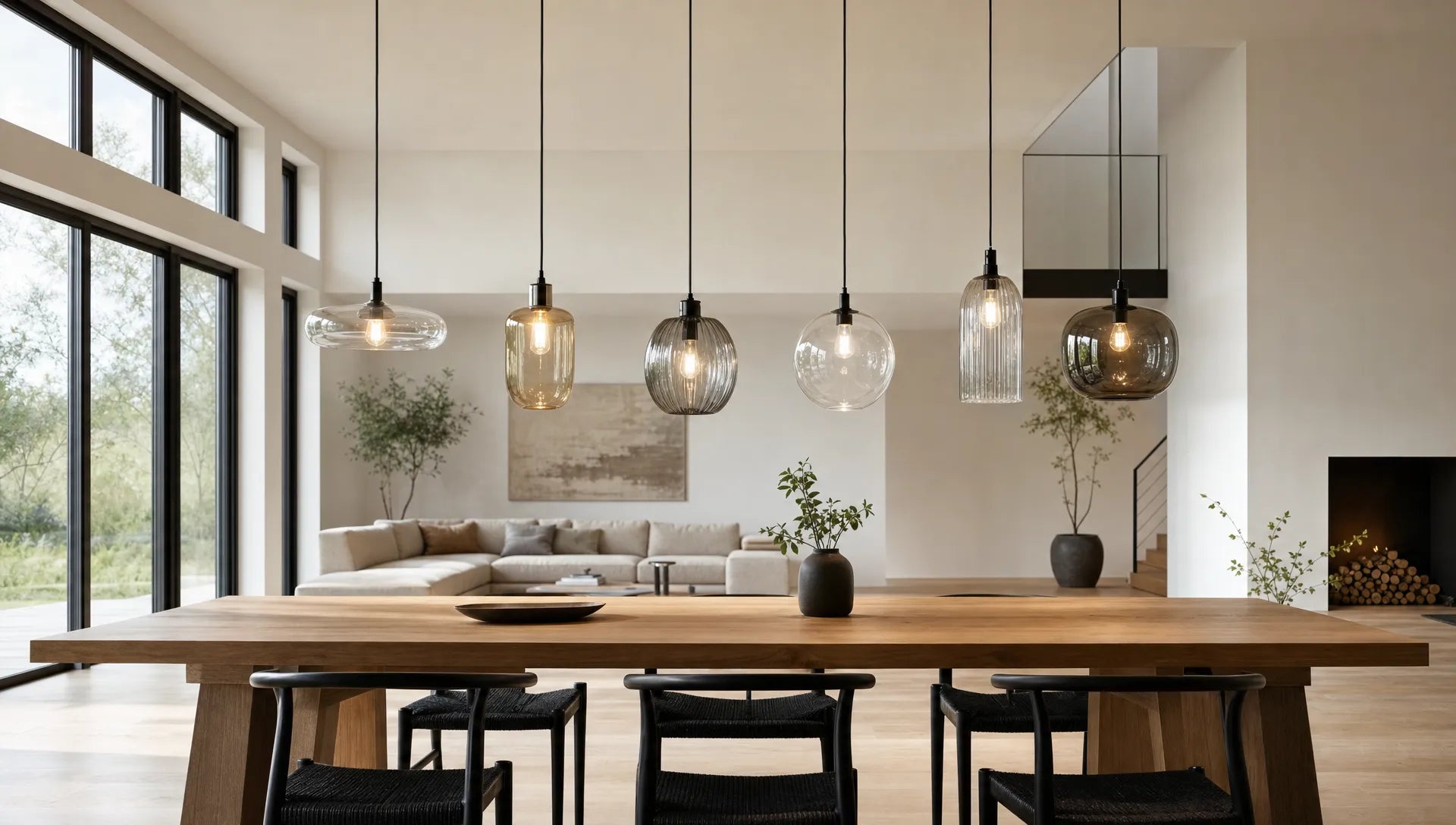
It is important that several light sources in the room harmonize with each other. A designFloor lamps should not work against pendant lights, wall lights or table lamps. Coordinate the light color and brightness so that there is no uneasy mix of cold and warm light.
How to find the ideal position step by step
A good placement can rarely only be planned on paper. Test those Floor lamps in the room before determining the final position. This small effort is worth it, especially with high-quality designer lights.
- View room in daylight: Check which corners remain dark and which furniture already appears strong.
- Test the evening mood: Turn other lights on and off to see which light zone is missing.
- Place temporarily: Set the Floor lamps in two to three possible positions and look at them while sitting and standing.
- Check glare: Sit on the sofa and armchair and see whether the bulb is directly visible.
- Check cables and routes: The best optical solution is only good if it remains safe and suitable for everyday use.
- Match with decoration: Add cushions, carpets, side tables or wall pictures so that the lamp appears integrated.
Photograph the variants with your smartphone from multiple angles. Pictures often make it easier to see whether the proportions are correct or whether a lamp is too close to a piece of furniture.
Common placement errors
A common mistake is to assume that a Floor lamps always belongs in a corner. This can work, but it often wastes your creative potential. Next to a seating area, an armchair or a sideboard, it can have a much stronger effect.
A light source next to the sofa that is too low is also problematic. If the shade ends at eye level or the lamp is directly visible, glare occurs. Too many eye-catching lights in a room can also compete. If there is already a large chandelier or a striking pendant light, this should Floor lamps either be designed to be quieter or consciously serve a different zone.
Another mistake is ignoring the cables. A visible cable does not automatically have to be a nuisance, but it should be routed neatly. In a high-quality living space, an uncontrolled cable is often more disruptive than a less than perfect location.
Frequently asked questions about placing a design Floor lamps
Where is there a design? Floor lamps best in the living room? It usually works particularly well next to the sofa, next to a reading chair, in a dark corner or next to a sideboard. What is crucial is that it has a clear function and does not get in the way.
How high should one be? Floor lamps be next to the sofa? The light should not shine directly into your eyes when sitting. A height between around 140 and 170 centimeters is often comfortable, depending on the sofa, the shape of the shade and the direction of the light.
Which light color suits you? Floor lamps in the living room? Warm white light of around 2,700 to 3,000 Kelvin is usually ideal for cozy living areas. Slightly brighter, directed light can be useful for concentrated reading.
Can one Floor lamps replace the ceiling light? In small or atmospherically furnished living areas, it can partially replace the main light source. However, flexible lighting usually requires a combination of ceiling light, Floor lamps and accent lighting better.
How do I avoid glare in a Floor lamps? Make sure that the bulb is not directly visible from where you sit. A screen, indirect lighting, an adjustable head or a greater distance from the sitting position can help.
Conclusion: The correct position makes the lamp a design element
One design Floor lamps looks convincing when it fits the room, the use and the proportions. Don't just place it wherever there is space, but where it will improve light, atmosphere and structure. Next to a sofa or armchair, in a dark corner or as an accent next to a piece of furniture, it can make the living space appear much more high-quality.
If you are planning modern lighting for your home, you can find it at BUYnBLUE a curated selection of designer lights for different living areas. With high-quality materials, secure ordering, free worldwide shipping and a 14-day return policy, you can choose the right lighting solution in peace and match it to your interior.