Integrate the beige lamp harmoniously into modern rooms
Anyone who searches for “lamp beige” is rarely just looking for one color. It's usually about a lamp that brings warmth into the room, looks modern and doesn't push itself into the foreground. This is precisely the strength of beige: the tone is neutral enough for clear architecture, but softer than white, gray or black.
In modern rooms, a beige lamp can work as a calm focal point, a unifying element or a subtle accent. What is crucial is that the color tone, material, shape, light color and proportion fit together. Then beige doesn't appear arbitrary, but rather consciously chosen.
Why beige works so well in modern spaces
Modern interiors often rely on reduced lines, open floor plans and a few, carefully placed objects. A beige lamp supports this calm without making the room appear cool. It is visually reserved, but still creates atmosphere.
Beige is also more versatile than many people think. It can appear sandy, greige, cream, taupe, linen or caramel. This means that a beige lamp can be integrated into both minimalist and homely, Scandinavian, Japanese-inspired or organic-modern rooms.
Beige looks particularly harmonious when the tone already occurs elsewhere in the room. This can be a carpet, a curtain, a sofa, a natural stone, a wood tone or a wall color. The lamp then picks up on existing nuances and combines furniture, materials and architecture.
Choose the right shade of beige
Not every beige lamp automatically fits into every room. The undertone decides whether the lamp appears fresh, warm, elegant or earthy. If you want a modern look, you should not look at beige in isolation, but always in combination with the color of the walls, floor, furniture and daylight.
| Beige tone | Effect | Fits particularly well |
|---|---|---|
| Cream beige | bright, soft, friendly | White, light wood, bouclé, light natural materials |
| Sand beige | natural, calm, timeless | Oak, travertine, linen, rattan, warm gray |
| Greige | modern, reserved, elegant | Concrete, black, chrome, walnut, cool gray tones |
| Taupe | high quality, subdued, adult | Dark wood, stone, bronze, warm metal tones |
| Caramel beige | warm, striking, homely | Terracotta, leather, brass, dark green tones |
In bright rooms with white walls, cream beige often appears particularly light. Greige is usually more harmonious for gray floors or concrete surfaces because it absorbs the cooler undertones. In rooms with a lot of wood, beige can be warmer so that the lamp doesn't look strange.
A good practical test: Hold a fabric sample, a wood sample or a photo of your furnishings next to the lamp you want. Does the beige tone appear yellowish, reddish or grayish? This nuance should be found at least once in the room.
Beige lamp in the living room: calm but not boring
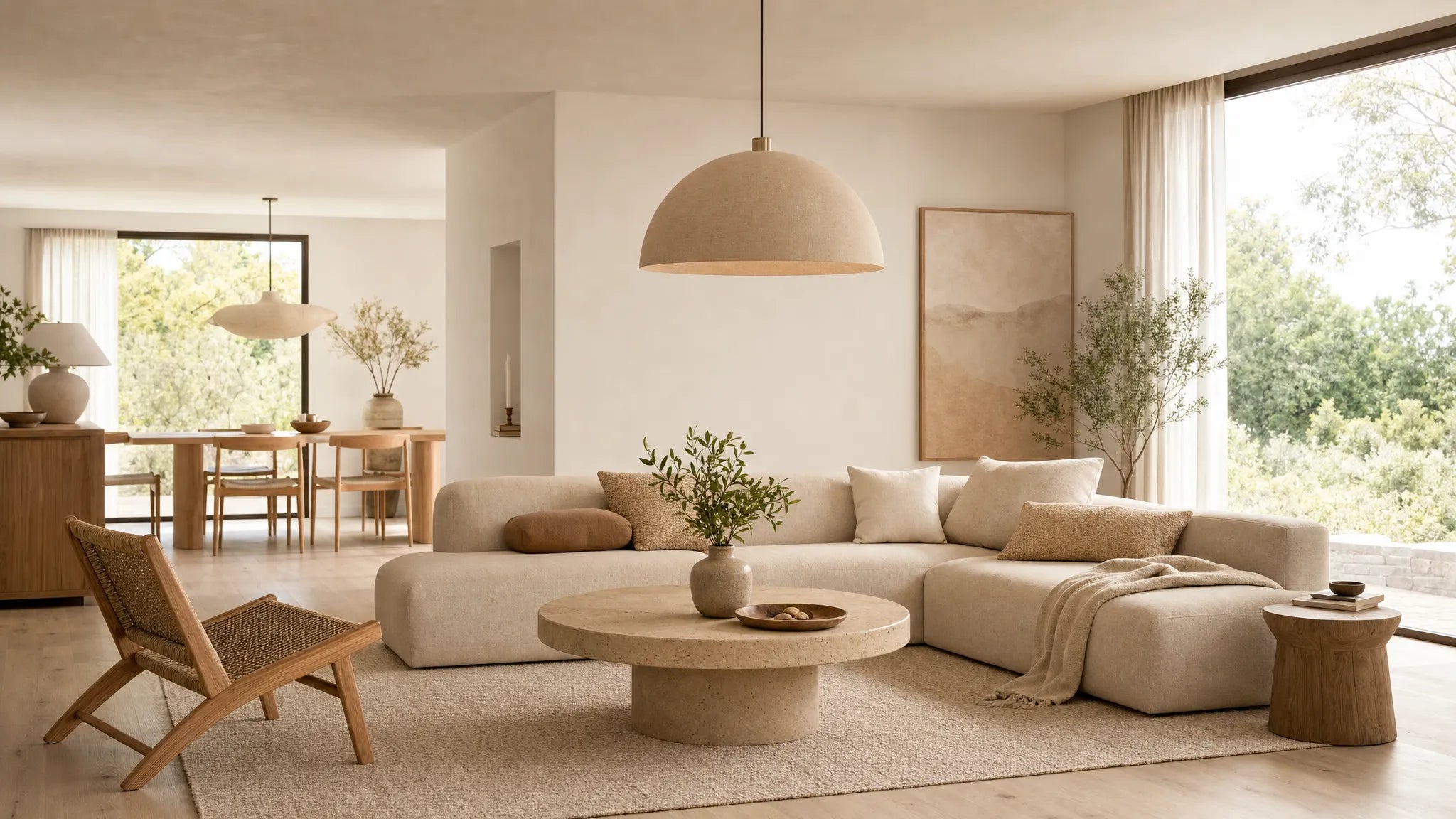
In the living room, a beige lamp can create atmosphere without overpowering the furniture. It works particularly well as a pendant lamp above a coffee table, as a floor lamp next to the sofa or as a sculptural table lamp on a sideboard.
If the room already contains many light tones, the lamp should be given presence through material or shape. A shade made of fabric, ceramic, alabaster glass, or textured metal can add depth to the neutral tone. This means the overall effect remains calm, but not flat.
In modern living rooms, beige looks particularly elegant in combination with:
- light oak wood and natural colored linen
- matt black as a graphic contrast
- warm brass or brushed gold
- Travertine, marble or other light stone surfaces
- deep accent colors such as olive green, chocolate brown or rust red
The important thing is the balance. A very large beige pendant lamp can become the focal point, while smaller beige table lamps serve more as recurring accents. If you use several lights, it is worth taking a look at the basic rules Combine modern lamps harmoniouslywithout the room becoming restless.
Dining room and kitchen: Beige as a soft counterpoint to clear lines
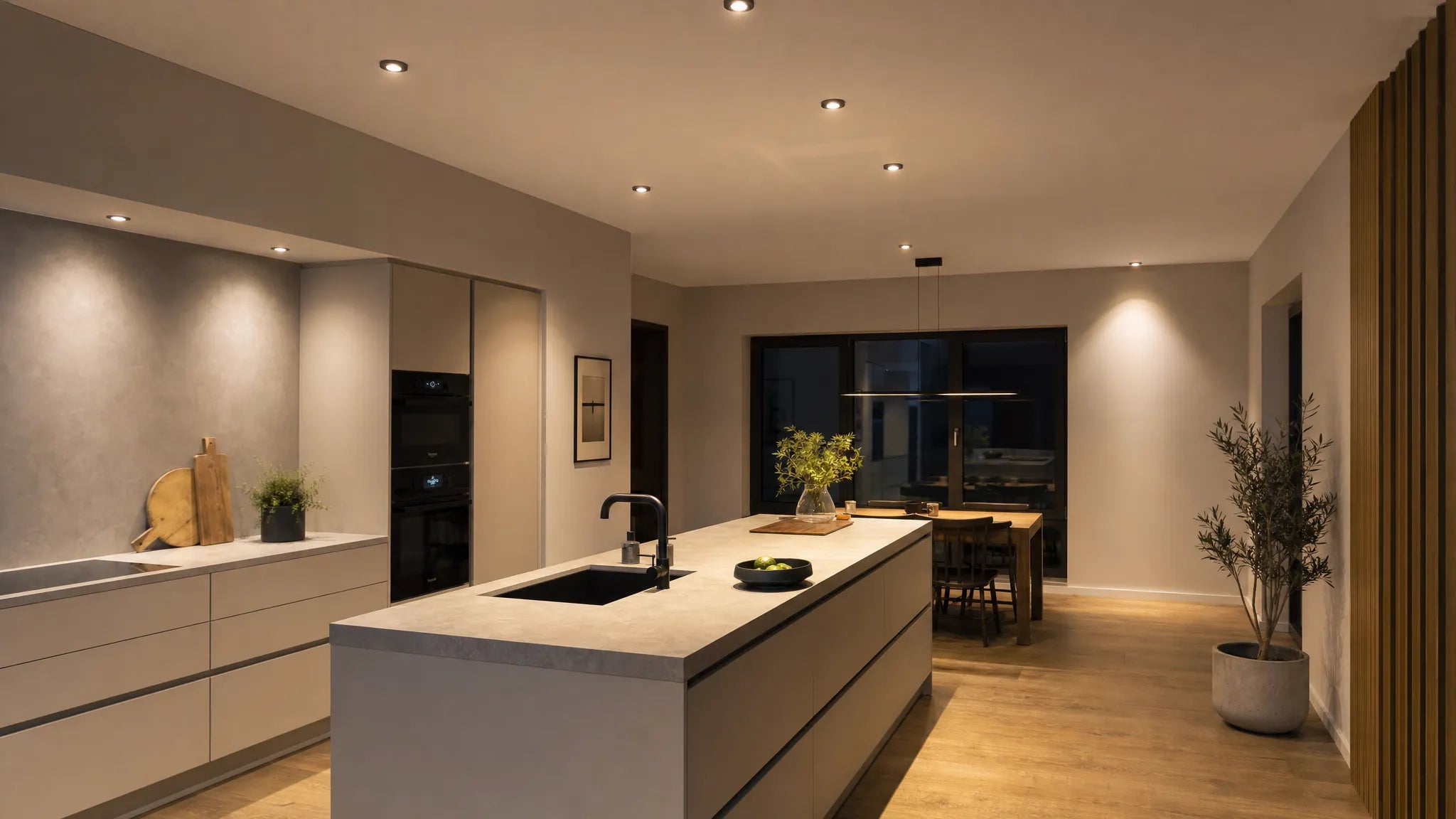
Modern kitchens are often dominated by smooth fronts, stone, stainless steel, glass or matt surfaces. A beige lamp can add just the right amount of softness here. Above a kitchen island or dining table, it looks inviting and takes away some of the austerity of the functional environment.
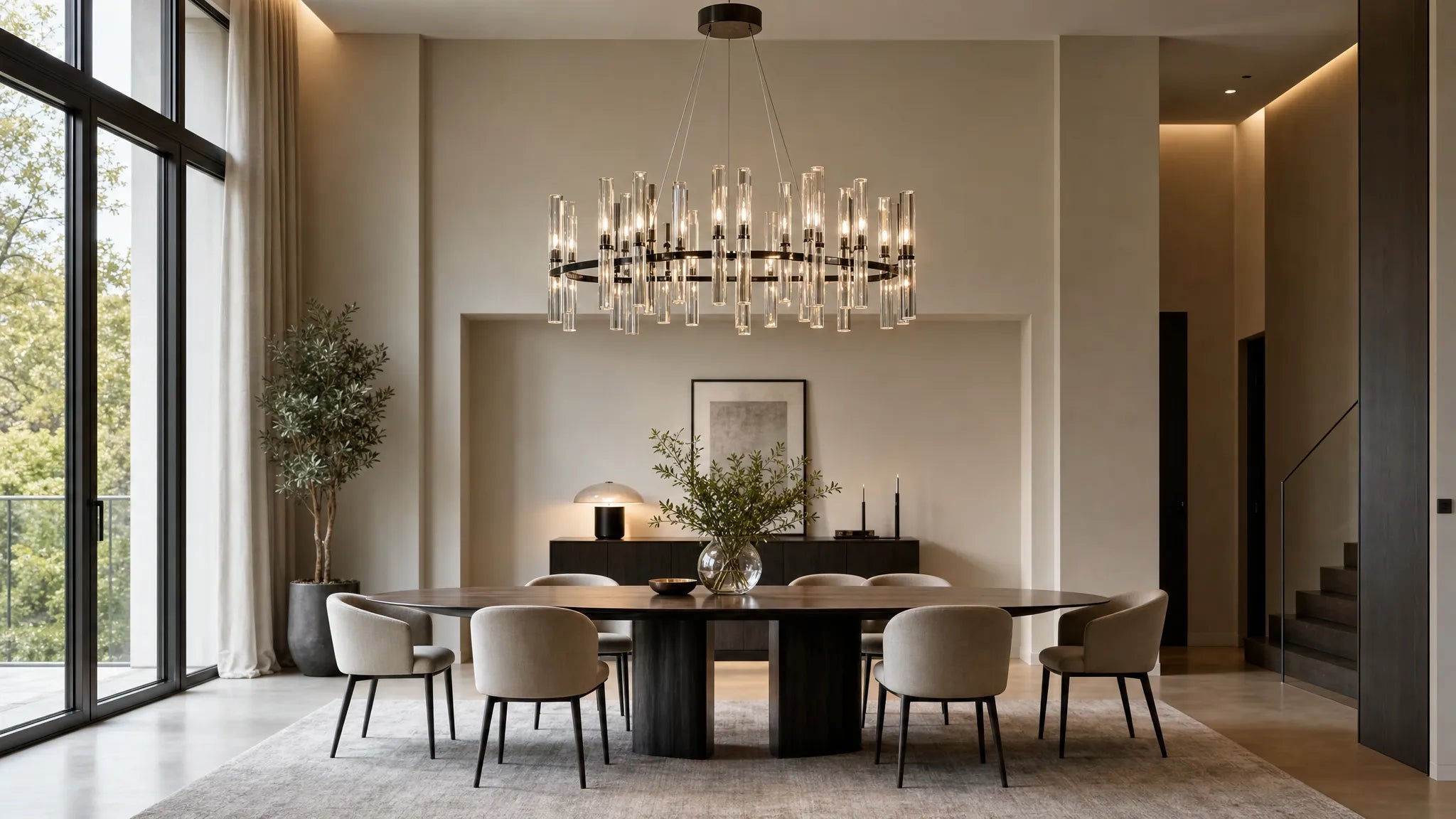
Above the dining table, the light should be large enough to visually anchor the table. As a rough guide, the lamp should be significantly narrower than the width of the table, but not so small that it appears lost. For long tables, two or three smaller pendant lights can be more harmonious than a single, too small shade.
The suspension also plays a big role. A beige pendant light should hang low enough to define the dining area but not interfere with the view between people. An adjustable cable length is particularly helpful for high ceilings or special room layouts.

Bedroom: consciously plan a soft lighting effect
Beige perhaps has its strongest effect in the bedroom. The color calms, appears warm and supports a relaxed room atmosphere. A beige lamp can be used as a bedside lamp, wall lamp, pendant lamp next to the bed or ceiling lamp.
For the bedroom, matt surfaces are often more pleasant than shiny ones. Fabric shades, opal glass, ceramics or powder-coated metals diffuse the light more gently and avoid harsh contrasts. A beige lamp is particularly harmonious when it corresponds to bed linen, curtains or a carpet in the same color spectrum.
Also make sure that the light is glare-free. A beautiful lamp loses its effect if it shines directly into your eyes when you are lying down. Shades, indirect lighting and dimmable lamps help to flexibly adjust the lighting mood.
Material and shape: This is how beige remains modern
Beige can quickly appear classic or rustic if the shape and material do not match the architecture. In modern rooms, clear silhouettes, high-quality surfaces and precise proportions are crucial.
A beige lamp looks modern if it takes up one of the following design directions: organic curves, linear minimalism, sculptural shapes or high-quality material contrasts. A cylindrical fabric shade can appear very calm, a spherical glass lamp can appear soft and timeless, while an asymmetrical pendant lamp can appear more artistic.
Materials greatly change the perception of color:
- Fabric makes beige soft, cozy and diffuse.
- Glass makes beige appear lighter, more elegant and often a little brighter.
- Ceramics emphasize the handcrafted, organic character.
- Metal in beige appears more architectural and clear.
- Natural materials enhance a warm, relaxed look.
Beige is particularly interesting for architects and interior designers because it can mediate between walls, furniture and lighting objects. A light in beige can blend into the architecture or deliberately stand out with a striking shape without being loud in color.
Light color: The underestimated factor
The color of the lamp is only part of the effect. The color of the light is at least as important. A beige lamp can suddenly appear flat or uncomfortable if the light is too cool. If the light is too warm it can appear yellowish.
Warm white light is often the best choice for living spaces. As a guide, around 2,700 Kelvin works for cozy areas such as living rooms and bedrooms. 3,000 Kelvin can make sense for the kitchen, work zones or functional areas if the room still needs to remain livable.
The color rendering also influences the effect. A high color rendering index ensures that beige, wood, textiles and wall colors appear more natural. Especially when it comes to high-quality materials, it is worth paying attention to good light sources instead of just deciding based on brightness.
Combine beige with other colors
A lamp in beige is a good starting point for calm color concepts. It can be used tone-on-tone or serve as a mild balance to darker accents.
If you have a monochrome room concept, you should plan for different textures. Beige wall, beige lamp and beige sofa can look very elegant if the surfaces vary: smooth, woven, matt, textured or shiny. Without these differences, the room can seem monotonous.
Contrasts are suitable for more excitement. Black makes beige more modern and graphic. Dark brown looks warm and luxurious. Olive green, sage green or muted blue add color without destroying the calm effect. If you prefer a Mediterranean or warm look, combine beige with terracotta, sand, cream and brass.
Common mistakes when integrating a beige lamp
The most common mistake is choosing beige as a “safe” color without checking the proportions and lighting effect. A lamp that is too small will disappear in the room. A lamp that is too large can appear heavy, especially if it is very solid or dark beige.
Another mistake is an inappropriate undertone. A yellowish beige next to cool gray can seem old-fashioned. A grayish beige next to warm wood can appear dull. The room appears more harmonious when the undertones are consciously coordinated.
The installation height is also often underestimated. Pendant lights in particular need the right cable length so that they neither hang lost on the ceiling nor protrude too deep into the room. At BUYnBLUE Chandeliers and pendant lights can be adjusted free of charge, for example in terms of cable length, canopy or color. This is particularly practical with high ceilings, open living areas or individual furnishing concepts.
Small checklist before purchasing
Before you decide on a beige lamp, a quick check will help. This way you avoid making bad purchases and ensure that the lamp not only looks beautiful, but also really works in the room.
- Does the beige tone match the walls, floors and furniture?
- Is the color tone or undertone repeated elsewhere in the room?
- Is the light large enough for a table, sofa, island or room volume?
- Does the material support the desired style?
- Is the light color warm and comfortable to use the room?
- Can cable length or mounting be adjusted if necessary?
- Does the lamp look like part of the furnishing concept even when it is switched off?
If you take these points into account, you will not integrate beige randomly, but rather precisely in terms of design. A beige lamp does not become a compromise, but rather a unifying element in the room.
Conclusion: Beige is modern when the details are right
A lamp in beige can make modern rooms appear quieter, warmer and more high-quality. It goes well with minimalist interiors, natural materials, open living concepts and elegant color palettes. The key is to choose the right tone and coordinate it with the shape, material, light color and spatial proportions.
At the curated designer lights from BUYnBLUE You will find modern lighting that is designed for different living areas and furnishing concepts. The free adjustment of selected chandeliers and pendant lights is particularly helpful, so that the light also fits perfectly with special ceiling heights or room layouts.
Frequently asked questions about the beige lamp
Does a beige lamp go with white walls? Yes, particularly good. Beige takes the coolness out of white walls and creates a softer transition between architecture and furnishings. Make sure that the beige tone does not look too yellow if you want the room to remain very clear and modern.
Which materials look modern in beige lamps? Glass, ceramic, matt metal lacquer, fabric with a clear shape and high-quality natural materials look particularly contemporary. What is important is less the material alone, but rather the combination of clean silhouette, good workmanship and appropriate lighting effect.
Which light color is suitable for a beige lamp? Warm white light around 2,700 Kelvin is usually pleasant for living rooms. 3,000 Kelvin can be useful in kitchens or work areas. Light that is too cool can make beige appear flat, while light that is too warm can make the tone appear more yellow.
Can you combine beige lamps with black details? Yes. Black gives beige contour and makes the look appear more modern. The combination is particularly harmonious when black details already appear on furniture handles, chair legs, picture frames or window profiles.
Is a beige pendant light suitable for high ceilings? Yes, if the size and suspension are right. For high ceilings, an adjustable cable length is important so that the light remains visually connected to the table, island or seating area and does not float too high up.
Find a beige light that suits your room
If you want to integrate a lamp that is beige and modern at the same time, it is worth taking a look at quality, proportion and adaptability. BUYnBLUE offers a curated selection of designer lights with high-quality materials, free worldwide shipping, 14-day returns, secure payment options and real-time order tracking. This means you can find a lamp that not only matches the color, but also impresses spatially and functionally.