Use E27 dimmable LED lamps in closed luminaires
If you are looking for “LED lamps dimmable E27” for a closed luminaire, you have to check two separate properties: dimmability and suitability for operation in a closed housing. A suitable E27 base and the label “dimmable” are not enough. The decisive factors are the manufacturer's information on the lamp, the specifications of the lamp and a compatible dimmer. This guide shows you how to classify this information and select a safe combination that is suitable for everyday use.
Two approvals determine suitability
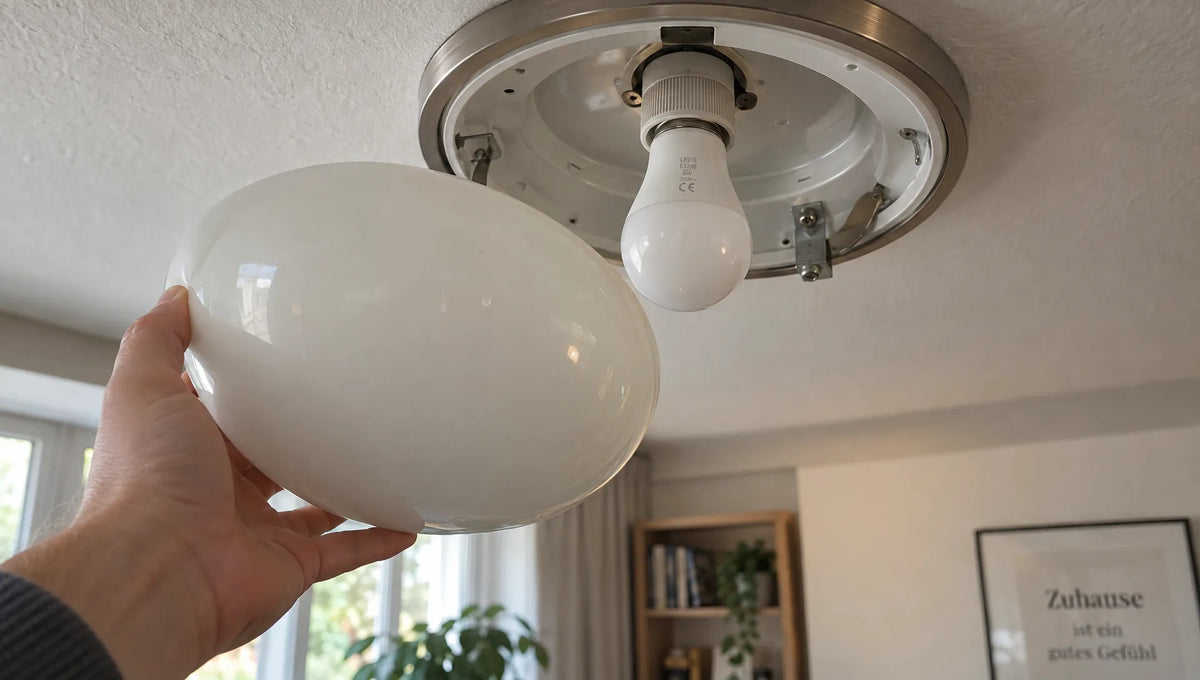
A dimmable LED lamp may be suitable for an open pendant lamp, but may operate outside its permissible operating conditions in a completely closed glass globe. The dimming release describes the electrical controllability. The approval for closed luminaires, on the other hand, primarily affects the heat conditions at the place of use.
Therefore, check the packaging, data sheet and instructions for use of the specific lamp. Look for a clear statement such as “suitable for enclosed luminaires”. English-language documents may contain information such as “suitable for enclosed luminaires” or restrictions such as “not for use in enclosed fixtures”.
These details are easily confused when purchasing:
| Information | What she says | Which she doesn't confirm |
|---|---|---|
| E27 | The lamp has a corresponding screw base | That the design and thermal conditions suit the luminaire |
| Dimmable | The lamp can be controlled using a provided dimming technology | That every existing dimmer is compatible |
| Actual power in watts | The electrical power consumption | The release for a closed housing |
| Suitable for closed lights | The manufacturer allows this use under the stated conditions | That all lighting requirements are no longer applicable |
If there is no clear statement about closed operation, ask the manufacturer. This information does not replace high energy efficiency or a well-known trademark.
“LED lamps dimmable E27” in closed housings: correctly classify heat
LEDs usually require less electrical power than incandescent lamps for the same amount of light. Nevertheless, heat is generated, especially on the LED components and the built-in electronics. This heat must be dissipated via the lamp and its surroundings.
In a closed luminaire, the heated air can only exchange ideas with the room air to a limited extent. How much the temperature rises depends, among other things, on the internal volume, the material of the housing, the installation position and the power consumption. Multiple lamps under the same cover can also increase the thermal load.
You should be particularly careful with small glass balls, flat ceiling lights and tight-fitting covers. An opal surface says nothing about ventilation: some opal shades are open at the bottom, others completely enclose the lamp.
For dimmable E27 LED lamps, it is the actual construction that counts, not just the appearance of the lamp. Even a high degree of protection is not proof of the thermal suitability of the lamp used. The protection class describes the protection against contact, foreign bodies and water, not the permissible heat load.
Why dimming down doesn't replace a lack of clearance
When dimming, light output and power consumption usually decrease. However, this does not mean that an unsuitable light source can be operated safely in a closed housing.
The load on the electronics also depends on the dimming technology and the specific combination of lamp and dimmer. In addition, someone can increase the brightness again later. The selection should therefore be based on a combination that works within the manufacturer's conditions even at full intended brightness.
A permanently low dimmer level is not a reliable solution for a lack of heat release. You should also not leave out a lamp cover provided or drill additional openings. This changes the construction and possibly also the protection against contact or moisture.
How to choose the right light source
Check the data sheet and luminaire specifications together
Start with the information on the light. The permissible lamp type, the maximum actual power, any LED-specific restrictions and the permitted dimensions are relevant. If there are several sockets, information on the overall configuration must also be taken into account.
Then compare these specifications with the data sheet of the dimmable E27 LED lamps. A statement such as “replaces 60 W” describes a brightness comparison class and is not the actual power consumption. The actual watt value counts for the power limit of the lamp, unless the instructions specify otherwise.
Conversely, a low watt value alone does not prove suitability: an LED lamp can be well below the printed power limit and still be excluded by the manufacturer for closed luminaires.
Also check possible restrictions on ambient temperature or installation position. A release with conditions is only helpful if these conditions are met at the intended location.
Pay attention to the design and space under the cover
E27 describes the base, not the size of the entire bulb. Two lamps with the same socket can differ significantly in length, diameter and structure. Designations such as A60 or G95 help with orientation, but do not replace dimensional drawings.
Compare the dimensions with the available interior space. The lamp must not press against the cover or prevent the housing from closing properly. Distances required by the manufacturer must be adhered to.
Also check whether the lamp can be screwed in without force and can be accessed again later. With a narrow opening, a larger LED design can theoretically fit into the interior, but cannot get through the opening.
A more compact lamp solves space problems, but is not automatically more heat-tolerant. The express suitability for closed operations remains decisive.
Select brightness and dimmer appropriately
Choose the brightness based on the luminous flux in lumens. An opal or tinted cover changes the distribution of light and can reduce the amount of light entering the room. So don't go for the most powerful light source without checking it.
For dimmable E27 LED lamps, the manufacturer should provide a suitable dimming technology or a compatibility list. Leading edge and trailing edge are not interchangeable. Minimum load, maximum LED load and the permissible number of connected lamps can also be relevant.
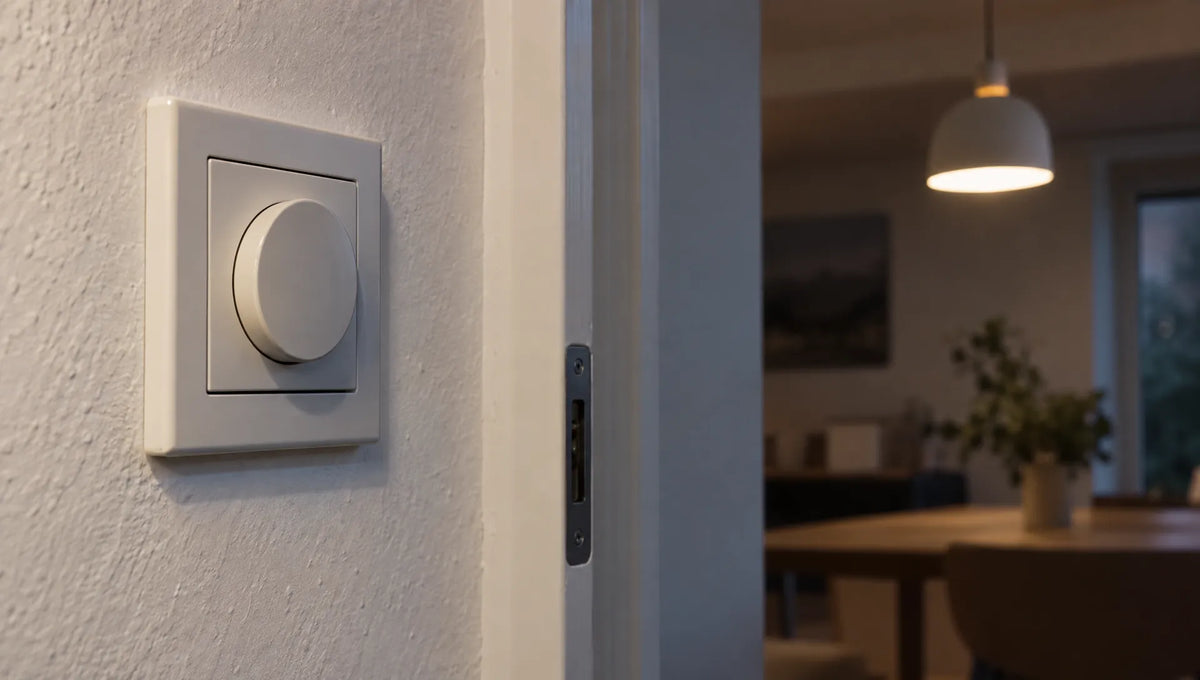
If you still have an older wall dimmer, the overview will help Retrofitting a dimmable light switchto classify the electrical requirements. Work on the permanent installation should be carried out by a qualified electrician.
Check installation and initial operating phases
Before changing the lamp, switch off the power supply and allow the lamp and bulb to cool down. Follow the assembly instructions, especially for screwed covers or sensitive glass shades. Damaged sockets, seals or cables should be checked before further use.
After insertion, the light must be completely closed again and according to the instructions. Then check the switch-on behavior and the usable dimming range. If there are several lamps, it makes sense to have the same equipment as long as it corresponds to the manufacturer's instructions.
Watch dimmable E27 LED lamps even after a long period of operation. A combination that is inconspicuous immediately after switching on may react differently when warmed up. This does not replace approval, but it does help to identify abnormalities early.
A temperature check by hand is not proof of suitability. The heat that can be felt outside does not provide any reliable information about the temperature of the electronics inside. Do not open the lamp during operation to take measurements or touch components.

If the lamp flickers, dims or goes out
Not all unusual behavior has the same cause. Flickering can result from an inappropriate dimmer combination, while delayed switching off can also be related to heat stress. A clear diagnosis based on the photo alone is not possible.
First classify the observation without changing the installation:
- Flickering only at low brightness: Check whether lamp manufacturers and dimmer manufacturers specify a usable minimum dimming value or corresponding settings.
- Problems after replacing a single lamp: Compare the model, performance and dimming release with the other lamps. A mixed configuration can react differently.
- Becoming dark or switching off after some operating time: Take the combination out of use until clarification. Thermal stress or an electrical fault are possible causes.
- Burning smell, discoloration or visible damage: Switch off the power supply as far as it is safe to do so and have the lamp checked by a professional before further use.
For dimmable E27 LED bulbs, repeated cycling is not a repair. Even a different dimmer does not eliminate the lack of clearance for closed housings.
If thermal suitability has already been clarified, see the guide Flicker-free combination of dimmable LED lamps further information on the interaction of the electrical components.
Switching without contact is not the same as dimming
When planning lighting, it is worth considering operation and brightness control separately. A switch turns the light on or off. A dimmer changes the brightness and must match the LED technology used.
This Infrared light switch panel smart home According to the product description, it enables contactless switching on and off with a hand swipe. This is useful, for example, if you don't want to touch the switch surface if possible.
However, neither a dimming function nor a release for a specific LED dimmer combination can be derived from this switching function. If contactless operation is to work together with brightness control, the complete technical specifications of the devices involved must be checked.
Regardless of the operating concept, dimmable E27 LED lamps in closed luminaires still require the appropriate heat release. A convenient switch does not change the thermal conditions in the lamp housing.
Frequently asked questions
Can any dimmable E27 LED lamp be used in a closed luminaire? No. The dimming release does not confirm the suitability for a closed housing. The lamp must be intended for this use and meet all of the lamp's specifications.
Is it enough to stay well below the maximum wattage of the light? No. A lower actual power consumption can reduce the amount of heat, but does not replace release. In addition to the power limit, also note LED-specific information, size and operating conditions.
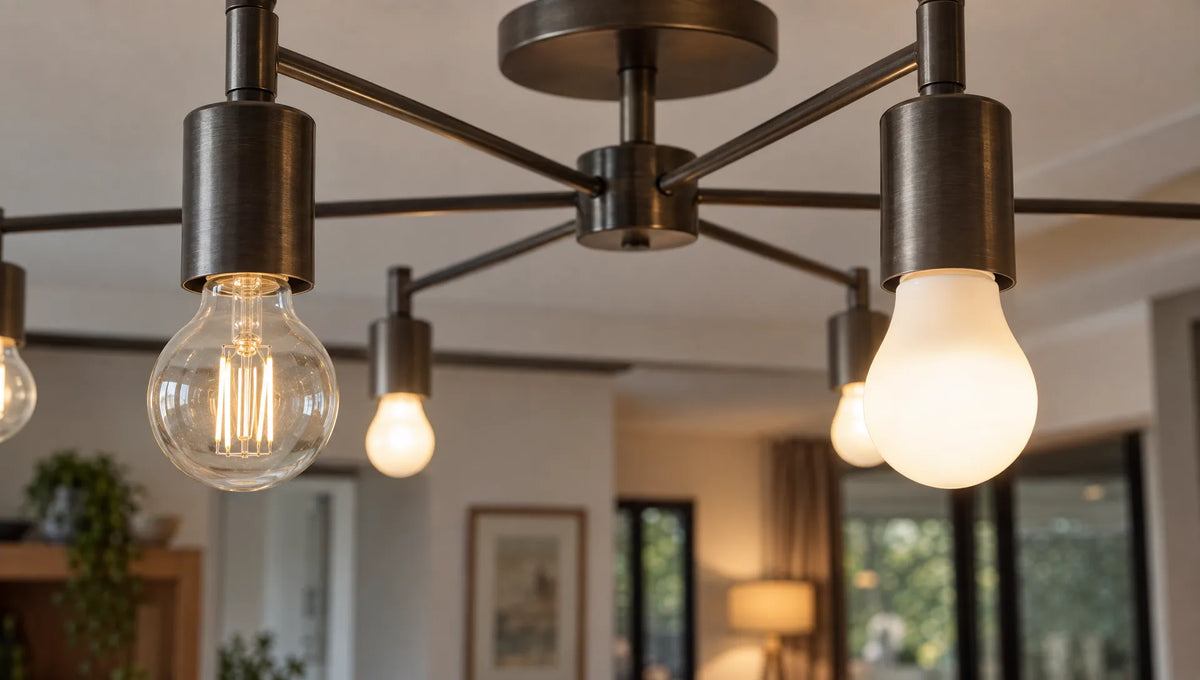
Are filament LEDs suitable for closed glass balls? That depends on the specific model. The visible LED filaments or a light bulb-like shape are not proof of heat compatibility. Check the information for exactly the item number you want to use.
Does a permanently low dimmer setting help against heat build-up? It can reduce power consumption, but does not automatically make an unsuitable lamp acceptable. Choose dimmable E27 LED bulbs so that the intended use, including full brightness, is covered by the manufacturer's specifications.
What to do if the packaging says nothing about closed lights? Look for a corresponding statement in the technical data sheet and in the instructions for use. If suitability remains unclear, ask the manufacturer or choose another lamp with clear approval.
Plan luminaires and lamps together
For reliable operation, three things have to fit together: the closed housing, the suitable E27 lamp and the approved dimming technology. Clarify these points before you buy, instead of trying to compensate for space or heat problems later through the operation.
When you choose a new light, you can BUYnBLUE Discover modern lights for your home. For each model, check the information on the socket, dimensions and permitted equipment. In this way, the desired light image can be combined with the technical requirements.