Vintage table lamp stylish on sideboard and console
One Vintage table lamp looks particularly strong on a sideboard or console because it not only provides light, but also has a small stage. These elevated pieces of furniture are ideal for making the shape, material and lighting effect of a lamp visible without overloading the room.
The key is in balance: the lamp can be present, but should not seem like a random find. Whether in the living room, dining area, hallway or bedroom, with the right proportions, matching accompanying objects and a well-thought-out light color, a single table lamp becomes a stylish design element.
Why sideboard and console are the perfect stage
Sideboards and consoles have a decisive advantage: they are usually at eye level or just below. A table lamp automatically becomes part of the room architecture. It marks a wall, frames a work of art, brings depth to an empty corner or provides an inviting light in the entrance area.
With a vintage table lamp there is something more. It brings a patina, a handcrafted appearance or historical shapes into the room. This can be a brass base, a fluted glass shade, a ceramic base, a mushroom shape or a textile shade with soft light. This character can be presented in a calm and high-quality way on a sideboard.
A console is usually narrower and is often placed in the hallway or behind a sofa. More restraint counts here. The lamp should not block the path, but still create atmosphere. On a wider sideboard, however, it can be more sculptural and larger.
If you are generally looking for inspiration about the effect of different table lamps, this is also worth it BUYnBLUE Post about Table lamps as atmospheric design elements.
The right size: Proportions determine elegance
Many styling errors arise not from the style of the lamp, but from incorrect proportions. A lamp that is too small will be lost on a long sideboard. A light that is too high on a narrow console, on the other hand, appears restless and can be disruptive to everyday life.
As a rule of thumb: the table lamp should match the width and height of the furniture. On a sideboard with a width of 160 to 200 cm, a vintage table lamp can be a little more spacious. A slim lamp base often looks more harmonious on a narrow hallway console.
| piece of furniture | Recommended lamp effect | Good proportion | Particularly fitting |
|---|---|---|---|
| Wide sideboard | Striking, decorative, visible | Medium to large table lamp | Ceramic, brass, opal glass, fabric shade |
| Low sideboard | Vertically balancing | Slightly taller lamp | Mushroom lamp, slim metal base, glass base |
| Narrow console | Light and elegant | Compact or slim lamp | Small brass lamp, smoked glass, delicate fabric shade |
| Console in the hallway | Functional and inviting | Not too deep, glare-free | Closed shade, warm light, stable base |
The depth of the furniture is also important. A lamp should stand securely and not protrude too far over the front edge. Stability is more important than a spectacular look, especially in the hallway where jackets, bags or strollers pass by.
Light color and bulb: Vintage needs warmth
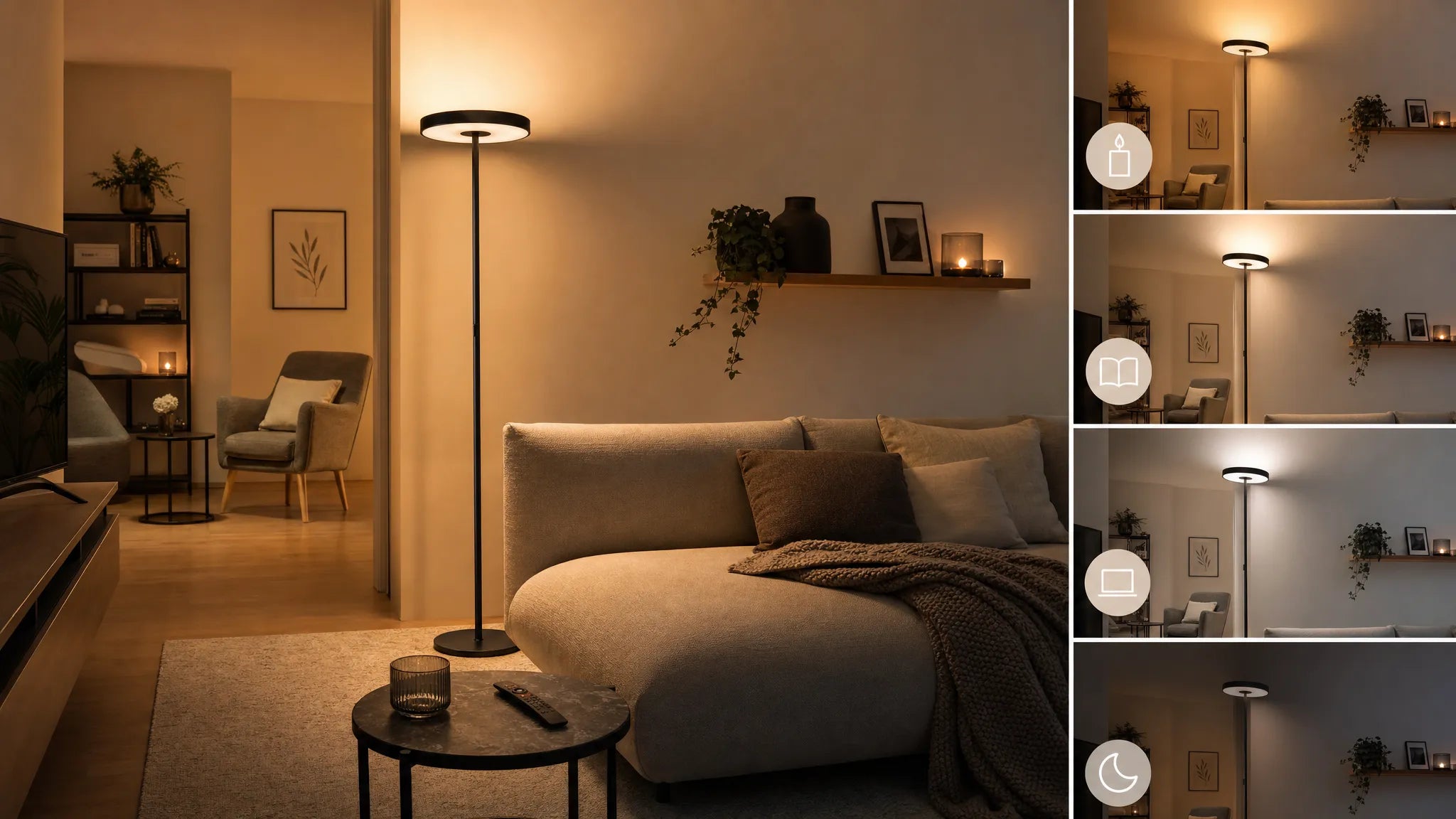
A vintage table lamp thrives on mood. That's why it rarely appears with cool, bluish light. Warm white light is usually the best choice for living rooms, sideboards and consoles. Values around 2700 Kelvin create a cozy atmosphere, 3000 Kelvin seems a little clearer and more modern.
The brightness should also suit the task. On a sideboard, the lamp is usually intended to provide accent light, not work light. So it can be softer and more reserved. A textile shade diffuses the light pleasantly. Opal glass appears calmer and more uniform. Smoked glass or amber-colored glass enhances the vintage character, but can give off less light.
Also, pay attention to glare. If the lamp shines directly into your eye while you're sitting, even the most beautiful model can be distracting. A closed or semi-transparent shade is often more pleasant for sideboards in the living room than an openly visible light source.
Styling on the sideboard: This creates a calm overall picture
A sideboard offers more space than a console. This is an advantage, but it can quickly lead to too much decoration. A vintage table lamp should be the anchor point here. A composition of a few, specifically selected objects is created around them.
The so-called triangle principle works particularly harmoniously. The lamp forms the highest point, next to it are medium-high objects such as a vase, framed picture or candle holder. Flat elements such as books, bowls or trays visually connect the group.
Do not always place the lamp exactly in the middle. It often looks more elegant when placed on the side, especially if there is a mirror or a work of art hanging above it. The opposite side can be balanced with a vase, a stack of illustrated books or a sculpture.
For a modern result, it is better to have a few objects with a clear relationship to each other than many small decorative pieces. Vintage can show character, but should not look like a hodgepodge. A single lamp with beautiful materiality can have a stronger impact than a crowded arrangement.
Styling on the console: Slim, inviting and suitable for everyday use
A console is often placed where there is little space: in the entrance area, behind the sofa, in a passageway or on a narrow wall. The vintage table lamp should therefore be compact enough so as not to restrict the function of the furniture.
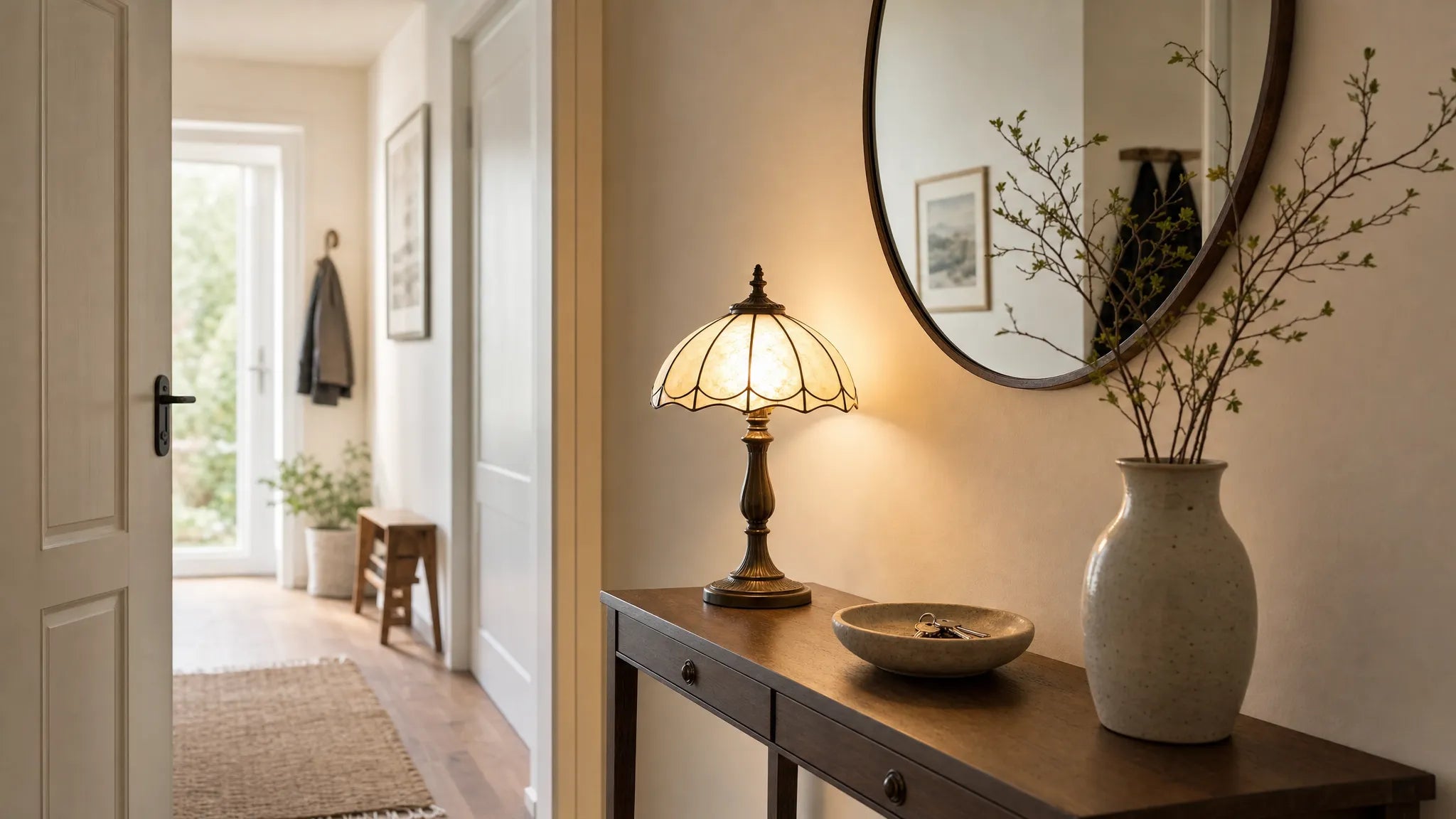
A lamp in the hallway looks particularly inviting if it emits warm light as soon as you enter the house. Combine them with a small bowl for keys, a mirror and perhaps a branch or a narrow vase. Often nothing more is needed.
The lamp should not be placed too low behind a sofa so that it does not get in the way when sitting. Cable routing is also important. A visible cable can look charming on vintage lights, but it should be routed neatly. Cable clips, one Power plug in furniture color or a deliberately chosen textile cable can make the difference.

Combine materials correctly
The appeal of a vintage table lamp often comes from materials that convey depth and history. Brass, glass, ceramics, wood, marble or structured materials bring a different feel to the room than purely smooth, modern surfaces.
To keep the look stylish, at least one material should recur in the room. A brass lamp is particularly suitable if warm metal tones can be found in picture frames, handles, candle holders or fittings. A ceramic lamp looks harmonious next to vases, bowls or handcrafted surfaces.
Contrasts are expressly permitted. A vintage table lamp on a very modern, sleek sideboard can look great. What is crucial is that the contrast appears deliberate. For example, combine an opulent lamp with reduced decoration or a simple vintage lamp with striking wallpaper.
| Lamp material | Effect | Good combination |
|---|---|---|
| Brass | Warm, elegant, classic | Walnut, travertine, cream, dark green |
| Opal glass | Soft, calm, timeless | Light walls, marble, chrome, light woods |
| Smoked glass | Dramatic, urban, retro | Black, walnut, leather, dark accents |
| Ceramics | Handcrafted, homely, individual | Linen, oak, natural tones, structured textiles |
| Fabric shade | Cozy, gentle, homely | Books, carpets, curtains, warm wall colors |
If you would like to delve deeper into the interaction between old and new, you will find further suggestions in the guide Combine vintage style with modern lamps.
Which vintage table lamp suits which room?
In the living room, the table lamp on the sideboard can be decorative and atmospheric. The main aim here is to create a softer island of light in the evening. Models with glass, ceramic or warm metal tones look particularly beautiful.
In the dining room, a vintage table lamp on a sideboard can round off the room if there is already a pendant light hanging above the table. It creates depth on the wall and prevents the lighting from only coming from above. It is important that the table lamp complements the main light rather than competing with it.
In the bedroom, a lamp on a console or dresser looks particularly calm if it harmonizes with textiles. A fabric shade, matte ceramic or opal glass go well with bedding, curtains and carpets. Very shiny or highly reflective surfaces can quickly appear too active.
Function is crucial in the hallway. The lamp should provide quick orientation, but not dazzle. Warm, indirect light makes the entrance area more homely and makes even narrow areas appear more designed.
Typical mistakes and how to avoid them
A vintage table lamp can appear very high-quality, but small details determine the overall impression. It is particularly common to either decorate too much or to place the lamp without reference to the room.
| Error | Effect | Better that way |
|---|---|---|
| Too small a lamp on a long sideboard | The lamp seems lost | Choose a larger model or add a tall vase |
| Too many small decorative objects | Restless, random impression | Group a few larger elements |
| Cold bulb | Vintage charm is lost | Choose warm white light |
| Lamp directly under a large mirror without any distance | Condensed composition | Plan height and distance consciously |
| No material reference in the room | The lamp appears isolated | Repeat metal, color or shape elsewhere |
Another common mistake is too much symmetry. Two identical lamps can be elegant on a long sideboard, such as in a formal dining room. However, in many modern living spaces, an asymmetrical solution looks more lively. A lamp Left, An art object on the right with a quiet area in between is often enough.
This makes vintage look modern instead of old-fashioned
The difference between stylish and old-fashioned lies less in the lamp itself than in its surroundings. A vintage table lamp looks modern when it gets air. Free space, clear lines and high-quality materials make them appear deliberately selected.
Avoid grouping exclusively vintage objects around the lamp. An old picture frame, an antique bowl and a nostalgic clock can quickly look like a museum together. The mix with modern elements is more exciting: abstract art, a minimalist tray, a smooth sideboard or a reduced vase.
The color palette also helps. Cream, greige, black, walnut, olive green, terracotta and muted blues often go very well with vintage lighting. However, too many colorful accents can make the look uneasy.
If you are looking for exactly this balance, the article adds Combine vintage table lamps correctly instead of looking old-fashioned the styling ideas shown here with further combination principles.
Combination with ceiling and pendant lights
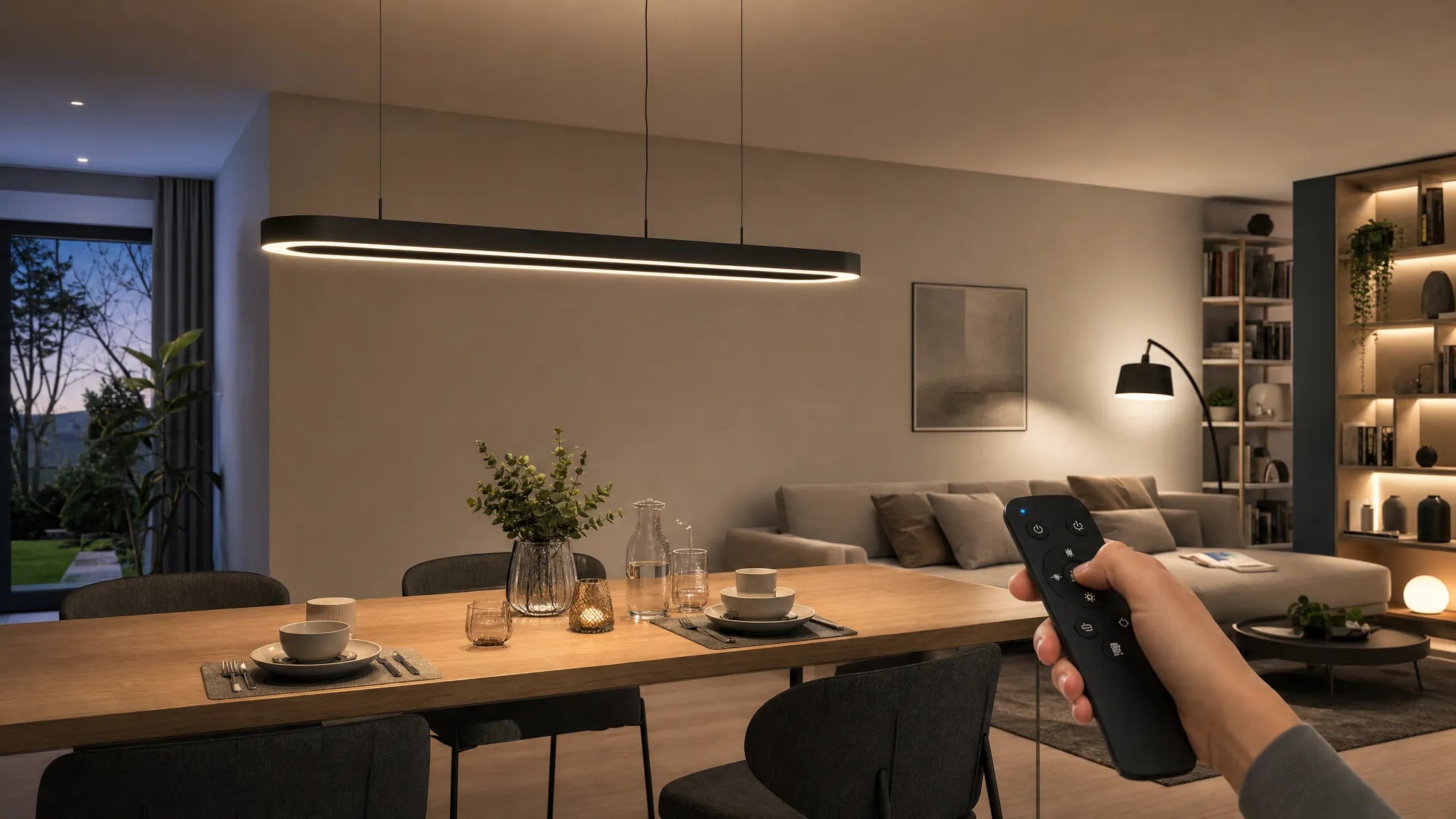
A table lamp on a sideboard or console should never be viewed in isolation. A room looks particularly harmonious when several light sources take on different tasks. The ceiling light provides basic brightness, a pendant light emphasizes the dining table or seating area, and the vintage table lamp creates atmosphere on the wall.
Make sure that the lights do not have to be too similar. It is often enough if they speak a common language. This could be a similar light color, a recurring metal, a round shape or a common material tone.
At BUYnBLUE You will find a curated selection of modern lights for different living areas. The free adjustment is particularly practical for chandeliers and pendant lights, for example in terms of cable length, canopy or color. This means that the main lighting can be precisely adjusted to the room height, furniture position and style, while the vintage table lamp develops its character as an accent.
Small checklist before purchasing or redesigning
Before you choose a vintage table lamp for your sideboard or console, it's worth taking a quick look at the space, furniture and usage. This way you avoid making bad purchases and create a result that not only looks beautiful, but also works in everyday life.
- Measure the width, depth and height of the furniture before choosing the lamp.
- Check whether the lamp in the room is dazzling, especially from a sitting position.
- Choose a warm light color if comfort is the priority.
- Repeat at least one material or color in the room.
- Make sure you leave free space on the sideboard or console.
- Pay attention to stability and secure cable routing in the hallway.
With this basis, the lamp becomes not just a decorative unique piece, but a functional part of your lighting concept.
Frequently asked questions about vintage table lamps on sideboards and consoles
How high should a vintage table lamp be on the sideboard? The ideal height depends on the furniture and the wall design. On a low or wide sideboard, the lamp can be higher and more present. It is important that it does not collide with mirrors, pictures or shelves above and that it does not cause glare from seat height.
Should a table lamp be placed in the middle of the sideboard? Not necessarily. A side placement often looks more elegant and modern. The other side can be visually balanced with a vase, an art object or books.
Which light color goes best with a vintage table lamp? Warm white light is usually ideal. Around 2700 Kelvin looks cozy and homely, while 3000 Kelvin seems a little clearer and more modern. Very cool light takes away the warm appearance of many vintage lights.
Can you combine a vintage table lamp with modern furniture? Yes, it is precisely this contrast that often appears particularly high-quality. It is important not to combine the lamp with too many nostalgic objects. Modern art, clear shapes and calm colors make vintage appear conscious and stylish.
Stylish lighting starts with the right staging
A vintage table lamp on a sideboard or console is more than a decorative accent. It structures the room, creates atmosphere and combines furniture, wall design and materials to create a harmonious overall picture.
If you would like to complement your table lamp with modern room lighting, discover BUYnBLUE High-quality designer lights for different living areas. With curated designs, free worldwide shipping, a 14-day return policy and personal support, your lighting concept can be further developed in style and safety.