

Choose a ceiling lamp: diameter, height and light distribution
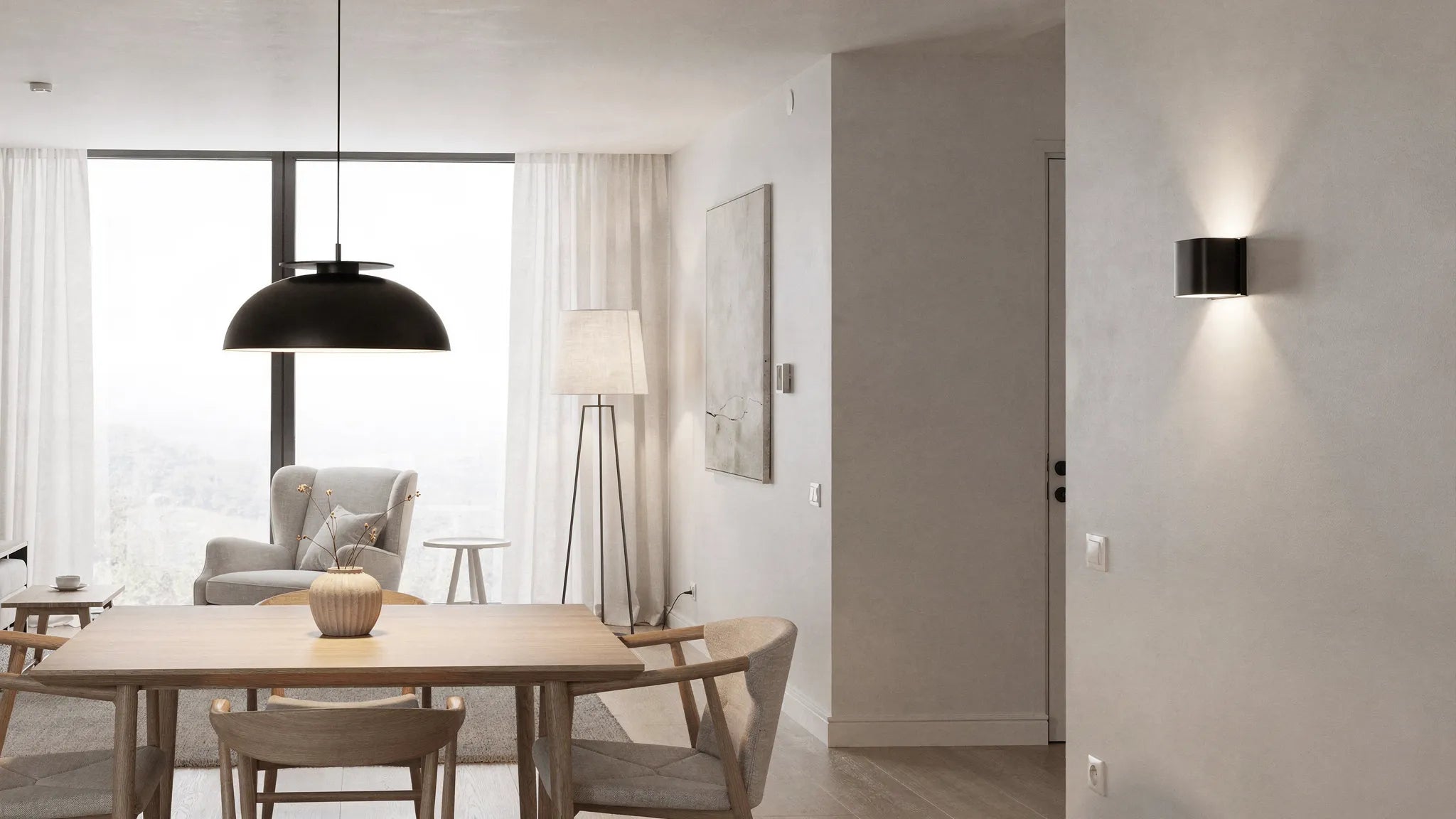
One Lamp on the ceiling only works “right” when three things fit together: diameter, Height (height or suspension) and the Light distribution in the room. Those who choose solely based on design often experience two classics: the lamp appears too small (the room remains “unfinished”) or it dazzles or creates harsh shadows.
In this guide you will get practical guidelines, simple measuring methods and typical setups for different rooms so that you can create your next one Lamp ceiling not only looks beautiful, but also better lit.
1) First measure, then shop: You need these 4 spatial data
Before you look at diameter or style, quickly gather basic data. This saves you from making bad purchases, especially with open floor plans or old building heights.
- Room dimensions: Length, width, rough furniture (sketch is enough)
- Ceiling height: Finished floor to ceiling (important for suspension)
- Location of the power outlet: central, offset, multiple outlets
- Use zones: Where do people work, eat, read, go?
Tip for planning and renovation: Mark additional routes and lines of sight in the sketch (e.g. from the sofa to the TV wall). This is exactly where it will later be decided whether a light is blinding.

2) Choose diameter: 3 rules that almost always work
Finding the right diameter is less “math” than many people think. It mainly depends on whether the light centrally the room or a zone (e.g. seating area) should emphasize.
Rule A: Wall Distance Rule (safe for central ceiling lights)
To ensure that a ceiling light neither appears “pressed against the wall” nor becomes too dominant, many interior designers plan with a visible edge to the wall.
- Target: All around 60 to 90 cm distance from the outer edge of the lamp to the wall
- Invoice: Maximum diameter ≈ shorter side of the room minus 2 × wall distance
Example: Room 3.2 m × 4.0 m, desired wall distance 0.7 m
- Max. diameter ≈ 3.2 m − 2 × 0.7 m = 1.8 m
- In practice you often choose 60 to 100 cm, depending on the style (delicate vs. opulent) and light output
This rule primarily prevents “too big” and is ideal for flat ceiling lamps, round models and central statement lights.
Rule B: Zone rule (when furniture plays the main role)
If the ceiling light is located above a clear zone (seating area, coffee table, free carpet area), it can be oriented towards this zone.
- Luminaire smaller than the zone: The luminaire should emphasize the zone, but not tower over it.
- The following often works as a rough guide: Luminaire diameter 1/3 to 1/2 of the zone width.
Rule C: In long rooms, it is better to “distribute” instead of over-dimensioning
A common mistake in hallways, kitchens or long living-dining areas: a single, large light in the middle leaves the ends dark.
The following are better:
- 2 to 3 smaller ceiling lights along the axis
- a linear light (e.g. elongated body)
- Rail with spots for flexibly controllable light cones
Quick orientation as a table (central, round)
| Room size (approx.) | Typical situation | Often consistent diameter (approx.) |
|---|---|---|
| 6 to 9 m² | small bedroom, office, bathroom | 30 to 45 cm |
| 10 to 16 m² | Standard room | 45 to 60 cm |
| 17 to 25 m² | Living room, large dining area | 60 to 90 cm |
| 26 m² + | Loft, open area | 80 cm + or more lights |
Note: These are practical areas, not standard values. Visual “mass” (material, density, dark colors) can make the impression significantly larger.
3) Plan the height and suspension: glare-free, walkable, balanced
Depending on the type of luminaire, “height” means two things:
- height (how far down a ceiling light is)
- suspension (for pendant lights: lower edge in cm above the floor or above the table)
Ceiling light (fitted or semi-fitted): height according to ceiling height
- 2.30 to 2.60 m ceiling height: prefer flat models or short heights so that the room does not appear cramped.
- from approx. 2.70 m: slightly more volume is possible (e.g. multi-layered shades, sculptural shapes).
- from approx. 3.00 m: larger lights are allowed to “breathe” and only then do they often appear proportioned.
Pendant light in the passage: bottom edge as a safety check
The following is a proven practical value for walking paths: Lower edge at least approx. 205 cm above the finished floor, so that even taller people don’t have to “get out of the way”. If there are children in the household or there is a lot of carrying (laundry basket), plan a little more reserve.
Pendant light over a table or island: zone rather than room height counts
It is crucial here that the lamp does not dazzle and does not disturb the view over the table.
- For dining tables works as a frequently used area: Lower edge approx. 60 to 75 cm above table top.
If you want to plan this in detail, this specialized guide will help: Plan the pendant light at the dining table correctly.
Table: Which height logic for which room?
| situation | Most important goal | Practical guideline |
|---|---|---|
| Hallway, walkway, entrance area | accessible, not in view | Lower edge approx. 205 cm + |
| Dining table | Glare-free, emphasize the table surface | Lower edge approx. 60 to 75 cm above the table |
| Coffee table / seating area | Atmosphere, lines of sight | often higher than the dining table, depending on the lamp |
| Kitchen work surfaces | little shade, bright | multiple light sources instead of just one pendant light |
4) Understanding light distribution: Why “bright enough” can still be wrong
Two lights can deliver the same number of lumens and still have completely different effects. The reason is this Light distribution.
The 4 most important types of distribution
Direct (directed downward): good for task lighting, but can cast shadows on faces or glare on shiny surfaces.
Diffuse (soft all around): pleasant as basic light, reduces harsh shadows, often appears more homely.
Indirect (upwards): reflected across the ceiling, makes rooms visually higher and quieter, but needs a reasonably bright ceiling.
Asymmetrical / targeted (e.g. wallwasher, spots): ideal for accentuating walls, pictures or materials.

Beam Angle: Quick cheat sheet
If you use spots or directional LED modules, the beam angle helps as orientation:
| Beam angle | Effect | Typical usage |
|---|---|---|
| 15 to 30° | tight, strong accent | Images, objects, niches |
| 36 to 60° | medium | Zone lighting, smaller areas |
| 90 to 120° | wide | Basic light, more even |
Avoid glare: The underestimated part of light distribution
Glare is often the main reason why a lamp is “annoying” in living spaces. Pay particular attention to:
- visible light source in the direct field of vision (sofa, dining table, bed)
- high-gloss surfaces (stone slab, glass, lacquer)
- too many directed spots without soft supplement
If you are looking for a reliable guide to “how much light”, this article can help: How much light does a room need?
5) Recommendations typical for the room: Which lamp on the ceiling fits where?
To ensure that the diameter, height and light distribution come together, it is worth taking a look at typical rooms.
Living room
Living rooms almost always work better with Layers of light instead of just a central light. The ceiling light can provide basic light, supplemented by floor or wall lights.
If you are looking for size logic specifically for the living room, read also: Living room ceiling lamp: find the perfect size.
Kitchen
In kitchens, light distribution is more important than a large diameter. A ceiling light as basic light plus work light (e.g. under upper cabinets) reduces shadows.
Further: Optimally illuminate the kitchen.
Hallway and entrance area
Two things count here: uniform brightness (no dark endings) and low glare. Often several small ceiling lights or a rail make more sense than a single statement.
bedroom
Works for bedrooms diffuse, warm light most pleasant. Indirect components or screens that cover the light source reduce glare when lying down.
bathroom
In the bathroom, also pay attention to suitable protection classes (IP) in the relevant zones. For practical tips: Find bathroom lighting.
6) The 10-minute pre-purchase reality check
These mini-checks can be done quickly and prevent the most common proportion errors.
- Adhesive tape stencil: Stick the planned diameter to the ceiling as a circle (or as a rectangle for elongated lights).
- Cord test for suspension: Hang a string on the planned lower edge, sit on the sofa or at the table and check the viewing height and potential for glare.
- Photo from room corners: Photograph the template from 2 to 3 typical angles (entrance, sofa, dining table).
- Reflection check: Check whether the light would reflect on the countertop, table or TV.
7) If the power outlet is not in the middle: solutions without compromise
Staggered outlets are commonplace, especially in old buildings. Three typical ways:
- Canopy solution: A larger or movable canopy can visually “center”.
- Adjust cable length: Crucial if you want a clean bottom edge despite the slope.
- Have the outlet moved: If it really bothers you or is statically/visually necessary.
Practical instructions for this: Move lamps correctly.
8) Planning advantage BUYnBLUE: Adapt the lamp to the room and ceiling
Especially with pendant lights and chandeliers, the perfect effect often fails due to details such as “5 cm too long” or “canopy does not fit the outlet”. BUYnBLUE offers one for this free customization for many pendant lights and chandeliers (e.g. cable length, canopy, color) so that the light really matches your ceiling and room geometry.
Come to this free shipping worldwide, 14 day return policy and support if there is uncertainty about dimensions or assembly questions.
Frequently asked questions (FAQ)
What size should a ceiling lamp be? A safe starting point is the wall distance rule: plan a distance of 60 to 90 cm from the wall all around and choose the diameter so that the luminaire appears “centered” without dominating.
How high should a pendant light hang in a passageway? In practice, it has proven useful to place the lower edge of walkways at least approximately 205 cm above the finished floor so that no one has to move out of the way.
Which is better, direct or indirect light? For living spaces, a combination is often most pleasant: indirect or diffuse basic light plus targeted zone light (reading, working), so you avoid harsh shadows and glare.
Why does my ceiling light seem too small even though it is bright enough? Proportions are independent of lumens. A diameter that is too small will make the ceiling appear “empty,” even if the amount of light is appropriate. A stencil on the ceiling shows this quickly.
Can the cable length and canopy be adjusted? At BUYnBLUE Many pendant lights and chandeliers can be adjusted free of charge (e.g. cable length, canopy, color) so that the light matches the ceiling height and outlet position.
Your next lamp for the ceiling: suitable in size, height and lighting effect
If you have your dimensions ready, you can look specifically for the design without having to guess about the diameter, suspension or light distribution. Browse the curated selection of modern lights BUYnBLUE and if necessary, use the free customization to create your new one Lamp on the ceiling fits exactly to the room, ceiling height and floor plan.

%20and%20the%20Light%20distribution%20in%20the%20room.%20Those%20who%20choose%20solely%20based%20on%20design%20of...)