Lamps and lights in comparison simply explained
Anyone looking for a comparison of lamps and lights usually doesn't want a specialist lecture, but rather a simple answer: Which lighting suits which room, which style and which purpose? That's exactly what this is about. Because good lighting is not just bright. It structures rooms, creates atmosphere, makes everyday activities easier and can make an interior appear more high-quality.
In everyday life the terms are often mixed. Technically speaking, it is lamp usually the light source, for example an LED bulb. The lamp is the complete object, such as a pendant light, ceiling light or wall light. If you want to read the basics in more detail, explained BUYnBLUE the most important Differences between lamps and lights detailed. What matters most when making a purchase decision is: which type of lamp performs which task?
The simple comparison: Which type of lamp can do what?
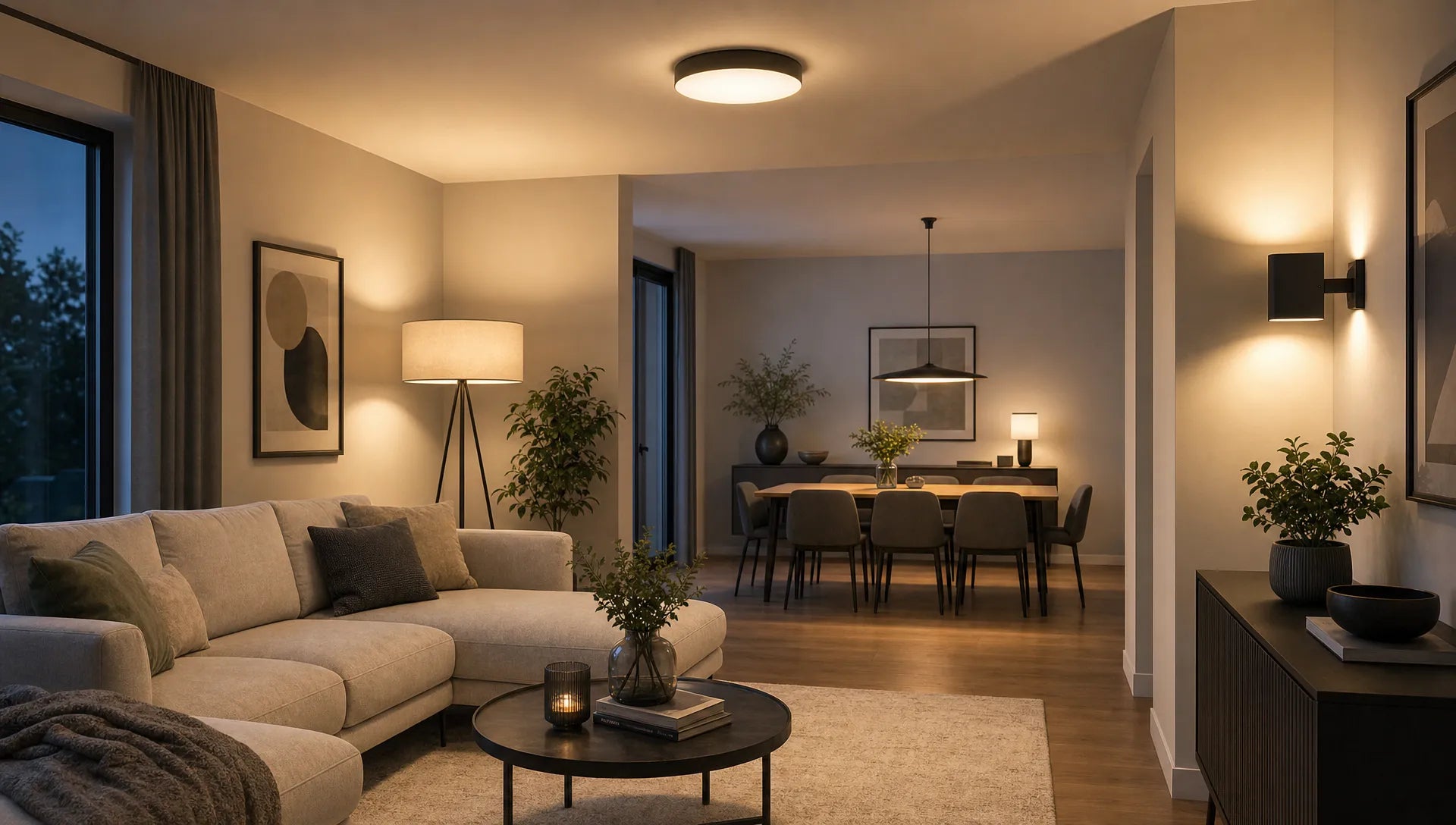
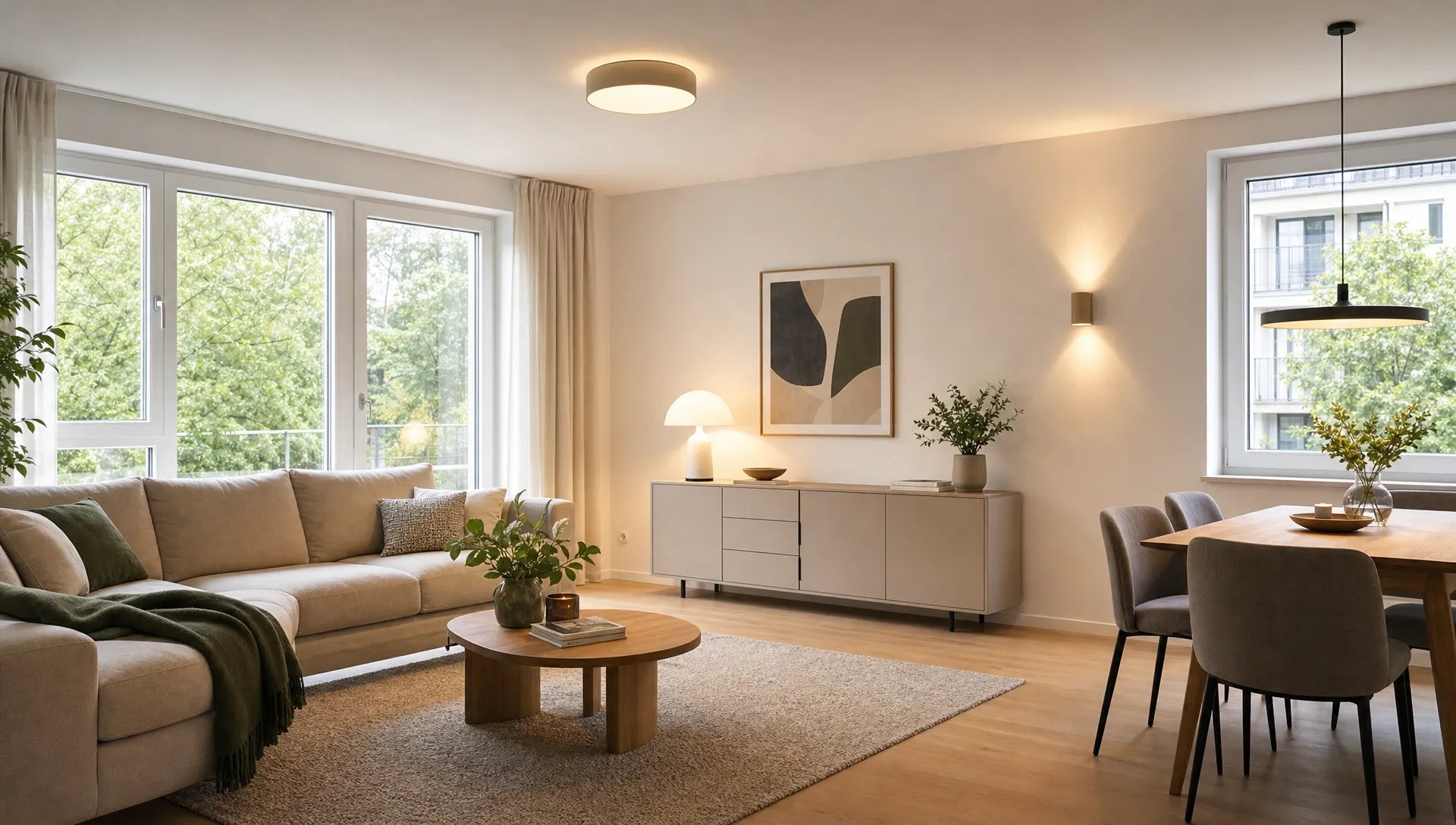
Each type of light has a typical strength. Some ensure uniform basic brightness, others set specific accents or create cozy islands of light. The best room is usually not created by a single light, but by a combination of several light sources.
| Type of luminaire | Typical use | Light effect | Particularly important when purchasing |
|---|---|---|---|
| Pendant lamp | Dining table, kitchen island, coffee table area | Focused, decorative, space-creating | Height, cable length, size in relation to the table |
| Ceiling light | Hallway, bedroom, kitchen, small rooms | Uniform basic lighting | Brightness, beam angle, room size |
| Chandelier | Dining room, living room, entrance area | Representative, atmospheric | Ceiling height, diameter, style of room |
| Wall light | Hallway, bedroom, living room, staircase | Indirect, soft, structuring | Installation height, freedom from glare, wall color |
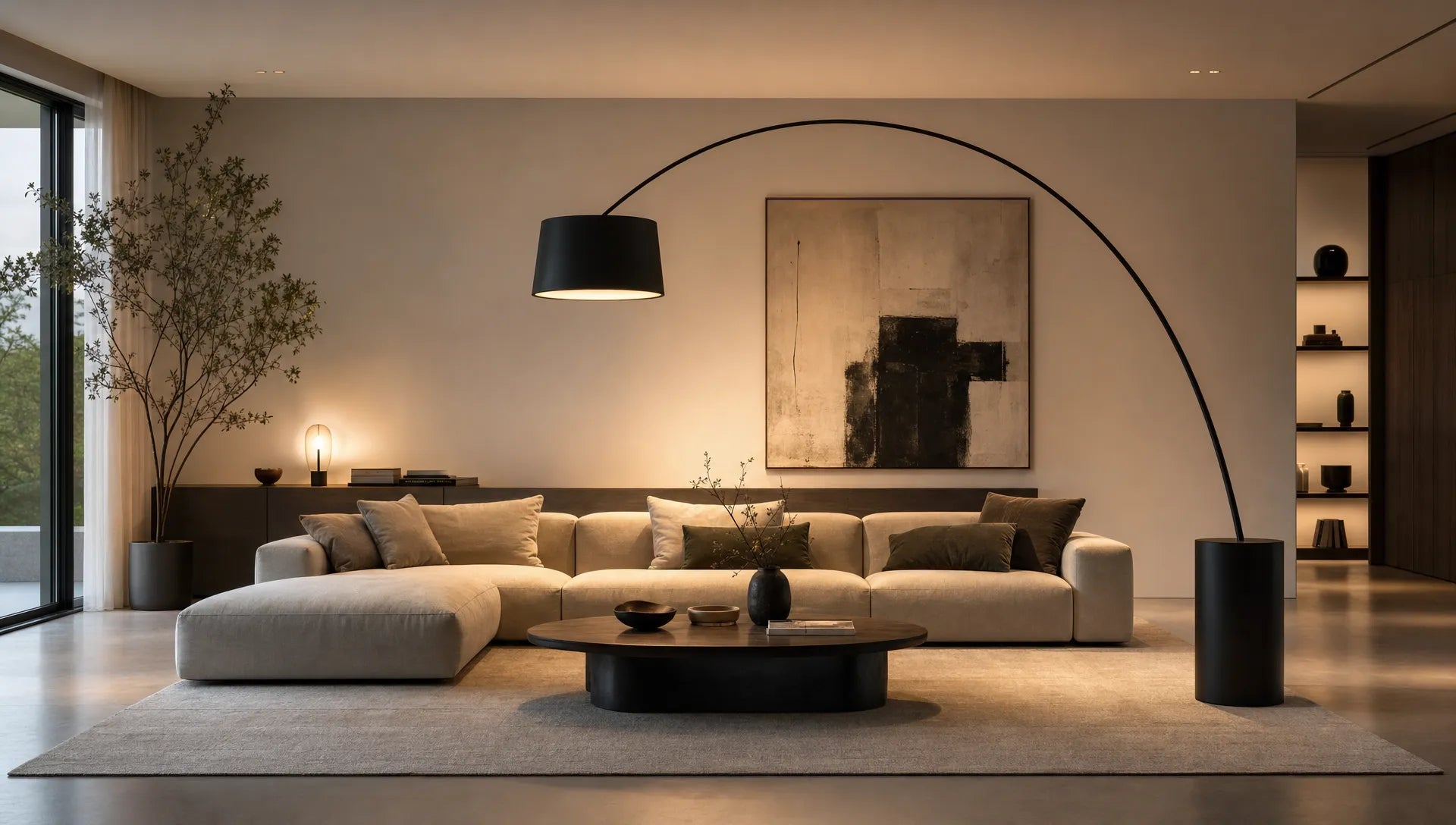
| Floor lamp | Reading corner, sofa, bedroom | Flexible, cozy, zoning | Stability, shade shape, dimming function |
| Table lamp | Side table, bedside table, desk | Local, homely, functional | Light color, glare, lampshade size |
| Spots and spotlights | Kitchen, hallway, gallery, work surfaces | Directed, precise, modern | Alignment, number, distance, beam angle |
| Outdoor light | Terrace, entrance, garden paths | Safe, orientating, decorative | IP protection, material, weather resistance |
The most important difference is not in the name, but in the lighting task. A pendant light above the dining table can look beautiful, but rarely replaces general room lighting. A ceiling light makes the room bright, but alone often creates little depth. Only the combination creates a harmonious lighting concept.
Compare lamps and luminaires according to their lighting task
A particularly simple method is to compare three types of light: basic light, zone light and accent light. This classification helps you avoid making bad purchases because you first think about the function and only then about the design, material and color.
Basic light ensures that a room is bright enough overall. Ceiling lights, large pendant lights, track systems or several recessed spots are suitable for this. This light should be even and not blinding.
Zone light illuminates specific areas such as dining tables, kitchen islands, reading chairs or desks. Pendant lights, table lamps, floor lamps and directed spots are particularly useful here.
Accent light highlights specific elements, such as art, plants, shelves, wall textures, or architectural details. Wall lights, small spots or indirect LED solutions create depth and atmosphere here.
| Light task | Matching lights | Example in everyday life | Target |
|---|---|---|---|
| Basic light | Ceiling lights, spots, large pendant lights | Light when entering the room | Orientation and brightness |
| Zone light | Pendant lamps, floor lamps, table lamps | Light over the dining table or sofa | Comfort and function |
| Accent light | Wall lights, spotlights, indirect lights | Illumination of pictures or niches | Atmosphere and spatial depth |
This tripartite division is particularly useful for living spaces, open floor plans, and renovation projects. Instead of choosing the strongest possible light, plan several light sources with clear tasks. This appears to be of higher quality and is more comfortable in everyday life.
Which lamps and lights suit which room?
Flexibility is crucial in the living room. Here we read, watch TV, relax, talk and sometimes work. A combination of ceiling light or pendant light, floor lamp and indirect light is ideal. Warm white light looks homely, dimmable lights significantly increase comfort.
In the dining room, the table is the focus. A pendant lamp or modern chandelier creates a clear focus and combines furniture, architecture and decoration. It is important that the lamp hangs low enough to emphasize the table, but not so low that it disrupts lines of sight. For long tables, linear pendant lights or several smaller lights look harmonious.
Function and safety count in the kitchen. Work surfaces need bright, low-glare light. Pendant lights above the kitchen island can be decorative and practical at the same time. Directed light sources are helpful under upper cabinets or along work zones. A light color that is too warm can be inconvenient when cooking, while neutral white light makes details more visible.
In the bedroom, light should be calming and functional at the same time. Ceiling light is practical, but bedside lights, wall lights or small pendant lights next to the bed create more atmosphere. If you read in the evening, you should pay attention to glare-free zone lighting.
The hallway is about orientation. Ceiling lights, wall lights or spotlights work well, depending on the length and height of the hallway. In narrow hallways, wall lights can visually enhance the room as long as they do not protrude into the walkway.
Technical requirements are particularly important in the bathroom. Moisture and splash water require appropriate types of protection. Pay attention to suitable IP protection classes and have electrical installations in sensitive areas planned professionally.

The most important purchasing criteria in comparison
If two lights look similar, it's the details that matter. Especially with modern designer lights, it's worth taking a closer look at the quality of light, dimensions, material and customization options.
Brightness in lumens is more meaningful than Watt. Watt describes the energy consumption, lumen the amount of light emitted. A modern LED can produce a lot of light with low wattage. That's why when comparing lamps and lights you should always pay attention to lumens, not just the known wattage of previous light bulbs.
Light color in Kelvin affects the mood. Warm white light with around 2700 to 3000 K looks cozy and fits well in living and sleeping areas. Neutral white light around 3500 to 4000 K is more objective and is often suitable for kitchens, bathrooms or work areas. Daylight white light appears very clear, but can quickly appear cool in living rooms.
Color rendering, often called CRI, is important if you want colors to appear natural. A CRI of 80 is considered solid for many everyday applications. For dining areas, art, high-quality materials or dressing areas, a value of 90 or higher is often more pleasant because colors appear more differentiated.
Dimmability makes lights more versatile. A dimmable pendant light can be bright when you're working and soft when you're having dinner. It is important that the bulbs, drivers and dimmers fit together. Not every LED works with every dimmer.
Size and proportion decide on the spatial effect. A lamp that is too small appears lost, while one that is too large dominates the room. Above dining tables, the diameter should match the size of the table. In rooms with high ceilings, pendant lights and chandeliers may be more present, while low rooms require flatter models.
Material and surface shape the style. Glass appears light and elegant, metal modern and clear, wood warm and natural. Black lights create graphic accents, brass and gold appear elegant, chrome or silver appear cool and technical.
If you want to delve deeper into terms like Kelvin, CRI, dimmability and light intensity, this will help small lexicon of lamps and lights as a compact orientation.
LED, halogen or classic bulbs?
For modern living spaces, LED is now the obvious choice in most cases. LEDs are efficient, long-lasting and available in many light colors, shapes and designs. They also enable slim lamp shapes that were difficult to achieve with old lamps.
Since 2021, the EU energy labeling for light sources has again used a scale from A to G. This makes it easier to compare efficiency classes. The European Commission provides information on eco-design and energy labels for light sources. What is important, however, is that the most efficient light source is not automatically the best choice if the light color, color rendering or lack of glare does not match the room.
Halogen lights have very good color rendering, but are significantly less efficient compared to LEDs. Classic light bulbs no longer play a role in modern lighting purchases. Anyone choosing a new light today should therefore check whether it uses integrated LED technology or is compatible with replaceable LED bulbs. The guide offers helpful in-depth information on this Buy LED lamp.
Standard light or individually tailored solution?
A common mistake when buying is to only look at the design. Pendant lights and chandeliers in particular must also fit structurally. Ceiling height, table position, power outlet and desired suspension determine whether a lamp really works in the room.
This is where individualization becomes particularly valuable. A pendant light above a dining table only looks harmonious if the height is right. In older buildings, very high ceilings may require longer cables. In new buildings or open living areas, a different canopy may be necessary so that the light fits neatly into the electrical position and room geometry.
BUYnBLUE offers free customization for chandeliers and pendant lights, for example in terms of cable length, canopy or color. This is particularly helpful for homeowners, interior designers and renovation projects where standard dimensions do not fit the reality of the room. This means that the lamp is not only visually suitable, but also functionally correctly integrated.
Common mistakes when comparing lamps and luminaires
Many bad purchases occur because lighting is viewed like a single piece of furniture. A lamp can be beautiful and still not fit the room. Conversely, a simple model can look perfect if the height, light color and placement are right.
Typical errors are:
- Buy only based on design, without checking the lighting effect and room size.
- Compare watts instead of lumens and thereby misjudge the brightness.
- Plan a single ceiling light as the entire room lighting.
- Choose light colors that are too cool in the living and sleeping areas.
- Do not adjust the suspension of pendant lights to the height of the table or ceiling.
- Assume dimmability without checking the compatibility of LED, driver and dimmer.
- Neglect IP protection in the bathroom or outdoors.
The best comparison therefore always begins with the room: What should happen there? Where is brightness needed? Where should atmosphere arise? Only then do style, material, color and budget follow.
Simple rules of thumb for a harmonious selection
For living areas, warm white light is usually more pleasant than neutral white or daylight white light. On the other hand, clearer light makes sense for work surfaces. Pendant lights above tables should be chosen proportionally to the length of the table. In small rooms, flat ceiling lights or subtle wall lights are often better than very expansive models.
Also pay attention to lines of sight. A lamp can be an eye-catcher, but should not be distracting. The correct height is crucial above dining tables and kitchen islands. Freedom of movement is important in walkways, hallways and stairwells. With decorative lights, it's worth taking a second look at the light source: Is it visible? Can it blind? Can it be dimmed?
For a high-quality result, a mix of direct and indirect light is recommended. Direct light helps when working, eating and reading. Indirect light makes rooms softer and larger. Accent lighting brings personality.
Frequently asked questions
What is the difference between lamps and lights? In a technical sense, the lamp is the light source, while the luminaire means the complete lighting object. However, in everyday life both terms are often used the same way.
Which light is best for the living room? A combination is usually ideal: a ceiling or pendant light for basic light, a floor lamp for the sofa area and indirect or accent lights for atmosphere.
Which light color is recommended for living spaces? Warm white light with around 2700 to 3000 K is often chosen for living rooms, bedrooms and dining areas because it looks cozy and homely.
Are LED lights always the best choice? In many cases today, LED is the most efficient and versatile solution. Nevertheless, in addition to energy consumption, you should also check light color, color rendering, dimmability and design.
What should I look for in pendant lights? What is important is the right suspension, appropriate size, sufficient brightness and a position that suits the table or kitchen island. If the ceiling height differs, an individual cable length may make sense.
Conclusion: The best comparison starts with the room
The easiest way to compare lamps and lights is to choose based on their task rather than their appearance. Ceiling lights provide orientation, pendant lights create zones, wall lights add depth, floor and table lamps ensure flexibility. The light color, lumen, CRI, dimmability, material and proportion are then decided.
If you are looking for modern designer lighting that not only looks beautiful, but also fits the room height, furnishings and use, look no further BUYnBLUE a curated selection of high-quality lights. Particularly practical: pendant lights and chandeliers can be adjusted free of charge so that the cable length, canopy or color exactly matches your project.