Choose a Japandi lamp: shapes, materials and lighting effect
One Japandi lamp shouldn't just look beautiful. It is intended to create calm, make materials tangible and illuminate the room in such a way that it appears reduced, warm and conscious. This is exactly where the challenge lies: Japandi thrives on restraint, but a lamp that is too simple can quickly look arbitrary. A lamp that is too dominant will disrupt the balance.
The best way to make the right choice is not to look at the lamp in isolation. Three questions are crucial: What form does the architecture of the room support? Which material suits the feel of your facility? And what lighting effect is created in everyday life, in the morning, in the evening, when eating, reading or relaxing?

What makes a Japandi lamp
Japandi combines Japanese clarity with Scandinavian warmth. Instead of decoration for the sake of decoration, it's about proportion, function, natural surfaces and a calm world of colors. A suitable lamp therefore usually appears reduced, but never cold.
Organic shapes, matt surfaces, wood, paper, linen, ceramics, glass or reserved metal are typical. Dark accents in black, anthracite or dark bronze can also work, as long as they are used delicately. It is important that the lamp serves a purpose and at the same time is perceived as a consciously placed object.
If you want to understand the style even more deeply, it is also worth taking a look at the related one Wabi-Sabi interior design style, which focuses on imperfection, naturalness and quiet beauty.
Choose the right shape: calm, graphic or organic?
The shape determines how strong a lamp is in the room. In Japandi style, it should not compete, but rather organize the space. A round paper lamp has a different effect than a slim linear pendant lamp, even if both glow warm white.
Round and oval shapes for soft rest
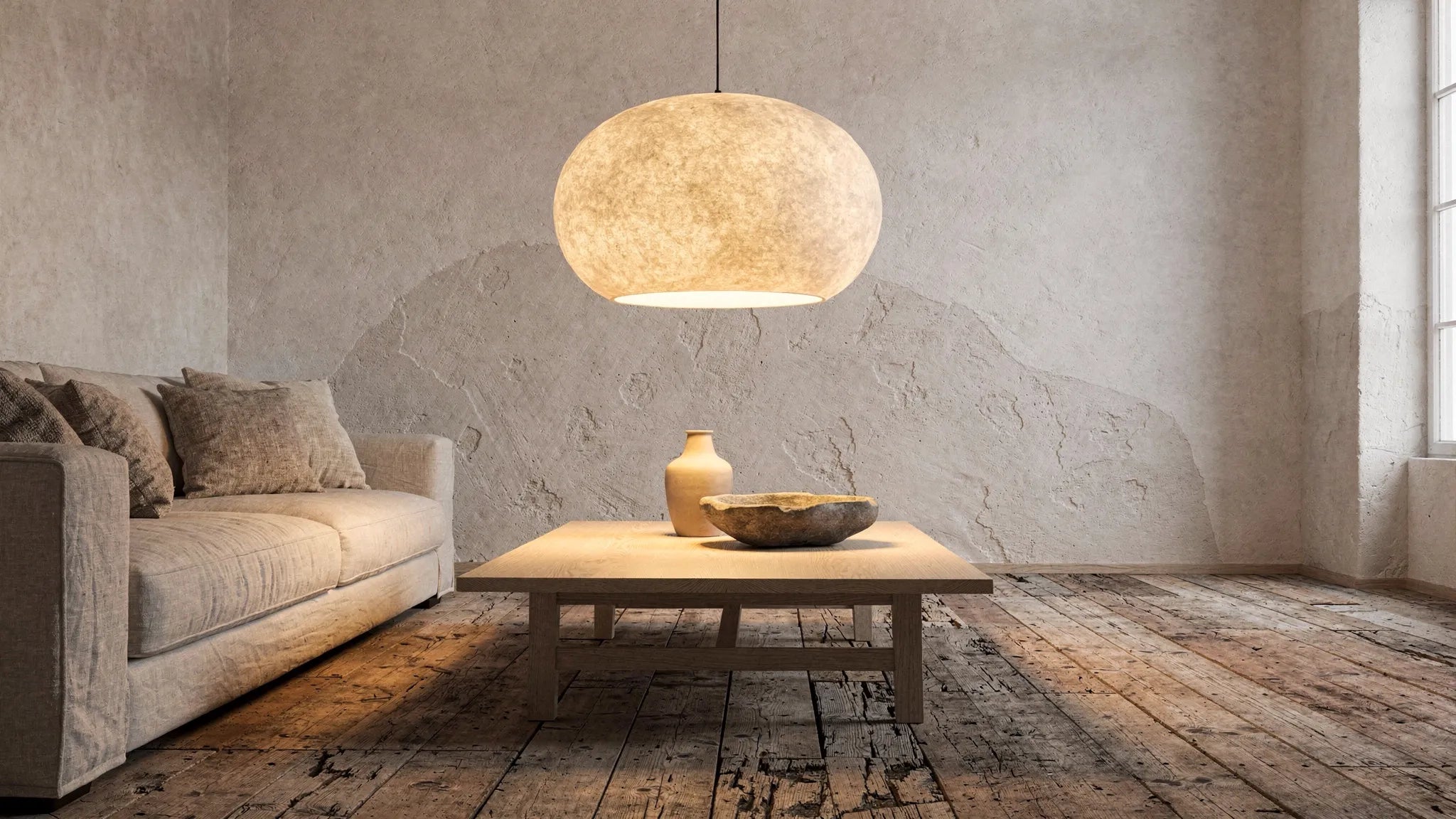
Round, oval and slightly asymmetrical shapes look particularly harmonious. They take the hardness out of straight lines, for example in rectangular dining tables, angular sofas or minimalist fitted kitchens. A spherical or lantern-like pendant light is suitable if the room already appears very clear and architectural.
These shapes fit particularly well over round dining tables, in bedrooms, in reading nooks or in living rooms with low furniture. The advantage: The light is usually distributed gently and over a wide area as long as the shade is translucent.
Cylindrical and conical shapes for a clear structure
Cylinders, cones and narrow shades bring more graphic precision into the room. They suit kitchen islands, long dining tables, hallways or modern new buildings where clear lines are desired. Several small pendant lights in a row look particularly elegant if the distances are precisely planned.
Make sure there is no glare here. Narrow shades often direct the light more downwards. This is ideal over a table or work surface, but can seem too harsh in the living room if there are no other light sources.
Flat and wide shapes for low rooms
In apartments with low ceilings, expansive pendant lights do not always make sense. Flat ceiling lights, wide drum shades or lights mounted close to the ceiling appear lighter and disturb the room height less.
Japandi does not mean automatic Pendant Lamp. A subtle ceiling light can also be very suitable if the material, light color and proportion are right. It is crucial that the lamp does not appear technical and cool, but rather has a homely surface or a gentle light distribution.
Sculptural shapes as a single focal point
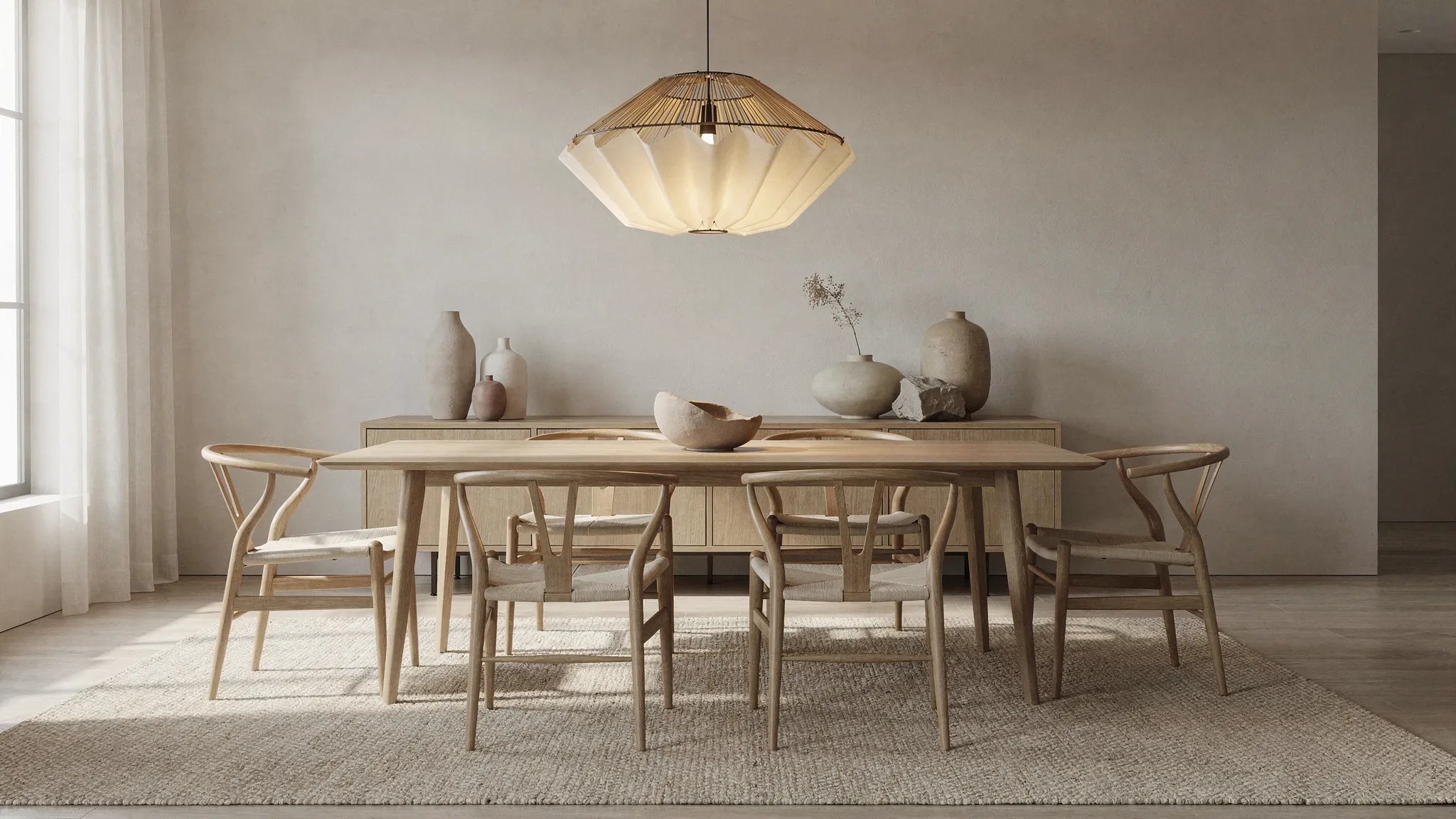
A single sculptural light fixture can have a strong impact in Japandi style if the rest of the room remains understated. This applies, for example, to an organically shaped pendant light above the dining table or a special table lamp on a sideboard.
The rule is: the more striking the shape, the calmer the color and material should be. An asymmetrical lamp made of light paper, matt ceramic or fine wood often looks more harmonious than a shiny, strongly contrasting statement object.
Materials: Which surface creates which mood?
In the Japandi style, material is more than just looks. It affects how light is scattered, reflected or absorbed. A lamp made of paper creates a different feeling of space than one made of glass or metal.
| material | Light effect | Fits particularly well | What you should pay attention to |
|---|---|---|---|
| Paper or rice paper look | Very soft, diffuse, with little shadow | Bedroom, living room, quiet dining areas | Only use with suitable lamps and a safe distance from the heat source |
| Wood, bamboo, rattan | Warm, structured, natural | Dining room, hallway, living area | Match the grain and color to the floor and furniture |
| Linen or textile | Subdued, homely, low-glare | Bedrooms, reading nooks, sideboards | Pay attention to dust care and light transmission |
| Ceramics | Quiet, high quality, handcrafted | Bedside table, sideboard, dining table | Matte surfaces usually appear more authentic than high gloss |
| Opal glass | Even, elegant, gentle | Bathroom, kitchen, hallway, living area | Very suitable if ease of care is important |
| Metal, matt | Precise, graphic, modern | Kitchen, dining area, architectural spaces | In the Japandi style, combine sparingly and with warm materials |
| Stone or marble | Heavy, valuable, grounding | Sideboards, consoles, accent areas | Don't choose too massive, otherwise the room will lose its lightness |
A Japandi lamp becomes particularly convincing when it uses at least one material in the room. A light wooden shade can harmonize with oak, ash or light floor coverings. A matte black suspension can be repeated in door handles, chair frames or window frames. Ceramics go well with vases, bowls and artisan surfaces.
Lighting effect: soft, warm and deliberately zoned
The most common mistake with Japandi lighting is too much technical light. A bright room is not automatically a good room. Japandi thrives on balance, i.e. sufficient brightness, gentle shadows and a calm light color.
Warm white light colors between around 2,700 and 3,000 Kelvin are usually ideal for living rooms. 2,700 Kelvin looks cozy and evening, 3,000 Kelvin seems a little clearer and more modern. More neutral light can be useful in kitchens or work areas, especially where colors and details need to be clearly visible.
In addition to the light color, color rendering is important. A high CRI value, often given as Ra or CRI, makes wood, textiles, ceramics and wall paints appear more natural. Especially for a style that relies on material nuances, a light source or LED module with good color rendering is worthwhile.
You can find out more about systematic lighting planning with basic lighting, work lighting and accent lighting in BUYnBLUE-Guide to LED lighting with 3-layer light.
Pendant lamp, ceiling lamp, table lamp or wall lamp?
A single lamp is rarely enough to make Japandi really work. The style requires islands of light: a soft point of light above the dining table, a quiet reading light next to the sofa, a warm table lamp on the shelf, perhaps a subtle wall lamp in the hallway.
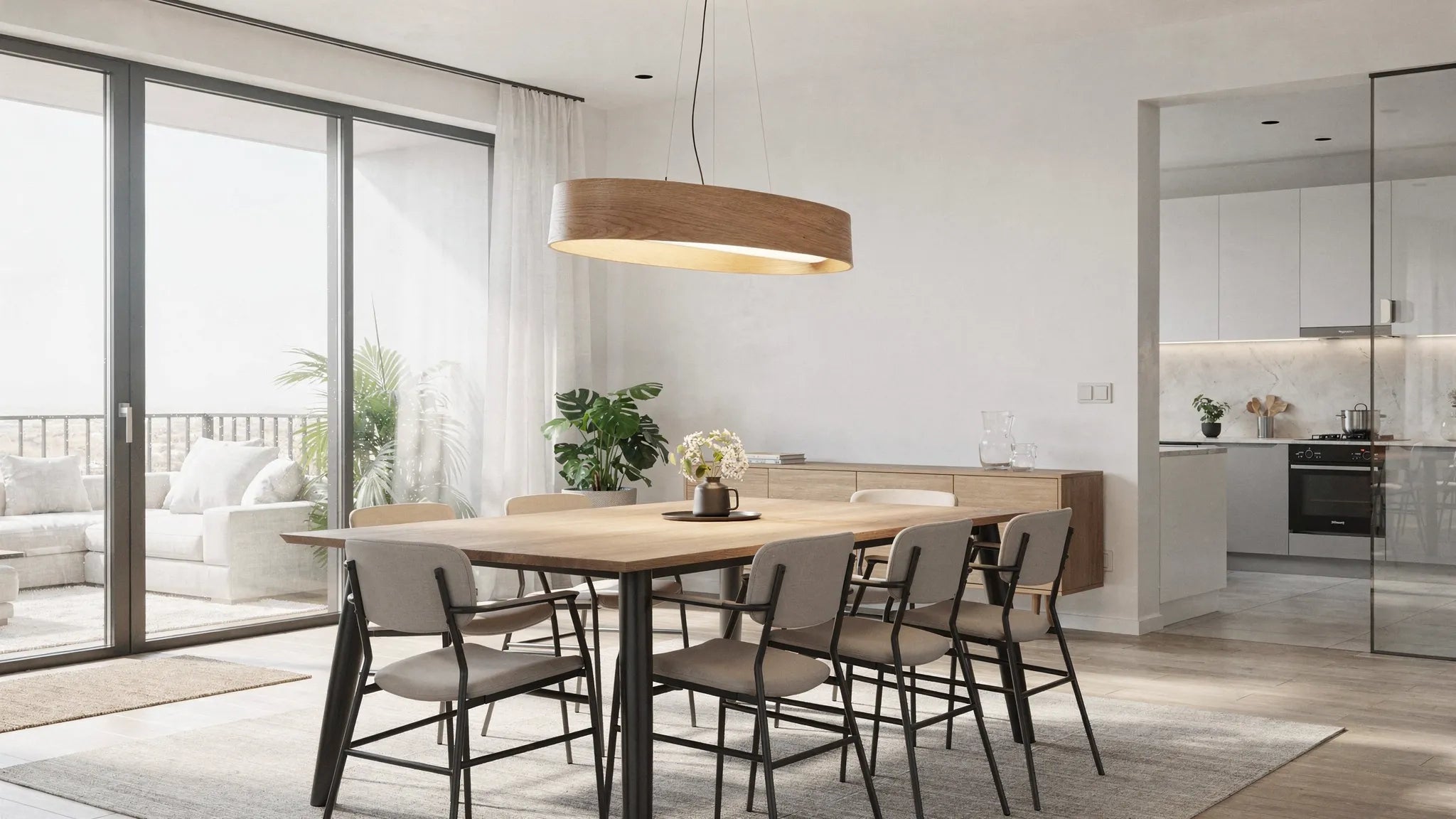
A pendant light is suitable if you want to define an area. It creates a clear focal point above the dining table, a kitchen island or a low coffee table. When it comes to dining tables, the right height is crucial so that the light does not dazzle or disturb the view. A distance of around 60 to 75 cm between the table top and the lower edge of the lamp is often used as a guide. Explained in more detail BUYnBLUE that in the guide to Pendant lamp above the dining table.
Ceiling lamps are suitable for basic lighting, but in the Japandi concept they should be as low-glare as possible. Opal glass, textiles, indirect light components or dimmable LED technology help to make the ceiling lighting more homely.
Table lamps and floor lamps are ideal for atmosphere. They bring light to eye level, which immediately makes rooms appear warmer. A ceramic table lamp with a linen or textile shade can create more of a Japandi effect on a sideboard than a large, central ceiling light.
Wall lights are particularly effective in hallways, bedrooms and next to sofas. Up-and-down lighting, indirect wall reflections or small pivoting lights create depth without overloading the room.
Room by room: Which Japandi lamp fits where?
The following overview will help you choose the shape, material and lighting effect to suit the room. It does not replace precise lighting planning, but offers a good initial orientation.
| space | Suitable shapes | Ideal materials | Recommended lighting effect |
|---|---|---|---|
| Living room | Round pendants, low floor lamps, subtle wall lights | Wood, linen, paper look, ceramic | Warm, dimmable, in several light islands |
| Dining room | Wide pendants, linear lights, organic individual lights | Wood, glass, matt metal, textile | Directed downwards, low-glare, comfortable |
| bedroom | Small pendants, table lamps, wall lights | Linen, paper look, ceramic, wood | Very warm, soft, rather indirect |
| Kitchen | Slim pendants, spotlights, clear ceiling lights | Matt metal, opal glass, wooden details | Functional, colorfast, brighter over work surfaces |
| hallway | Flat ceiling lights, wall lights, small pendants | Opal glass, wood, matt metal | Inviting, even, not too dark |
| bathroom | Protected ceiling or wall lights | Opal glass, metal, suitable wet room materials | Clear, low-glare, with appropriate IP protection class depending on the area |
| Home office | Table lamp, floor lamp, indirect complement | Matt metal, wood, textile | Easy to concentrate, low in shadows, controllable |
In the living room, a combination of three to five light sources is recommended, depending on size and use. In the bedroom, two to three soft points of light are often enough. In the kitchen and bathroom, the light can be more functional, but should be balanced out by warm accents.
Colors: neutral doesn't mean boring
Japandi colors usually range between cream, sand, greige, stone, warm white, light wood, dark brown and black. A light should support this palette, not break it. Matt surfaces are particularly harmonious because they appear calmer than reflective paint or very shiny metal.
Light wood and beige create lightness. Dark wood, black or bronze provide depth and structure. White opaline glass looks modern and timeless, but can appear somewhat neutral if the room does not contain warm textures. That's why opal glass works particularly well with wood, linen, clay, lime plaster or natural stone.
If you're unsure, choose a light that picks up either the floor, the dining table, or a recurring metal detail in the room. This creates a connection without everything having to look exactly the same.
Proportions: The lamp must fit the dimensions of the room
Japandi thrives on emptiness and balance. A lamp that is too small appears lost, a lamp that is too large appears restless. Especially with pendant lights, you should choose the proportion not only based on the size of the room, but also the size of the furniture.
A single small light often appears too weak above a long dining table. A wide, horizontal light or a quiet group of two to three pendants is better. A central, round or organic shape can look very harmonious over a round table. In small rooms, transparent, bright or softly diffused shades are usually better than heavy, dark bodies.
The ceiling height also plays a role. In high rooms, a pendant light may protrude more into the room. With low ceilings, flat lights, wall lights or table lamps are often more elegant. If the desired light generally fits, but the cable length or ceiling rose is not ideal, an adjustment can make the difference.
Right here is the free customization service from BUYnBLUE Practical: For pendant lights and chandeliers, the cable length, ceiling canopy or color can be adjusted as required so that the light matches the room height and floor plan.
Typical errors with Japandi lamps
Many bad purchases are not because the lamp is bad, but because it does not suit the lighting task. A nice paper light may be too dark over a kitchen countertop. A precise metal lamp can appear too harsh in the bedroom. A large designer lamp can destroy the desired peace and quiet in a reduced space.
Pay particular attention to these points:
- The lamp looks good, but the light color is too cold.
- The umbrella is nice, but blinds when sitting or lying down.
- The lamp is too small for the table, sofa or room height.
- There is only one central light source instead of multiple light zones.
- The material appears artificial or shiny, even though the room is furnished naturally and matt.
- The pendulum height was not checked before purchase.
- Dimmability was forgotten, even though the room needs multiple moods.
A good test: imagine the room in the evening, not just in daylight. Japandi light is then intended to create peace, depth and security. If the lamp only impresses as an object during the day but does not create the right atmosphere in the evening, it is not the best choice.
Short checklist before purchasing
Before you buy a Japandi lamp, it's worth taking a look at function, proportion and light quality. These questions will help you decide:
- What is the purpose of the lamp: basic light, zone light, work light or accent light?
- Should the shape appear soft, graphic or sculptural?
- Does the material pick up on existing surfaces in the room?
- Does the size fit the furniture group and not just the room area?
- Is the light color warm enough for the desired mood?
- Is the lamp dimmable or can it be used with dimmable bulbs?
- Does glare occur when you sit, lie down or eat at the table?
- Does the cable length, canopy or color need to be adjusted?
If you can answer these points, the choice will be much easier. Then it's no longer about finding just any beautiful lamp, but rather the right lamp for exactly your room.
Frequently asked questions
Which light color suits a Japandi lamp best? For living and sleeping areas, 2,700 to 3,000 Kelvin is usually ideal. The light appears warm, calm and homely. A little clearer light can be useful for the kitchen, bathroom or home office, especially if good vision and color recognition are important.
Which materials are particularly typical for Japandi? Wood, bamboo, paper look, linen, ceramic, opal glass and matt metals work particularly well. A natural, calm surface is crucial. Very shiny or very colorful materials usually appear less harmonious.
Is a Japandi lamp always minimalist? Yes, but minimalist doesn't mean empty or boring. A Japandi lamp can be sculptural, craftsmanlike and very expressive as long as it stays calm and doesn't appear cluttered.
Which lamp is suitable for a Japandi dining table? Pendant lights with a soft or clear shape, such as round shades, linear lights or natural materials such as wood, linen and glass, are particularly suitable. What is important is low-glare light, the right height and a width that fits the table.
Can you combine Japandi lamps with modern LED technology? Yes very good. LED technology is particularly suitable because it is energy efficient and, depending on the luminaire, allows for dimming, different light colors or very flat designs. It is important to pay attention to warm light and good color rendering.
Find a Japandi lamp that really suits your space
A good Japandi lamp has a quiet appearance but a strong effect. It combines form, material and light so that your home appears calmer, warmer and more conscious.
At BUYnBLUE You will find a curated selection of modern designer lights for different living areas. Particularly helpful for Japandi interiors: pendant lights and chandeliers can be adjusted free of charge, for example in terms of cable length, ceiling rose or color. The lamp not only fits the style, but also the ceiling height, furniture arrangement and room layout.
Additionally, you benefit from free worldwide shipping, secure payment options, tracking, 14-day return policy and customer service if you need assistance with your selection. This turns a beautiful lamp into a harmonious lighting solution for your home.