Combine vintage table lamps correctly instead of looking old-fashioned
A vintage table lamp can instantly make a room more personal. It brings patina, history and a certain warmth that many purely modern facilities lack. But that is exactly where the challenge lies: If they are combined incorrectly, the look quickly appears random, heavy or as if it has been left behind from a bygone era.
The difference between charming and old-fashioned rarely comes from the lamp alone. The decisive factors are proportions, light color, material mix and the furniture that surrounds them. If you consciously plan these points, you can use a vintage-style table lamp as an elegant break in style without the room appearing nostalgically overloaded.

Why a vintage table lamp quickly looks old-fashioned
A vintage table lamp is a strong design element. It stands out thanks to its special shapes, warm materials, brass, glass, ceramics, fabric shades or visible details. It's these features that make them interesting, but they can also become too much if the rest of the decor repeats the same nostalgic tone.
It usually looks old-fashioned when all the elements seem to come from the same past: dark furniture, heavy curtains, patterned carpets, lots of small decorative pieces and a lamp with a warm shade. The room then no longer has any tension, but looks like a copy of the style.
A vintage table lamp, on the other hand, appears modern if it is deliberately contrasted. An old form sits on a clear sideboard. A brass base meets a matte black vase. An opal glass shade complements a reduced sofa. The room then not only tells of the past, but also connects character with the present.
The most important rule: vintage as an accent, not as an overall disguise
If you want a vintage table lamp to look elegant, it needs air. It shouldn't disappear among too many other retro objects, but rather appear like a consciously placed accent. This is particularly true in modern apartments, new buildings or minimalist interiors.
A good rule of thumb is: one dominant vintage element per zone is sufficient. On the sideboard this can be the table lamp. Maybe the lamp on the bedside table and otherwise just a simple book. A classic banker's lamp can work in the home office if the desk, chair and wall design remain clear and calm.
This restraint is not boring. It makes the lamp more visible and of higher quality. The stronger the design of the lamp, the more reduced its surroundings can be.
Which vintage table lamp suits which interior style?
Not every vintage table lamp conveys the same mood. Mid-Century looks different than Art Deco, Industrial looks different than a 70s-style ceramic lamp. Anyone who understands the character of the lamp can specifically embed it into a modern concept.
| Vintage table lamp style | Typical features | Modern combination partners | Effect in space |
|---|---|---|---|
| Mid-Century | Brass, dark wood, conical shades, clean lines | Walnut, bouclé, black steel, cream walls | Elegant, warm, design-conscious |
| Art Deco | Glass, gold, chrome, marble, geometric shapes | Velvet, smoked glass, dark accent colors, clear furniture | Glamorous, noble, expressive |
| Industrial | Metal, cage screen, visible screws, dark surfaces | Concrete, leather, wood, minimalist shelves | Urban, robust, loft-like |
| 70s ceramics | Organic shapes, glazes, mushroom shape, brown and orange tones | Natural stone, light fabrics, modern art, beige | Cozy, creative, soft |
| Classic desk lamp | Articulated arm, green glass, metal base, functional shape | Straightforward desk, leather accessories, clear order | Serious, focused, timeless |
The trick is not to copy the entire style. An Art Deco lamp doesn't have to be in an entire Art Deco room. It often works even better when used as a single, luxurious accent in a simple, modern room.
Combine colors correctly: a maximum of three main tones
Colors play a big role in whether a vintage table lamp looks fresh or dusty. Many older designs already have warm tones: brass, amber, smoked glass, walnut, cream, terracotta or dark green. If too many other colors are added, the room quickly loses its calm.
For a modern result, a simple rule of three works particularly well. Choose a neutral base color, a material color, and an accent color. For example: warm white walls, brass details and a deep green. Or: light gray, black metal and cognac-colored leather.
If the lamp is already colored, the environment should remain more reserved. A 70s-style orange ceramic lamp doesn't need other strong retro colors right next to it. It looks more high-quality on a light side table, next to a neutral sofa or in front of a quiet wall.
Material mix: This is how the modern break is created
Vintage thrives on materials with depth. Patinated metal, hand-formed ceramics, ribbed glass or a textile lampshade have a different effect than smooth, new surfaces. So that the look doesn't become difficult, you need a counterpoint.
These combinations work very well:
- Brass with matt black or light travertine
- Smoked glass with light wood and linen fabrics
- Ceramics with modern art and clear metal objects
- Dark wood with cream bouclé or smooth leather
- Chrome with glass, mirrors and reduced furniture edges
It is important to discreetly repeat a material from the lamp elsewhere. If the lamp has a brass base, a small picture frame, handle or bowl in a similar tone can suffice. Too many repetitions, on the other hand, quickly appear arranged.
Light color: The underestimated modernization factor
No matter how beautiful a vintage table lamp may be, if the light source is unsuitable, it will look wrong. Light that is too cold makes warm materials hard and uncomfortable. Light that is too yellow can make the room appear old-fashioned and dark.
Warm white light between 2700 and 3000 Kelvin is usually ideal for living rooms. It maintains the cozy effect but remains clear enough for modern facilities. For very atmospheric corners, such as on a sideboard or in the bedroom, a particularly warm light bulb of around 2200 to 2700 Kelvin can also be suitable. In the workplace it can be a little more neutral as long as the lamp is used functionally.
Color reproduction also counts. A high CRI value, ideally 90 or more, makes wood, textiles, wall colors and art appear more natural. If you want to go deeper into color temperature, lumens and light quality, it's worth it BUYnBLUE-Guide What is Kelvin and what does this number mean for lamps and lights?.
| Use of the vintage table lamp | Recommended light color | Brightness as orientation | Tip |
|---|---|---|---|
| Decoration on sideboard | 2200-2700K | approx. 150-350 lumens | Choose warm and dimmable |
| bedside table | 2700K | approx. 250-450 lumens | Prefer glare-free umbrella |
| Reading corner | 2700-3000K | approx. 400-800 lumens | Lead light downwards |
| Desk | 3000-4000K | approx. 500-900 lumens | Good color rendering and little glare |
| Hall console | 2700K | approx. 150-300 lumens | Use as a welcome light |
These values are deliberately intended as orientation. Lampshade, distance, light source type and room size change the actual effect.
Proportions: The lamp must fit the furniture
A common cause of an old-fashioned impression is the wrong size. If the table lamp is too small, it looks like a random find. If it is too big, it will uncomfortably dominate the furniture and the room.
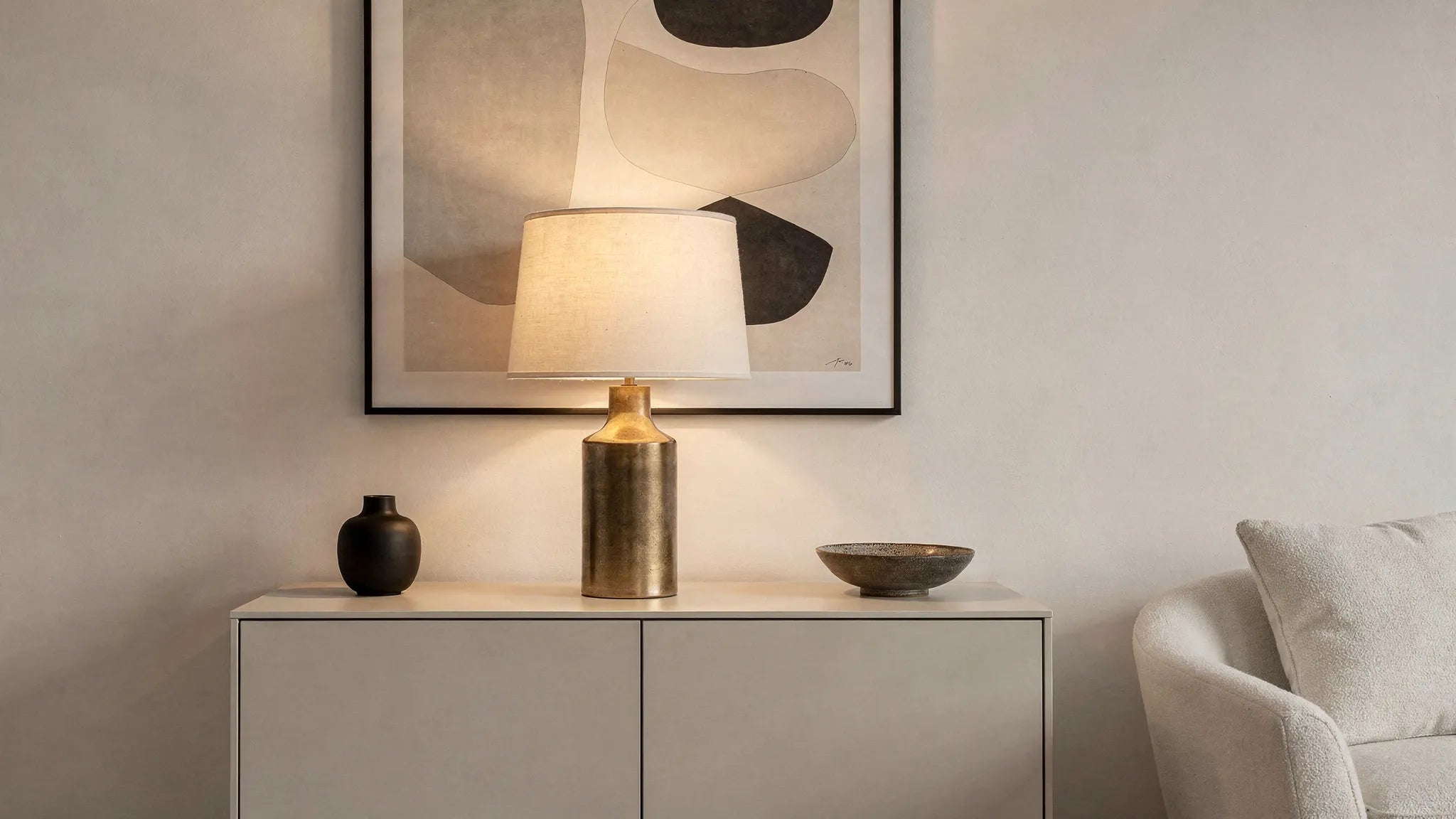
A vintage table lamp can be present on a sideboard. It looks particularly beautiful when its total height is approximately a third to a maximum of half the height of the wall design above it. Next to a sofa, the lower edge of the umbrella should be approximately at eye level when sitting so that the light does not glare. On the bedside table, the lamp should neither be too bulky nor block the view over the bed.
A simple test helps: Take a photo of the lamp in the intended location from the normal viewing direction of the room. You can often see more quickly from the photo whether the proportion is correct or whether the area appears too crowded.
Combine vintage table lamps in the living room
In the living room, a vintage table lamp works particularly well as mood lighting. It doesn't have to illuminate the entire room, but rather create an island of light. On a side table next to the sofa, on a low shelf or on a sideboard, it can create depth and make the room more homely.
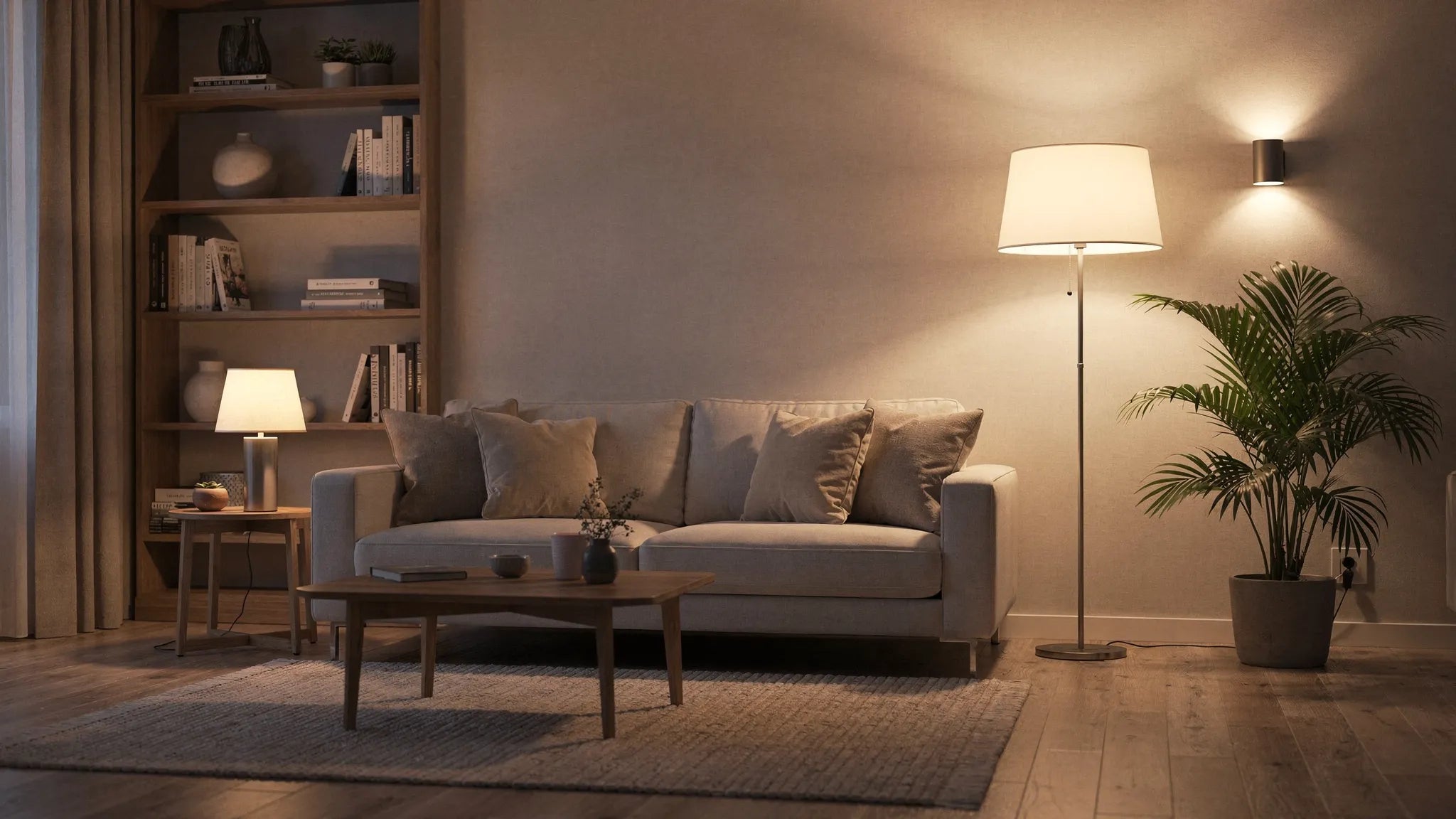
The combination looks modern when the lamp is not standing alone. Supplement it with a second light source at a different height, for example a floor lamp or indirect wall lighting. This creates a multi-layered light image. Exactly this principle explained BUYnBLUE detailed in the post Plan LED lighting: 3-layer light for the entire home.
A vintage table lamp on a simple sideboard with a large art print above it is very elegant. The print brings presence into the scene, the lamp brings warmth. Important: Leave visible spaces between the lamp, picture, vase and decoration. Empty space is not a mistake but part of the design.
In the bedroom: cozy, but not kitschy
A vintage table lamp can appear softer in the bedroom than in the living area. Fabric shades, opal glass, ceramic or brass work particularly well here. So that the room does not become too romantic or heavy, bedding, wall color and furniture should remain calm.
A nice combination is a vintage lamp base with a modern, monochrome shade. If the lamp already has an eye-catching shade, the bedside table should be simple. If there are two bedside tables, the lamps do not have to be identical. Two different lights can look very modern if they are connected by height, material or light color.
Dimming is ideal for relaxed evening routines. A dimmed warm white light prevents the vintage table lamp from looking purely decorative. It becomes a functional, pleasant light source.
In the home office: character without restlessness
In the work area, a vintage table lamp is a stylish counterpart to monitors, laptops and technology. Articulated lamps, pharmacy lamps, banker lamps or reduced metal models are particularly suitable. So that it is not just decorative, it should be placed in an ergonomically sensible way.
Right-handed people usually position the lamp Left, Left-handers right so that the hand does not cast a shadow on the work surface or notes. When working on a screen, the light should not hit the monitor directly. An adjustable umbrella or articulated arm is more practical than a purely decorative model.
If you use a lamp primarily for work, pay more attention to lack of glare, color rendering and sufficient brightness. The post LED table lamp: What is important when reading, working and relaxing deepens these criteria from a functional perspective.
Hallway and entrance area: the first impression counts
A vintage table lamp on a console in the hallway can be very inviting. It makes the entrance more homely and creates a gentle orientation light in the evening. It immediately brings character, especially in modern apartments with white walls and smooth surfaces.
So that the hallway does not appear cluttered, the lamp should be combined with a few, clear objects: a bowl for keys, a mirror, perhaps a single branch in a vase. A mirror behind or next to the lamp increases the light and makes narrow entrance areas appear more spacious.
In very small hallways, the lamp should not be too expansive. Slim feet, opal shades or cylindrical shapes appear lighter than wide shades with dark patterns.
The most common styling mistakes and how to avoid them
| Error | Why it seems old-fashioned | Better solution |
|---|---|---|
| Too many vintage objects in one zone | The room looks like a themed room | Set a focus and complement it in a modern way |
| Wrong light source | Too yellow, too dark or too cold distorts the effect | Choose warm white, dimmable and with a good CRI |
| Lamp scale too small | The lamp appears lost or random | Check the proportions to the furniture and the wall |
| Overloaded decoration | Details compete with each other | Plan open spaces consciously |
| Visible cable chaos | The look appears restless and unkempt | Organize cables, have them shortened or route them cleverly |
| Old umbrella in poor condition | Stains and discolorations do not look like patina | Replace the shade or clean it professionally |
The difference between patina and neglect is particularly important. A little aging can be beautiful. Defective cables, yellowed screens, wobbly sockets or damaged plugs, on the other hand, are not a stylistic device.
Original vintage or new lamp in retro style?
Both can make sense. A true vintage piece has history and often a special quality of materials. To do this, you have to check more closely whether the electrics, socket and stability are still safe. For very old lamps, it is advisable to have them checked by a qualified electrician, especially if cables appear porous or no modern safety standards can be identified.
A new vintage-style lamp is often less complicated. It offers the desired look, but with modern technology, suitable lamps and reliable workmanship. This is the better choice for many living situations, especially if the lamp is used every day.
At BUYnBLUE You will find a curated selection of high-quality designer lights for modern living areas. If you would like to combine your vintage table lamp with a matching pendant lamp or chandelier, the free adjustment service is particularly interesting: For chandeliers and pendant lights, among other things, the cable length, canopy or color can be adjusted to suit the room height and furnishings. This creates a harmonious overall concept in which the vintage accent does not appear isolated.
This is how you build a modern lighting concept around the vintage table lamp
A table lamp should rarely be the only source of light in the room. It develops its effect best in interaction with basic lighting, zone lighting and accent lighting. The vintage table lamp usually takes on the role of mood or accent light.
A modern living room could, for example, be structured like this: A subtle ceiling or pendant light provides basic brightness. A floor lamp supports the reading zone. The vintage table lamp on the sideboard creates depth and atmosphere. In addition, indirect light on the wall or shelf can make the room visually softer.
This way the lamp is not overwhelmed. It doesn't have to be able to do everything, but can do exactly what vintage design can do particularly well: create a warm, personal and characterful lighting atmosphere.
Mini checklist before purchasing or styling
Before choosing or relocating a vintage table lamp, consider these points:
- Does the size match the surface on which the lamp is placed?
- Does the lamp have enough free space to be effective?
- Does a lamp material repeat subtly in the room?
- Is the light color warm, but not unpleasantly yellow?
- Is the electrical system safe and the light source suitable?
- Is there at least one other light source in the room?
- Does the lamp appear to be deliberately placed rather than accidentally turned off?
If you answer these questions predominantly with yes, there is a high probability that your vintage table lamp will look modern and high-quality.
Frequently asked questions about vintage table lamps
How do I combine a vintage table lamp with a modern look? Use the lamp as a single accent and combine it with clean lines, calm colors and modern materials. Contrasts such as brass with black, ceramic with natural stone or smoked glass with light wood work particularly well.
Which light color suits a vintage table lamp? 2700 Kelvin is usually ideal for living and sleeping areas. For particularly cozy accent lighting, 2200 to 2700 Kelvin can be suitable. At the desk, the light can be a little more neutral, around 3000 to 4000 Kelvin.
Does a vintage table lamp look out of place in a minimalist apartment? No, it can have a very strong effect, especially in minimalism. It is important that it is given enough space and does not compete with many other nostalgic objects.
Can I combine two different vintage table lamps in one room? Yes, if there is a unifying property. This can be a similar height, material color, light color or design language. Without a connection, the combination quickly appears random.
Should I have the electrics checked on a real old table lamp? Yes, a professional inspection makes sense for original old lamps. Porous cables, loose sockets or old connectors should not be ignored as safety is more important than the authentic look.
Which furniture goes particularly well with a vintage table lamp? Simple sideboards, modern side tables, linear bedside tables and reduced desks are ideal partners. They give the lamp space and prevent the look from appearing too heavy or old-fashioned.
Conclusion: Character needs contrast
A vintage table lamp looks modern if it doesn't sink into nostalgia. It needs contrast, good proportions, the right color of light and a clear role in the room. Instead of collecting a lot of old elements, a consciously chosen piece that is combined with modern furniture, calm colors and high-quality light is often enough.
If you would like to design your home with characterful lights, discover them at BUYnBLUE modern designer lighting for different living areas. With curated lighting, free worldwide shipping, 14-day returns, secure payment options, and 24/7 customer service, it's easier to bring vintage charm and contemporary living together.