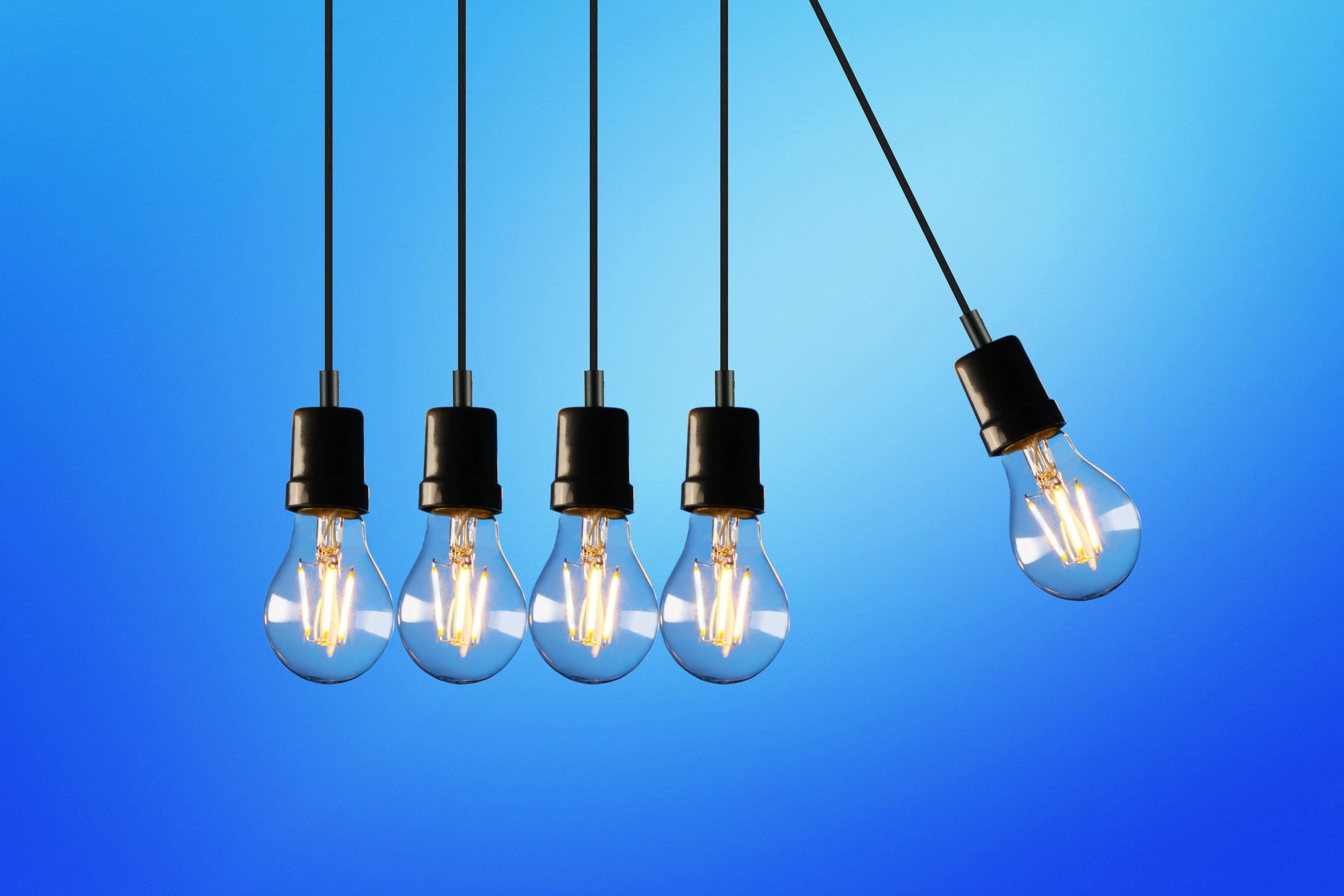
Hand-blown lamp glass from Germany
Do you also feel the longing for tradition and craftsmanship perfection? Are you looking for man-made things rather than technological marvels? Sterile LED panels and discreet smart lights dominate in hardware stores and online shops. But experience it in this context Lampshades made of hand-blown glass a remarkable comeback.
It is not a random development, but a conscious countermovement to social trends. In this article we reflect on the tradition of hand-blown lampshades and show where you can still learn and purchase this art today.
The revival of an almost forgotten craftsmanship
Hand blown lampshades are more than just functional lighting elements. They are unique pieces shaped by experienced hands. Every umbrella tells a story - the story of heat, patience, skill and love for the material. The craft of glassblowing is one of the oldest crafts in the world.
The revival of hand-blown glass is currently being driven by several hypes. One of these trends is the so-called Biophilic design. The idea is that people lived in an environment that was tailored to them and exuded a sense of harmony. In modern, highly rationalized interiors, this is often exactly what is missing - and this emptiness creates an unconscious dissatisfaction.
Another trend is the concept of Human-Centric Lighting. Lamps are not only used as a light source, but also act as a design element in life. Research shows that the type of light that surrounds us also influences our sleep-wake cycles, our mood and our cognitive performance. This is exactly what hand-blown glass creates with its irregular surface structure.
And finally there is the general one Desire for quality craftsmanship. This is a conscious statement against industrial mass production, against the arbitrariness of goods that look the same everywhere and break equally quickly everywhere.
From investment to art form
Our grandparents and great-grandparents looked at it Lamps made of hand-blown glass as an investment. A beautiful glass star, a hand-blown pendant lamp or a colored lamp glass were not consumer goods that were replaced when they went out of fashion. They were assets passed down in families, kept in display cases and enjoyed by generations.
The television program “Cash for Rares” demonstrates in an entertaining way that such objects actually retain their value – and often even gain value. A glass star from Lauscha from the 1950s can be worth several hundred euros today if it is of good quality.
Young people watching this show are now discovering that the old lamp from the warehouse that previously seemed worthless to them is actually a treasure - and that it could be worth investing in handcrafted glass lamps again instead of Bitcoin or stocks.
The emotional dimension of glass as a material
While the market is full of LED strips that disappear unobtrusively into the corners of shelves, something essential is often missing: the emotional touch, the human warmth, the feeling of coziness and individuality. This is exactly what hand-blown glass brings back into play. It is reminiscent of Murano traditions, Bohemian art glass and the famous glassworks of the Bavarian Forest. It fits perfectly with our German furnishing style in living rooms, hallways, offices and hotels.
You not only see light, but also the traces of human creativity. This creates an emotional connection that no lighting technology, no matter how efficient, can provide.
The craft of glassmaking requires skill
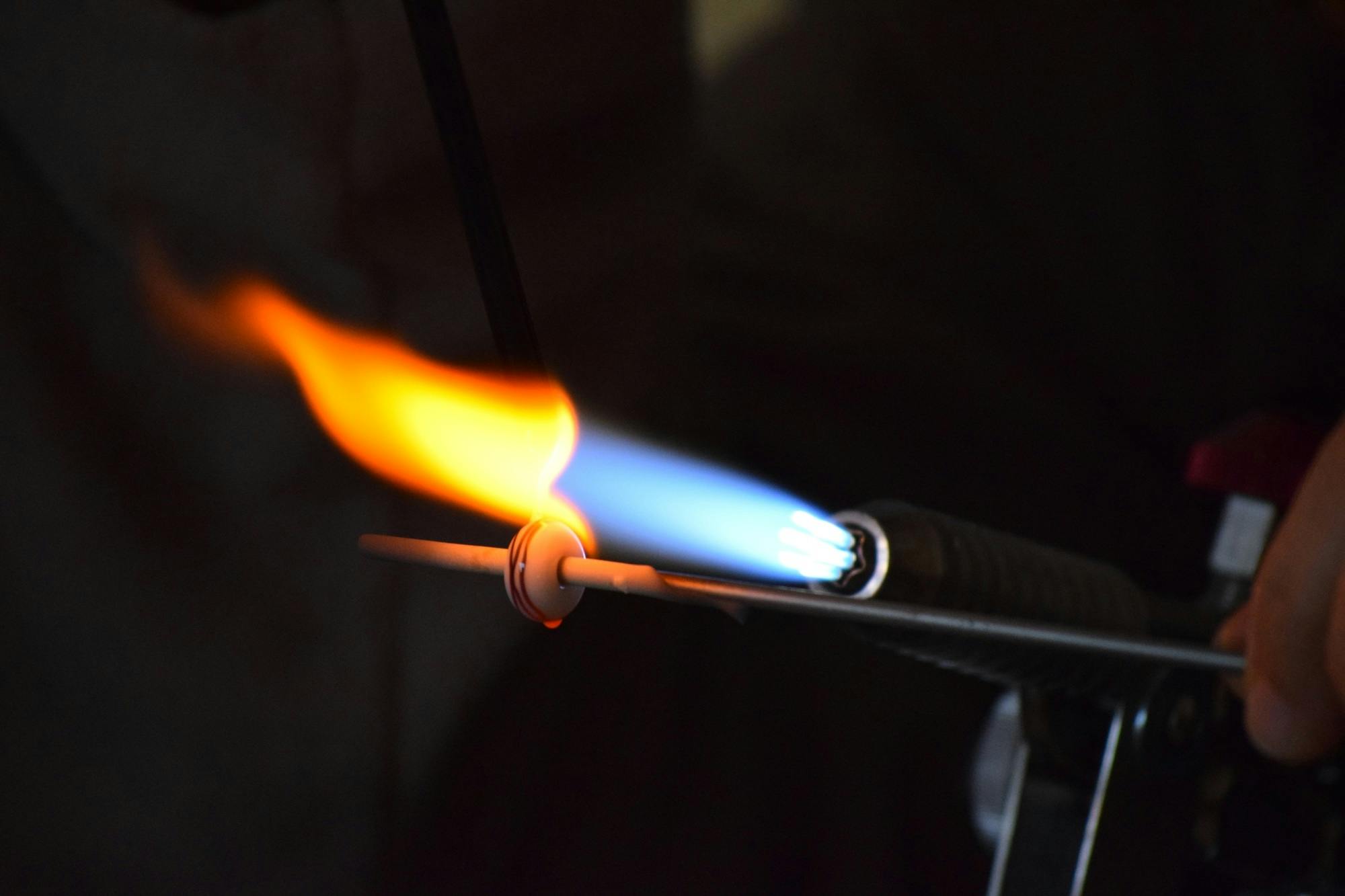
To truly understand the art of hand-blown glass, you need to take a moment to understand how these objects are created. The process is an ancient, fascinating ritual that has changed little over centuries. Watching an experienced glassblower work gives you a deeper respect for the craft.
Temperatures between 1200 and 1400 degrees Celsius, this extreme heat is necessary to make the glass plastic. Using a long, sturdy metal blowing pipe, the master scoops up a portion of this glowing, viscous glass. Then the real work begins:
First he blows air into it and at the same time rotates the pipe to shape the glass evenly. This sounds simple, but it requires absolute control. Too much pressure and the glass will burst; too little and it won't be the desired shape. With skillful movements, supported by various tools, the shape of a lampshade slowly emerges. The glassblower can improvise and vary, meaning that each piece is truly unique. No two lampshades are alike.
Some glassblowers work with several layers, superimposing colors and thus achieving special effects. The entire process requires absolute concentration and years of practice. Small irregularities inevitably arise during hand production: air bubbles, slight undulations in the surface or individual color variations are the result. It is precisely these “flaws” that give hand-blown glass its unique character.
Time expenditure and economy
A highly complex lampshade with multiple colors and detailed shapes can take two to three hours or even longer. Special pieces even require a whole working day. This makes the prices of 100 to 2000 euros for such umbrellas understandable.
In a time when fashion trends and quick consumption dominate and you buy LED lamps for a few euros that give up the ghost after two years, investing in a hand-blown glass piece initially seems outdated. And yet this is exactly where the spirit of the times lies: They are long-lasting and become more elegant over the years.
The market is booming: numbers, trends and growth
According to various industry reports, the premium glass light segment is currently growing at impressive rates of 15 to 20 percent per year. Sustainability is playing an increasingly central role. Glass can be recycled indefinitely, has an almost unlimited shelf life and does not become electronic waste after just a few years. A second strong factor is individualization, because each umbrella is unique.
Glass factories in Germany
In Germany, which looks back on a 500-year-old glassblowing tradition, manufactories are experiencing a renaissance. The large regional centers are Lauscha in the Thuringian Forest, the Bavarian Forest around Oberstdorf and Zwiesel and the Harz. These regions are historically grown centers of glass technology. Knowledge was concentrated there for generations, raw materials were available and handicrafts were part of the cultural heritage.
The glassblowing profession was recognized by UNESCO as an intangible cultural heritage in 2015 – an appreciation that shows that it is not an old, outdated technology, but a living cultural practice worth surviving.
Global design trends 2026: culture and aesthetics
In the USA, hand-blown glass balls and drops will dominate as pendant lights in 2026. They are often placed in kitchen islands or stairwells and create fantastic accents. There is a trend towards sculptural, almost artistic lighting solutions that are not only functional but are designed as works of art. Biophilic design integrates natural motifs, such as bubbles that look like soap bubbles or shapes that are reminiscent of coral deposits and sponges from the sea. This is often combined with a sustainable design philosophy: nature serves as a role model and craftsmanship forms a counterpoint to mechanical production.
Across Europe, especially in Scandinavia, there is a concept called Japandi, an aesthetic fusion of Japanese minimalism and functional Scandinavian design. This results in matt, opal white glass shades that produce diffuse, very soft light without causing glare. When it comes to color trends, earthy tones such as amber and olive green as well as soft pastel tones are in demand. A practical keyword here is also smart integration: Dimmable E27 lamps with controllable light allow the user to adapt the lighting mood to the time of day or activity.
In India and parts of Asia, hand-blown glass remains an undisputed luxury element. Colorful glass shades reminiscent of Murano glass can be found in large reception halls. There, light is often used in a more ornamental and decorative way, not only as an instrument for illumination, but also as a visual decoration of a room.
Lifespan and cultural continuity
Hand-blown lampshades are a cultural statement: This is not about a quick trend and quick disposal. For a society struggling with resource scarcity and climate change, this is an important change in perspective.
German glassworks are increasingly using renewable energy in their production. The technology is modernized, but the craft itself remains unchanged.
The idea of sustainability is also very important when it comes to raw material procurement: Lamberts Glas, for example, obtains its quartz sand locally from controlled sources, which minimizes transport routes and supports the local economy. Many manufacturers are using recycled glass and experimenting with new, more environmentally friendly glass melting fluxes. These are small but significant steps towards more sustainable production.
The emotional counterpoint in a high-tech world
Ultimately, the most significant dimension of handblown glass lies in its profound emotional and philosophical impact. In a world where technology is becoming increasingly invisible and unstoppable, where we are surrounded by algorithms, where artificial intelligence determines our workflows and optimization is the ultimate goal, a lampshade made of hand-blown glass offers a calming counterpoint.
You not only see light, but also the traces of human creativity. This creates an emotional connection that no amount of efficient LED panels or intelligent lighting systems can offer. It is a form of longing, of love and of conscious perception.
Conclusion
Hand-blown glass lampshades are much more than just functional lighting elements. They are works of art that bring spaces to life, tell stories of masters and preserve the tradition of a craft tradition.
Anyone who buys such a lamp is not just purchasing light. He invests in quality, sustainability, local craft traditions and cultural heritage. This is a conscious statement against fast pace, throwaway mentality and mass-produced goods.
Visit our Online lamp shop BUYnBLUE.com and invest in exclusive lamps for your home! Perhaps these will one day be traded at “Cash for Rares” and surprise future generations.