Plan lighting with LED in a comfortable and efficient way
Homely lighting with LEDs doesn't start with the question of which lamp is the brightest. What matters is what mood a room should create, what activities take place there and how the light interacts with materials, colors and furniture. Today, LED technology makes this planning particularly flexible: it saves energy, can be dimmed very precisely and opens up design options that were difficult to implement with classic lamps.
At the same time, LED light only has a high quality effect if it is planned correctly. Light that is too cool in the living room, a dazzling pendant light above the dining table or too few circuits can make even a beautiful interior appear restless. The following guide shows you how to plan LED lighting to be efficient, comfortable and suitable for your home.
Why LED lighting is the basis of modern home planning
LEDs have not only become popular because they consume less power. They are also so popular because they create design freedom. Small LED modules enable delicate pendant lights, indirect light lines, flat ceiling lights and sculptural shapes that were previously hardly technically possible.
Loud U.S. Department of Energy LED bulbs for living spaces use at least 75 percent less energy than classic incandescent bulbs and can last up to 25 times longer. The exact lifespan depends on quality, heat dissipation, usage and electronics, but the basic advantage is clear: LED light is a very efficient choice for permanently used living areas.
However, energy consumption is not the only decisive factor for comfort. An LED can be economical and still appear unpleasant if the color temperature, light distribution or glare are not right. Good planning therefore combines three goals: sufficient brightness, a pleasant atmosphere and low energy requirements.
First plan the use, then select the luminaire
Many lighting errors arise because people first buy a single, beautiful light and only then consider whether it really illuminates the room well. The opposite approach is better. First ask: What happens in this room at different times of the day?
In the living room you may want to read, relax, receive guests and create a calm atmosphere in the evening. In the kitchen, you need bright, low-shadow lighting on countertops, but in the evening you may just want soft lighting above the kitchen island. What counts in the bedroom is not maximum brightness, but rather soft light for getting dressed, reading and winding down.
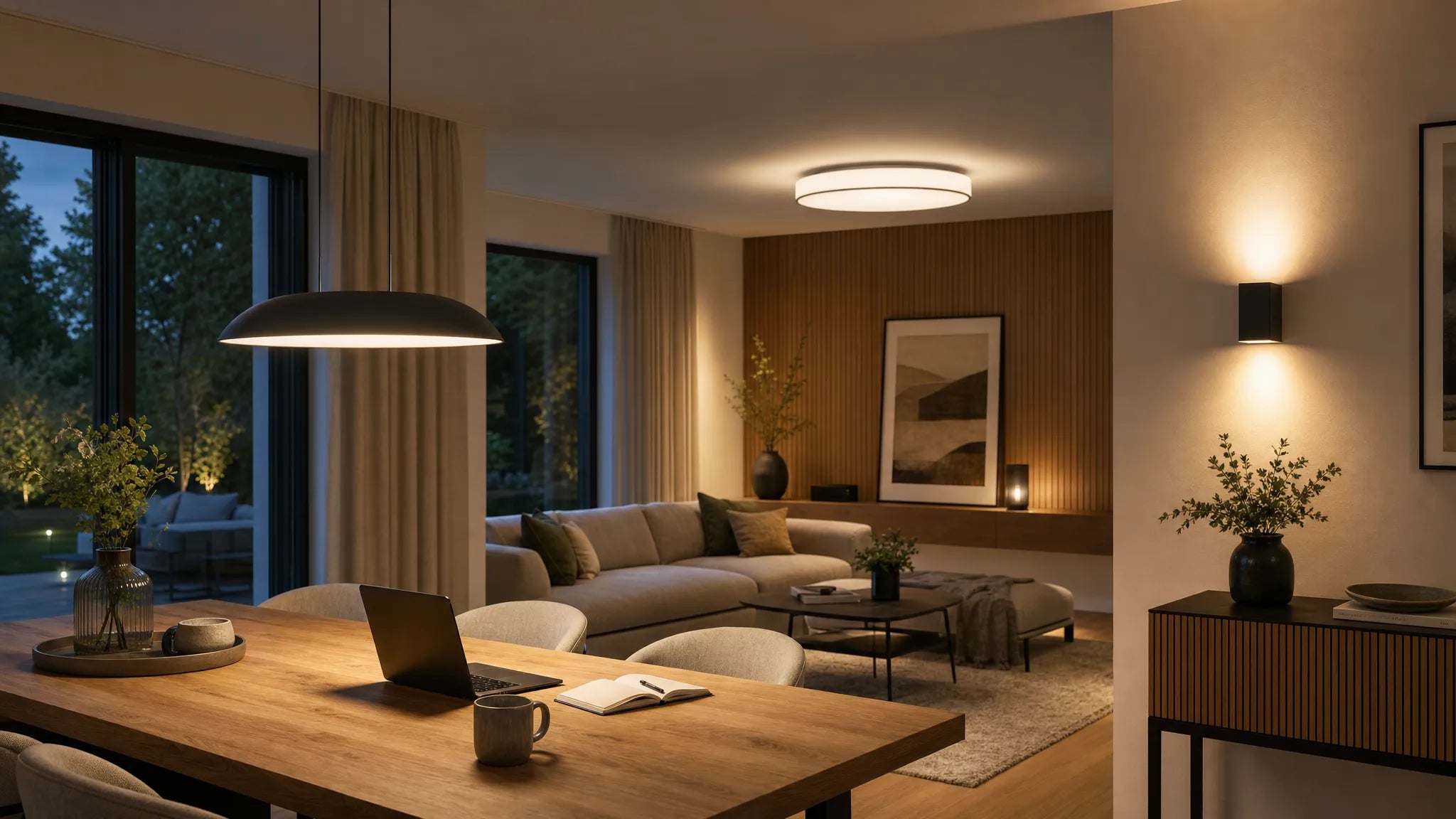
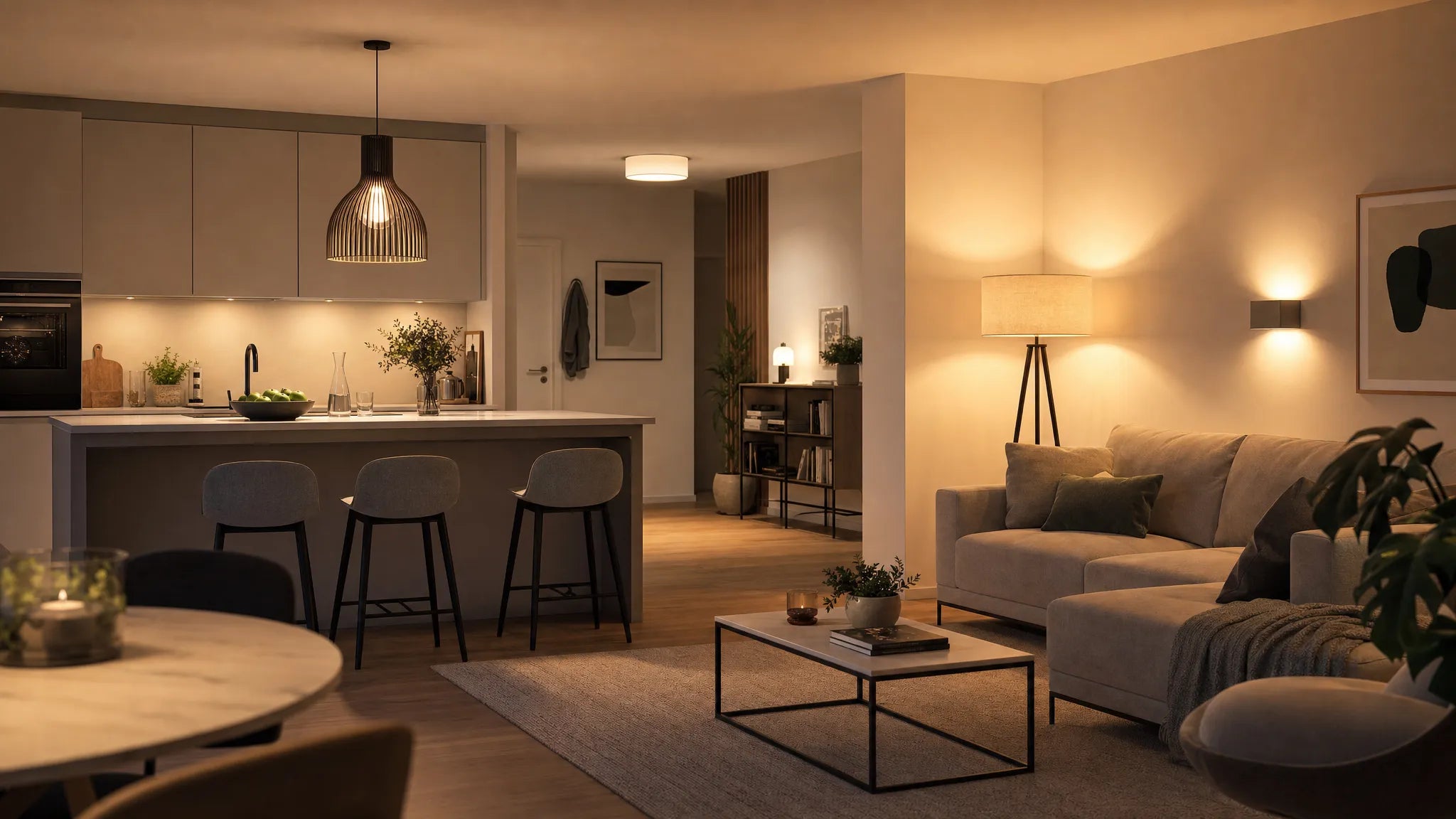
A simple division into light zones is helpful. Instead of providing a room with just one central ceiling light, combine multiple light sources. A pendant lamp can emphasize the dining table, wall lights create depth, a floor lamp brings reading-friendly light to the armchair and subtle accents highlight shelves or works of art. If you would like to systematically deepen this principle, the BUYnBLUE Guide to Three-layer principle of LED lighting a good addition.
Lumens instead of watts: This is how you estimate the correct brightness
With LED lights, watt is only the power consumption, not the brightness. The decisive factor is the luminous flux in lumens. An efficient LED can produce a lot of light with just a few watts, while a decorative light with a lower luminous flux is more suitable for atmosphere than for basic brightness.
The following values are rough guidelines for living spaces. They do not replace professional lighting calculations, but they do help with an initial assessment.
| room or zone | Aim of lighting | Rough guide value | Homely planning tip |
|---|---|---|---|
| Living room | flexible basic brightness and atmosphere | around 100 to 150 lm/m² plus accents | Use multiple dimmable light sources instead of one very bright ceiling light |
| Dining area | Illuminate the table evenly | around 300 to 500 lm/m² on the table surface | Choose a pendant light so that faces are clearly visible and no one is blinded |
| Kitchen | safe work lighting | around 300 to 500 lm/m², work surfaces often brighter | Add under-cabinet lights or directed light to avoid shadows when cutting |
| bedroom | calm light with functional zones | around 100 to 150 lm/m² | Plan for warm white light and separate reading lights |
| Hallway and stairs | Orientation and security | about 100 to 200 lm/m² | Use glare-free wall or ceiling lights, especially on steps |
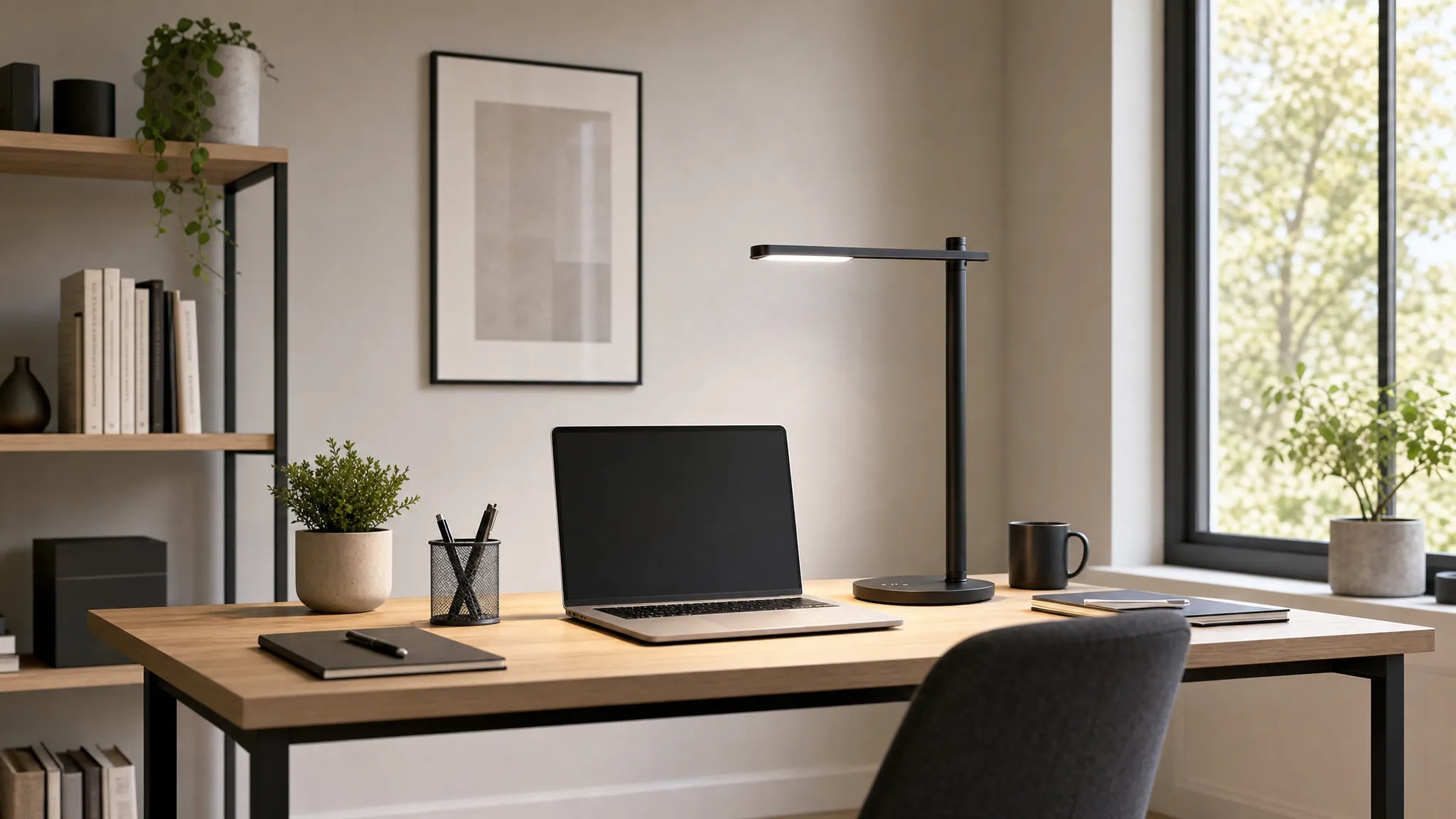
| Home office | concentrated work | around 300 to 500 lm/m² at the workplace | Combine more neutral light and a good desk lamp |
What's important is that a room doesn't need the same brightness everywhere. Homeliness arises precisely from differences. Brighter where people work, read or eat. Softer where you want to relax.
Light color: The key to cozy LED light
The light color is given in Kelvin. The lower the value, the warmer and cozier the light appears. The higher the value, the more objective and activating it appears. For most living areas, warm white light is the best choice.
| color temperature | Effect | Suitable areas |
|---|---|---|
| 2200 to 2700 K | very warm, evening, cozy | Living rooms, bedrooms, lounge areas, decorative accents |
| 2700 to 3000 K | warm white, homely, versatile | Dining room, hallway, eat-in kitchen, pendant lights |
| 3500 to 4000 K | more neutral, clearer, more functional | Kitchen, bathroom, home office, utility room |
| over 4000 K | very objective, similar to daylight | rather work areas, garage or technical rooms |
For a harmonious overall picture, adjacent areas should not differ too much from one another. An open living-dining-kitchen area looks more harmonious if the decorative lights are in the range of 2700 to 3000 K and only work surfaces are illuminated a little more clearly.
Also pay attention to color reproduction. It is often stated as CRI or Ra. A value of 80 or more is common for living rooms; a value of 90 or more is particularly recommended for high-quality interiors, art, textiles, kitchens and dining areas. The better the color rendering, the more natural the wood, fabrics, wall colors and food appear.

Avoid glare: Efficiency must not appear glaring
A very efficient LED is of little use if it is blinding. Glare occurs when the light source falls directly into the eye, shines too selectively or is reflected in shiny surfaces. Modern open floor plans in particular with kitchen fronts, stone countertops, glass, mirrors and large windows can reflect light more than expected.
For pendant lights above the dining table, the light source should be shielded or softly diffused. A common orientation is to position the bottom edge of the lamp about 60 to 75 centimeters above the table top. This creates closeness and atmosphere without disturbing eye contact. If the ceiling is very high, a longer suspension may make sense so that the light does not appear lost.
Wall lights and ceiling lights should also be chosen not only based on design, but also based on beam angle. Direct light is good for tasks, indirect light is good for atmosphere. A combination of both makes rooms appear larger, quieter and of higher quality.
Dimming and circuits: making efficiency noticeable in everyday life
Dimmable LED light is one of the easiest ways to make rooms more comfortable and at the same time more efficient. It can be brighter in the morning or when cleaning, but in the evening a fraction of the maximum power is often enough. If you reduce the brightness, you usually also reduce power consumption, as long as the lamp, driver and dimmer are technically compatible.
Therefore, you should not only plan the lights, but also the operation. Separate circuits for basic light, table light, work light and accent light are particularly convenient. In open living areas, you can illuminate the kitchen brightly, while the dining area already appears warm and dimmed.
When purchasing, you should check carefully whether an LED light is dimmable and which dimmer system it works with. Not every LED harmonizes with every wall dimmer. If you are unsure, it is worth taking a look at the technical information or seeking advice before the electrical installation is completed. You can find more basic information about modules, lamps and dimming in the article on Difference between integrated LED modules and replaceable bulbs.
Room by room: This is how LED lighting looks homely
In the living room, LED lighting works best when it does not dominate from above. A central ceiling light can be practical, but should be complemented by floor, wall or table lamps. It becomes particularly homely when light areas are created: an indirectly lit wall, a softly lit shelf or a pendant light that visually ties a seating area together.
In the dining room, the lamp can appear more as a design element. A pendant light above the table creates a focal point and structure. It is important that the table surface is bright enough, but that people are not blinded. Warm white light with good color rendering makes food appear appetizing and materials appear natural.
Function is the main focus in the kitchen. Worktops need clear, shadow-free light. A ceiling light alone is often not enough because you cast shadows on yourself while you work. Additional under-cabinet lights, directed spots or pendant lights above an island significantly improve comfort and safety. For the kitchen-living room, it is recommended to separate work light and atmospheric light.
In the bedroom, LED light should calm you down. Warm white, dimmable and low-glare is usually the right combination here. Directed reading lights are useful next to the bed so that the entire room doesn't have to be bright. Wardrobes benefit from clearer light so colors can be better distinguished.
A combination of mirror light and ambient light is important in the bathroom. The mirror light should illuminate the face evenly and not cast harsh shadows. Warm, dimmed light is also pleasant for relaxing evening routines. Always pay attention to suitable protection levels in the bathroom depending on the installation zone and have electrical work carried out professionally.
Orientation counts in the hallway and on stairs. Glare-free LED wall lights, ceiling lights or indirect light lines are ideal here. A motion detector can save additional energy, especially in passage areas that are often only used for a short time.
Luminaire design, proportions and customization
LED technology enables very slim and modern lighting designs, but the proportion remains crucial. A pendant light that is too small above a large dining table looks lost. A lamp that is too large in a low room can be overwhelming. It is therefore worthwhile for architects, interior designers and renovation projects to include lights in the room planning early on.
Ceiling height, furniture and lines of sight are particularly important. In old buildings with high ceilings, a pendant light can hang much more prominently. In new buildings with lower ceiling heights, flatter shapes, indirect light or elongated lights are often more pleasant. The suspension above dining tables, kitchen islands and stairwells should exactly match the situation.
This is where customization can make the difference. At BUYnBLUE Chandeliers and pendant lights can be adapted free of charge to specific requirements, such as cable length, canopy or color. This is particularly helpful when a lamp not only needs to look beautiful, but also really matches the ceiling height, room layout and furnishings.
Save energy without losing atmosphere
Efficient LED planning does not mean using the most economical light with the lowest wattage everywhere. It is crucial to use light in a targeted manner. A well-placed light with the right beam angle can use less energy than several poorly positioned light sources that still do not illuminate the room pleasantly.
When comparing, pay attention to lumens per watt, i.e. the light output. The EU energy label for light sources also helps to classify efficiency classes. The European Commission provides information on light sources, eco-design and energy labeling. For everyday living, however, it is equally important whether the light is suitable for use and whether it is comfortable being switched on.
Practical savings levers are often very simple:
- Plan dimmable lights where usage changes throughout the day.
- Use motion detectors in the hallway, stairs, storage room or guest toilet.
- Use warm accent lighting instead of full room brightness in the evening.
- Install separate circuits so that not all lights always run at the same time.
- Choose high-quality LEDs with good heat dissipation, as heat can shorten the lifespan.
If you want to create a special atmosphere in addition to efficiency, indirect lighting accents, wall reflections and light lines are an elegant solution. You can find inspiration for this in the article above creative lighting effects with LED lamps.
Common planning mistakes with LED lighting
The most common mistake is a light color that is too cool in living spaces. What appears clear and modern in the showroom can quickly appear uncomfortable at home. Warm white light is usually the safe choice for the living room, dining area and bedroom.
A second mistake is too little light on work surfaces. Kitchens, desks and mirror areas need targeted functional light. If only the middle of the room is illuminated, shadows will appear exactly where light is needed.
A third mistake is a lack of dimming. Without dimming, a room always remains the same light, even though usage and mood change. LED lights in particular are particularly convenient when they can be flexibly controlled.
Another point is the wrong lamp size. Designer lights only appear high-quality if the scale, height and position are correct. Carefully measure the table, room height and sightlines before purchasing.
Short checklist for your LED lighting planning
Before you choose lights, you should clarify these points:
- What activities take place in each room?
- Where is bright work light needed?
- Where should warm, dimmed mood lighting be created?
- Which lights should be switched separately?
- Which light color suits the materials and room function?
- Do the cable length, canopy or color have to be adapted to the room situation?
Once these questions are answered, the selection becomes much easier. Instead of randomly combining individual lights, a harmonious lighting concept is created that brings furnishings, architecture and everyday life together.
Frequently asked questions about LED lighting
Which LED light color is the most homely? Warm white light between 2700 and 3000 K is usually ideal for living rooms. For a particularly cozy evening atmosphere, 2200 to 2700 K can be pleasant. In the kitchen, bathroom or home office, the light can be a little more neutral.
How many lumens do I need per room? This depends on the size of the room, wall colors, usage and lamp position. As a rough guide, 100 to 150 lm/m² is often sufficient as basic light in the living room, while the kitchen or workplace needs 300 to 500 lm/m².
Is dimmable LED lighting more energy efficient? Yes, in many everyday situations, dimming can reduce consumption because the light is not continuously operated at full power. It is important that the light, driver and dimmer are compatible.
Are integrated LED modules better than replaceable LED bulbs? Both can make sense. Integrated modules often enable particularly slim designs and optimized light distribution. Interchangeable bulbs offer more flexibility when changing later. Quality, location and maintenance requirements are crucial.
How do I avoid bright LED lights? Choose warm white light colors, pay attention to glare-free shades or diffusers and combine direct with indirect light. Several lower light sources usually have a more pleasant effect than one very bright central light.
Choose LED lighting to suit your home
Well-planned lighting with LEDs not only makes rooms more efficient, but also more comfortable, flexible and of higher quality. When brightness, light color, dimming and luminaire design match, light is created that supports everyday life and visibly enhances the furnishings.
At BUYnBLUE You will find a curated selection of modern designer lights for different living areas. Particularly practical for demanding rooms: pendant lights and chandeliers can be adjusted free of charge, for example in length, canopy or color. This means that your lamp fits your home not only visually, but also technically and spatially.