What an LED dimmer switch has to do at low load
Anyone looking for “dimmer switch LED” should look particularly closely at a single, economical light. A dimmer that works smoothly with several lamps can flicker when the power is low, switch on unreliably or cause the LED to glow when switched off. It is therefore not just the maximum load capacity that is crucial, but also the expressly approved minimum LED load and the interaction with the LED driver.
Three things count when making your selection: a suitable load range, a compatible dimming method and stable behavior at the lower end of the brightness scale. This guide shows you how to check these requirements without relying on the label “LED suitable” alone.
Why a single LED places greater demands on the dimmer
In a classic light bulb, the current flowed through a largely ohmic consumer. An LED light, on the other hand, contains electronics that convert the mains power into a current suitable for the LEDs. In the case of replaceable LED lamps, this electronics is located in the lamp, and in many permanently integrated lights it is in a separate driver.
This input electronics does not draw power in the same way as a light bulb. In addition, it itself requires certain operating conditions. At low loads, both the supply to the dimmer and the behavior of the driver can become problematic.
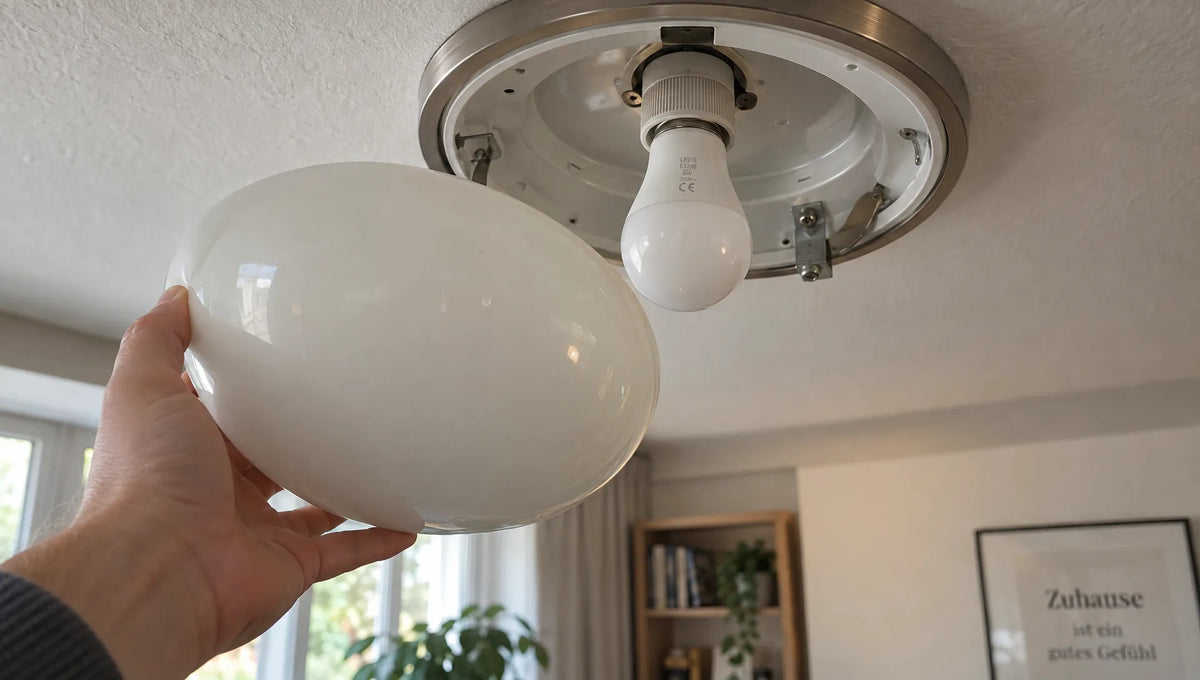
This is particularly noticeable when a powerful light bulb is replaced by a single LED during a renovation. The connected load drops significantly, but the old dimmer remains unchanged. The fact that it worked reliably beforehand says little about its suitability for the new light source.
An LED dimmer switch is therefore a must be released for the actually connected LED load. A high maximum wattage is not proof of quality for good dimming in a small pendant light.
“dimmer switch led” in the data sheet: correctly classify the minimum load
The minimum load describes the smallest connected load for which the manufacturer allows operation under the specified conditions. It is to be distinguished from the lowest achievable brightness.
A calculation example, not a product specification: A luminaire with a nominal electrical output of 5 W is below a specified LED load range of 20 to 100 W. With an approved range of 3 to 100 W, it is mathematically within the limits. However, this does not yet confirm the compatibility of your driver.
Use electrical power for this test, not something like “replaces 60W.” If there are several lights, the connected nominal powers are added together. The permitted number of LED drivers may also be limited.
| Information in the data sheet | Importance at low load |
|---|---|
| LED minimum load | Shows whether the small connected power is basically within the approved range |
| LED maximum load | Applies to LED consumers and can be significantly below the maximum load for incandescent lamps |
| Permissible number of drivers or lamps | Takes into account limits that do not result from the total watts alone |
| Approved dimming procedure | Must match the input of the LED driver |
| Compatibility list | Provides information on specifically tested combinations |
If only a general load range and “LED suitable” are on the packaging, you should ask about the LED-specific limits before purchasing. Information in watts and volt amperes cannot easily be equated.
Dimming methods and drivers must match
An LED dimmer switch for the usual 230 V connection changes the form of the mains voltage during phase control. With phase control, the beginning of a half wave is cut off; with phase control, the end is cut off. The connected driver must support the respective procedure.
Trailing edge is provided for many dimmable LED lamps, but is not a blanket solution for every LED. The approval of the lamp or driver manufacturer remains decisive. Even a universal dimmer does not automatically eliminate every intolerance.
The label “dimmable” alone is also not enough. A driver with DALI, 1-10 V or other control interface cannot be automatically controlled by an upstream phase dimmer. For permanently integrated LEDs, the information on the entire luminaire should therefore be checked.
For replaceable lamps, the guide on how to use one will also help Choose dimmable light bulbs without flickering. For low loads, it is also crucial whether this lamp can also be operated individually on the intended dimmer.
Two-wire or with neutral wire: Why the connection counts
Many two-wire dimmers supply their own electronics via the connected consumer. Depending on the design, a small current can flow through the light even when it is switched off. Sensitive LED drivers can cause afterglow or occasional flashes of light.
A dimmer with a neutral conductor can power its electronics regardless of the current path through the light. This can be advantageous for small loads. However, a neutral wire connection does not guarantee flicker-free dimming and does not replace load testing or driver release.
For an LED dimmer switch, the connection type should therefore be taken into account early on in the selection. An electrician must determine whether there is a usable neutral conductor in the existing switch box. This cannot be reliably determined from the age or appearance of the light switch.
Installation depth, heat dissipation and possible power reductions under certain installation conditions are also part of the planning. If switches are replaced or cables are changed, this is work for a qualified electrician, not for an experiment based on the exclusion principle.
Minimum load is not minimum brightness
A dimmer can match the connected power rating and still become unstable at very low brightness. The driver must also work reliably with the greatly changed input voltage. Otherwise the light will pulsate, individual lamps will go out or the light will only start after it has been turned up significantly.
An adjustable lower dimming limit can help here: the usable adjustment range then begins above the unstable range. This means that the light may not be as dim as hoped, but it can still be operated reliably.
Such a setting does not replace a minimum load that is not met. It is also not proof that an unsuitable driver can be made permanently suitable.
Switching on is also important for an LED dimmer switch with a low load. A light can still glow dimly when dimmed down, but cannot start when switched off at the same setting. Therefore, don't just ask for the lowest dimming level, but also for the lowest brightness that can be reliably switched on.
A specified dimming range such as “1 to 100 percent” also needs context. It can describe a control range and cannot be understood without checking as the actually achievable luminous flux range for each connected luminaire.
How to check behavior after installation
The most meaningful test is with the intended light and driver, not with any test lamp. Only operate the fully assembled system. Settings on the device are made according to the instructions; Work on mains voltage is reserved for qualified electricians.
Check these situations in normal use:
- Start at low brightness: At a low setting, turn the light off and on several times. It should start reliably without having to be turned up first.
- Slow dimming down: Pay attention to whether the light decreases evenly or suddenly goes out, pulsates or shows visible jumps.
- Operation after heating: Repeat the test after a few minutes. The behavior can change with temperature.
- Switched off state: In a dark room, check whether the LED glows or flashes repeatedly.
- Multiple lights: Observe whether they all start together and remain stable at low brightness.
An LED dimmer switch should not only pass a short functional test. Also note which lights are connected and which settings were used. If you change the lamp later, you can understand why the behavior has changed.
Visual inspection detects visible flickering but does not confirm the absence of all temporal light fluctuations. Streaks in a smartphone recording can be an indication, but are not a reliable measurement due to camera settings and recording methods.

What typical error images actually say
A symptom alone does not reveal the cause. Especially with low connected loads, several problems can appear similar. The following overview helps you to have targeted inspections instead of randomly replacing components.
| Observation | Possible cause | Useful checkpoint |
|---|---|---|
| Flickering only at the bottom end | Unstable driver operation in the deep dimming range | Check the release and have the lower dimming limit set according to the instructions |
| Only start after the rules have been raised | The driver's switch-on conditions are not met if the setting is small | Check the switch-on behavior of the combination |
| Afterglow despite the dimmer being switched off | Small residual current or capacitive coupling | Have the connection type and installation checked by a professional |
| Individual lamps in a group go out | Different behavior of the drivers or lamps | Check assembly and common compatibility |
| Malfunction despite low watt total | Inappropriate dimming method or exceeded number of drivers | Check LED-specific approvals and number limits |
Additional load modules or so-called bypass solutions are not a universal remedy. They are only an option if they are intended for the specific combination and are installed professionally. Connecting an additional lamp to achieve the minimum load is also no substitute for a properly planned solution.
When purchasing, evaluate technology and design separately
For a small light load, you should first clarify the minimum load, driver enable and connection type. Only then do the operating feel, surface and coordination with the furnishing concept follow. This will prevent a switch that looks good from becoming the wrong choice from a technical point of view.
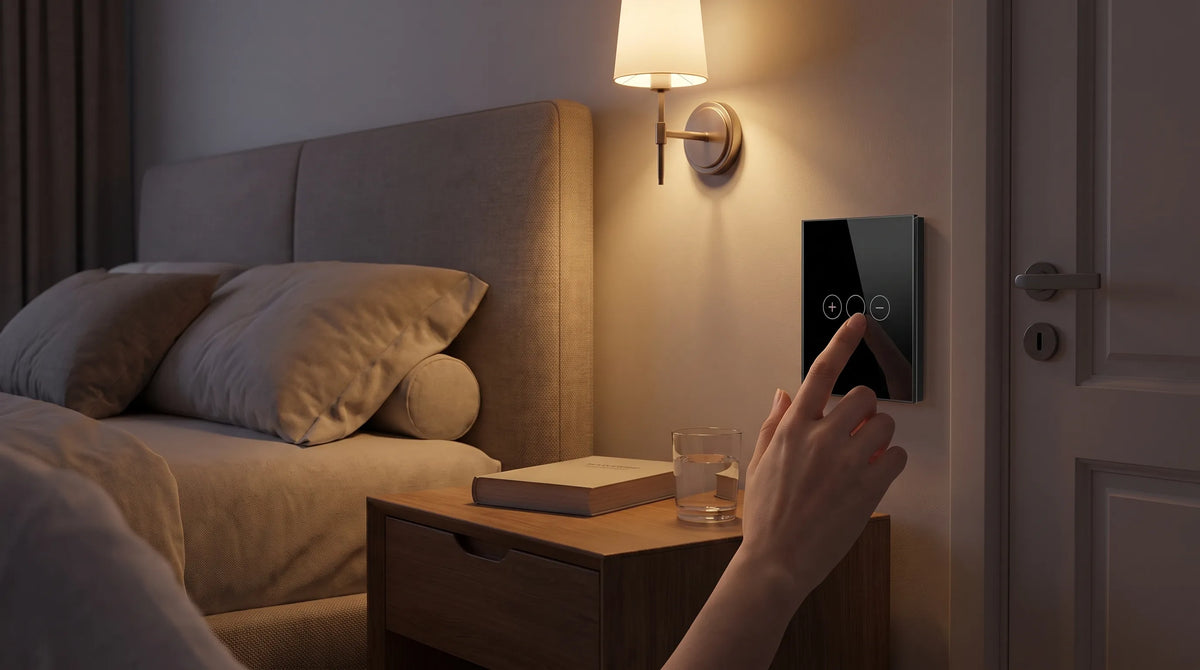
The Smart Touch Dimmer from BUYnBLUE is specially designed for LED lights and is available in gold, white and black. This means that it can be creatively integrated into different modern living spaces. However, approval for a specific low load cannot be derived from this information alone.
Before combining this or any other LED dimmer switch with a single economical light, you need the documented LED load range, the supported dimming method and the appropriate connection type. If this information is missing, it should be requested from the provider before ordering.
When it comes to chandeliers, it's not just the overall output that counts: due to their input electronics, several small LED lamps can have different requirements than a single lamp with the same wattage. Therefore, the permissible number of lamps or drivers is also part of the purchase decision.
Frequently asked questions
What minimum load should an LED dimmer have? It must match the connected electrical nominal power. A correspondingly low, explicitly stated minimum LED load is required for a single economical LED. There is no ideal value that applies to all lights.
Will a 5W LED work with any LED suitable dimmer? No. The power must be within the approved LED load range. In addition, the dimming method, driver and connection conditions must match.
Does setting the minimum brightness higher help? This can exclude an unstable lower dimming range from operation. If the minimum load is not met or a driver is fundamentally unsuitable, this will not make it compatible.
Is a dimmer with neutral always better? It can power its electronics independently of the light, which can be helpful at low loads. However, the documented releases and the behavior of the specific combination remain crucial.
Can the existing dimmer remain when changing lamps? Only if it is suitable for the new LED assembly. Previously trouble-free operation with incandescent lamps or other LEDs is not sufficient proof.
Select the lamp and dimmer together
Plan low loads as a coordinated combination of light, driver and dimmer. Documented compatibility and reliable switching on at low brightness are more important than the highest possible maximum wattage.
At BUYnBLUE You will find modern lights for different living areas. Before purchasing, compare the technical specifications of your selected lamp with those of the intended dimmer so that the design and lighting control match.