Which living room lamp goes with the sofa, TV and coffee table?
You can recognize a good living room lamp not just because it looks beautiful. It must fit the three most important fixed points in the room: Sofa, TV and coffee table. This is exactly where you spend time, read, relax, watch films, receive guests and put away everyday objects. If the lamp illuminates these zones incorrectly, even a high-quality living room can quickly appear restless, dark or dazzling.
If you're looking for a "living room lamp" online, you don't need the largest or brightest lamp first, but rather the right combination of proportion, lighting effect and placement. This guide shows which type of lamp suits which living situation and what you should pay attention to so that the sofa, television and coffee table work harmoniously together.
Why the sofa, TV and coffee table determine the choice of lamp
Many living rooms are still planned from the center of the room: look for a ceiling connection, hang a lamp, and you're done. This rarely works really well because the center of the room often does not correspond to the actual center of use. In modern floor plans, the sofa is often slightly offset, the TV sits against a wall and the coffee table forms the center of the seating area.
The right living room lamp should therefore not only suit the size of the room, but also the size Furniture group fit. Three questions are crucial: Where do people sit? Where are they looking? Which area should be emphasized?
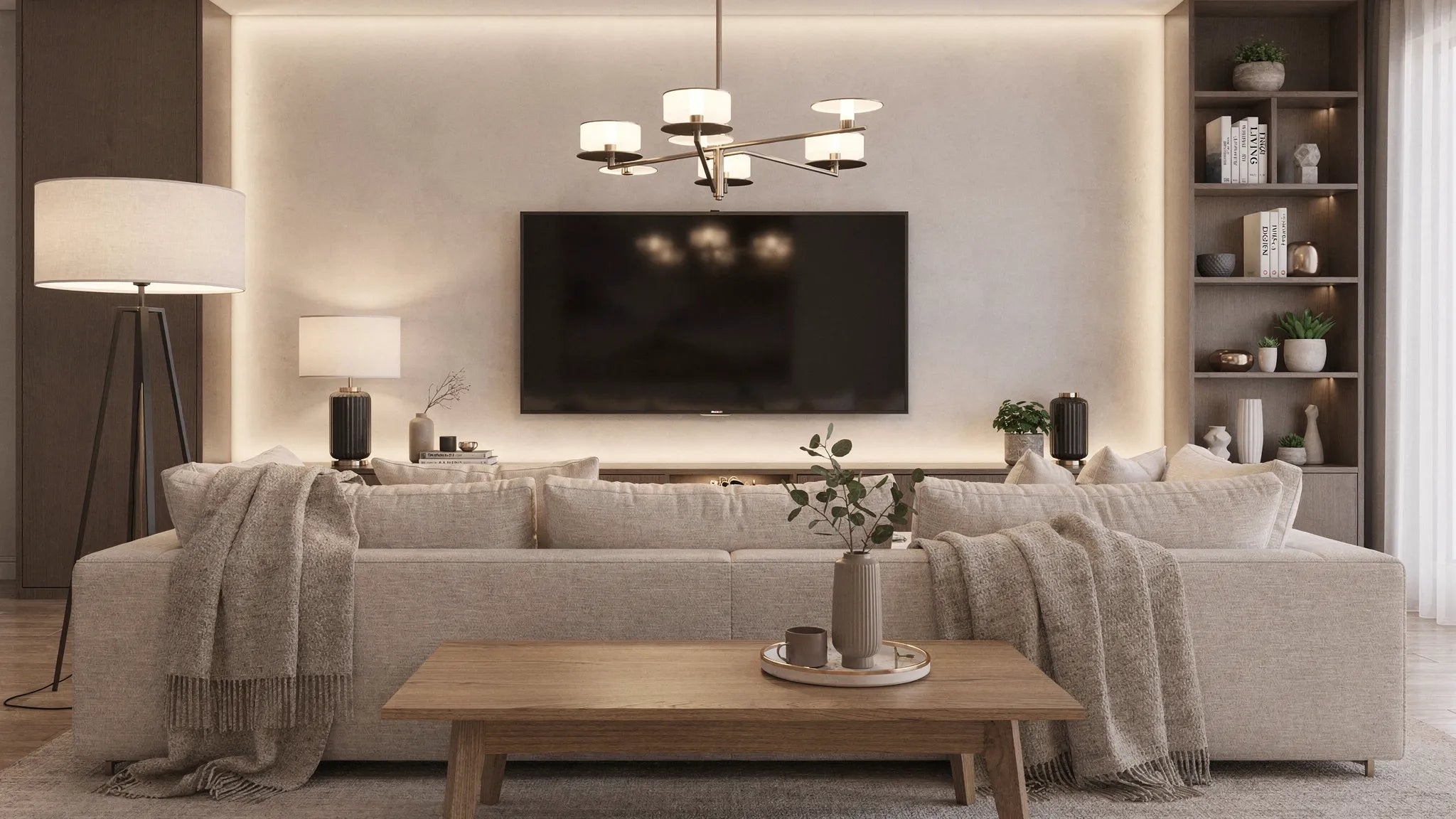
The sofa needs warm, side or indirect light that softly illuminates faces. The TV area requires glare-free backlighting so that the screen does not reflect. The coffee table can be given greater emphasis as a design focal point, but should not become a tripping hazard or visual barrier.

Quick orientation: Which lamp fits which zone?
The following table will help you make your first decision. It does not replace individual lighting planning, but shows which lights are particularly useful around the sofa, TV and coffee table.
| Zone in the living room | Aim of lighting | Matching lamp type | Good position |
|---|---|---|---|
| Sofa | Sitting comfortably, reading, talking | Floor lamps, Arc lamp, wall lamp, table lamp | To the side or slightly behind the sofa |
| TV wall | Glare-free ambient light, less contrast | Indirect wall light, LED light, small accent light | Behind or next to the TV, not opposite |
| Coffee table | Emphasize focal point, decorative light | Pendant lamp, flat ceiling lamp, small chandelier | Centered above the table or seating area |
| center of the room | Create basic brightness | Ceiling light, spots, diffuse pendant light | Only makes sense if it matches the furniture arrangement |
| corners and shelves | Depth, atmosphere, accents | Table lamp, wall lamp, small floor lamp | On a sideboard, shelf or wall surface |
A single lamp is usually not enough for a living room. It becomes particularly comfortable when a central light is combined with two to four additional light sources. You can also find out more about zone thinking in BUYnBLUE-Guide to Lamps in the living room and cozy lighting zones.
Which living room lamp suits the sofa?
The sofa is the most important measure of the effect of the lamp. A delicate lamp next to a large living area appears lost, a massive chandelier above a small two-seater sofa quickly appears overloaded.
An arc lamp works particularly well on a large corner sofa because it can guide the light over the seat without having to have a ceiling connection in exactly the right place. A pendant light above the coffee table can also summarize the seating area, as long as it is not hanging in view of the TV.
A small sofa is more likely to benefit from slim floor lamps, wall lights or a compact ceiling light. The lamp should not take up too much volume here, otherwise the room will appear visually narrower. Flat, horizontal lamp shapes work well on low sofas, while sofas with high backs often tolerate a taller floor or wall lamp.
| Sofa type | Particularly suitable lamps | What to pay attention to? |
|---|---|---|
| Large corner sofa | Arc lamp, statement pendant light, large chandelier | Align the lamp with the seating area, not just the center of the room |
| Small 2 or 3 seater sofa | Slim Floor lamps, Table lamp, compact ceiling light | Choose a light that is light and proportional |
| Low lounge sofa | Flat pendant lamp, indirect light, low table lamps | Keep the line of sight to the TV clear |
| High back sofa | High Floor lamps, Wall light, up-and-down light | Do not allow light to shine directly at eye level |
| Modular sofa | Multiple flexible light points | Plan zones instead of a rigid middle |
The color of the sofa also plays a role. Dark fabrics and leather absorb more light, while light coverings reflect it more. A dark gray or black sofa usually needs more side and indirect light so that the seating area does not appear heavy. A bright sofa can quickly appear cozy with warm, soft light.
TV lighting: The lamp must not dazzle
When it comes to television, less is often more. The most common error is a bright ceiling lamp that is reflected in the screen or falls directly into the field of vision. This strains the eyes and takes away from the cinematic atmosphere of the room.
A soft background lighting is better. It reduces the harsh contrast between the bright screen and the dark room. Indirect wall lights, subtle strip lights behind the TV stand or small table lamps on a sideboard are suitable for this. It is important that the light source does not shine directly onto the screen surface.
Position lights in the TV area to the side, above or behind the TV. Avoid bright spots opposite the screen, shiny lampshades in the reflection area and cold white light, which makes the room appear technical. Warm white light between around 2,700 and 3,000 Kelvin is usually more pleasant for TV evenings.
If you would like to go deeper into this topic, the article is on indirect lighting in the living room a good addition.
Coffee table as a focal point: pendant light, ceiling light or chandelier?
The coffee table is the natural center of the seating area. A light above it can frame this area very elegantly. This is especially true in open living spaces where the sofa, dining area and kitchen flow into one another. A well-placed pendant lamp or a modern chandelier immediately shows that the lounge zone begins here.
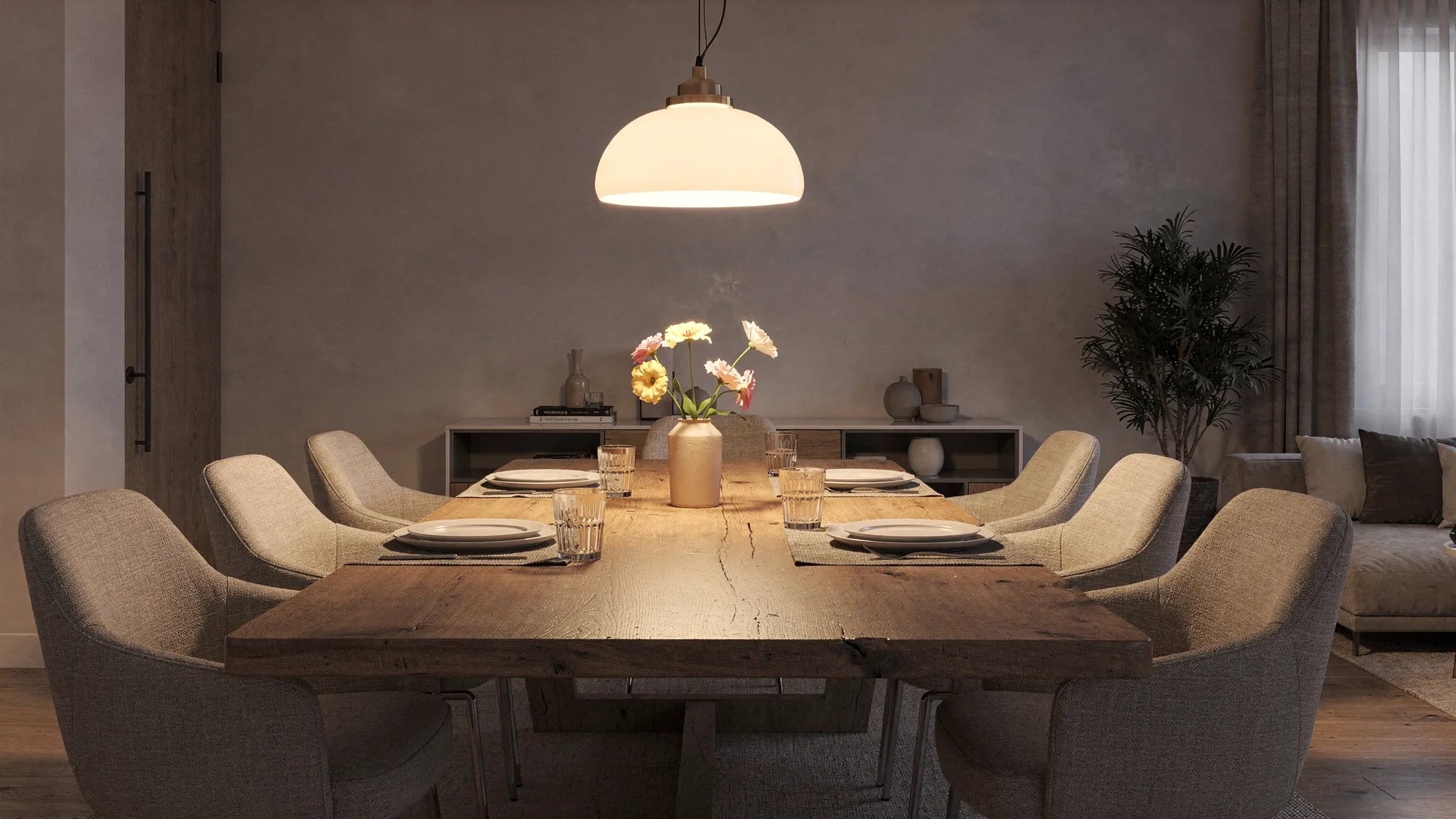
Whether a pendant light above the coffee table makes sense depends on the height of the room, the TV view and usage. If children often play, people walk around the table or the coffee table is often moved, a higher hanging ceiling light is usually more practical. If the table is stable and the room is high enough, a pendant lamp can appear very high-quality.
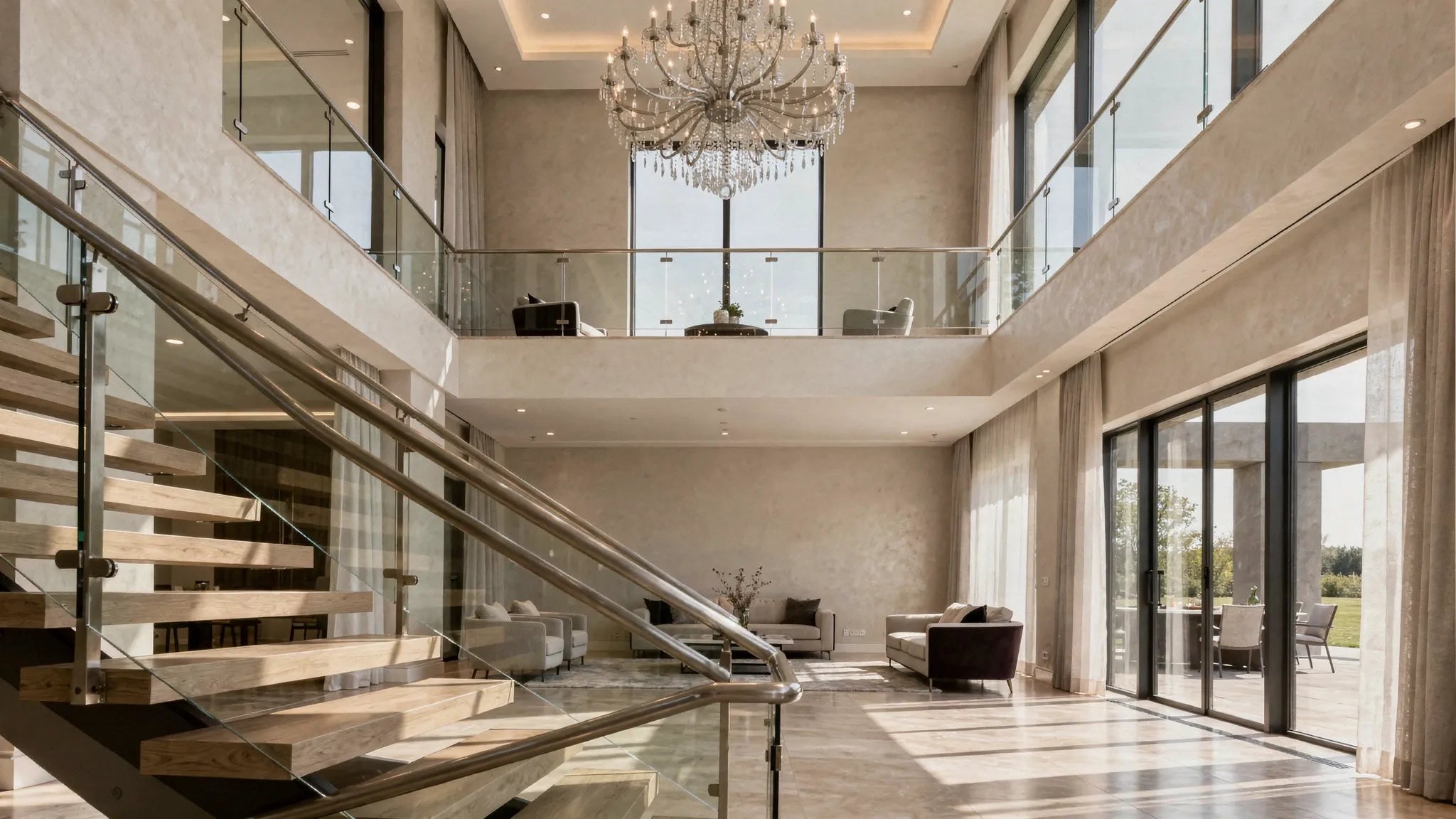
Flat ceiling lamps or lights with wide, diffuse light are suitable for low rooms. For high rooms, the living room lamp can be more voluminous, for example as a multi-bulb chandelier or sculptural pendant light. What is crucial is that it visually connects the room downwards without disturbing the sight lines.
| situation | Good choice | Why it works |
|---|---|---|
| Low ceiling under approx. 2.50 m | Flat ceiling light, wall light, Floor lamps | Space remains open, no head height is lost |
| High ceiling from approx. 2.70 m | Pendant lamp or chandelier | Adds height and creates a clear focal point |
| Coffee table is exactly in front of the sofa | Central pendant light | Seating group appears deliberately designed |
| Coffee table is often moved | Ceiling light plus mobile lamps | More flexibility in everyday life |
| TV is directly behind the coffee table | Higher hanging or transparent light | The view of the screen remains clear |
At BUYnBLUE It is particularly practical that chandeliers and pendant lights can be adjusted free of charge, for example in terms of cable length, ceiling canopy or color. This is particularly important in the living room because the existing ceiling connection rarely sits perfectly above the coffee table and every room height requires different proportions.
The most important measurements: height, distance and size
Dimensions determine whether a lamp is high-quality or distracting. A living room lamp above the coffee table should neither hang too low nor be too small for the seating area.
As a guide, there should be enough headroom under a light in walkways, usually at least around 2.00 m. A pendant light can hang lower directly above a coffee table because no one is walking through it. Nevertheless, it should not block the view of the television, people you are talking to or the window. In many living rooms, a lower edge between around 1.60 and 1.90 m above the floor looks harmonious, depending on the lamp design, table height and seating position.
For very delicate or transparent lights, the light can hang a little lower. For solid, dark or closed shapes, more height is often better. Before final assembly, test the position with a cardboard, string or paper marker. Sit on the sofa and check whether the light interferes with your field of vision.
You can use the coffee table and sofa as a guide for the size. A round lamp goes well with round or organic tables. An elongated lamp harmonizes with rectangular coffee tables and long sofas. As a rough rule of thumb, the light should be visible enough to define the seating area, but not appear wider than the dominant furniture area.
If you are also planning a central ceiling lamp, it is worth taking a look at the guide Living room ceiling lamp: How to find the perfect size.
Light color and brightness: Cozy but functional
Living room light must be flexible. You need more light when reading than when watching a series. When you visit, the room should appear friendly and lively. When relaxing in the evening, the lighting can be significantly softer.
In living areas, the following values are tried and tested guidelines, not rigid regulations:
| Usage | Brightness as orientation | Recommended light color |
|---|---|---|
| Relaxing on the sofa | Soft room light, around 100 to 200 lux | Warm white, approx. 2,700 to 3,000 K |
| Read | Targeted light on a book or magazine, around 300 to 500 lux | Warm white to neutral warm, approx. 2,700 to 3,500 K |
| Watch TV | Very soft indirect ambient light | Warm white, approx. 2,200 to 3,000 K |
| Receive guests | Even, dimmable mix of basic and accent lighting | Warm white, approx. 2,700 to 3,000 K |
| Decoration and coffee table | Accent light instead of harsh brightness | Warm white, approx. 2,700 K |
Dimming is almost always recommended in the living room. It prevents a lamp from only working in one situation. Also pay attention to good color reproduction, especially if you want the sofa, carpet, wood and art objects to appear high-quality. A CRI value of 80 or more is solid, from 90 onwards colors usually appear more natural.
You can find more basics about color temperature in BUYnBLUE-Contribution What is Kelvin and what does this number mean for lamps and lights?.
Which lamp suits which interior style?
The matching living room lamp should not repeat exactly the same shape as the sofa and coffee table. A conscious connection is more exciting: a material, a color or a line that is reflected in the room.
Linear pendant lights, minimalist ceiling lamps or sculptural chandeliers with clear geometry go well with a modern, straight-lined sofa. If the coffee table is made of glass, lamps with glass, chrome or polished metal can accommodate the lightness. On a wooden table, warm metals, matt surfaces or organic shapes look particularly harmonious.
A Scandinavian or Japandi-inspired living room benefits from understated lighting, soft lighting and natural tones. An industrial living room tolerates black metal lights, visible structures and clear contrasts. In glamorous interiors, the lamp may shine more, for example with gold, brass or glass accents.
The important thing is the balance. If the sofa is already very noticeable, the lamp should be quieter. If the sofa and coffee table are simple, the lamp can make the statement.
Typical room situations and the best solution
In small living rooms, the lamp should save space and not visually weigh down the room. Flat ceiling lights, wall lights, narrow floor lamps and indirect light sources are often better than large pendants. The coffee table can be accentuated by a small table lamp on the sideboard or a lamp next to the sofa without anything hanging above it.
In large living rooms, a single ceiling light is usually not enough. A central pendant light or a chandelier above the seating area can structure the room. In addition, floor lamps, wall lights and accent lamps ensure that the corners do not remain dark.
In open living-dining areas, the lamps should create zones. Above the dining table, the pendant light can be more functional, and above the coffee table it can be more atmospheric. Make sure that both lights are stylistically related without having to appear identical.
If there is no ceiling connection above the coffee table, there are several solutions: an arc lamp, a wall lamp with a good beam of light, an offset pendant lamp with an adapted cable route or a mix of floor and table lamps. For permanently installed solutions, an electrician should check what can be implemented safely and cleanly.
Common living room lamp mistakes
Many bad purchases occur not because of poor design, but because of incorrect placement. You should avoid these points:
- The lamp is aligned with the center of the room instead of with the seating area.
- The light hangs so low that it blocks the view of the TV.
- Direct light is reflected in the television or glares on the sofa.
- The light color is too cold and makes the living area uncomfortable.
- The lamp is not dimmable and appears too bright in the evening.
- The lamp is too small for the sofa and coffee table and visually disappears.
- There is only one light source, which makes the room appear flat and uncomfortable.
If you are unsure, plan the lines of sight first: from the sofa to the TV, from the sofa to the coffee table, from the entrance to the seating area. A good light supports these axes instead of interrupting them.
Mini pre-purchase checklist
Before you buy a living room lamp, answer these questions:
- Should the lamp be primarily decorative or also provide reading light?
- Will it be placed above the coffee table, next to the sofa or on the ceiling?
- Is there a clear view of the TV when everyone is sitting on the sofa?
- Does the size of the lamp match the sofa and the shape of the table?
- Is warm white, dimmable light possible?
- Are there enough other light sources for corners, shelves and TV zones?
- Does the cable length, canopy or color need to be adjusted?
The last point in particular is often crucial in the living room. A light can look perfect, but lose its effect with the wrong cable length or unsuitable canopy.
Frequently asked questions
Which living room lamp fits best over the coffee table? Pendant lights, small chandeliers or flat ceiling lights fit above the coffee table. It is crucial that the lamp fits the shape of the table, does not glare and does not disturb the view of the TV.
Should the lamp in the living room hang in the middle of the room or in the middle above the coffee table? In most modern living rooms, alignment with the seating area works better than just the center of the room. If the sofa and coffee table are offset, the lamp should emphasize this area of the furniture.
Which light color is most pleasant for the sofa and TV? Warm white light between around 2,700 and 3,000 Kelvin is ideal for living rooms. Very soft, indirect light is suitable for TV evenings so that the contrast to the screen is not too strong.
Is a pendant light above the coffee table impractical? Not necessarily. It is practical if the coffee table is stationary, the room height is correct and the lamp is not hanging in walkways. In small or very flexible living rooms, ceiling, floor or wall lights may be better.
How many lamps does a living room need? Three to five light sources are usually useful: basic lighting, a sofa lamp, indirect TV lighting and one or two accent lights. This creates more depth than with just a ceiling lamp.
Which lamp fits a large corner sofa? A large corner sofa can tolerate a more powerful light, such as an arc lamp, a larger pendant light or a modern chandelier. It is important that the lamp summarizes the seating area and does not just hang randomly in the middle of the room.
The matching living room lamp BUYnBLUE find
The best living room lamp combines design, proportion and suitability for everyday use. It matches the sofa, takes the TV into account and highlights the coffee table so that the whole room appears more harmonious.
At BUYnBLUE You will find a curated selection of modern designer lights for different living areas. Particularly helpful for living rooms: pendant lights and chandeliers can be adjusted free of charge, for example in terms of cable length, ceiling canopy or color. Plus free worldwide shipping, secure payment options, real-time order tracking, 24/7 customer service and a 14-day return policy.
If the sofa, TV and coffee table are already set, it is worth not considering the lamp as the last detail. It is the element that visually brings the entire seating area together.