Choose a dimmable light bulb without flickering
One Light bulb dimmable Choosing sounds easy: find the right socket, select warm white light, turn the dimmer and you're done. In practice, however, a different picture often emerges. The light flickers at low brightness, the lamp hums or it can only be controlled in a very small area.
The good news: Flickering is usually not a coincidence, but the result of an inappropriate combination of bulb, dimmer, driver and luminaire. If you check these four points before buying, you will get a calm, atmospheric light that looks really high-quality in the living room, dining area or bedroom.
What does “dimmable light bulb” actually mean today?
In everyday life, many people continue to say “light bulb”, but today what is usually meant is an LED bulb with an E27, E14 or GU10 base. Classic incandescent lamps were very easy to dim, but they consumed a lot of energy. Modern LEDs are more efficient, but require electronics, the so-called driver. It is precisely this driver that determines whether dimming works properly.
It is important to note that not every LED is dimmable. The packaging or technical data must expressly say “dimmable”. A non-dimmable LED bulb on a dimmer may flicker, hum, fail early or not turn on at all.
If you're just basically comparing LED bulbs, it's also worth it BUYnBLUE-Guide Buy an LED lamp: This is how you find the right model. Lumens, Kelvin, CRI and sockets are explained in more detail there.
Why dimmable LEDs flicker
LEDs react significantly faster to power fluctuations than old light bulbs. A traditional wall dimmer reduces brightness by cutting or cutting the AC voltage every half cycle. This was not a problem for an incandescent lamp because the filament continued to glow slowly. An LED sees these interruptions much more directly.
That's why dimmable LEDs need a driver that can handle the respective dimmer technology. If the two don't match, visible flickering, strobe effects or uneven dimming will occur. The EU ecodesign rules for light sources now take such effects into account using parameters such as Pst LM and SVM, which are included in the Regulation (EU) 2019/2020 be described. In everyday life, however, these values are not always prominently displayed on the packaging.

Typical causes of flickering can usually be easily identified:
| Symptom | Probable cause | Sensible solution |
|---|---|---|
| Flickering only at very low brightness | Minimum load or dimming limit not reached | Limit the dimming range on the dimmer or choose a compatible lamp |
| Flickering across the entire area | Dimmer and LED driver do not fit together | Use an LED-compatible dimmer and check the phase section often |
| Humming in the dimmer or light bulb | Electronics are subjected to unfavorable loads | Use a different type of dimmer or a higher quality lamp |
| Individual lamps flicker in a multiple light | Different LED models mixed | Use the same dimmable lamps from a series |
| Light suddenly flickers after months | Check the bulb, socket or installation | Replace bulbs, call a specialist if you suspect electrical problems |
If the flickering occurs not only when dimming, but also at full brightness, read the article Flickering lamps: what to do if the light flickers?. It also covers sockets, switches, network fluctuations and security issues.
The most important purchasing criteria for a dimmable light bulb without flickering
The most important step is not to look for the highest wattage, but rather to check compatibility. Modern LED lamps can have very different electrical properties with the same brightness. Two E27 LEDs with 806 lumens and 2700 Kelvin can behave completely differently on the same dimmer.
1. Make sure there is a clear dimming release
“Dimmable” must be clearly stated in the technical data. Phrases such as “not suitable for dimmers” or a crossed-out dimmer symbol mean: This lamp does not belong on a wall dimmer. With high-quality LEDs you will often find additional information such as “dimmable with trailing edge” or “compatible with selected LED dimmers”.
The dimming range is also important. Some LEDs only dim down to around 20 or 30 percent, others significantly lower. For a dining room, a 100 to 20 percent clean area is often enough. Many people want to dim down more in the bedroom or with indirect lighting.
2. Check socket, voltage and lamp type
E27 and E14 are particularly common in living areas. GU10 is often used in spots. For low-voltage systems such as 12-volt MR16 spots, a transformer also comes into play. This must also be LED and dimmer compatible, otherwise the system will flicker despite the appropriate LED.
For designer lights with visible bulbs, the design also plays a role. Filament LEDs often look particularly elegant in glass pendant lights, open shades or modern chandeliers. For closed lights, you should pay attention to heat dissipation and the permissible power, because heat can shorten the lifespan of the electronics.
3. Match the dimmer to the LED
Many old dimmers were designed for incandescent and halogen lamps. They expect a significantly higher load and often work unstable with LED lamps. A modern LED dimmer is therefore usually the better choice.
| Dimmer type | Typical labeling | Suitability for LEDs | Note |
|---|---|---|---|
| Phase control | R, L or “leading edge” | Only reliable with suitable LEDs | Common with older dimmers, higher risk of flickering |
| phase section | C or “trailing edge” | Often well suited for dimmable 230 V LEDs | Often quieter dimming, but check compatibility |
| Universal dimmer | RLC or LED universal | Can adapt to different loads | Good option for mixed needs |
| 0-10V, DALI, PWM, CCR | Depending on the system | More likely with integrated lights and professional planning | Very good results are possible, but the system must fit together |
| App or smart dimming | Via bulbs or lights | It's good if there is no wall dimmer in between | Smart bulbs usually cannot be dimmed using a wall dimmer |
For many replaceable E27 and E14 LEDs in living areas, an LED-compatible trailing edge dimmer is an obvious solution. However, don’t just rely on the type of dimmer. The decisive factor is the specific combination of dimmer model and light source.
4. Note minimum load and maximum load
A common mistake: The dimmer is technically intact, but the connected LED load is too low. An old dimmer with a minimum load of 40 watts can have problems with three LED lamps of 5 watts each because there is only 15 watts in total.
Therefore, add up the actual LED power. A pendant light with five E14 LEDs of 4 watts each has a total load of 20 watts. The dimmer should support this range properly, for example with an LED load specification such as 3 to 100 watts. Pay attention to the manufacturer's instructions and do not exceed the maximum load.
5. Choose light quality to suit the room
Freedom from flickering alone does not make for good light. 2700 Kelvin is a safe choice for living rooms because warm white light looks cozy. If the evening atmosphere is very cozy, 2200 to 2400 Kelvin can also be interesting. For kitchens, bathrooms or work areas, 3000 to 4000 Kelvin are often more functional.
When it comes to brightness, lumens count instead of watts. A classic 60 watt light bulb roughly corresponds to around 800 lumens. For open living areas, dining tables and kitchen islands, you should always consider the brightness in conjunction with the shape of the lamp, the beam angle and the size of the room.
The CRI value describes the color rendering. CRI 80 is usually standard for living spaces, but CRI 90 or higher is recommended for high-quality interior design, art, textiles, wooden surfaces and dining tables. Interior designers in particular pay attention to this because materials appear flat or distorted if color reproduction is poor.
Step by step: How to choose the right dimmable light bulb
With this approach you can significantly reduce bad purchases:
- Check light: Note the socket, maximum wattage, number of bulbs and whether the light is open, partially open or closed.
- Identify dimmer: Check whether your existing dimmer is suitable for LEDs and which load ranges and dimmer types are specified.
- Select bulb: Only choose LEDs that are specifically dimmable and match the type of dimmer.
- Calculate total load: Multiply the wattage per LED by the number of bulbs and compare the result with the dimmer range.
- Equipped uniformly: If possible, use identical bulbs from the same series in multi-bulb lights.
- Testing: After installation, check all dimming levels, especially the lower area.
If you need to replace the wall dimmer or work on the electrical installation, a qualified electrician should take over. For basic safety rules when connecting lights, see the BUYnBLUE-Guide Connecting a lamp: instructions for beginners.
Which dimmable solution suits which room?
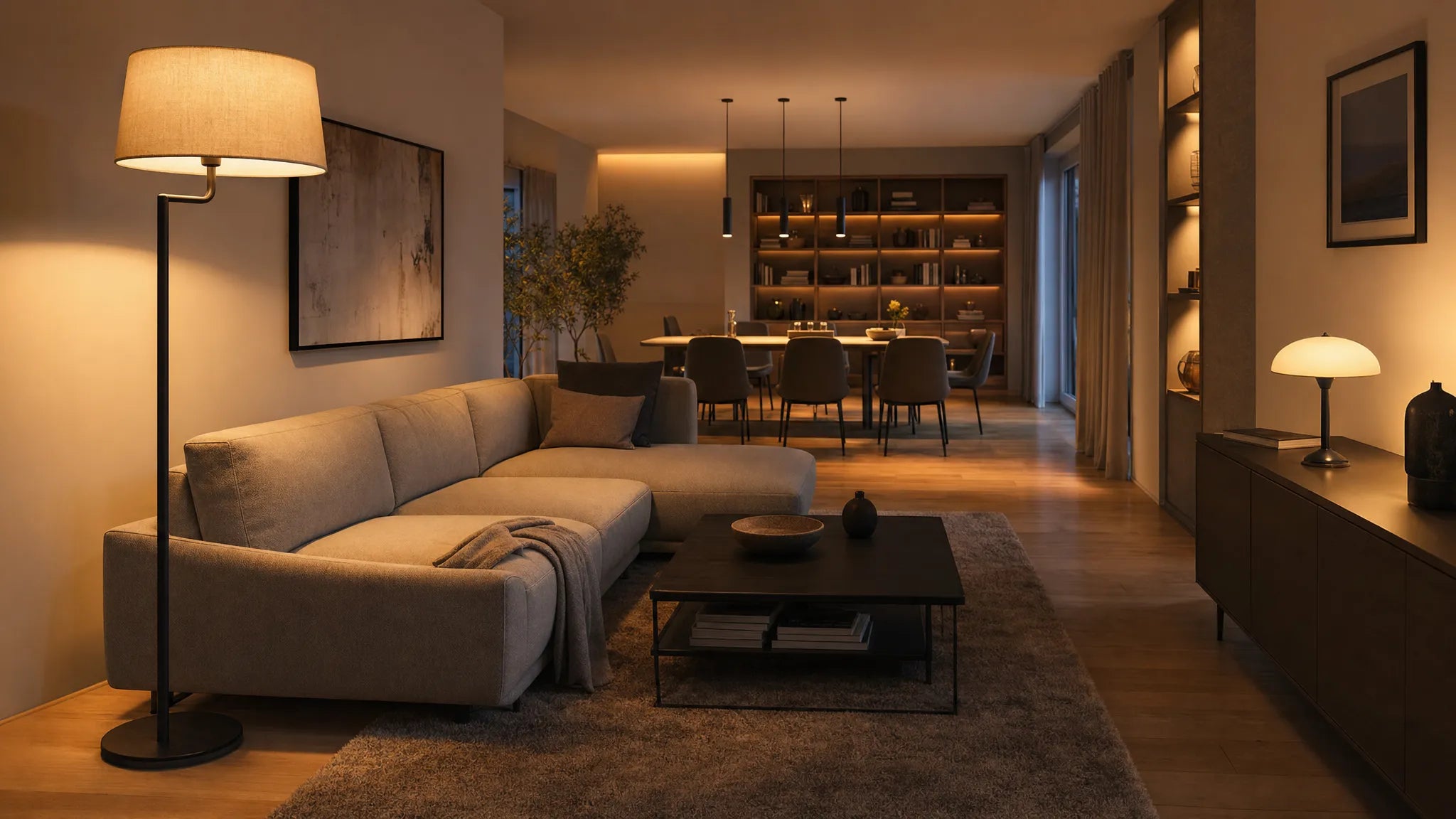
A wide, quiet dimming area is particularly important in the living room. The requirements often change here: bright light for tidying up, soft light for movie nights and medium brightness for guests. A combination of dimmable ceiling or pendant lamps, table lamps and indirect light usually looks more pleasant than a single, very bright light source.
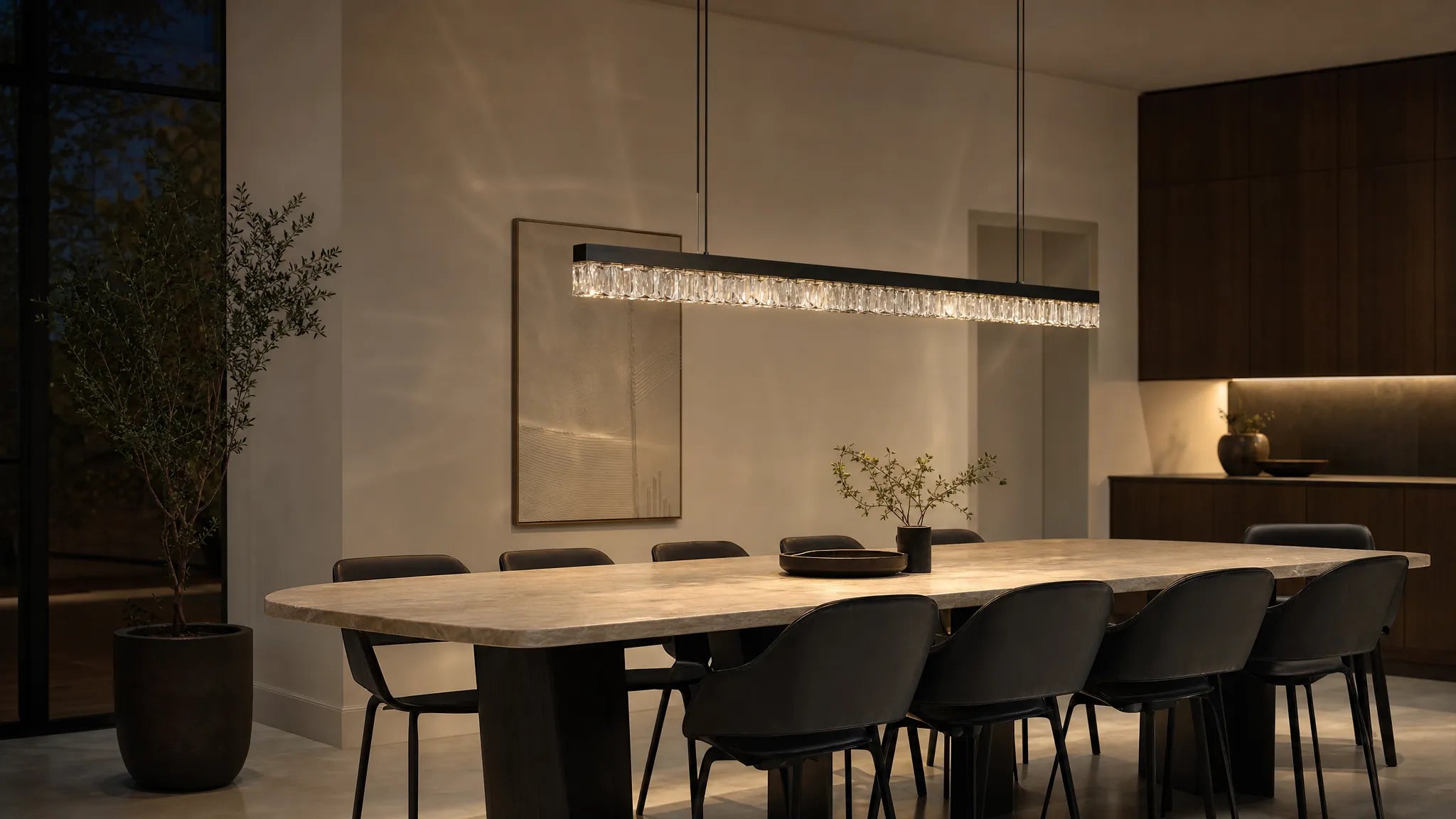
Dimmable lamps above the dining table should not only have low flicker, but also strong colors. Warm white light with good color rendering makes food, wood and fabrics appear more natural. If the pendant light has several visible light sources, all LEDs should fit together visually and technically.
In the bedroom, the light can be dimmed particularly gently. Dim-to-warm lamps are interesting here: when dimming, not only is the brightness reduced, but the color temperature is also warmer. This is similar to the behavior of classic light bulbs and is very pleasant in the evening.
In the kitchen and home office, a very low dimming level is less important than stable, low-glare and sufficiently bright light. It is often worth planning work lighting and mood lighting separately. You can find out more about this in the guide Plan LED lighting: 3-layer light for the entire home.
Smart bulb or classic dimmer?
Smart LED bulbs are usually dimmed via an app, remote control or voice control. They contain their own electronics and should generally not be operated on a classic wall dimmer. The wall dimmer reduces the power supply, while the smart electronics actually require constant voltage.
If you want to use smart bulbs, you usually leave the wall switch at full power and only dim digitally. Alternatively, choose a smart light or system that is specifically compatible with suitable smart switches and controls.
Classic dimmable LED lamps with LED wall dimmers, on the other hand, are ideal if you want familiar operation. This is often the most elegant solution for renovations, rental apartments or design-oriented rooms, as long as the electrical compatibility is correct.
This is how you test whether the light is really quiet
After inserting the lamp, you should not just switch it on briefly, but also check the entire dimming path. Slowly turn from maximum brightness to lowest level. Look for visible flickering, sudden shutdowns, delayed starting, and humming noises.
A simple everyday test is the smartphone slow motion mode. Point the camera at the turned on lamp. Strong moving streaks can be an indication of pronounced light modulation. This test does not conform to standards and does not replace a measuring device, but it does help to quickly identify noticeable problems.
The hand movement test can also be useful. Move your fingers quickly in front of the light. If the movement appears very choppy, a strobe effect may be present. You should avoid such effects, especially in work areas, kitchens or with mirror light.
Avoid common mistakes when purchasing
The most common mistake is assuming that every LED bulb works with every dimmer. Driver quality and dimming range are often limited, especially with inexpensive lamps. This doesn't automatically mean that expensive LEDs are always perfect, but high-quality bulbs often offer better electronics, more stable color rendering and clearer technical specifications.
Another mistake is mixing different light sources in a multi-bulb lamp. Even if all LEDs are dimmable, they can react differently. One lamp starts earlier, another flickers in the lower area, the next appears cooler in color. For chandeliers and pendant lights with multiple sockets, uniform fittings are almost always the better choice.
Dimming across multiple levels is also problematic. A smart light bulb that is also attached to a wall dimmer or a light with an integrated dimmer that is dimmed externally can become unstable. If possible, opt for clear dimming logic: either wall dimmer, integrated light dimmer or smart control.
When the luminaire itself is the focus
With modern pendant lights, chandeliers and designer lights, the light source is only part of the overall impression. Cable length, suspension, ceiling rose, light distribution and material determine whether the dimming will later appear harmonious. A perfectly dimmable LED is of little use if the lamp is dazzling or hangs too high above the table.
BUYnBLUE offers a curated selection of modern designer lights for various living areas. Particularly practical for pendant lights and chandeliers: Many requirements can be tailored to the height of the room and furnishings through free adjustments such as cable length, ceiling rose or color. This means that not only the dimmable light bulb but also the lamp itself fits the room.
FAQ: Choose a dimmable light bulb without flickering
Can every LED light bulb be dimmed? No. An LED may only be dimmed if it is expressly marked as dimmable. Non-dimmable LEDs can flicker, buzz or become damaged on the dimmer.
Which dimmer is best for dimmable LED bulbs? LED-compatible trailing edge dimmers often work very well with 230-volt LEDs. What remains crucial, however, is the specific compatibility between dimmer, light source and load range.
Why does my dimmable light bulb only flicker at a low setting? The minimum load is usually not reached or the lamp reaches its lower dimming limit. A different LED dimmer, an adjusted minimum brightness or a more compatible light source can help.
Can I use Smart-Bulbs with a regular wall dimmer? As a rule not. Smart lamps should usually be permanently supplied with full voltage and dimmed via an app, remote control or voice control. Always check the manufacturer's information.
What to do if the dimmable lamp buzzes? Humming often indicates an unfavorable combination of dimmer and LED driver. Test a compatible bulb or another LED dimmer. If there are noises from the switch, cable or light, an electrician should check.
Are “flicker-free” LEDs really completely flicker-free? The term is used differently. Many products have low flicker or no visible flickering, but technically there may still be a small amount of light modulation. Look for high-quality drivers and reputable technical information.
Matching dimmable lighting for a quiet home
A dimmable light bulb without flickering is not created by chance, but rather by the right combination: dimmable LED bulb, suitable dimmer, correct load and a lamp that suits the room. Anyone who checks these points will receive atmospheric lighting that visibly improves design and comfort.
Discover at BUYnBLUE modern lights and lamps, which combine high-quality materials, timeless design and flexible customization options. Whether it's a pendant light above the dining table, a chandelier in the living area or an individual solution for high ceilings: with the right planning, dimmable light appears calm, elegant and exactly as atmospheric as it should be.